Which Side Is the Gay Earring? Debunking the 2026 Myth
Debunk the 'gay earring' myth once and for all—trace its origins, explore modern ear curation trends, and embrace authentic self-expression in 2026.

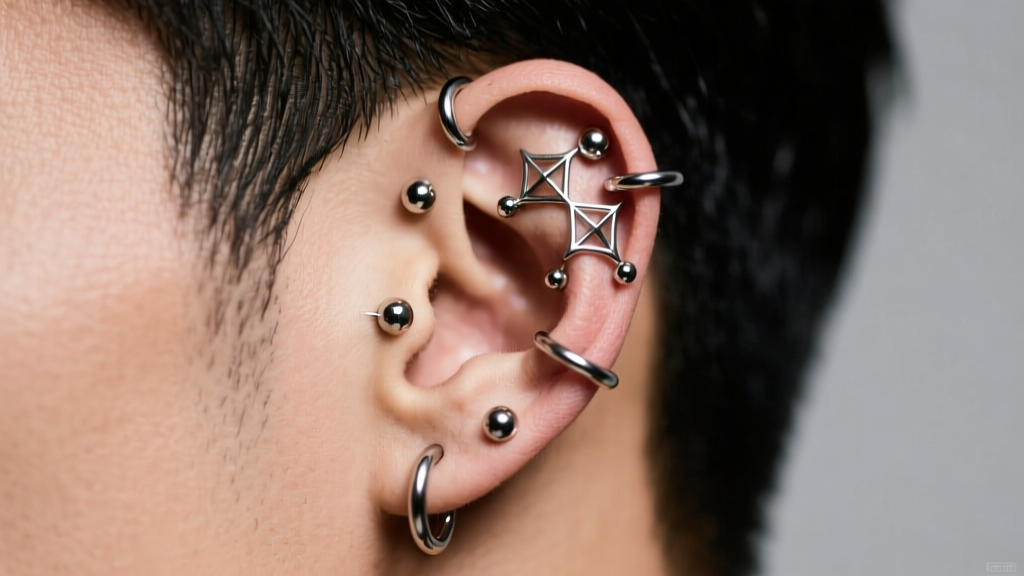
If you have ever found yourself typing earring which side is gay into a search engine, you are tapping into a fascinating cultural artifact that bridges the gap between historical queer signaling and modern fashion. For decades, a persistent urban myth dictated that the side of a man’s pierced ear served as a covert indicator of his sexual orientation. However, as we navigate the style landscape of 2026, the rigid binaries of the past have entirely dissolved, replaced by an era of radical self-expression, anatomical curation, and gender-fluid aesthetics.
In this comprehensive style and trend analysis, we will deconstruct the origins of the “gay ear” myth, examine why it is entirely obsolete today, and provide a masterclass in modern ear curation. Whether you are planning your first lobe piercing or a complex cartilage constellation, understanding the history and the metallurgy of body jewelry is essential for a safe, stylish outcome.
The Historical Origins of Queer Piercing Codes
To understand the search query “earring which side is gay,” we must look back to the 1970s and 1980s. During an era when LGBTQ+ individuals faced severe legal and social persecution, covert signaling systems were necessary for community building and safety. The most famous of these was the “hankie code” (or bandana code), where the color and pocket placement of a handkerchief communicated specific sexual preferences and roles.

This concept of lateral signaling eventually bled into mainstream fashion via the ear piercing. The prevailing rhyme of the late 20th century was “Left is right, and right is wrong.” In this outdated and highly problematic parlance, a single piercing on the right earlobe was widely recognized in Western cultures as a subtle indicator that a man was homosexual. Conversely, the left ear was deemed the “heterosexual” standard. This code was heavily perpetuated by mainstream media, high school gossip, and even biased fashion magazines of the 1990s.
However, it is crucial to note that this code was never universal. In various subcultures, including the 1970s punk and glam rock scenes, men like David Bowie and George Michael wore earrings on both ears or exclusively the left, completely detaching the jewelry from strict sexual categorization and attaching it instead to musical and sartorial rebellion.
The Cultural Shift: Why the Rule is Dead in 2026
The idea that a specific earlobe dictates sexual orientation is entirely dead in 2026. The dismantling of this myth was not a sudden event but a gradual erosion driven by pop culture, the LGBTQ+ rights movement, and the mainstreaming of gender-fluid fashion.
- The 2010s K-Pop and Hip-Hop Influence: Global superstars like G-Dragon, A$AP Rocky, and Young Thug normalized multiple ear piercings, pearl studs, and dangling diamonds on both ears, completely divorcing the jewelry from the old right/left binary.
- The Rise of Gender-Fluid Styling: Icons such as Harry Styles, Bad Bunny, and Timothée Chalamet have popularized a curated, maximalist approach to jewelry that ignores traditional gender norms entirely.
- Gen Z and Alpha Aesthetics: Younger demographics view the “gay ear” concept as a relic of a repressed era. In 2026, piercings are viewed as architectural enhancements to the body’s natural anatomy, not as orientation markers.
“Jewelry is an extension of personal architecture. To limit a piercing to a single side based on an outdated 1980s code is to ignore the vast canvas of the human ear.” — Contemporary Body Modification Historians
Modern Ear Curation: Anatomy Over Orientation
Today, the focus has shifted from which side to pierce, to how to curate the ear’s unique topography. The modern “ear project” involves mapping out multiple piercings that complement the specific folds, ridges, and lobules of your individual anatomy. Professional piercers assess the prominence of your antihelix, the depth of your conch bowl, and the thickness of your helix rim before recommending placements.
Standard Gauge Sizes and Healing Timelines
When planning a curated ear, understanding gauge sizes (the thickness of the jewelry) is critical. Using improper gauges can lead to migration, rejection, or the dreaded “cheese-cutter effect,” where a heavy hoop on a thin wire slowly slices through the lobe tissue.
| Piercing Placement | Standard Gauge | Initial Jewelry Style | Estimated Healing Time |
|---|---|---|---|
| Standard Lobe | 18G (1.0mm) - 16G (1.2mm) | Flat-back Labret Stud | 6 - 8 Weeks |
| Helix (Outer Cartilage) | 16G (1.2mm) | Flat-back Labret Stud | 4 - 12 Months |
| Tragus | 16G (1.2mm) | Flat-back Labret Stud | 4 - 8 Months |
| Conch | 14G (1.6mm) | Flat-back Stud or Hoop | 6 - 12 Months |
| Daith | 16G (1.2mm) | Clicker Ring or Captive Bead | 6 - 12 Months |
Note: Healing times are highly variable and depend on aftercare, immune system health, and jewelry material quality. Cartilage piercings are notorious for prolonged healing phases due to the lack of direct blood flow to the tissue.
Metallurgy and Material Grades: What Belongs in Your Ear
A common mistake among those new to ear curation is prioritizing the aesthetic of the gemstone over the metallurgy of the post. The Association of Professional Piercers (APP) maintains strict guidelines regarding what materials are safe for long-term wear, particularly in fresh piercings.
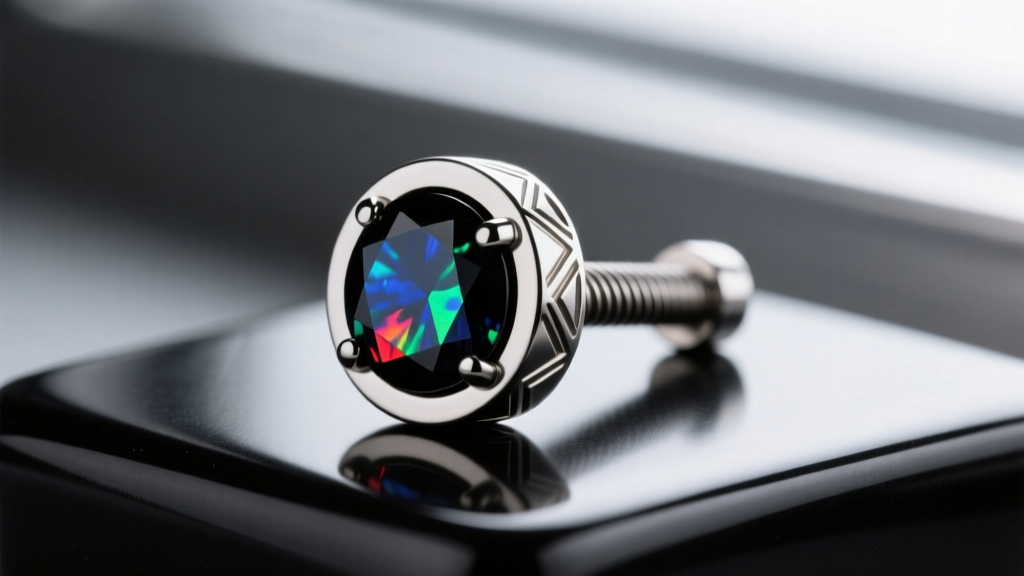
The Titanium Standard (ASTM F136)
If you are getting a new piercing or have sensitive skin, Implant-Grade Titanium (ASTM F136) is the undisputed gold standard. Unlike 316L surgical steel, which contains up to 10% nickel and can cause severe contact dermatitis or hypergranulation, ASTM F136 titanium is entirely nickel-free. It is lightweight, highly biocompatible, and can be anodized to produce vibrant colors without the use of toxic dyes or plating that can flake off inside the fistula (the piercing channel).
Solid Gold Requirements
If you prefer the warmth of gold, you must opt for 14k or 18k solid gold that is specifically alloyed for body jewelry (often palladium-based to avoid nickel). Gold-plated, gold-filled, or vermeil jewelry is strictly prohibited for fresh piercings, as the microscopic friction of a healing fistula will strip the plating, exposing the base metal to the bloodstream.
Threadless vs. Internally Threaded Mechanics
The mechanism by which the jewelry stays in your ear is just as important as the metal. High-end brands like BVLA (Body Vision Los Angeles) and Anatometal utilize two superior methods:
- Internally Threaded: The screw mechanism is on the decorative end, and the post is smooth. This prevents the sharp threads from tearing the delicate fistula tissue during insertion.
- Threadless (Push-Pin): The decorative end features a slightly bent pin that creates tension when pushed into the hollow post. This is the preferred method for most cartilage piercings in 2026, as it offers a secure fit without the risk of cross-threading or losing the backing in your hair.
Conversely, externally threaded jewelry (where the screw is on the post itself) should be avoided at all costs. Forcing a sharp, threaded post through a piercing causes micro-tears and introduces bacteria directly into the wound.
Planning Your Gender-Fluid Ear Project
Whether you are drawn to the edgy, industrial look of a 14-gauge barbell traversing the helix, or the delicate, celestial vibe of a constellation of bezel-set opals scattered across your lobule and tragus, the key to a successful ear project is patience and professional guidance.
- Consult an APP-Certified Piercer: Use the APP Certified Piercer Directory to find a vetted professional. Avoid mall kiosks and piercing guns, which use blunt force trauma and cannot be properly sterilized in an autoclave.
- Map the Anatomy: Work with your piercer to create a digital or physical mock-up. A flat helix might not support a standard hoop without bending, requiring a custom-fitted flat-back stud instead.
- Stagger the Healing: Never get more than three or four piercings at once. The body’s immune system can only handle so much localized trauma; overloading it will result in prolonged swelling, irritation bumps, and potential rejection.
The Final Verdict on Piercing Codes
The historical search for an “earring which side is gay” is a window into a time when marginalized communities had to rely on whispers and subtle accessories to find one another. Today, we honor that history not by adhering to its restrictive rules, but by embracing the absolute freedom it helped secure. In 2026, your ears are a canvas for high-end metallurgy, anatomical artistry, and unapologetic self-expression. Wear the titanium hoops, the 18k gold threadless studs, and the vintage diamond clips on whichever side—or sides—bring you joy.


