Explore Beaded Hoop Earring Designs: A Beginner's Style Guide
Discover the best beaded hoop earring designs for your style. Learn about wire gauges, bead materials, and face-shape matching in this beginner guide.


Beaded hoops bridge the gap between minimalist metal rings and elaborate chandelier earrings. They offer movement, texture, and a pop of color or organic luster that solid metals simply cannot achieve. However, when you begin exploring beaded hoop earring designs, the sheer variety of materials, wire gauges, and clasp mechanisms can be overwhelming. This beginner-friendly explainer breaks down the anatomy, material science, and styling frameworks you need to choose the perfect pair.
The Anatomy of Beaded Hoop Earring Designs
Before purchasing or crafting your own pair, it is crucial to understand the three structural pillars of beaded hoops: the core wire, the bead type, and the clasp mechanism. The core wire dictates the durability and weight limit of the earring. If the wire is too thin, the weight of glass or crystal beads will warp the circular shape over time, leading to a distorted, oval-like appearance.
The beads themselves are not merely decorative; they dictate the center of gravity. A hoop heavily clustered with beads on the bottom half will swing differently than one with evenly distributed micro-beads. Finally, the clasp—ranging from latch-backs to continuous endless wires—determines both the security of the earring and its overall aesthetic profile.
Decoding Materials: Wire, Thread, and Bead Types
The longevity of beaded hoop earring designs relies heavily on material selection. For the core structure, avoid cheap brass or nickel-plated wires, which can cause contact dermatitis and tarnish rapidly. Instead, look for these industry-standard materials:
- 14k Gold-Filled Wire: Unlike gold-plated wire (which has a microscopic flash of gold), gold-filled wire contains a solid layer of 14k gold that constitutes at least 5% of the total metal weight. According to Jewelers of America, gold-filled jewelry is highly durable, tarnish-resistant, and safe for sensitive skin.
- Niobium: A highly reactive metal that is anodized to create vibrant, permanent colors without the use of dyes or plating. It is 100% hypoallergenic and incredibly lightweight.
- Sterling Silver (925): Classic and bright, though it requires occasional polishing to remove silver sulfide tarnish.
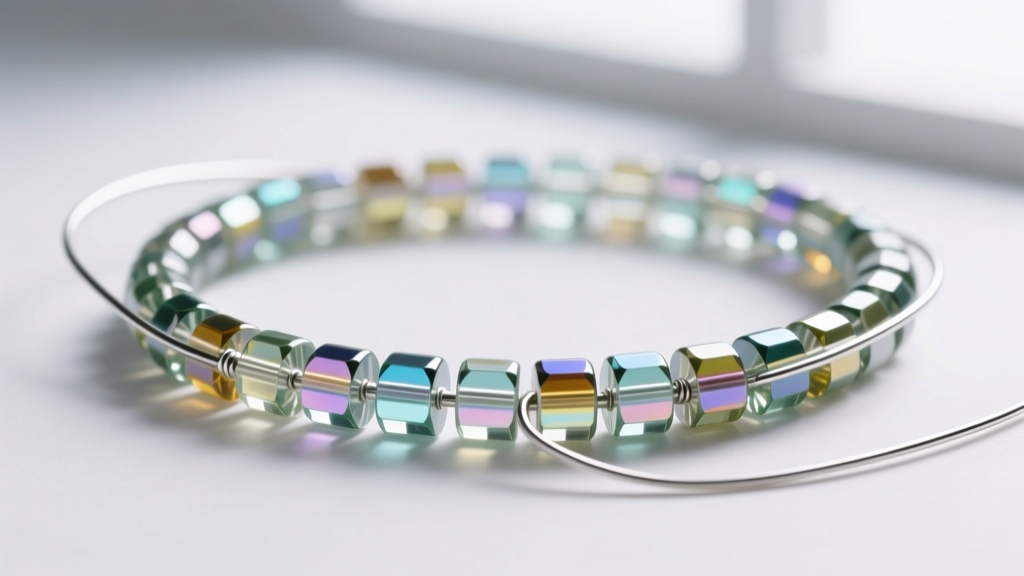
When it comes to the beads themselves, uniformity is key for a polished look. Japanese seed beads, particularly Miyuki Delicas, are cylindrical and precisely sized (typically 1.6mm x 1.3mm for size 11/0), allowing them to snap together like tiny bricks. For larger focal beads, Preciosa or Swarovski crystals offer unparalleled light refraction, while freshwater pearls provide an organic, asymmetrical elegance. The Gemological Institute of America (GIA) notes that freshwater pearls are cultured entirely from mantle tissue, resulting in a solid nacre composition that makes them remarkably durable for everyday jewelry wear.
Material Comparison Matrix
| Bead Material | Weight Profile | Durability & Care | Approx. Price Range (Per Pair) |
|---|---|---|---|
| Miyuki Seed Beads | Ultra-Light | High; shatter-resistant glass | $25 - $60 |
| Preciosa Crystal | Medium | High; prone to scratching if knocked | $45 - $120 |
| Freshwater Pearl | Medium-Heavy | Medium; sensitive to acids/perfumes | $60 - $200+ |
| Natural Stone (e.g., Turquoise) | Heavy | Low-Medium; porous, requires sealing | $80 - $250 |
Sizing, Gauge, and the "Cheese Cutter" Effect
One of the most common mistakes beginners make is ignoring wire gauge. Gauge refers to the thickness of the wire that passes through your ear piercing. Standard earlobe piercings are usually done at 20-gauge (0.81mm) or 18-gauge (1.02mm).
When selecting beaded hoop earring designs, you must balance the hoop diameter with the wire gauge. If you choose a large 40mm hoop strung with heavy glass beads, an 18-gauge or 20-gauge wire will act like a cheese cutter against your earlobe. The concentrated weight on a thin wire will cause discomfort, stretch the piercing, and potentially cause tearing over a full day of wear.
The Golden Rule of Gauges for Beaded Hoops:
- 15mm - 25mm (Huggies/Small Hoops): 20-gauge or 18-gauge wire is perfectly safe, as the bead count and overall weight are minimal.
- 30mm - 40mm (Standard Hoops): Opt for 18-gauge or 16-gauge (1.29mm) wire to support the structural integrity and distribute weight.
- 50mm+ (Statement Hoops): Require 16-gauge or even 14-gauge wire, or a hollow-tubing design to maintain the circle shape without dragging the lobe down.
Clasp Mechanisms: Security vs. Aesthetics
The clasp dictates how the earring sits on the ear and how secure it is during movement.
Latch-Back (Saddleback)
The most common clasp for medium-to-large beaded hoops. A hinged wire snaps into a grooved catch. While highly secure, the catch mechanism adds a small amount of visual bulk at the top of the earlobe, which can interrupt the continuous flow of beads.
Continuous (Endless) Hoop
A sleek design where a thin, slightly tempered wire feeds directly into a hollow tube on the other side of the hoop. This creates an unbroken, 360-degree circle of beads. However, they require careful handling; bending the wire to open and close it repeatedly can weaken the metal and distort the circular tension.
Clicker (Hinged Segment)
Often used in smaller huggie-style beaded hoops, clickers feature a seamless hinge that snaps shut with an audible "click." They are incredibly secure and offer a flush, invisible closure, making them ideal for intricate, uninterrupted beadwork.
Face Shape & Styling Matrix for Beginners
Beaded hoop earring designs are highly versatile, but altering the shape and bead distribution can dramatically influence facial proportions. Use this framework to select your next pair:
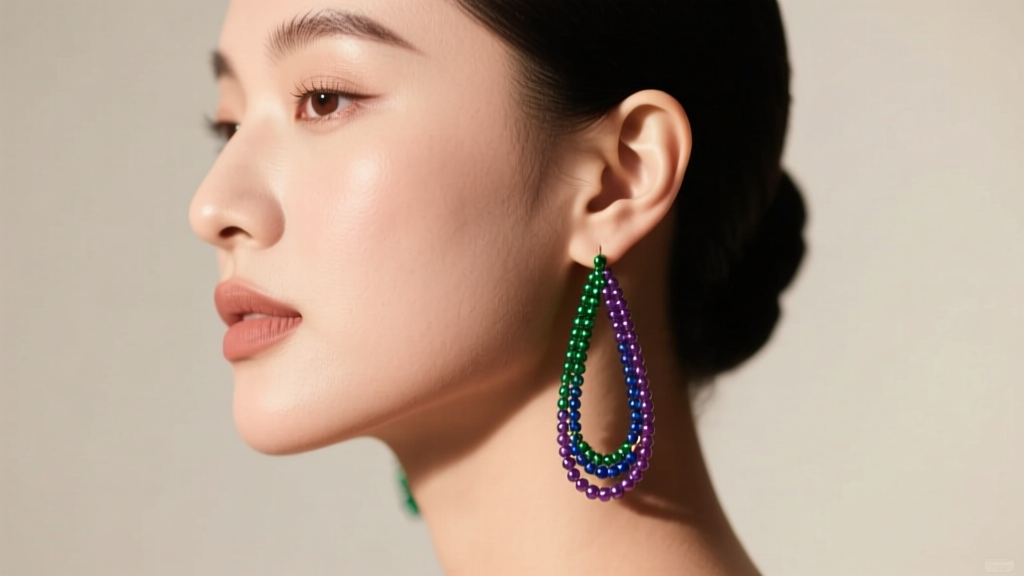
- Round Faces: Avoid perfectly circular, thick-beaded hoops that emphasize width. Instead, look for elongated, teardrop, or oval-shaped beaded hoops. The vertical drop draws the eye downward, creating the illusion of a longer, more sculpted jawline.
- Square Faces: Angular jawlines benefit from softening elements. Medium-sized circular hoops (25mm-35mm) featuring rounded freshwater pearls or smooth, polished crystal beads help soften sharp facial angles.
- Heart-Shaped Faces: With a wider forehead and narrower chin, teardrop hoops that are heavier at the bottom can add visual weight to the lower half of the face, creating beautiful symmetry.
- Oval Faces: The universal shape. You can confidently experiment with geometric beaded hoops, oversized statement circles, or asymmetrical bead distributions.
Care, Cleaning, and Preventing Tarnish
Proper maintenance ensures your beaded hoops retain their structural tension and optical brilliance. Never use ultrasonic jewelry cleaners on beaded hoops containing freshwater pearls, opals, or porous natural stones (like turquoise or lapis lazuli). The high-frequency vibrations can fracture the nacre or stone, and the heat can degrade the epoxy used to secure focal beads.
For glass seed beads and crystals, a simple soak in warm water with a drop of mild dish soap, followed by a gentle brush with a baby toothbrush, will remove skin oils and lotion buildup. Always dry the wire completely with a microfiber cloth before storing. To prevent wire warping, store your hoops flat in a lined jewelry box or hang them from a dedicated earring tree. Never toss beaded hoops loosely into a purse or drawer, as the pressure can easily bend the core wire out of its circular alignment.
Where to Shop: Navigating the Market
When investing in beaded hoop earring designs, provenance matters. For bespoke, intricately woven seed bead hoops, independent artisans on platforms like Etsy offer unparalleled craftsmanship, typically ranging from $35 to $85. For premium crystal and pearl hoops set in solid gold or heavy gold-filled wire, look to established mid-tier jewelry brands like Mejuri or Catbird, where prices generally reflect the raw material costs ($90 to $250). Always verify the metal content and the origin of the beads to ensure you are paying for genuine quality rather than mass-produced plated imitations.


