Ronaldo Earrings Guide: Styling & Troubleshooting Diamond Studs
Troubleshoot common issues with Ronaldo earrings, from lobe sag and nickel allergies to snagging. Learn how to style athletic diamond studs safely.

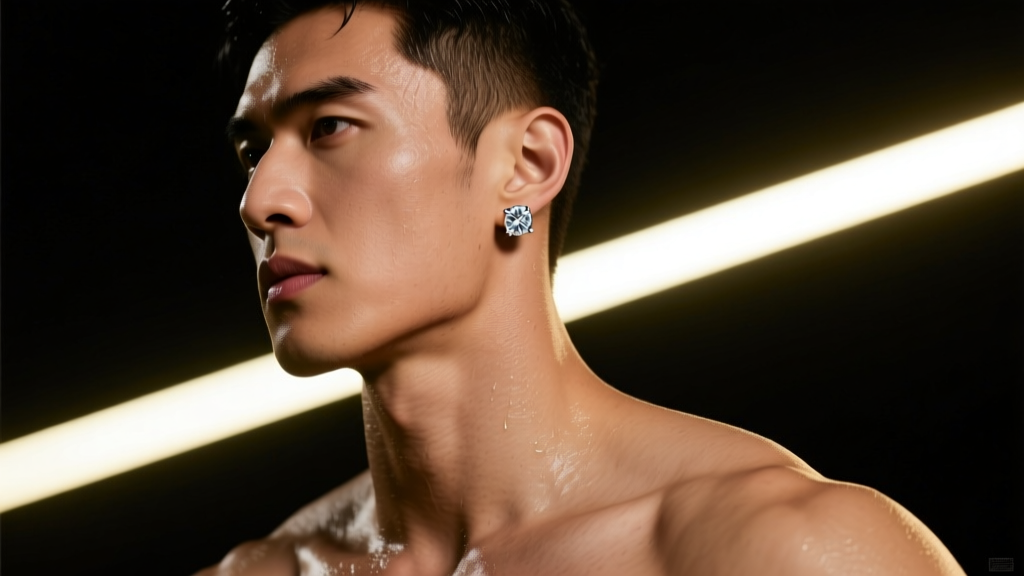
Cristiano Ronaldo didn’t just redefine modern football; he fundamentally shifted the cultural acceptance of men’s diamond jewelry. The iconic "Ronaldo earrings" look—characterized by large, brilliant-cut diamond studs worn effortlessly on and off the pitch—has sparked a massive trend. However, as we navigate the jewelry landscape in 2026, the market is flooded with cheap replicas and poorly constructed alternatives that lead to a host of biomechanical and dermatological problems. Fans searching for the ultimate athletic diamond stud often end up with stretched lobes, severe contact dermatitis, and cloudy stones.
This comprehensive troubleshooting guide addresses the most common failures associated with Ronaldo-style earrings. Whether you are investing in lab-grown diamonds, high-grade moissanite, or trying to salvage a pair of heavy cubic zirconia studs, understanding the physics of earlobe stress and the metallurgy of earring posts is critical for pulling off this look safely and stylishly.
The Heavy Stone Dilemma: Troubleshooting Lobe Sag and Tearing
The most frequent complaint among men attempting the Ronaldo earring aesthetic is lobe sagging. Ronaldo frequently wears studs ranging from 1.5 to 2.0 carats (approximately 7.5mm to 8.5mm in diameter). When you buy a budget-friendly replica, the manufacturer often uses dense base metals and thick glass or low-grade cubic zirconia (CZ) to mimic the heft of a real diamond. This creates a pendulum effect on the earlobe.
Standard lobe piercings are typically performed at 20-gauge (0.81mm) or 18-gauge (1.02mm). A heavy 8mm stud resting on a thin 20-gauge post will slowly slice through the tissue over time, especially if you are active, sweat frequently, or accidentally tug the earring while changing clothes.
Actionable Solutions for Lobe Support
- Upgrade the Post Gauge: If your piercer allows, transition to a 16-gauge (1.29mm) or 14-gauge (1.63mm) post. The thicker metal distributes the weight of the stone across a wider surface area of the fistula (the piercing channel), drastically reducing the "cheese-cutter" effect.
- Use Silicone O-Rings: If you are stuck with a standard post, purchase medical-grade silicone earring support discs or O-rings. These sit between the earlobe and the earring backing, providing a shock-absorbing cushion that prevents the heavy stone from dragging the skin downward.
- Opt for Bezel Settings: Prong settings catch on hair and athletic wear, causing sudden yanks that can tear the lobe. A smooth bezel setting encapsulates the stone in a metal rim, eliminating snag points and lowering the overall profile of the earring.
Material Matrix: Avoiding the "Green Ear" Allergic Reaction
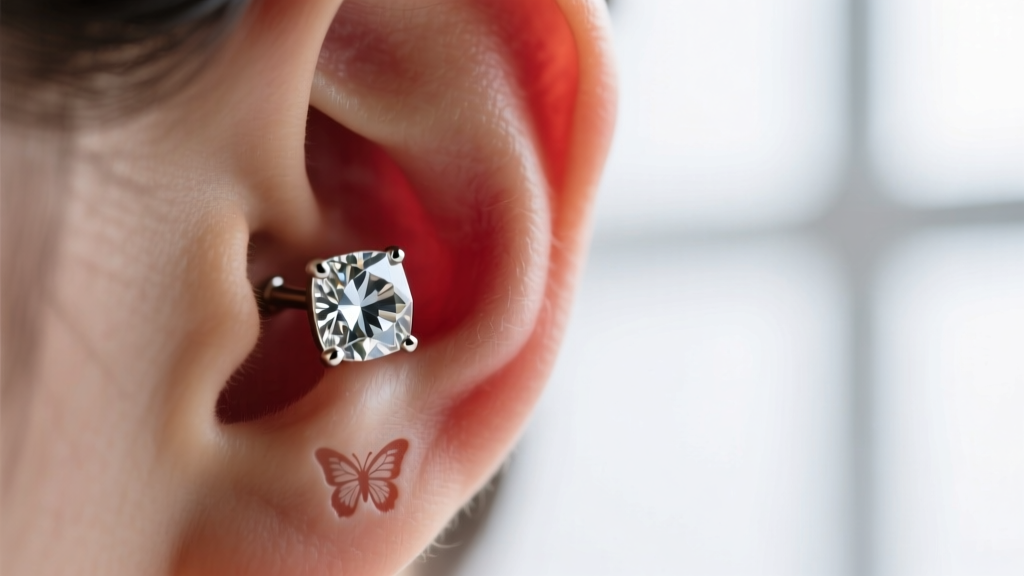
Nothing ruins the elite athlete aesthetic faster than a flaking, green, or infected earlobe. Many mass-market "Ronaldo style" earrings are cast from 316L surgical stainless steel or mystery brass alloys. While 316L steel is often marketed as "hypoallergenic," it actually contains between 8% and 10.5% nickel. When sweat (which is mildly acidic) breaks down the passive oxide layer on the steel, nickel ions leach into the skin, triggering allergic contact dermatitis. According to the Mayo Clinic, nickel allergy is one of the most common causes of allergic contact dermatitis worldwide, and once developed, it is a lifelong sensitivity.
Earring Material Comparison Chart
| Material | Nickel Content | Best Use Case | Troubleshooting Note |
|---|---|---|---|
| 316L Surgical Steel | 8% - 10.5% | Budget fashion, short-term wear | Will cause reactions in sensitized lobes; avoid for sports/sweating. |
| ASTM F-136 Titanium | 0% (Nickel-Free) | Active lifestyles, fresh piercings, sensitive skin | The gold standard for athletic wear; lightweight and highly biocompatible. |
| 14k Solid Gold | Varies (Alloy dependent) | Everyday luxury, premium aesthetics | Ensure it is alloyed with palladium or silver, not nickel, for white gold. |
| Platinum (950) | 0% | Heirloom investment, ultra-premium | Extremely dense and heavy; requires a very thick post to support the weight. |
The Fix: If your current Ronaldo earrings are turning your skin green or causing itching, immediately switch to Implant-Grade Titanium (ASTM F-136). Many high-end body jewelry brands now offer titanium flat-back labrets with interchangeable gemstone tops, allowing you to achieve the diamond look without the dermatological nightmare.
Snag Hazards: Upgrading the Earring Backing System
Traditional butterfly backs (friction backs) are the enemy of the active man. The sharp metal prongs on the back of the earring catch on towel loops, hoodie strings, and pillowcases. Furthermore, the small surface area of a butterfly back fails to provide adequate support for a heavy 1.5-carat stone, leading to the earring drooping forward at an awkward angle.
In 2026, the standard for high-end men's studs has shifted entirely to internally threaded flat-back labrets or threadless push-pin systems. A flat-back labret features a smooth, flat disc that rests flush against the back of the earlobe. This eliminates all snag hazards, provides a wide base of support to keep heavy stones sitting perfectly perpendicular to the floor, and is vastly more comfortable when sleeping or wearing over-ear headphones.
Proportion Troubleshooting: Sizing "Ronaldo Studs" for Your Face Shape
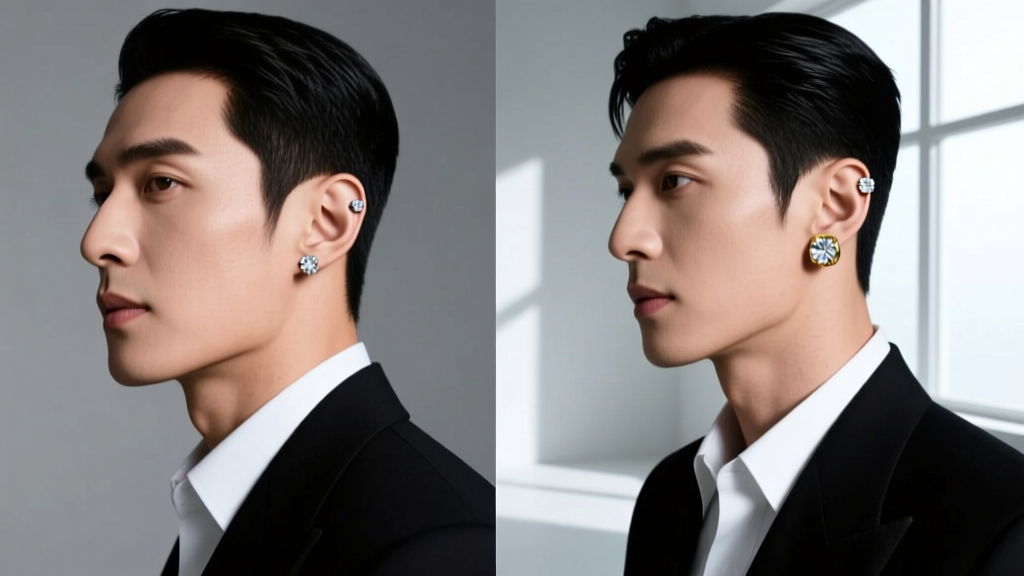
A common styling mistake is blindly copying the exact carat weight of a celebrity without considering facial proportions. Ronaldo has a broader face, a strong jawline, and a larger physical frame, allowing him to carry the visual weight of an 8.5mm (2.00ct) diamond without it looking overwhelming. If you have a narrower face or smaller earlobes, a stone that large will look disproportionate and tacky.
Face Shape & Ear Size Sizing Guide
- Square/Broad Jawline: You can comfortably pull off 6.5mm to 8.0mm (1.00ct to 2.00ct) stones. The sharp angles of your jaw balance the circular brilliance of a large round-cut stone.
- Oval/Average Face: Stick to the 5.0mm to 6.5mm (0.50ct to 1.00ct) range. This provides the necessary flash for the "athlete" look without overpowering your natural features.
- Narrow/Heart-Shaped Face: Opt for 4.0mm to 5.0mm (0.25ct to 0.50ct). A smaller, highly brilliant stone will draw attention to your eyes and cheekbones rather than dragging the visual focus down to your ears.
- Small Earlobes: Regardless of face shape, if your earlobe tissue is less than 1cm from the piercing hole to the edge of the ear, do not exceed a 5mm stone. Larger stones will overhang the edge of the lobe, creating an unbalanced silhouette and increasing the risk of edge-tearing.
Stone Selection: Troubleshooting Cloudiness in Diamond Alternatives
Not everyone has the budget for a $15,000 natural diamond, and the modern man is increasingly turning to alternatives. However, choosing the wrong alternative leads to the "cloudy stone" problem. Cubic Zirconia (CZ) is highly porous on a microscopic level. When exposed to sweat, lotions, and natural skin oils, CZ quickly becomes cloudy and dull, losing the sharp, icy sparkle required for the Ronaldo look.
For a permanent, maintenance-free sparkle, you must choose between Moissanite and Lab-Grown Diamonds. According to the Gemological Institute of America (GIA), proper care is essential for maintaining a diamond's brilliance, but lab-grown diamonds possess the exact same Mohs hardness (10) and refractive index as mined diamonds, meaning they will not scratch or cloud from daily gym sessions. Moissanite (Mohs 9.25) is slightly more brilliant and fiery than diamond due to its double refraction, offering an intense "disco ball" flash that many athletes actually prefer for maximum visibility under stadium lights.
Maintenance Protocol for High-Impact Lifestyles
To keep your studs looking like fresh ice, you must implement a strict cleaning protocol. Sweat and dead skin cells accumulate behind the stone setting, blocking light from entering the pavilion (the bottom of the gem). This is the primary reason athletic earrings lose their sparkle.
- Weekly Soak: Mix a few drops of mild, ammonia-free dish soap in warm water. Let the earrings soak for 15 minutes.
- Soft Brushing: Use a dedicated, ultra-soft baby toothbrush to gently agitate the area directly behind the stone and around the prongs or bezel.
- Avoid Chlorine: Never wear your earrings in a chlorinated pool. Chlorine can react with the alloys in 14k gold, causing microscopic stress fractures in the prongs, which can lead to the loss of your stone.
- Ultrasonic Caution: While ultrasonic cleaners are great for lab-grown diamonds, avoid using them on fracture-filled stones or tension settings, as the high-frequency vibrations can loosen the mounting.
By troubleshooting the structural, metallurgical, and proportional flaws inherent in cheap replicas, you can successfully adopt the iconic Ronaldo earring aesthetic. Prioritize implant-grade metals, upgrade to flat-back support systems, and choose a stone size that complements your unique anatomy to ensure your jewelry performs as well as you do.


