The Ultimate Cleaning Guide for Gold Texas Earrings
Discover expert care and cleaning tips for gold Texas earrings. Learn how to safely maintain intricate cutouts, enamel motifs, and delicate pave diamonds.

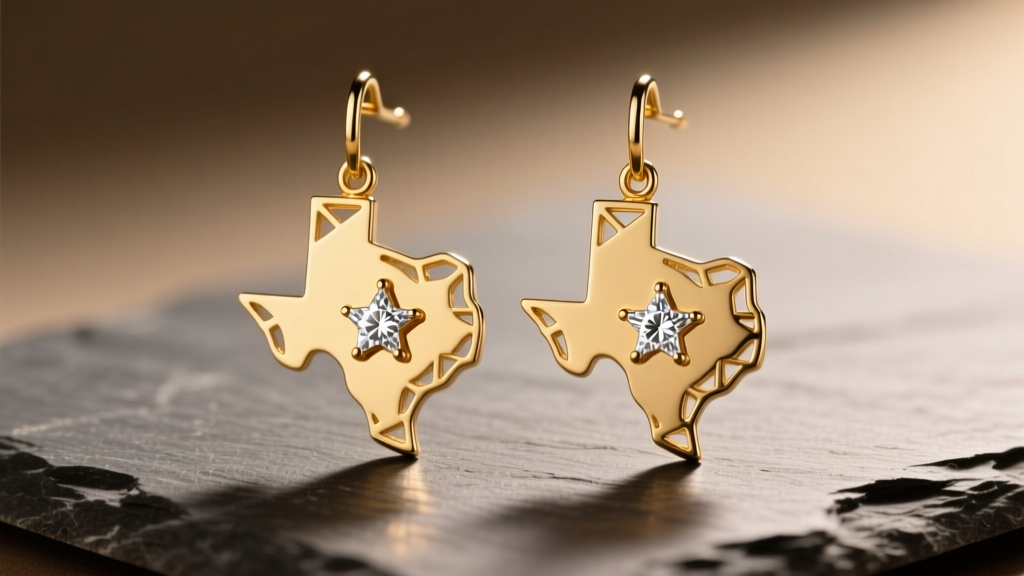
Introduction to Regional Motif Jewelry Care
Regional pride jewelry has seen a massive resurgence, with gold Texas earrings standing out as a staple for both everyday wear and special occasions. Whether you own a minimalist 14k gold state silhouette, an intricate bluebonnet cluster, or a champlevé enamel Texas flag huggie, these pieces require specialized maintenance. The unique topography of the Texas state outline—complete with the Red River curve, the Sabine River border, and the sharp angles of the Panhandle—creates microscopic crevices where sebum, cosmetics, and environmental dust accumulate rapidly.
Unlike simple gold hoop earrings or smooth dome studs, gold Texas earrings often incorporate mixed media. Jewelers frequently integrate pavé diamonds to highlight the 'Lone Star' or use vitreous enamel to add the iconic red, white, and blue of the state flag. These additions completely change the cleaning protocol. Using the wrong chemicals or mechanical cleaners can permanently fracture enamel or vibrate microscopic diamond prongs loose. In this comprehensive 2026 care guide, we will break down the exact material science and step-by-step maintenance required to keep your Texas-themed gold earrings pristine.
Why Texas Motif Earrings Require Special Attention
The primary challenge with state-shaped jewelry is the perimeter-to-surface-area ratio. A 15mm Texas silhouette has a highly irregular border, meaning there are dozens of tight corners and narrow inlets. When worn, these crevices trap dead skin cells and lotion. Furthermore, the leverbacks or fishhook wires used for dangling map silhouettes are subject to unique stress points due to the asymmetrical weight distribution of the state's shape. Proper care is not just about aesthetics; it is about preserving the structural integrity of the earring components.
Material Breakdown: Gold Alloys and Enamel Durability
Before applying any cleaning solution, you must identify the exact materials used in your earrings. The karatage of the gold and the presence of enamel dictate what chemicals are safe to use.
| Material / Finish | Durability Profile | Cleaning Vulnerabilities | Recommended Care Level |
|---|---|---|---|
| 14k Yellow / Rose Gold | High (58.5% pure gold, alloyed with copper/zinc) | Resistant to scratching; can tolerate gentle brushing. | Moderate |
| 18k Yellow Gold | Medium (75% pure gold, softer alloy) | Prone to micro-scratches; requires ultra-soft bristles. | High |
| Champlevé Enamel | Low to Medium (Glass fused in metal troughs) | Shatters under ultrasonic waves; degrades in harsh acids. | Extreme |
| Pavé Melee Diamonds | High (Diamond) / Low (Micro-prongs) | Prongs loosen with ultrasonic vibration or aggressive brushing. | High |
According to the Gemological Institute of America (GIA), gold alloys are highly susceptible to degradation from chlorine and mercury. Never wear your gold Texas earrings in swimming pools or hot tubs, as the chlorine will chemically react with the copper and zinc alloys in 14k gold, causing a condition known as 'stress corrosion cracking,' which can snap the earring post entirely.
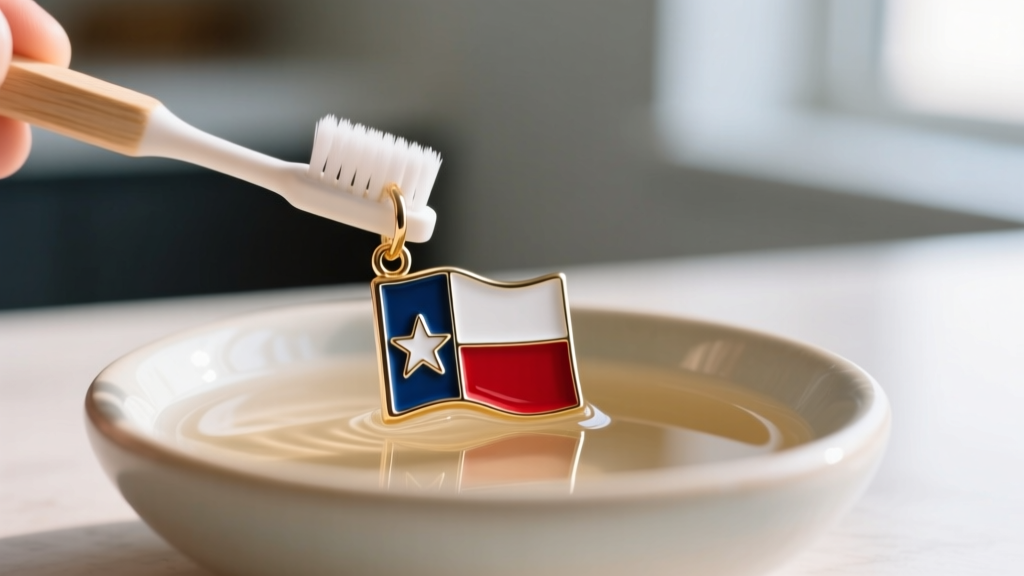
Step-by-Step Cleaning Protocol for Intricate Silhouettes
To safely remove buildup from the tight corners of the Panhandle and the Gulf Coast curve without damaging enamel or pavé settings, follow this exact protocol. This method is endorsed by conservation experts for mixed-media gold jewelry.
Tools Required
- Distilled or filtered lukewarm water (tap water contains minerals that leave spots)
- Mild, phosphate-free dish soap (e.g., original blue Dawn)
- A baby toothbrush with ultra-soft bristles (standard toothbrushes will scratch 18k gold)
- Wooden toothpicks (for non-abrasive crevice cleaning)
- Lint-free microfiber polishing cloth
- Can of compressed air (optional, for drying tight corners)
The Cleaning Process
- Prep the Solution: Mix three drops of mild dish soap into a small ceramic bowl of lukewarm distilled water. Avoid hot water, as rapid temperature changes can cause thermal shock to glass enamel.
- Soak (With Caution):strong> Submerge solid gold Texas silhouette earrings for 5 to 10 minutes to loosen sebum. Crucial Note: If your earrings feature enamel (like a Texas flag design), limit soaking to a maximum of 2 minutes to prevent water from seeping under the enamel boundaries.
- Agitate Gently: Using the baby toothbrush, lightly sweep the bristles along the perimeter of the state shape. Always brush in one direction, moving from the center of the earring outward toward the edges to push debris out of the crevices.
- Target the Crevices: For stubborn buildup in the sharp angles of the Rio Grande border, gently use the wooden toothpick. Never use metal needles or safety pins, as they will permanently gouge the gold and damage rhodium plating on white gold accents.
- Rinse and Dry: Rinse under a gentle stream of lukewarm distilled water. Pat dry with a microfiber cloth. Use compressed air to blow moisture out of the earring post hole and any pavé diamond settings.
What to Avoid: The Ultrasonic and Chemical Trap
Many jewelry owners mistakenly believe that ultrasonic cleaners are the ultimate solution for detailed jewelry. While ultrasonic high-frequency waves are excellent for plain diamond solitaires, they are highly destructive to gold Texas earrings for several reasons:
- Enamel Fracturing: The vibrations can cause champlevé or guilloché enamel to crack, pop out of its metal trough, or develop microscopic spiderweb fractures.
- Pavé Stone Loss: The 'Lone Star' on many Texas earrings is crafted using micro-pavé settings. The ultrasonic waves can easily vibrate the tiny, fragile prongs holding 1.0mm melee diamonds, causing the stones to fall out.
- Chemical Damage: Commercial jewelry dips and ammonia-based cleaners will strip the oxidized antiquing often used to highlight the borders of state map earrings, leaving them looking flat and washed out.
Expert Insight: The American Gem Society strongly advises against using toothpaste or baking soda pastes on gold jewelry. These substances contain silica and calcium carbonate, which act as abrasive sandpaper on a microscopic level, permanently dulling the high-polish finish of your gold earrings.
Structural Maintenance: Posts, Hinges, and Weight Distribution
Care extends beyond cleaning; it includes mechanical maintenance. The asymmetrical shape of Texas creates a pendulum effect when worn as a dangle earring, placing uneven stress on the post and hinge mechanisms.
Gauge Thickness and Bending Risks
A solid 14k gold Texas silhouette measuring 20mm across can weigh between 3.5 and 5 grams. Standard earring posts are typically 20-gauge (0.81mm thick). A 20-gauge post supporting a 5-gram asymmetrical weight is highly prone to bending when inserting or removing the friction back. If your Texas dangles feel heavy, consult a jeweler to have the posts upgraded to 18-gauge (1.02mm) or 16-gauge (1.29mm) wires. Alternatively, opt for Texas silhouettes mounted on sturdy leverback ear wires, which distribute the weight more evenly across the upper lobe cartilage.
Maintaining Friction Backs and Screw Backs
The tension of your earring backs degrades over time. For heavy gold map earrings, standard butterfly friction backs often slip off due to the downward pull of the metal. To secure your investment, switch to jumbo silicone ear backs or upgrade to La Pousette (locking) backs, which feature a mechanical locking mechanism that prevents the heavy gold silhouette from accidentally pulling off the post and getting lost.
Storage Solutions for Intricate Cutouts
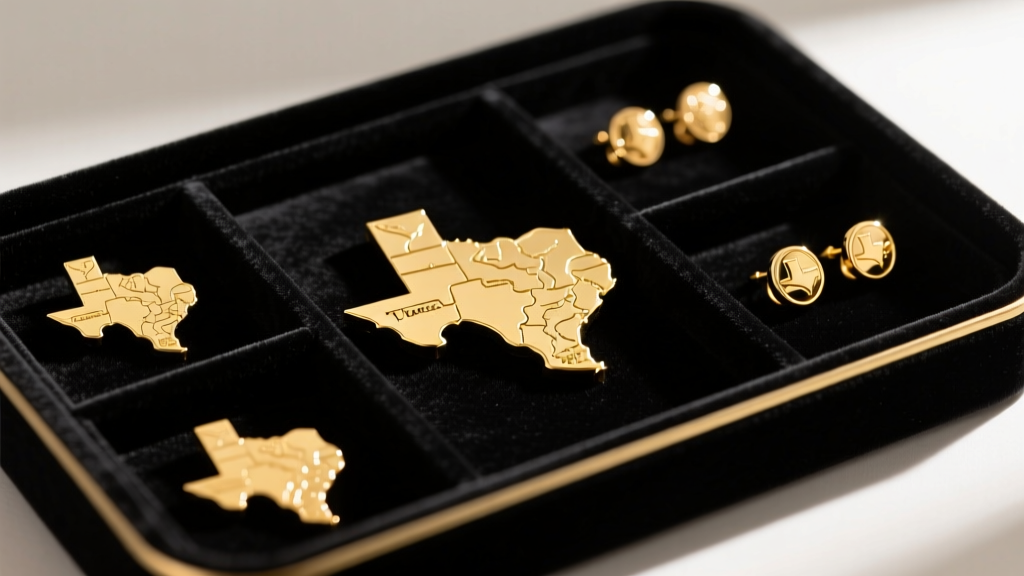
How you store your gold Texas earrings is just as critical as how you clean them. Tossing them into a communal jewelry box is a recipe for disaster. The sharp points of the Texas Panhandle and the Rio Grande valley can easily scratch softer gemstones or become bent if crushed under heavier jewelry.
Store each pair in an individual, soft-lined compartment. For long-term storage, place the earrings in a ziplock bag with an anti-tarnish strip (such as 3M Anti-Tarnish tabs). These strips absorb sulfur compounds in the air that cause the copper alloys in 14k and 18k gold to oxidize and turn dull. By combining meticulous, gentle cleaning with proper structural awareness and secure storage, your gold Texas earrings will remain a brilliant, structurally sound celebration of state pride for decades to come.


