Buying Guide for Making Earrings: Essential Tools & Findings
Discover what to look for when buying supplies for making earrings. Our guide covers hypoallergenic metals, wire gauges, and professional tools.

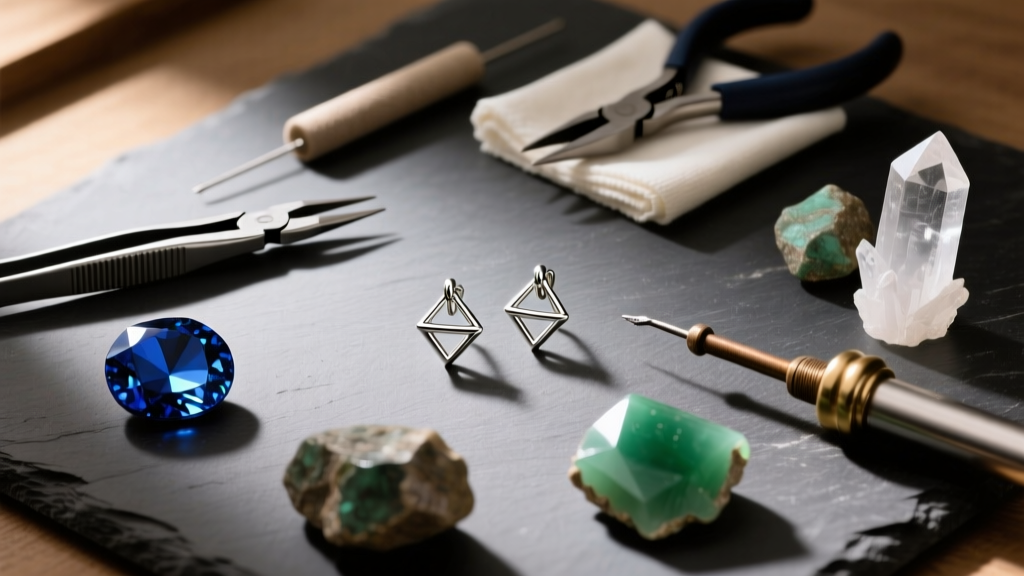
The Foundation: Choosing Hypoallergenic Metals for Ear Wires
When buying supplies for making earrings, the metal you choose for your ear wires and posts dictates both the longevity of your jewelry and the comfort of your customer. As we navigate the jewelry market in 2026, consumers are vastly more educated about metal allergies, specifically nickel sensitivity. The most common failure mode for independent jewelry makers is relying on vague terms like "surgical steel" or "hypoallergenic plated," which often contain enough nickel to trigger allergic contact dermatitis.
For professional-grade earring making, you must buy metals with verifiable metallurgical standards. According to the Association of Professional Piercers (APP), implant-grade titanium (ASTM F136) is the gold standard for sensitive ears. It is entirely nickel-free, lightweight, and highly resistant to corrosion. Niobium is another excellent, highly reactive-free option that can be anodized into vibrant colors without using dyes or platings that might chip over time.
If you prefer the look of precious metals, avoid standard sterling silver (925) for ear wires, as the 7.5% copper content can cause tarnishing and react with acidic skin pH. Instead, source Argentium Silver (960 grade). Argentium replaces some of the copper with germanium, making it highly tarnish-resistant and significantly more hypoallergenic. For gold, always buy 14k or 18k solid gold, or high-quality 14/20 gold-filled wire. Avoid gold-plated brass wire entirely; once the micro-thin plating wears off from friction against the earlobe, the underlying brass will oxidize and turn the skin green.
Understanding Wire Gauges and Hardness for Earring Making
Buying the right wire requires understanding two distinct metrics: gauge (thickness) and hardness (temper). Selecting the wrong combination is the primary reason handmade earrings lose their shape or fail to hold gemstones securely.
Wire hardness is categorized into three main tempers:
- Dead Soft: Extremely pliable. It bends easily with bare hands but will not hold its shape under tension. Use this only for intricate wire-wrapping or weaving, never for ear wires or clasps.
- Half-Hard: The absolute workhorse for making earrings. It offers a balance of malleability for looping and enough rigidity to spring back into shape. This is what you should buy for French hooks, leverbacks, and headpins.
- Full-Hard: Very stiff and brittle. It is difficult to bend and will snap if worked too much. It is primarily used for making rigid clasps or structural components that must not flex.
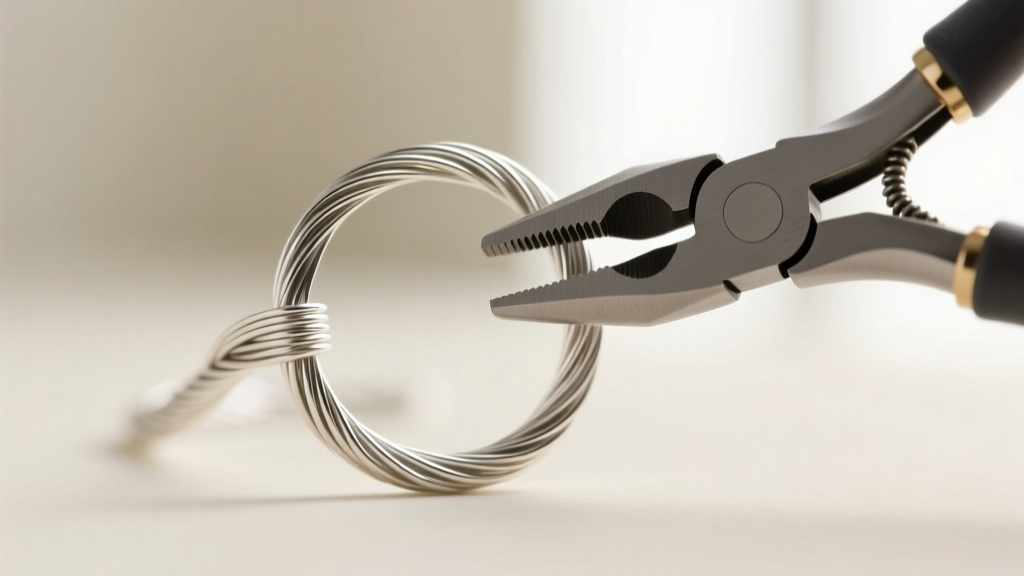
Wire Gauge and Application Chart
| Gauge (AWG) | Diameter (mm) | Recommended Hardness | Best Application in Earring Making |
|---|---|---|---|
| 22 Gauge | 0.64 mm | Half-Hard | Small, lightweight beads; delicate wire-wrapping; pearl headpins. |
| 20 Gauge | 0.81 mm | Half-Hard | Standard ear wires, French hooks, and general-purpose headpins. |
| 18 Gauge | 1.02 mm | Half-Hard | Heavy drop earrings, leverback findings, and structural jump rings. |
| 16 Gauge | 1.29 mm | Dead Soft / Half-Hard | Thick cartilage hoops, ear cuffs, and heavy-duty clasps. |
When buying wire from reputable suppliers like Rio Grande, you can filter by both gauge and temper. Always buy 20-gauge half-hard wire for standard lobe earrings, as it fits 99% of pierced ears while providing enough structural integrity to hold a 6mm gemstone without bending out of shape.
Essential Findings: Beyond the Basic French Hook
Findings are the mechanical components that make your earrings functional. While the standard French hook (fishhook) is cheap and ubiquitous, it is notorious for falling out during sleep or when removing winter clothing. When buying findings to elevate your earring designs, look for secure closures.
Leverback Ear Wires: These feature a hinged closure that snaps securely into place. They are essential for heavy drop earrings or designs utilizing valuable gemstones. When buying leverbacks, check the hinge tension; a high-quality leverback will produce a distinct, crisp "click" when closed, indicating a precise manufacturing tolerance.
Kidney Wires: Shaped like a kidney bean, these wires use a tension catch that is incredibly secure. They offer a vintage aesthetic and are much harder to accidentally dislodge than standard shepherd hooks.
Friction Backs vs. Screw Backs: If you are making stud earrings, the backer is just as important as the post. Standard butterfly friction backs lose their tension over time, leading to lost earrings. Upgrade your supply kit to include bullet-clutch backs with silicone interiors, which grip the post tightly and are much more comfortable for the wearer. For high-value diamond or gemstone studs, invest in screw-back findings, which thread onto a specialized post and are virtually impossible to lose.
Professional Tooling: What to Buy and What to Avoid
The tools you use to manipulate your wire and findings will directly impact the finish of your earrings. Cheap tools leave tool marks, mar soft metals, and suffer from poor alignment, leading to asymmetrical loops and frustrated makers.
Investing in professional-grade jewelry tools is not a luxury; it is a necessity for reducing material waste and ensuring a premium retail finish on your handmade earrings.
Here is a targeted buying list for the essential earring-making toolkit:
- Flush Cutters: You need a cutter that leaves a perfectly flat cut, not a pinched "V" shape. Avoid $15 hardware store cutters. Invest in a Tronex 7291 or Lindstrom 8141 (priced between $75 and $95). These feature precision-ground jaws that cut 20-gauge silver wire like butter, leaving a flush end that requires minimal filing.
- Chain Nose Pliers (Smooth Jaw): Serrated teeth will permanently scar your silver and gold-filled wire. Buy pliers with perfectly smooth, polished inner jaws. Wubbers and Tronex make excellent smooth-jaw options. You will use these for gripping wire, closing jump rings, and tucking wire tails.
- Round Nose Pliers: Essential for forming consistent loops at the top of your headpins. Look for a pair with a smooth taper. To ensure your loops are exactly the same size every time, use a fine-point Sharpie to draw a line on the jaw, giving you a visual guide for where to place the wire.
- Nylon Jaw Pliers: These are the secret weapon for professional finishers. After bending your wire, it will have micro-kinks. Running the wire through nylon jaw pliers work-hardens it slightly and straightens it without leaving a single scratch on the metal.
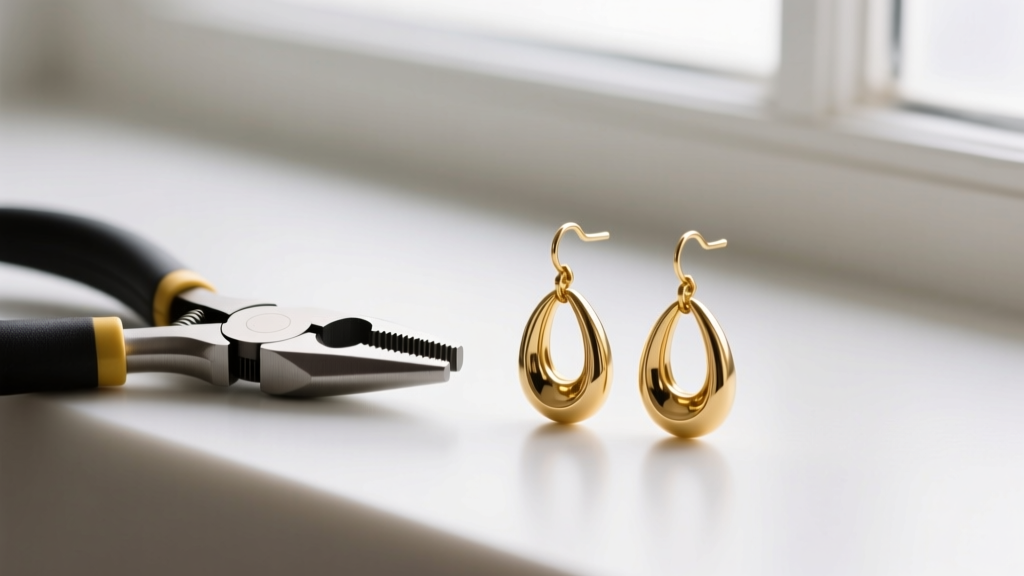
Sourcing Strategy: Where to Buy Quality Earring Supplies
Where you buy your supplies dictates your profit margins and your quality ceiling. Avoid general craft stores for metal findings; their inventory is typically composed of plated base metals with high failure rates and inconsistent sizing.
For precious metals, wire, and high-end findings, establish a wholesale account with dedicated jewelry supply houses. Companies like Rio Grande, Stuller, and Hoover & Strong offer assay-guaranteed metals. While the minimum order quantities might be slightly higher, the cost per gram drops significantly, and you are guaranteed to receive exactly the alloy you paid for.
For bulk base-metal findings (like stainless steel jump rings or brass ear nuts for practice), specialized online bead and finding distributors like Halstead Bead or Fire Mountain Gems offer excellent sourcing guides and volume discounts. Always request a material safety data sheet (MSDS) or a metal composition breakdown when buying from overseas wholesalers on platforms like Alibaba to ensure you are not inadvertently importing leaded brass or nickel-heavy alloys.
Final Checklist Before You Start Making Earrings
Before you finalize your supply order and begin production, run through this quality-assurance checklist:
- Verify the Alloy: Are your ear wires stamped or certified as nickel-free (e.g., ASTM F136 Titanium, Argentium 960, or 14k Gold)?
- Check the Temper: Did you select half-hard wire for your ear hooks, rather than dead soft?
- Test the Findings: Do your leverbacks click securely? Do your friction backs hold the post tightly without sliding off?
- Inspect the Tools: Are your plier jaws completely smooth to prevent marring your expensive metals?
By prioritizing metallurgical integrity, precise gauges, and professional tooling, you transition your craft from amateur hobbyist to professional jeweler. The right supplies not only make the process of making earrings more efficient but ensure your final pieces are durable, comfortable, and worthy of a premium price point.


