Material Guide: Choosing Authentic 50's Style Earrings
Discover the material properties of authentic 50's style earrings. Compare vintage Lucite, Aurora Borealis rhinestones, and gold-filled metals.

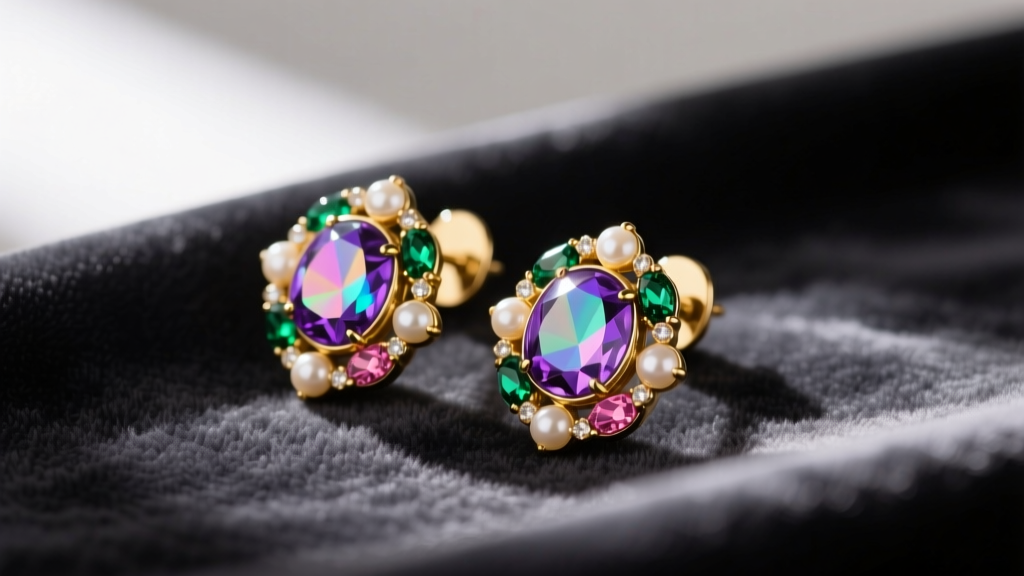
The mid-century era remains a golden age for jewelry design, characterized by bold silhouettes, optimistic aesthetics, and rapid advancements in material science. For collectors and vintage enthusiasts, sourcing authentic 50's style earrings requires more than just an eye for design; it demands a deep understanding of the specific metallurgy, polymers, and glasswork that defined the decade. Modern reproductions often fail to capture the tactile weight, optical properties, and structural integrity of original mid-century pieces.
In this comprehensive material guide, we deconstruct the physical properties of 1950s fashion jewelry, providing you with an actionable framework to authenticate, evaluate, and preserve these wearable artifacts.
The Metallurgy of Mid-Century Glamour: Base Metals vs. Gold-Filled
Unlike fine jewelry which relied on solid 14K or 18K gold, 1950s fashion earrings predominantly utilized gold-filled (GF) or rolled gold plate (RGP) constructions. Understanding the distinction is critical for evaluating vintage condition and pricing.
Gold-Filled vs. Electroplated Gold Wash
Authentic 50's style earrings were frequently stamped with hallmarks such as 1/20 12K GF. This stamp indicates that 5% of the total weight of the metal item is 12-karat gold, mechanically bonded to a brass or copper core under extreme heat and pressure. This results in a gold layer that is typically 50 to 100 times thicker than modern electroplated "gold wash."
- Vintage Gold-Filled (1950s): Gold layer thickness ranges from 2.0 to 3.0 microns. Highly resistant to tarnish and skin acidity. Can be lightly polished without exposing the base metal.
- Modern Gold Wash (Reproductions): Electroplated flash layers measuring 0.1 to 0.5 microns. Prone to rapid wear, revealing the pot-metal or brass core beneath, often leading to contact dermatitis.
When inspecting base metal components like earring posts or clip-on backs, look for the warm, deep yellow hue characteristic of 12K gold alloys. Modern reproductions often utilize a brighter, almost brassy 24K-tinted electroplating that lacks the nuanced warmth of mid-century gold-filled layers.
The Rhinestone Revolution: Aurora Borealis and Foiled Glass
The 1950s marked a paradigm shift in glass manufacturing for jewelry, spearheaded by the collaboration between Christian Dior and Manfred Swarovski. In 1955, they introduced the Aurora Borealis (AB) finish, fundamentally changing how 50's style earrings interacted with light.
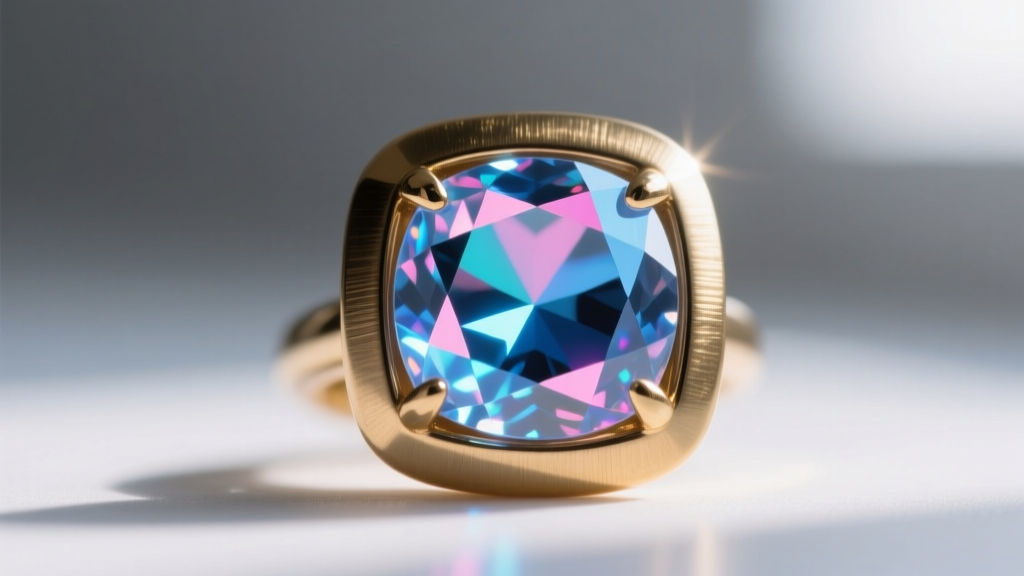
Identifying Authentic Aurora Borealis (AB) Coatings
The original AB effect was achieved through a vapor-deposited metallic salt coating applied to the surface of leaded glass chatons. According to archival data from the Corning Museum of Glass, this vacuum-coating process created a microscopically thin layer of metal that refracts light into iridescent spectrums of blue, pink, and gold.
"Authentic 1950s AB rhinestones exhibit a slightly 'oily' or 'slick' rainbow sheen that shifts dynamically with movement. Modern AB coatings often appear overly uniform, heavily metallic, or statically purple under direct light."
Foil Rot in Vintage Chatons
Non-AB rhinestones from the era relied on silver or gold foil glued to the flat backs of pointy-back chatons to amplify brilliance. When evaluating vintage pieces, use a 10x jeweler's loupe to inspect the foil backing. Moisture intrusion causes "foil rot," characterized by blackened, flaking, or oxidized patches. While minor foil rot is expected in 70-year-old jewelry, severe deterioration drastically reduces the stone's refractive index and the piece's overall market value.
Polymers of the Era: Lucite, Bakelite, and Acetate
Plastic jewelry reached new heights of sophistication in the 1950s. While Bakelite dominated the 1930s and 40s, the post-war boom saw a massive shift toward Lucite (poly(methyl methacrylate) or PMMA) and cellulose acetate. Distinguishing between these polymers is essential for accurate dating and valuation.
| Material | Weight & Density | Optical Clarity | Authentication Test |
|---|---|---|---|
| Bakelite (Phenolic) | Heavy, dense, feels substantial | Opaque or translucent; never fully clear | Simichrome polish test (turns cloth yellow); smells like formaldehyde/camphor when rubbed with hot water. |
| Lucite (PMMA) | Lightweight but solid | Optically pure; allows embedded glitter or reverse-carved motifs | No reaction to Simichrome; odorless when heated; glows fluorescent under UV blacklight. |
| Cellulose Acetate | Very lightweight, slightly flexible | Semi-transparent; often mimics tortoiseshell or amber | Smells faintly of vinegar when warmed; highly susceptible to shrinking and warping over decades. |
For chunky, carved button earrings or geometric hoops, Lucite was the undisputed king of the 1950s. Designers like Trifari and Coro frequently utilized molded Lucite to create lightweight, oversized 50's style earrings that would be physically unbearable if cast in solid metal.
Faux Pearls and Organic Simulants
The 1950s aesthetic heavily favored pearls, driven by the polished, feminine silhouettes of the decade. However, natural and cultured pearls were prohibitively expensive for most fashion jewelry lines. This era perfected the art of the faux pearl, most notably through the Majorica manufacturing process.
Authentic mid-century faux pearls were not plastic. They were crafted using a glass bead core, repeatedly dipped in essence d'orient—a solution derived from guanine (crystalline material extracted from fish scales) suspended in lacquer. The Gemological Institute of America (GIA) notes that this organic coating gives vintage faux pearls a deep, luminous orient that modern plastic-coated beads simply cannot replicate. When examining 50's style earrings featuring pearls, look for the slight "gritty" texture when rubbed gently against the edge of a tooth, a hallmark of both cultured pearls and high-end guanine-coated glass simulants.
Hardware and Findings: Identifying Era-Specific Backings
The findings—the mechanical parts that attach the earring to the ear—are often the most reliable indicators of age. In the 1950s, pierced ears were still relatively uncommon in Western fashion, meaning the vast majority of earrings were designed for un-pierced lobes.
Paddle-Back Clip-Ons vs. Modern Clips
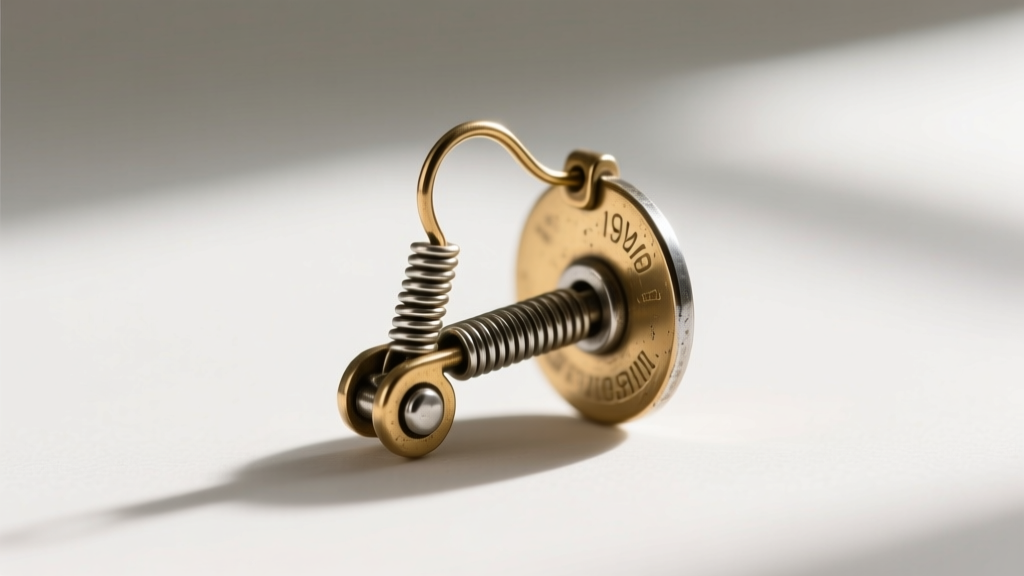
Vintage 50's style earrings predominantly utilized the "paddle-back" or "fat clip" mechanism. These feature a wide, flat, paddle-shaped contact pad designed to distribute pressure evenly across the lobe, preventing the pain associated with narrower, modern clip-on styles. The tension springs in authentic 1950s clips were forged from thicker gauge steel or brass, providing a firm, enduring grip.
Screw-Backs and Tension Fatigue
Early 1950s pieces often featured screw-backs with a small, cupped metal pad. When evaluating these, check the threading on the screw post. Vintage threads were hand-finished or stamped with a slightly wider, deeper pitch than the fine, machine-cut threads found on modern reproductions. Be wary of metal fatigue; over-tightening 70-year-old brass screws can easily strip the threads or snap the post entirely.
Authentication Framework for Collectors
When building a collection of authentic mid-century earrings, apply this three-point material verification framework:
- Weight and Thermal Conductivity: Hold the earrings in your palm. Authentic glass rhinestones, Lucite, and gold-filled brass possess a specific thermal mass that takes longer to warm to body temperature compared to lightweight modern acrylics and hollow pot-metals.
- Magnetic Testing: Use a rare-earth neodymium magnet. While gold, brass, and copper are non-magnetic, many modern reproduction findings utilize cheap, nickel-plated steel that will weakly attract a magnet. Vintage 50's style earrings should exhibit zero magnetic pull.
- Blacklight (UV) Analysis: A 365nm UV flashlight is indispensable. Vintage Lucite will often fluoresce brightly, while older Bakelite will remain dull. Furthermore, UV light easily reveals modern adhesives used in repaired or "frankenstein" pieces, which glow stark white or neon green under ultraviolet exposure.
By focusing on the molecular and structural realities of these materials, you can confidently navigate the vintage market, ensuring your collection of 50's style earrings is as historically accurate as it is visually stunning. For further historical context on mid-century adornment, the Victoria and Albert Museum maintains an extensive digital archive detailing the socio-economic shifts that drove these material innovations.


