Beginner's Guide to Collecting Vintage Cloisonne Earrings
Discover how to identify, price, and care for vintage cloisonne earrings. Our beginner-friendly guide covers enamel grades, eras, and buying tips.

The Anatomy of Cloisonné: More Than Just Color
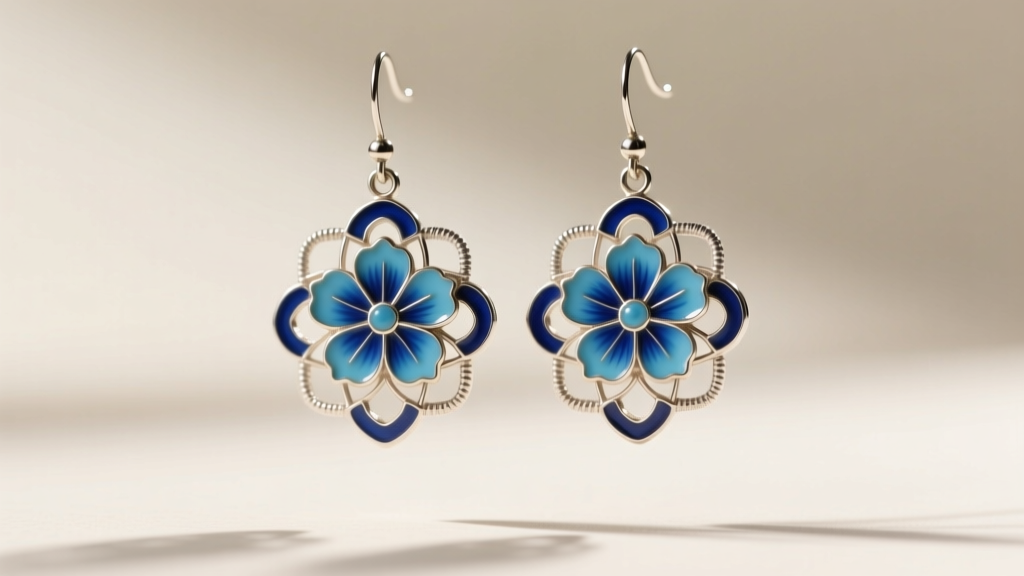
When you first encounter vintage cloisonne earrings, the vibrant, glass-like colors and intricate metallic webs are immediately captivating. But to truly appreciate and collect these pieces, you must understand the metallurgy and chemistry behind them. Cloisonné is not simply painted metal; it is a complex vitreous enamel technique. According to the Victoria and Albert Museum (V&A), the process involves soldering or gluing fine metal wires—known as cloisons (French for 'partitions')—onto a metal base to create tiny cellular compartments.
These compartments are then filled with frit, a finely ground glass powder mixed with water. The piece is fired in a kiln at approximately 1450°F (790°C). The glass melts, fuses to the metal base, and shrinks. Because it shrinks, the artisan must repeat the filling and firing process three to five times to ensure the glass sits flush with the top of the wire walls. Finally, the surface is ground flat with carborundum stones and polished to a high gloss. For vintage earrings, the base metal is typically copper, brass, or sterling silver, while the wire partitions are often 24-gauge to 28-gauge fine silver or brass.
How to Identify True Vintage Cloisonné
The market is flooded with modern reproductions masquerading as vintage. As a beginner, your primary goal is to distinguish authentic vitreous (glass) enamel from modern 'cold enamel' (epoxy resin). Here is a practical framework for authentication:
The Wire and Cell Test
Examine the metal wires under a 10x jeweler's loupe. In authentic vintage pieces, the wires are individual strips that have been cut, bent, and glued or soldered by hand. You will often find slight imperfections, overlapping joints, or tiny gaps where the wire meets the base plate. Modern mass-produced fakes often use stamped metal bases where the 'wires' are simply raised ridges of the same base metal, or they use perfectly uniform, machine-laid wire that lacks the subtle organic flow of hand-craftsmanship.
The Temperature and Texture Test
Vitreous enamel is essentially glass. It feels cold to the touch and warms up slowly. Epoxy resin feels closer to room temperature and warms almost instantly against your skin. Furthermore, glass enamel has a distinct, deep luster and optical clarity. If the surface looks slightly cloudy, overly plastic, or shows tiny bubble bursts that look like pinpricks rather than smooth polishing marks, you are likely looking at a modern resin reproduction.
The Counter-Enamel Indicator
Because glass and metal expand and contract at different rates during kiln firing, a copper or silver base will warp if enamel is only applied to the front. To balance the tension, master enamelists apply a layer of 'counter-enamel' to the back of the piece. If you flip a pair of vintage drop earrings over and see a solid, often darker or speckled layer of fired glass on the reverse, it is a strong indicator of authentic, high-quality vitreous cloisonné.
Major Vintage Eras and Pricing Tiers
Understanding the historical context of vintage cloisonne earrings will help you price them accurately and build a cohesive collection. The Lang Antiques Antique Jewelry University notes that different regions and eras favored distinct color palettes and base metals. Below is a data table outlining the primary categories you will encounter in the vintage market.
| Era & Origin | Base Metal & Wire | Design Characteristics | Estimated Price Range (Per Pair) |
|---|---|---|---|
| 1920s–1940s Chinese Export | Sterling silver or silver-plate; fine silver wire | Intricate floral motifs, turquoise and cobalt blue dominance, heavy filigree accents | $80 – $250 |
| 1950s–1970s Japanese Modern | Copper; brass or copper wire | Geometric patterns, abstract landscapes, muted earth tones, minimalist settings | $45 – $120 |
| 1960s–1980s Western Studio Artisan | Sterling silver or 14k gold; 24k gold wire | Art Deco revivals, abstract expressionist cells, experimental color gradients | $200 – $800+ |
| Mid-Century Tourist Trade (Generic) | Thin brass or copper alloy | Simplistic motifs, thinner enamel layers, often lacking counter-enamel | $20 – $50 |
Condition Reports: Critical Flaws to Avoid
Unlike solid gold or gemstone jewelry, cloisonné is inherently fragile. The glass enamel can chip, crack, or degrade if exposed to environmental stressors. When evaluating vintage cloisonne earrings for purchase, always request high-resolution macro photos and check for the following failure modes:
Verdigris and Base Metal Corrosion
Verdigris is a green, crusty copper acetate that forms when copper or brass base metals react with moisture and oxygen. In earrings, this often occurs around the ear wire fittings or the earlobe contact points. Not only is verdigris toxic and a skin irritant, but it also expands as it forms, pushing up against the enamel from underneath and causing the glass to pop off the base metal. Never buy vintage enamel earrings with active, untreated verdigris creeping under the cloisons.
Enamel Crazing and Pitting
Crazing appears as a network of microscopic hairline cracks within the glass. This is usually caused by thermal shock (e.g., the previous owner wearing them in a hot sauna or dropping them in snow) or an improper ratio of glass expansion to metal expansion during the original firing. While light crazing can add 'patina' character, deep cracks will eventually harbor dirt and oils that cannot be cleaned. Pitting, on the other hand, looks like tiny craters and is often the result of an overzealous jeweler using a harsh grinding wheel to re-polish the piece, effectively grinding away the top layer of glass.
Care and Maintenance for Enamel Jewelry
Proper care is non-negotiable for preserving the structural integrity of vintage cloisonne earrings. The most common mistake beginners make is treating enamel like standard gemstone jewelry. Never put cloisonné earrings in an ultrasonic cleaner. The high-frequency acoustic cavitation bubbles created by ultrasonic machines will shatter the vitreous glass and shake the delicate soldered wires loose from the base plate.
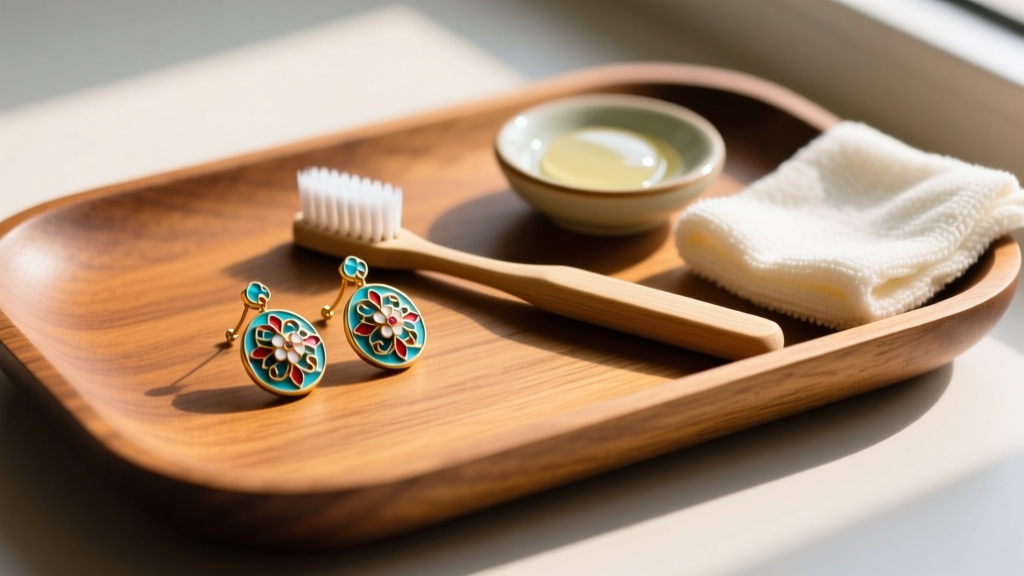
Similarly, avoid steam cleaners and harsh chemical dips (like silver polish). The chemicals can strip the polish from the metal wires and leave a cloudy, irreversible film on the glass surface. Instead, use a dedicated, gentle cleaning protocol:
- Mix a few drops of pH-neutral dish soap (like Dawn) into a bowl of lukewarm—not hot—distilled water.
- Submerge the earrings for no more than 60 seconds to loosen surface oils.
- Gently agitate the surface using a baby toothbrush (which has ultra-soft bristles that will not scratch the glass or catch on the wire partitions).
- Rinse briefly under a slow stream of lukewarm water.
- Pat dry immediately with a lint-free microfiber cloth, ensuring no moisture is trapped in the crevices where the ear wire meets the enamel body.
Final Thoughts for New Collectors
Collecting vintage cloisonne earrings is a rewarding pursuit that bridges the gap between metallurgy, glassblowing, and wearable art. By focusing on the quality of the wirework, verifying the presence of vitreous glass over modern resins, and strictly avoiding pieces with underlying copper corrosion, you will build a resilient and historically significant collection. Start with mid-century Japanese or Chinese export pieces to train your eye on authentic cell structures before graduating to high-end Western studio artisan pieces. Treat the glass with the respect it demands, and your vintage earrings will retain their brilliant, glassy luster for decades to come.


