Best Earring Sets Hoops: 2026 Budget & Value Guide
Discover the best earring sets hoops for 2026. We assess budget materials, gauge sizes, and pricing to help you find lasting value without overspending.

The True Cost of Cheap Hoops: A 2026 Material Breakdown
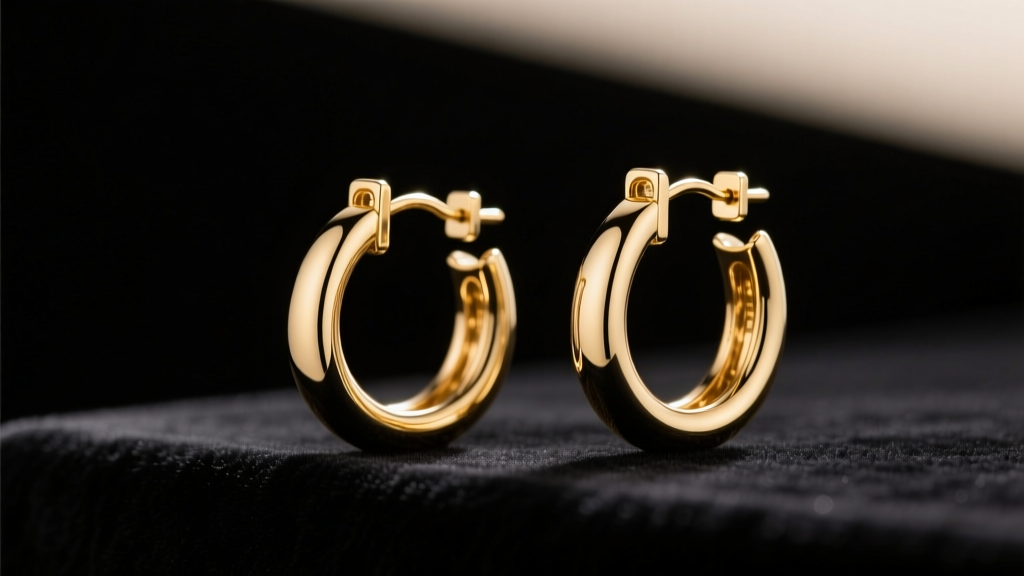
The market for multi-pack jewelry has exploded, but when evaluating earring sets hoops, consumers often fall into the trap of prioritizing quantity over metallurgical integrity. A $15 set of five gold-toned hoops might seem like a steal, but the hidden costs of skin irritation, tarnishing, and structural failure make them a poor long-term investment. To truly assess value, we must look past the aesthetic and examine the base metals and plating standards used in today's budget-friendly sets.
The Brass and Copper Trap
Most ultra-budget hoop sets (priced under $20) utilize brass or copper alloys as their base metal. These materials are highly reactive. When exposed to the natural pH and moisture of your skin, the copper oxidizes, resulting in the dreaded "green skin" effect. Furthermore, brass is relatively soft, meaning the thin wire used in these hoops will easily warp out of its circular shape when sleeping or changing clothes.
316L Surgical Steel: The Baseline Standard
Stepping up to the $25–$45 range, you will frequently encounter 316L stainless steel. This is an excellent budget material for fully healed lobe piercings. It offers high tensile strength, meaning the hoops will retain their shape. However, 316L steel contains between 8% and 10.5% nickel. While the nickel is generally trapped within the alloy's crystal structure, prolonged exposure to sweat can cause leaching, triggering contact dermatitis in sensitive individuals. According to the Association of Professional Piercers, steel is acceptable for healed piercings but should be avoided for fresh cartilage or highly sensitive lobes.
ASTM F-136 Titanium: The Hypoallergenic Gold Standard
If your budget allows for $50–$85 per set, implant-grade ASTM F-136 titanium is the ultimate value proposition. It contains zero nickel, is 40% lighter than steel, and will never tarnish or corrode. When you buy a titanium hoop set, you are purchasing a lifetime product rather than a seasonal accessory.
Gold Vermeil vs. Flash Plating
Many budget sets advertise "gold plated," but there is a massive difference between flash plating and true vermeil. The Federal Trade Commission Jewelry Guides dictate that for a piece to be classified as gold vermeil, it must have a sterling silver base and a gold layer of at least 2.5 microns thick. Flash-plated hoops often feature a mere 0.1 to 0.5 microns of gold over brass, which will rub off within weeks of daily wear, exposing the reactive base metal beneath.
2026 Pricing Matrix: What You Should Actually Pay
Use this matrix to determine if the earring sets hoops you are browsing are priced fairly based on their material composition and manufacturing quality.
| Material Composition | Fair Price Range (Set of 3-5) | Expected Lifespan | Best Use Case |
|---|---|---|---|
| Brass Base + Flash Gold Plate | $12 - $18 | 1 - 3 Months | Occasional, short-term wear |
| 316L Stainless Steel (Uncoated) | $25 - $40 | 2 - 5 Years | Daily wear in healed lobes |
| Sterling Silver + Gold Vermeil | $45 - $75 | 1 - 3 Years (with care) | Everyday office and evening wear |
| ASTM F-136 Titanium (PVD Coated) | $60 - $95 | Lifetime | Sensitive ears, cartilage, 24/7 wear |
Gauge and Sizing: Avoiding the Tear-Out Trap
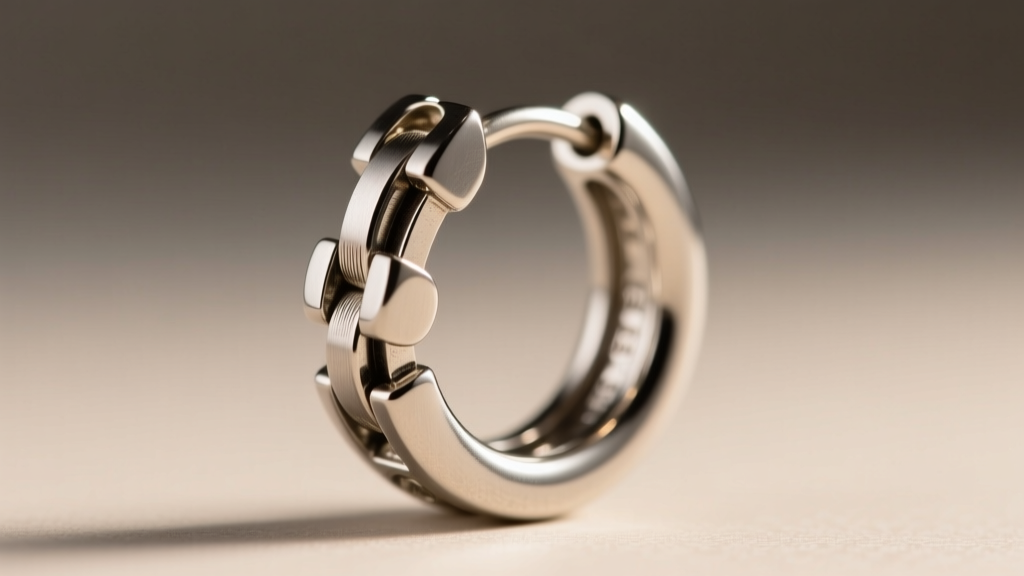
One of the most overlooked aspects of hoop value is the wire gauge (thickness). The gauge dictates both the comfort of the earring and its structural durability. Many mass-market hoop sets cut costs by using ultra-thin wire, which leads to structural failure and potential earlobe damage.
The 20-Gauge Vulnerability
Standard fashion hoops are often 20-gauge (0.81mm). While this thin wire slides easily through the ear, it lacks the rigidity to support the weight of the hoop during movement. If a 20-gauge hoop catches on a sweater or a towel, the wire will bend, and the stress will transfer directly to the earlobe, risking a "cheese-cutter" effect that can stretch or tear the piercing.
The 18-Gauge Sweet Spot
For standard lobe hoops ranging from 15mm to 30mm in diameter, 18-gauge (1.0mm) is the ideal thickness. It provides enough rigidity to maintain a perfect circle under stress while remaining comfortable for standard lobe piercings. When shopping for your sets, always check the product specifications for the exact millimeter or gauge size. If the brand does not list the gauge, it is almost certainly a flimsy 20-gauge or 22-gauge wire.
16-Gauge for Cartilage and Huggies
If your hoop set includes smaller huggies intended for the upper lobe or helix cartilage, they should be 16-gauge (1.2mm). Cartilage piercings are typically done at 16G or 14G; forcing a thinner hoop into these piercings can cause irritation bumps and migration.
Structural Integrity: Solder Joints and Hinges
Beyond the metal itself, the engineering of the hoop's closure mechanism is where budget sets either prove their worth or fail completely.
The Solder Joint Failure Point
On standard continuous or latch-back hoops, the post is attached to the hoop wire via a solder joint. In cheap manufacturing, this is done with a bulky, low-temperature solder that creates a weak, discolored lump. This is the exact point where budget hoops snap. High-value budget brands utilize laser welding or cold-forging techniques, resulting in a seamless, smooth transition between the post and the wire. Inspect the product macro-photos closely; if the joint looks like a melted blob of metal, pass on the set.
Huggie Hinges: Spring vs. Clicker
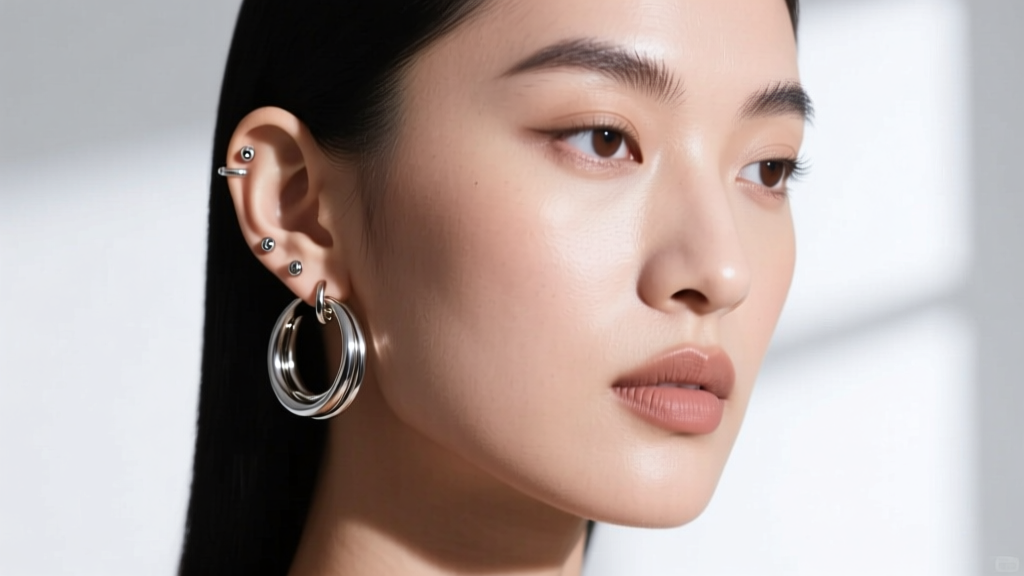
Huggies are incredibly popular in multi-piece sets, but their hinge mechanisms are notorious failure points. Cheap sets use spring-loaded hinges with tiny, fragile internal springs that snap within months. Furthermore, the tension on the closure often warps, leaving the huggie permanently gaping open. For lasting value, seek out sets that feature "clicker" or segment-ring closures. These rely on precise metal-on-metal tension and a satisfying "click" to stay closed, completely eliminating the need for fragile internal springs.
The At-Home Value Assessment Framework
Already purchased a budget set of hoops? Use this quick framework to assess their true value and safety before committing them to your daily rotation.
- The Magnet Test: Hold a strong neodymium magnet near the hoops. Implant-grade titanium and sterling silver are non-magnetic. If the hoops are pulled toward the magnet, they contain high levels of iron or steel, which is fine for durability but may cause issues for nickel-sensitive wearers.
- The Hallmark Check: Use a jeweler's loupe to inspect the post or the inside of the hoop wire. Legitimate brands will stamp "925" for sterling silver or "Ti" for titanium. A lack of any hallmark on a vermeil set is a red flag for brass-base flash plating.
- The Tension Test: Open and close the latch-back mechanism 10 times. A high-quality hoop will have a firm, deliberate resistance and snap shut with a clean alignment. If the post wiggles loosely in the catch, the hoop will inevitably fall out and be lost.
Maintenance: Maximizing the ROI of Your Hoop Sets
Even the best budget-friendly earring sets hoops require proper maintenance to reach their maximum lifespan. Never use ultrasonic cleaners or harsh chemical dips on gold vermeil or PVD-coated sets, as these will strip the micron-layer of plating instantly. Instead, use a mild, phosphate-free dish soap and warm water, gently scrubbing with a baby-bristle toothbrush to remove sebum and dead skin cells from the hinge mechanisms. Dry thoroughly with a microfiber cloth to prevent water spots. By investing in 18-gauge or 16-gauge sets made from verifiable base metals, and maintaining them properly, you can build a versatile, high-quality hoop wardrobe without paying luxury brand markups.


