Gold Frog Earrings: The Ultimate Buying Guide & Style Tips
Discover how to choose the perfect gold frog earrings. Our expert buying guide covers karat purity, casting methods, post gauges, and styling tips.

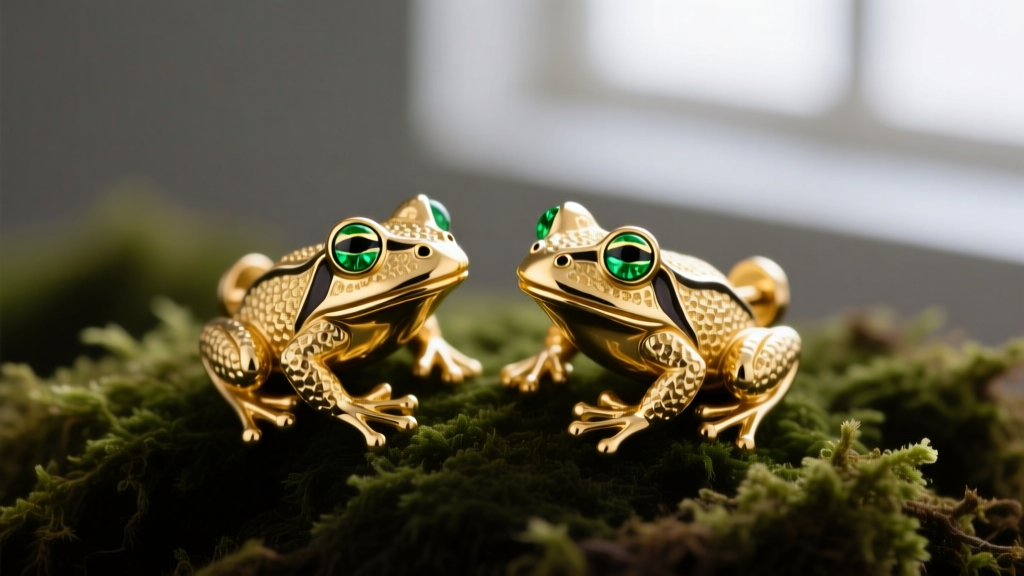
The Resurgence of Amphibian Motifs in Fine Jewelry
Nature-inspired jewelry has undergone a massive evolution. As we navigate the fine jewelry landscape of 2026, whimsical motifs are no longer relegated to children's accessories or cheap costume jewelry. The gold frog earring has emerged as a standout piece, bridging the gap between the enduring cottagecore aesthetic and high-end artisanal craftsmanship. Frogs have symbolized transformation, fertility, and safe travels since ancient Egyptian and Roman times.
Frogs have symbolized transformation, fertility, and safe travels since ancient Egyptian and Roman times, making them a profoundly meaningful motif in fine jewelry.
Today, wearing a meticulously crafted gold amphibian on your earlobe is a subtle nod to nature, imbued with historical significance and modern sartorial edge. But buying animal-shaped jewelry requires a different level of scrutiny than purchasing a simple gold hoop or diamond stud. The intricate topology of a frog—its protruding eyes, bent legs, and textured skin—presents unique structural challenges. This comprehensive buying guide will walk you through the exact specifications, material grades, and engineering details you need to evaluate before investing in gold frog earrings.
Decoding Gold Purity for Intricate Animal Designs
When browsing for gold frog earrings, you will primarily encounter 10K, 14K, and 18K gold. According to the Gemological Institute of America (GIA), the karatage dictates not just the color, but the structural integrity of the piece. For a 3D sculpted frog, 14K gold (58.5% pure gold) is often the superior choice. It offers a Vickers hardness that is significantly higher than 18K gold.
Why does this matter? A frog earring often features delicate, protruding toes and thin legs. If cast in 18K or 22K gold, these extremities are highly susceptible to bending or snapping if caught on a sweater or bumped against a surface. 14K gold provides the necessary tensile strength to preserve the artisan's original detailing over decades of daily wear. However, if you are purchasing a flat, die-struck frog silhouette or a huggie hoop with an engraved frog motif, 18K gold is perfectly safe and will provide that rich, buttery yellow hue that collectors covet. Always check the hallmark stamp inside the earring post or on the backing pad; legitimate pieces will bear a '585' or '750' stamp alongside the maker's mark.
Manufacturing Techniques: How Your Frog is Made
The method used to create your gold frog earrings drastically affects the price, weight, and level of detail. Understanding these techniques will help you determine if a piece is fairly priced and built to last.
| Method | Best For | Durability | Price Range |
|---|---|---|---|
| Lost-Wax Casting | 3D, realistic textures | High (if 14K) | $300 - $800+ |
| Die-Striking | Flat, 2D silhouettes | Medium | $50 - $150 |
| Champlevé Enamel | Colorful tree frogs | High (fused glass) | $250 - $600 |
Lost-Wax Casting: This is the gold standard for 3D, realistic frog studs. A wax model is carved, encased in plaster, and burned out, leaving a cavity where molten gold is injected. This captures microscopic skin textures and dynamic poses. Expect to pay a premium due to the labor and gold weight.
Die-Striking: Used for flat, 2D frog silhouettes. A steel die stamps the shape out of a thin sheet of gold. These are lightweight, affordable, and excellent for everyday wear, though they lack dimensional depth.
Enameling: For those seeking green or brightly colored tree frogs, look for champlevé enamel. This technique involves carving troughs into the gold and fusing glass powder into them. Avoid cheap epoxy-painted frogs, as the color will chip and yellow within months.
The Engineering of Comfort: Posts, Gauges, and Backings
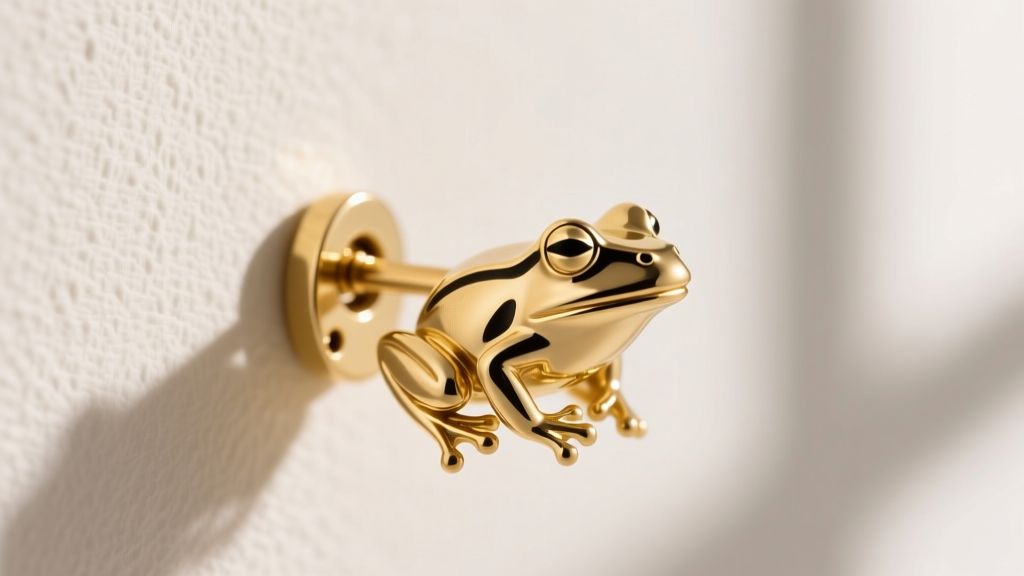
The most common point of failure in novelty earrings is the post. A solid, 3D cast gold frog is surprisingly heavy, often weighing between 2.5 and 4.5 grams per earring. If the jeweler solders a standard 20-gauge (0.81mm) post onto this heavy focal piece, you will experience "earring droop." The center of gravity pulls the frog downward, causing the post to bend and the earring to face the floor.
When evaluating gold frog earrings, explicitly look for an 18-gauge (1.02mm) or even a 16-gauge (1.29mm) post. The thicker wire provides the rigidity needed to keep the frog sitting flush and upright against the earlobe. Furthermore, discard standard butterfly friction backs. The narrow surface area of a butterfly back will dig into your earlobe under the weight of a solid gold frog. Instead, seek out jumbo flat-disc friction backs or, ideally, threaded screw-back clutches. Screw-backs distribute the weight evenly across a wider area of the earlobe and guarantee that your precious amphibian will not slip off and get lost in the wild.
Gemstone Accents: Eyes and Skin Textures
High-end gold frog earrings often incorporate gemstones to bring the creature to life. The eyes are the focal point. Tsavorite garnet and emerald are the most popular choices due to their vivid green hues. However, as noted by the International Gem Society, emeralds are heavily included and inherently brittle (ranking 7.5 to 8 on the Mohs scale but with poor toughness).
If the frog's eyes are set in high prongs where they might be knocked against a doorframe, an emerald could easily chip. Tsavorite garnet is a vastly superior alternative for daily-wear earrings; it boasts a similar vibrant green color but possesses much better toughness and lacks the surface-reaching fractures common in emeralds. Alternatively, some artisans use cabochon-cut black spinel or onyx for the eyes, giving the frog a sleek, modern, and slightly edgy appearance that pairs beautifully with yellow or rose gold.
Styling Gold Frog Earrings for Your Face Shape
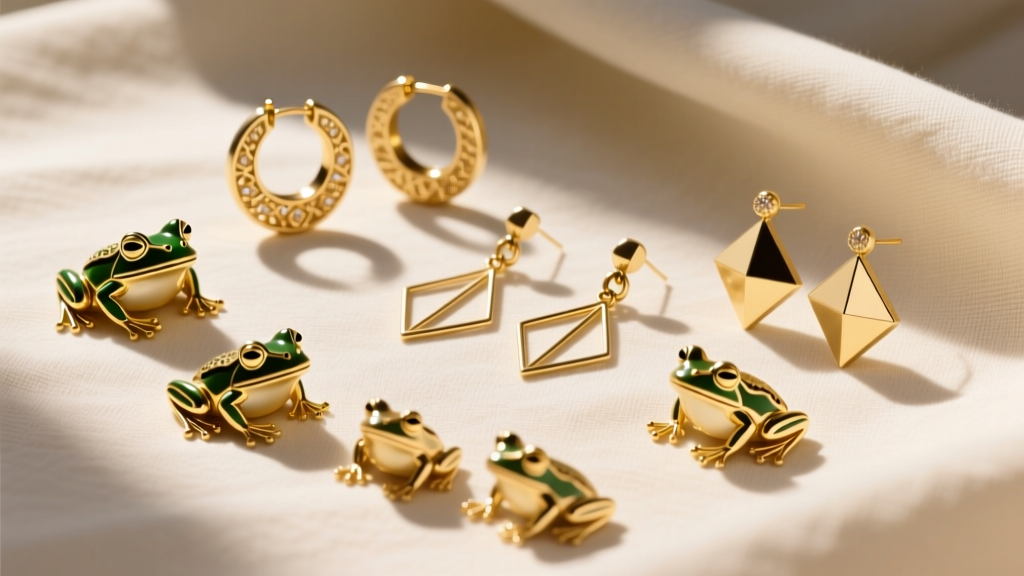
While animal motifs are inherently playful, they can be styled to flatter your specific facial geometry. Here is a practical framework for choosing the right silhouette:
- Round Faces: Avoid wide, sprawling 3D frog studs that add horizontal volume to the cheeks. Instead, opt for gold frog dangle earrings or drop styles where the frog sits at the bottom of a delicate chain. The vertical line elongates the face.
- Square Faces: Soften a strong jawline with curved, organic shapes. A plump, rounded tree frog stud with smooth, polished gold and no sharp geometric lines will complement your bone structure beautifully.
- Heart-Shaped Faces: You can pull off almost any style, but medium-sized gold frog huggies offer a fantastic balance. The huggie hugs the earlobe, while a tiny gold or enamel frog charm dangles just below, drawing attention to the cheekbones without overwhelming the narrow chin.
- Oval Faces: You have the versatility to wear bold, oversized statement frogs. Look for asymmetrical designs—perhaps a leaping frog on one ear and a resting lily pad on the other.
Care and Maintenance for Intricate Gold Amphibians
Cleaning a textured gold frog requires more care than wiping down a plain gold band. The microscopic crevices meant to mimic amphibian skin are magnets for lotion, sebum, and environmental dust. Never use an ultrasonic cleaner on gold frog earrings, especially if they feature enamel work or fracture-filled emeralds; the high-frequency vibrations can shatter the stones or crack the glass enamel.
Instead, create a lukewarm bath of distilled water and a few drops of mild, phosphate-free dish soap. Let the earrings soak for ten minutes to loosen debris. Then, use a brand-new, extra-soft baby toothbrush to gently sweep the bristles over the frog's back and between the toes. Rinse thoroughly under lukewarm running water and dry immediately with a lint-free microfiber cloth. Store them in a dedicated compartment in your jewelry box to ensure the protruding legs do not become tangled with chain necklaces or scratched by harder gemstones like diamonds or sapphires.


