Gauge Earrings Explained: A Beginner Guide to Piercing Sizes
Confused by earring thickness? Our beginner-friendly guide to gauge earrings explains standard sizes, mm conversions, and how to avoid piercing damage.

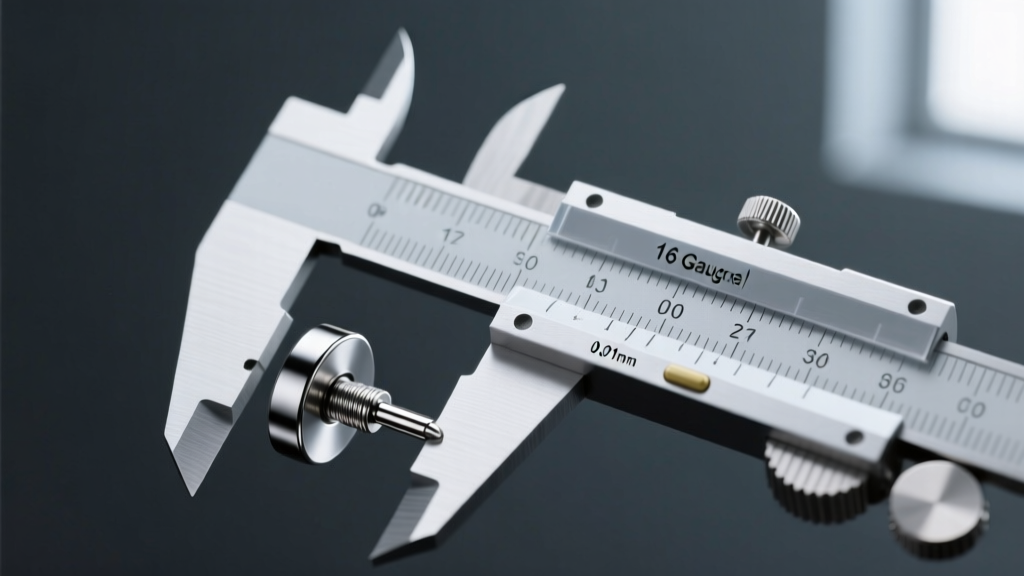
The Counter-Intuitive Math of Gauge Earrings
If you are new to body jewelry, the gauge system can feel like a riddle designed to confuse you. Unlike standard measurements where a larger number means a larger size, the gauge system for earrings works in reverse. The higher the gauge number, the thinner the wire. A 20-gauge earring is significantly thinner than a 14-gauge earring. This system originates from the American Wire Gauge (AWG) standard, historically used to measure the thickness of electrical wires and metal sheets. As wire was pulled through progressively smaller drawing dies, the gauge number increased while the physical diameter decreased.
For beginners shopping for gauge earrings, this inverse scale means you must pay close attention to the exact millimeter (mm) equivalent, especially when transitioning between standard lobe piercings and cartilage placements. Guessing your gauge size can lead to jewelry that simply will not fit, or worse, jewelry that damages your piercing channel.
Standard Gauge Earrings Chart: Millimeters and Inches
To eliminate the guesswork, here is the definitive conversion chart for the most common earring gauges used in modern piercing studios. Keep this reference handy when shopping online, as many retailers list only the gauge number or only the millimeter thickness.
| Gauge Size | Millimeters (mm) | Inches (approx) | Common Piercing Applications |
|---|---|---|---|
| 20G | 0.81 mm | 0.032" | Standard earlobe (piercing gun), nose studs, some helix |
| 18G | 1.02 mm | 0.040" | Standard earlobe (needle), tragus, forward helix, cartilage |
| 16G | 1.29 mm | 0.051" | Cartilage, conch, daith, rook, industrial, standard lobe (APP recommended) |
| 14G | 1.63 mm | 0.064" | Industrial, conch, daith, stretched lobes, heavy-duty cartilage |
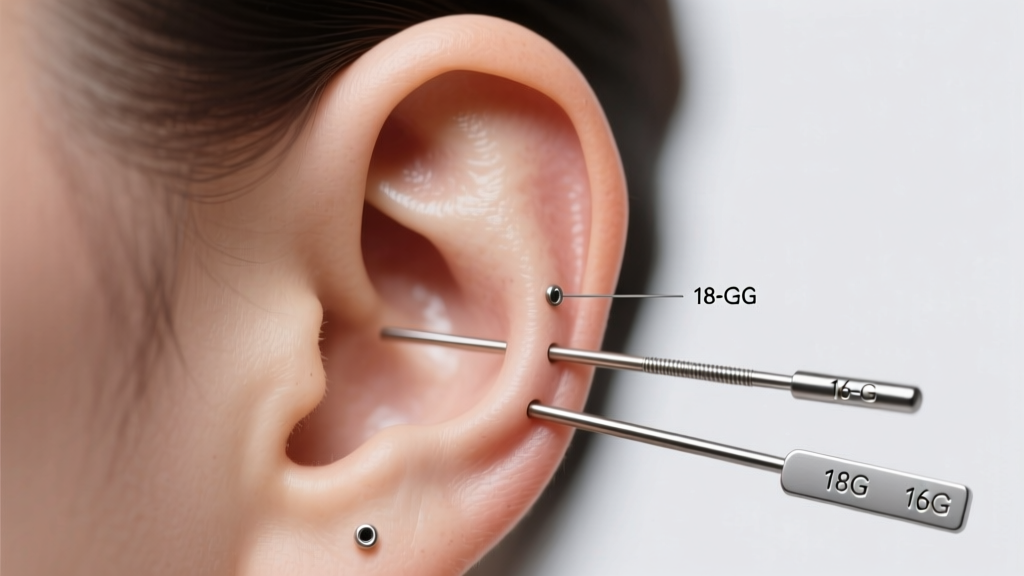
Standard Sizing by Piercing Location
Earlobe Piercings: Gun vs. Needle
The gauge of your earlobe piercing depends entirely on how it was performed. Piercing guns, commonly found in mall kiosks, use spring-loaded mechanisms to force a sharp, pointed earring stud through the tissue. These studs are almost universally 20G or 18G. Because the gun causes blunt force trauma, professional piercers and dermatologists strongly advise against them. Conversely, a professional piercer using a hollow needle will typically pierce lobes at 16G or 14G. A thicker gauge earring provides more surface area inside the piercing channel, reducing the risk of the "cheese-cutter effect" (detailed below) and promoting a much more stable, comfortable healing process.
Cartilage Piercings (Helix, Tragus, Conch)
Cartilage tissue is dense, avascular (lacking direct blood supply), and highly prone to migration if irritated. According to the Association of Professional Piercers (APP), the gold standard for most cartilage piercings is 16G (1.29mm). Some delicate placements, like a forward helix or a small tragus, may be pierced at 18G, but 16G remains the industry benchmark for structural stability. Wearing a 20G earring in a 16G cartilage piercing will cause the jewelry to slide around excessively, introducing bacteria and delaying healing.
The Dangers of Wearing the Wrong Gauge Size
Forcing jewelry that is the wrong thickness into your piercing is not just uncomfortable; it can cause permanent anatomical damage. Understanding the biomechanics of your tissue is crucial for long-term piercing health.
The "Cheese-Cutter" Effect
Imagine pulling a thin wire taut and pressing it into a block of cheese. It slices right through. This physics principle applies directly to your earlobes. If you wear heavy dangle earrings on a thin 20G or 18G wire, the downward tension combined with the minimal surface area will slowly slice through your earlobe tissue over time. This is known as the cheese-cutter effect. To prevent your lobes from splitting and requiring surgical reconstruction, always wear heavier earrings on thicker posts (16G or 14G) or opt for lightweight designs on standard 18G wires.
Piercing Migration and Rejection
When a gauge earring is too thin for a cartilage piercing, the body recognizes the jewelry as an unstable foreign object. The constant micro-movements of a thin post in a wider fistula (the piercing tube) cause chronic inflammation. As noted in research published by Dermatology Times, chronic inflammation is the primary catalyst for piercing migration, where the body slowly pushes the jewelry toward the surface of the skin until it ultimately rejects and falls out entirely. Upgrading to a 16G implant-grade titanium post stabilizes the channel and halts the migration process.
Material Grades: Because Thickness Isn't Everything
A beginner might find the correct gauge size, only to experience severe contact dermatitis because of the metal alloy. When shopping for gauge earrings, the material is just as critical as the millimeter thickness. The APP Body Jewelry Materials Guide strictly recommends the following for healing and sensitive piercings:
- Implant-Grade Titanium (ASTM F136): The absolute best choice for sensitive ears. It contains zero nickel, is highly biocompatible, and is lightweight. If you have reactive cartilage, titanium is non-negotiable.
- Niobium: A highly reactive element that is hypoallergenic and can be anodized to create vibrant colors without using toxic paints or platings.
- 14k or 18k Solid Gold: Must be alloyed for biocompatibility (avoid white gold, which often contains nickel). Gold-plated or gold-filled earrings will eventually wear down, exposing the base metal and causing infections.
"Surgical steel is a misleading marketing term. Most commercial 'surgical steel' earrings contain up to 12% nickel, which triggers allergic reactions in a significant portion of the population. Always opt for implant-grade titanium instead."
How to Measure Your Current Gauge Earrings at Home
If you have lost the packaging and are unsure what size your current earrings are, do not guess. You can measure them accurately at home using a cheap digital caliper. Do not use a standard ruler or measuring tape, as they lack the precision required for sub-millimeter differences.
- Acquire Digital Calipers: Purchase a basic digital caliper (available at any hardware store for under $15). Ensure it is set to measure in millimeters (mm).
- Clean the Jewelry: Sanitize the earring post with rubbing alcohol to remove any oils or debris that could skew the reading.
- Measure the Post, Not the Head: Clamp the caliper jaws gently around the straight post or the thickest part of the wire hoop. Do not measure the decorative gem or the flat back disc.
- Read the Display: A reading of 1.2mm to 1.3mm means you are wearing 16G. A reading of 0.9mm to 1.0mm indicates 18G. A reading around 0.8mm is 20G.
Frequently Asked Questions About Gauge Sizing
Can I stretch my 20G lobe piercing to 16G?
Yes, but it must be done gradually. Never force a 16G earring into a 20G hole, as this will cause micro-tearing and scar tissue buildup (blowouts). Use a professional piercing taper, lubricated with jojoba oil, to gently stretch the tissue over a few weeks, moving from 20G to 18G, and finally to 16G.
Why do my 18G hoop earrings keep bending?
Because 18G (1.02mm) is relatively thin, seamless hoops made of softer metals like high-karat gold or pure silver will easily warp when you sleep on them. If you need durable, everyday hoops that hold their perfect circle shape, upgrade to 16G or 14G, or choose a stiffer metal like implant-grade titanium or stainless steel.
Are all earring backs compatible with all gauges?
No. Friction backs (butterfly clutches) are typically manufactured for 20G and 18G posts. If you have 16G or 14G earrings, standard butterfly backs will not fit over the post. For thicker gauges, you must use screw-on backs, hinged segment rings, or flat-back labret studs with internal threading.


