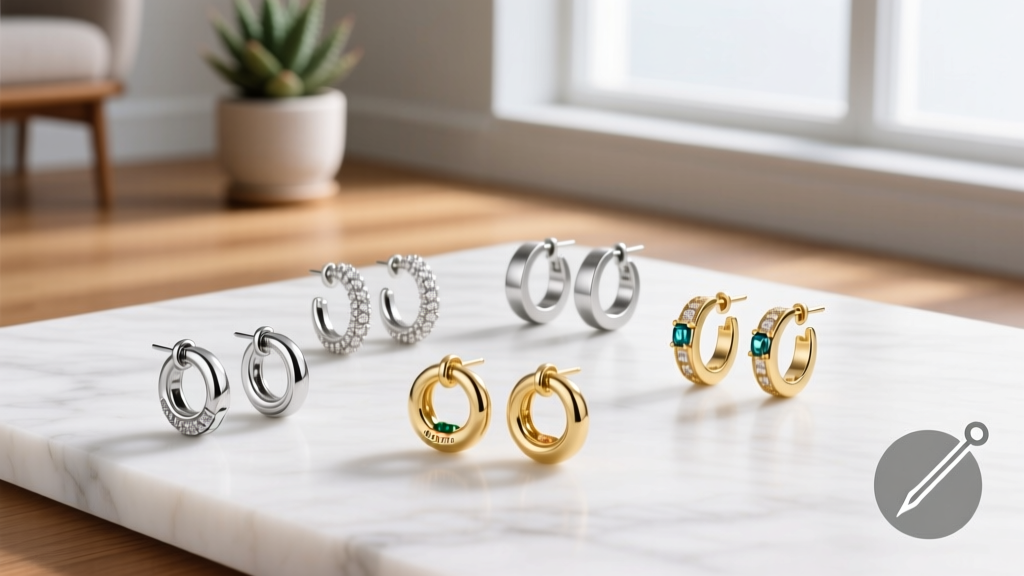
Solid Flower Earrings Gold: Technical Craftsmanship Guide
Discover the technical nuances of solid flower earrings gold. Explore karat differences, casting methods, gauge sizes, and structural durability.

The Metallurgy of Floral Gold: 14k vs. 18k vs. 22k
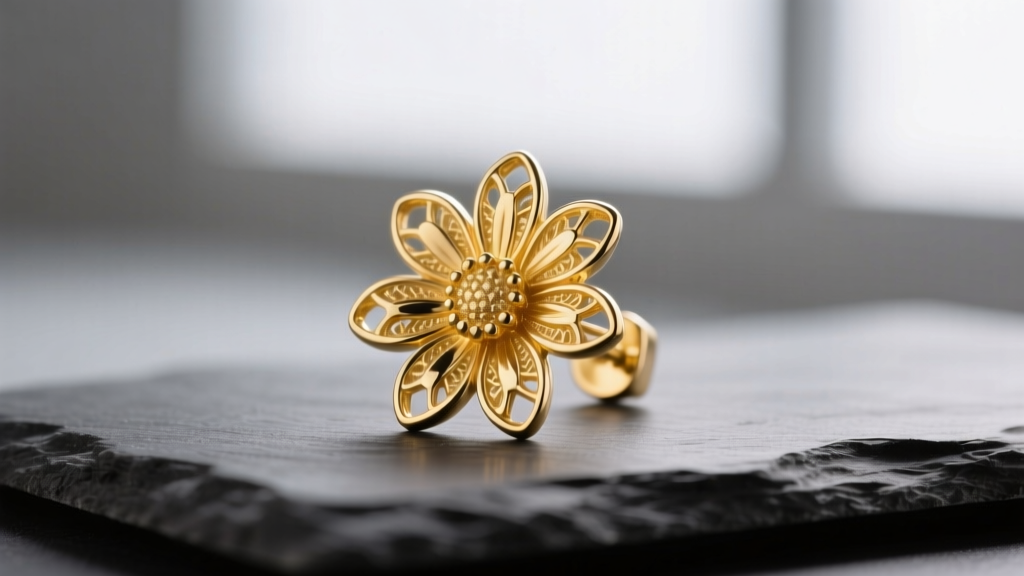
When evaluating fine jewelry, the aesthetic appeal of floral motifs often overshadows the underlying metallurgical engineering required to make them wearable. For solid flower earrings gold, the choice of karat is not merely a matter of color or prestige; it fundamentally dictates the structural integrity of the petals, stems, and post joints. According to the Gemological Institute of America (GIA), pure 24k gold is far too malleable for intricate botanical designs. A 24k gold petal tip measuring less than 1.5mm in thickness will deform under the slightest lateral pressure.
To achieve the crisp edges and domed geometries seen in high-end floral earrings, jewelers rely on specific alloy compositions. 18k yellow gold (75% pure gold, typically alloyed with 15% copper and 10% silver) offers a luxurious, deep yellow hue and a Vickers hardness (HV) of approximately 90-110. While beautiful, 18k gold is prone to work-hardening and eventual brittleness if the petals are heavily textured or hammered. Conversely, 14k yellow gold (58.5% pure gold, with higher copper and zinc ratios) achieves a Vickers hardness of 120-140 HV. This increased tensile strength makes 14k the superior technical choice for delicate, filigree-style flower earrings gold, as it resists bending and maintains the sharp definition of stamen and petal edges over decades of daily wear.
Manufacturing Techniques: Casting vs. Die-Stamping
The method used to form the floral silhouette drastically impacts the earring's porosity, weight, and surface finish. Master jewelers typically employ one of two primary techniques when fabricating premium flower earrings gold:
Investment Casting (Lost-Wax Method)
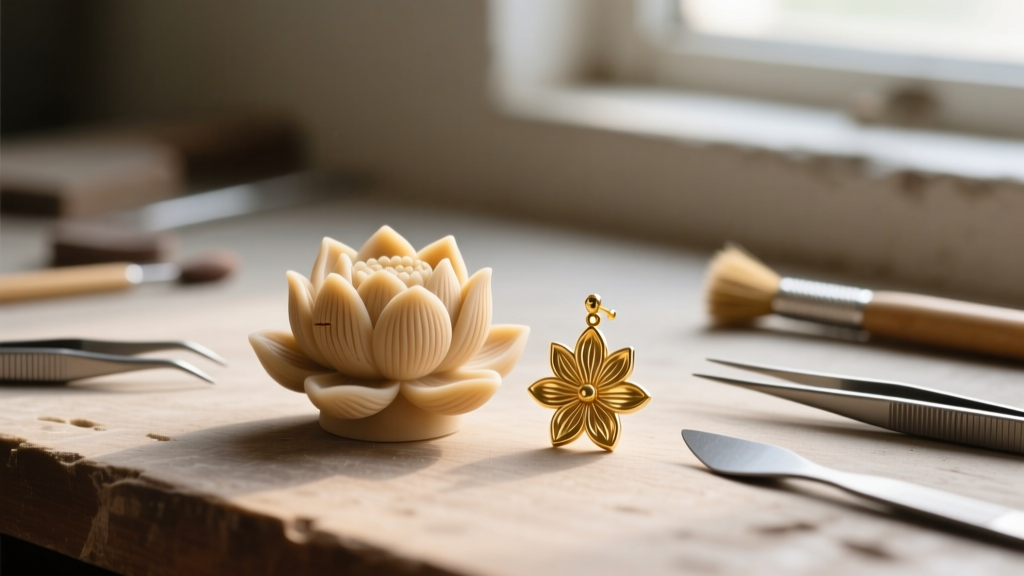
Most 3D, domed floral designs (such as peonies or lotuses) are created via investment casting. A wax model is encased in a plaster-like investment material, burned out in a kiln, and replaced with molten gold. While this allows for complex, organic undercuts, it introduces the risk of shrinkage porosity—microscopic gas pockets trapped as the gold cools. If porosity occurs near the solder joint where the earring post meets the flower base, it creates a critical structural weak point. Expert casters mitigate this by using centrifugal or vacuum casting equipment to ensure dense metal packing.
Die-Stamping (Striking)
For flatter, vintage-inspired floral silhouettes (like daisies or sunflowers), die-stamping is the superior method. A sheet of gold is placed between a hardened steel hub and die, then struck with immense hydraulic pressure. This process work-hardens the gold, aligning its grain structure and significantly increasing its tensile strength. Die-struck flower earrings gold are remarkably lightweight yet highly resistant to warping, making them ideal for larger, statement-sized lobes that might otherwise drag down a heavier cast piece.
Structural Integrity: Post Gauges and Clutch Mechanics
A common failure mode in poorly engineered floral earrings is post bending or shearing. The weight distribution of a flower earring is inherently top-heavy, especially in drop or dangle configurations. Selecting the correct wire gauge for the post is critical to counteracting the pendulum effect caused by head movements.
Below is a technical breakdown of standard post gauges used in fine floral gold earrings, referencing data commonly utilized by suppliers like Rio Grande:
| Gauge | Diameter (mm) | Best Application | Shear Strength & Notes |
|---|---|---|---|
| 22g | 0.64mm | Ultra-lightweight micro-studs | Low. Prone to bending; requires careful handling. |
| 20g | 0.81mm | Standard 5mm-10mm floral studs | Medium. The industry standard for standard lobe piercings. |
| 18g | 1.02mm | Heavy drops, large domed florals | High. Prevents the "droop" effect in top-heavy designs. |
| 16g | 1.29mm | Cartilage/helix floral cuffs | Very High. Necessary for thicker cartilage tissue. |
Furthermore, the solder used to attach the post to the floral backing must be a hard solder (melting point ~740°C). If a manufacturer uses easy solder (~650°C) to save time, the heat from a simple ring-sizing repair nearby could inadvertently melt the earring post joint, causing the flower head to detach.
Gemstone Integration: The Floral Pistil
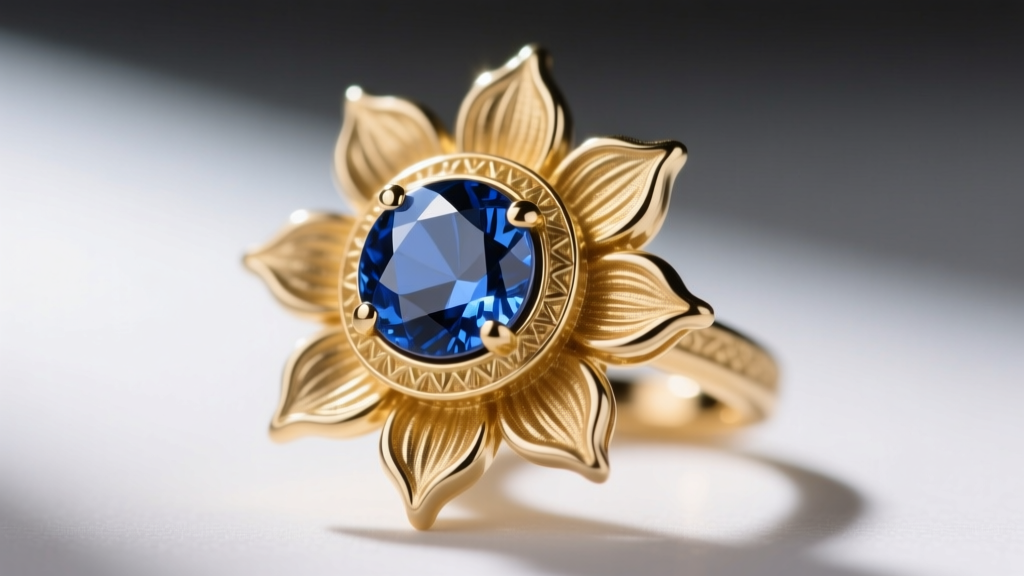
When a central gemstone is used to represent the pistil or seed pod of the flower, the setting technique must balance security with light performance. Bezel settings are highly recommended for active wearers. A bezel involves a continuous rim of gold folded over the gemstone's girdle. In a sunflower or daisy design, a yellow gold bezel around a round-cut sapphire or black diamond not only secures the stone against impact but also visually mimics the dense, protective center of a real botanical specimen.
Prong settings, while allowing more light to enter the stone, present a snag hazard. If prongs are used on flower earrings gold, they should be V-prongs at the cardinal points to protect the gemstone's corners, and the prong tips must be laser-welded rather than torch-soldered to prevent thermal shock to heat-sensitive stones like opals or emeralds often used in spring-themed floral designs.
Troubleshooting Common Failure Modes
Even master-crafted flower earrings gold can suffer from specific mechanical failures over time. Understanding these modes allows collectors and jewelers to perform proactive maintenance:
- Petal Snagging and Tearing: Intricate filigree petals can catch on knitwear. If a petal tears, it must be laser-welded. Traditional torch soldering will flood the delicate negative space with solder, ruining the floral silhouette.
- Clutch Wear on Heavy Drops: The friction backs (butterfly clutches) on heavy 18k floral drops often wear out the internal tension springs, leading to lost earrings. Upgrading to La Pousette push-pull locking backs or screw-backs is highly recommended for any gold flower earring exceeding 4 grams in weight.
- Alloy Discoloration: High-copper 14k rose gold floral earrings can develop a dark patina or cause skin discoloration if exposed to cosmetics and sulfur. Regular ultrasonic cleaning and occasional polishing with a rouge cloth will restore the original luster without stripping the textured petal finishes.
"True luxury in botanical jewelry is not just in the purity of the gold, but in the engineering of the unseen armatures and the precise alloy ratios that allow a delicate petal to survive a lifetime of wear." — Master Bench Jeweler Adage
Ultimately, investing in high-quality flower earrings gold requires looking past the initial sparkle. By scrutinizing the karat hardness, manufacturing origin, post gauge, and setting mechanics, you ensure that your botanical gold pieces remain structurally sound and visually stunning for generations.