How to Wear a Heavy Kim Kardashian Earring Without Tearing Your Lobe
Learn how to wear a heavy Kim Kardashian earring stack without lobe tearing or cartilage irritation. Expert troubleshooting for statement jewelry.

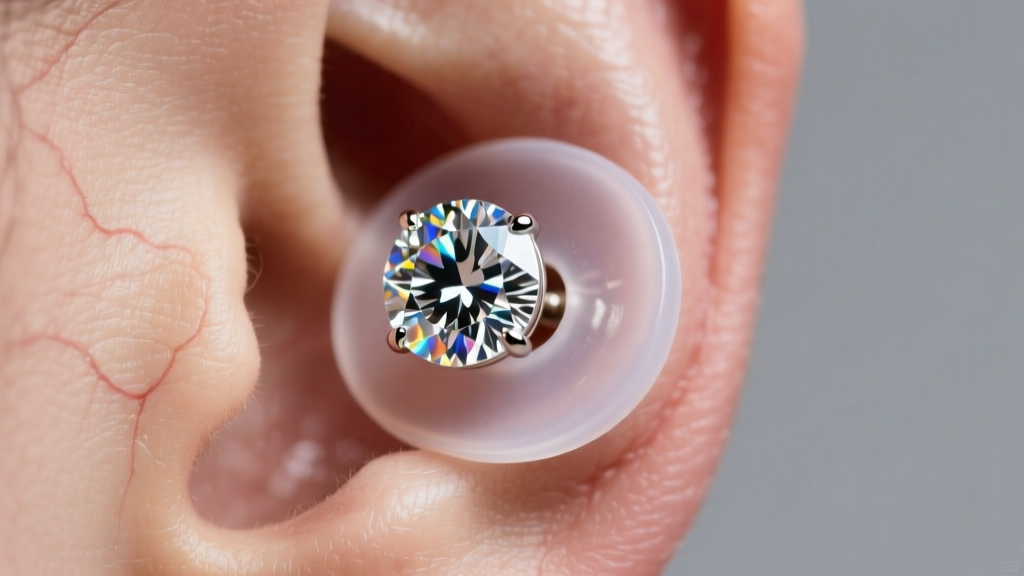
The modern kim kardashian earring aesthetic is a masterclass in juxtaposition. Whether she is sporting massive, multi-carat diamond studs on the red carpet or a sleek, minimalist stack of tight cartilage hoops for a Skims campaign, the look is iconic. However, replicating this high-impact style often leads to severe structural problems for the average wearer. Heavy statement pieces and tightly layered cartilage stacks place immense biomechanical stress on delicate ear tissue, resulting in lobe sagging, fistula tearing, cartilage migration, and contact dermatitis.
As jewelry professionals and piercing experts, we see the fallout of these trends daily. If you are trying to achieve that signature heavy, layered look without permanently damaging your ear anatomy, you need a strategic approach to weight distribution, material science, and gauge sizing. Here is your comprehensive troubleshooting guide to wearing heavy statement earrings safely.
The Physics of Lobe Sag: Troubleshooting Heavy Studs
Kim Kardashian frequently wears diamond studs ranging from 3 to 5 carats. According to the Gemological Institute of America (GIA), a 4-carat round brilliant diamond weighs approximately 0.8 grams. While this sounds negligible, the issue is not just the weight—it is the leverage. When a 0.8-gram stone is mounted on a standard 0.8mm (20-gauge) post, the center of gravity sits several millimeters away from the earlobe. This creates a forward-pulling lever effect that causes the earring to droop and the lobe tissue to stretch over time.
Support Solutions: Lifters, Patches, and Post Upgrades
To troubleshoot the dreaded "drooping diamond" look, you must increase the surface area supporting the back of the lobe and reinforce the post itself.
- Silicone Lobe Lifters: These are small, disc-shaped silicone pads that slide onto the earring post behind the lobe. They provide a wide, cushioned base that distributes the weight of a heavy stone across a broader area of tissue, instantly lifting the stud to a forward-facing angle.
- Adhesive Support Patches: Products like LobeWonder are medical-grade, hypoallergenic adhesive patches applied to the back of the earlobe. They feature a reinforced center hole that prevents the earring post from cutting through the tissue under heavy loads.
- Post Thickness Upgrades: If you are commissioning custom heavy studs, request a post thickness of at least 1.0mm or 1.2mm. Standard 0.8mm posts will bend under the weight of a 3+ carat stone, causing the backing to slip and the lobe to tear.
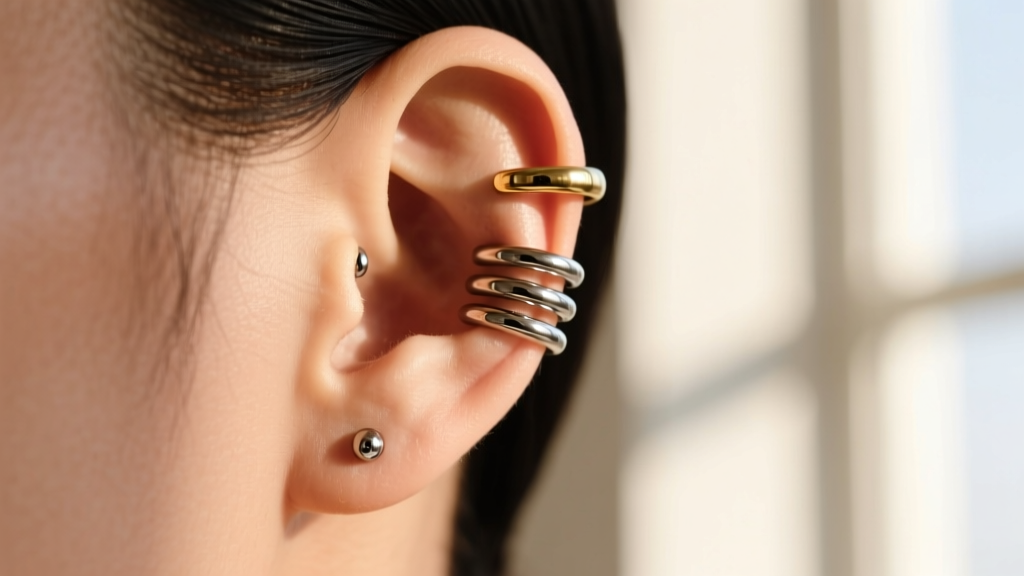
Cartilage Stack Complications: Hoops, Cuffs, and Migration
The signature layered cartilage stack—featuring multiple tight helix and flat hoops alongside minimalist ear cuffs—is a staple of the modern celebrity aesthetic. However, troubleshooting cartilage complications requires an understanding of tissue healing timelines and the "cheese-cutter effect."
Gauge Sizing and the Cheese-Cutter Effect
Fashion jewelry brands often sell cartilage hoops in 20-gauge (0.8mm) or 18-gauge (1.0mm) wire thicknesses to save on precious metal costs. When a thin wire is placed through a cartilage piercing, the localized pressure on the fistula (the piercing channel) is incredibly high. Over months of wear, this thin wire can slowly slice through the cartilage, a phenomenon known in the body modification industry as the cheese-cutter effect, leading to rejection and migration.
The Association of Professional Piercers (APP) strongly recommends using implant-grade titanium (ASTM F-136) for all healing and long-term cartilage wear. For hoops that mimic the tight, stacked celebrity look, you should never wear a wire thinner than 16-gauge (1.2mm), and 14-gauge (1.6mm) is vastly superior for long-term tissue health.
Sizing Matrix: Achieving the Stack Without Pressure Necrosis
Tight hoops look sleek, but if the inner diameter is too small, it restricts blood flow and causes pressure necrosis. Use this troubleshooting matrix to size your cartilage stack correctly:
| Piercing Placement | Minimum Safe Inner Diameter | Recommended Wire Gauge | Troubleshooting Tight Fits |
|---|---|---|---|
| Standard Helix | 8.0mm (5/16") | 16g (1.2mm) | Switch to a flat-back labret if swelling occurs |
| Flat / Auricle | 6.0mm to 7.0mm | 16g or 14g | Use a huggie with a wider hinge to avoid pinching |
| Tragus | 6.0mm (1/4") | 16g (1.2mm) | Ensure the hoop clears the anti-tragus ridge |
| Conch | 10.0mm to 12.0mm | 14g (1.6mm) | Large diameter required to prevent cartilage bowing |
Material Allergies and the "Green Ear" Problem
When building a dense stack of earrings, the cumulative exposure to base metals increases exponentially. A common troubleshooting issue we see is contact dermatitis, often misdiagnosed as an infection. If your earlobe is itchy, red, or flaking after wearing a new statement piece, you are likely experiencing a nickel allergy.
Why White Gold Fails in Layered Stacks
Many high-end and fashion jewelry brands use nickel as an alloying metal to create white gold. According to the American Academy of Dermatology (AAD), nickel allergy is one of the most common causes of allergic contact dermatitis. When you wear multiple white gold pieces in a stack, the friction and trapped moisture accelerate the leaching of nickel salts into the skin.
The Expert Fix: If you want the silver-toned look of a celebrity stack without the allergic reaction, abandon white gold entirely. Opt for Platinum 950 or Palladium. If you prefer gold, stick to 14k or 18k solid yellow or rose gold, which are typically alloyed with copper and silver rather than nickel. Never wear gold-plated or gold-vermeil jewelry in a cartilage stack, as the microscopic friction between stacked pieces will wear away the plating within weeks, exposing the reactive brass or copper base metal underneath.
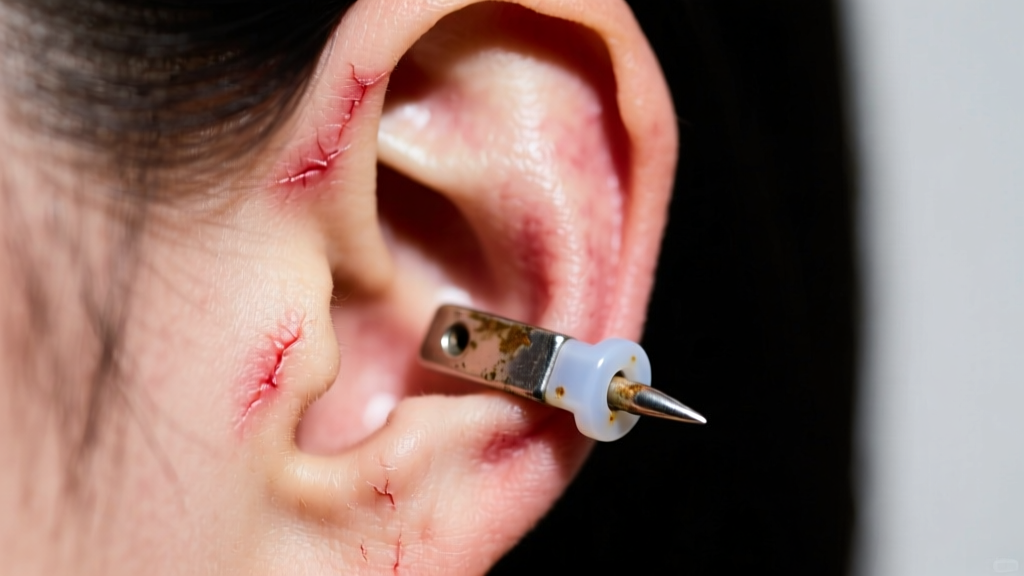
Step-by-Step Recovery Plan for Damaged Lobes
If you have already pushed your anatomy too far and are experiencing stretched fistulas or micro-tears from wearing heavy statement earrings, you must intervene immediately to prevent the need for surgical reconstruction.
- Remove the Heavy Hardware: Take out all heavy studs and large-gauge hoops immediately.
- Downsize and Rest: Insert a lightweight, implant-grade titanium flat-back labret or a sterile glass plug (which is inert and non-porous) to keep the hole open without applying downward pressure.
- Tissue Massage: Once the acute irritation subsides, massage the lobe daily with pure, unrefined jojoba oil or emu oil to promote collagen remodeling and tissue elasticity.
- Consider Lobuloplasty: If the lobe has stretched beyond repair or split entirely, a cosmetic lobuloplasty (earlobe repair surgery) is a straightforward in-office procedure. As of 2026, the average cost ranges from $500 to $1,500 per ear, depending on the complexity of the tear and the surgeon's expertise.
Final Verdict: Achieving the Look Safely
The quintessential kim kardashian earring style is all about bold proportions and meticulous layering, but it should never come at the cost of your anatomical health. By upgrading your post thickness, utilizing silicone lobe lifters, enforcing strict 16-gauge minimums for cartilage hoops, and eliminating nickel alloys from your stack, you can wear heavy, high-impact jewelry with absolute confidence. Treat your ear tissue with the same respect you treat your fine jewelry, and your stack will remain flawless for decades.


