Marlon Earrings: Technical Guide to Tension-Fit Cartilage Cuffs
Explore the engineering of Marlon earrings. This expert guide covers tension-fit mechanics, ASTM titanium grades, and gauge sizing for cartilage cuffs.

The Architecture of Marlon Earrings: Beyond Standard Huggies
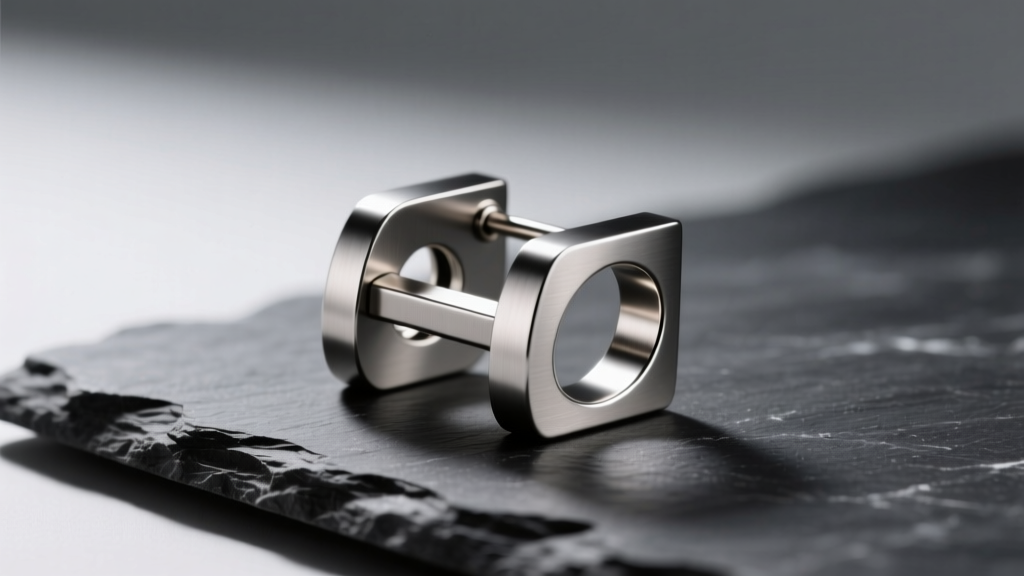
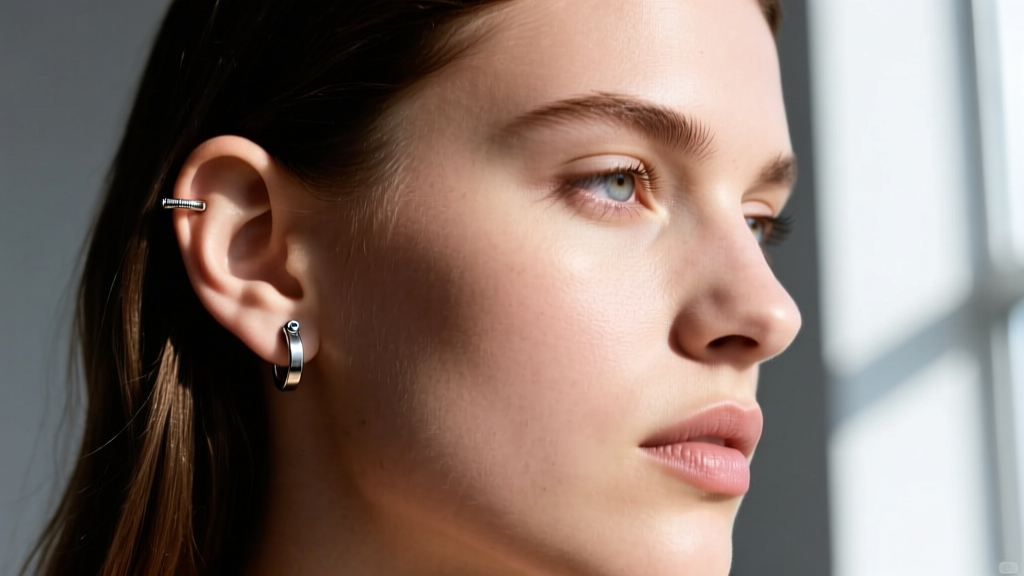
In the landscape of contemporary body jewelry, Marlon earrings have carved out a highly specific niche. Unlike traditional hinged huggies that require a healed lobular or cartilage piercing, or paddle-back clip-ons that rely on localized, painful pressure points, the Marlon style utilizes a distributed radial tension architecture. Designed primarily for the helix, anti-helix, and tragus, these non-pierced cuffs bridge the gap between avant-garde aesthetics and biomechanical comfort.
The defining characteristic of a genuine Marlon earring is its 'C-bridge' structural design. Rather than a simple open ring, the Marlon features a reinforced posterior spine that distributes the clamping force evenly across the back of the cartilage, while the anterior face provides the visual weight. This engineering prevents the localized ischemia (tissue whitening due to restricted blood flow) that plagues cheaper, vintage-style clip-ons. In 2026, advancements in 5-axis CNC milling have allowed designers to reduce the overall weight of the posterior spine by 18% without sacrificing the structural yield strength required to maintain tension over years of daily wear.
Metallurgy and Material Science: The ASTM F136 Advantage
The material composition of a Marlon earring dictates its longevity, biocompatibility, and tension retention. While mass-market alternatives often rely on 316L surgical stainless steel or 925 sterling silver, expert-grade Marlon cuffs are machined from ASTM F136 Ti-6Al-4V (ELI) titanium alloy.
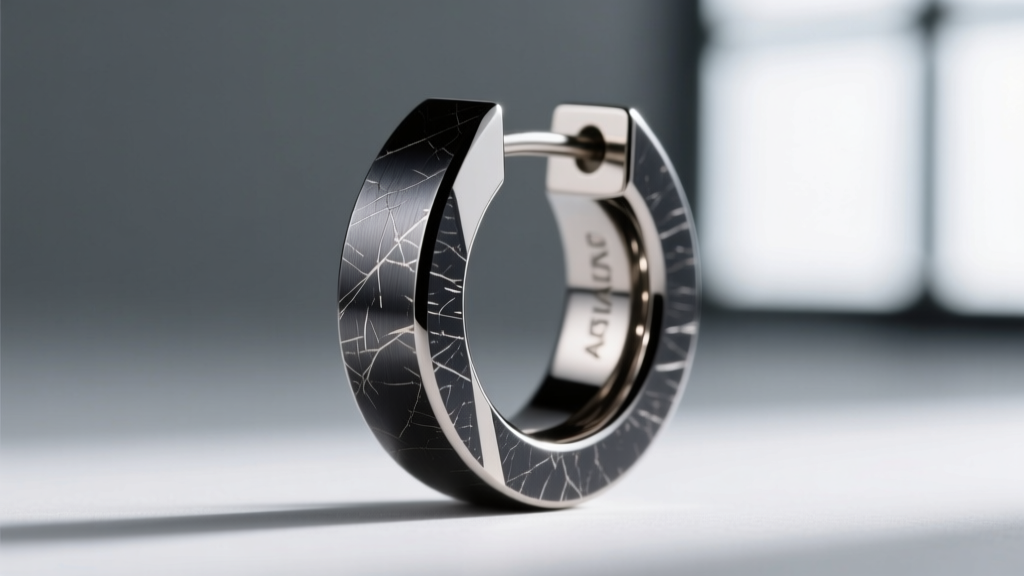
Why is this specific alloy critical for tension-fit jewelry? Sterling silver suffers from work hardening; repeatedly flexing a silver cuff to put it on and take it off alters its crystalline structure, eventually leading to metal fatigue and catastrophic snapping. 316L steel, while durable, contains nickel, which can cause contact dermatitis when trapped against the skin in a high-friction, tension-fit environment.
ASTM F136 titanium, as detailed by the ASTM International F136 Standard, incorporates 6% aluminum and 4% vanadium. This specific metallurgical blend provides a high strength-to-weight ratio and exceptional elastic memory. When you gently pull apart a titanium Marlon earring to slide it onto your cartilage, the alloy's yield strength ensures it snaps back to its exact original tolerance, maintaining the precise clamping force required to stay secure without pinching the tissue.
Radial Tension and Fitment Tolerances
Fitting a Marlon earring is not a one-size-fits-all scenario. Cartilage thickness varies drastically between individuals and even across different zones of the same ear. A proper fit requires matching the Inner Diameter (ID) and the wire/stock thickness to the specific anatomical site. The Association of Professional Piercers emphasizes that jewelry must accommodate natural tissue swelling and movement; the same principle applies to tension cuffs, which must account for tissue compressibility.
| Inner Diameter (ID) | Target Cartilage Zone | Avg. Tissue Thickness | Required Clamping Force |
|---|---|---|---|
| 7.5mm - 8.0mm | Tragus / Anti-Tragus | 2.5mm - 3.5mm | Low (0.8N - 1.2N) |
| 8.5mm - 9.5mm | Mid-Helix / Flat | 1.5mm - 2.5mm | Medium (1.5N - 2.0N) |
| 10.0mm - 11.0mm | Upper Helix / Rim | 1.0mm - 2.0mm | High (2.2N - 2.8N) |
Note that the clamping force (measured in Newtons) must increase as the tissue becomes thinner and less compressible. Upper helix cartilage is dense and rigid; therefore, a larger ID with a tighter manufacturing tolerance is required to prevent the cuff from sliding off during sleep or physical activity.
Troubleshooting Common Fitment Failures
Even with precision-machined jewelry, users occasionally experience fitment issues. Understanding the biomechanics of the ear allows for quick troubleshooting:
- Slippage During Wear: This is rarely a failure of the metal's tension. Human skin secretes sebum, which acts as a lubricant and drastically reduces the friction coefficient between the titanium and the cartilage. High-end Marlon earrings solve this by featuring micro-textured inner walls (achieved via CNC milling or light sandblasting) that grip the skin's microscopic ridges without requiring excessive clamping force.
- Ischemia and Pinching: If the cartilage turns white or throbs after 30 minutes, the ID is too small. The cuff is compressing the capillary beds. You must size up by at least 1.0mm to restore proper blood circulation.
- Asymmetrical Gripping: If the cuff leans forward or backward, the user is likely bending the anterior face rather than the posterior spine during application. Always apply pressure to the thickest part of the C-bridge to avoid warping the visual alignment.
Maintenance of PVD and Micro-Textured Finishes
Modern Marlon earrings frequently utilize Physical Vapor Deposition (PVD) to achieve matte black, rose gold, or gunmetal finishes. PVD coatings are applied in a vacuum chamber, bonding at a molecular level to the titanium substrate. While highly scratch-resistant, the micro-textured inner walls designed for grip can trap dead skin cells, cosmetic products, and sebum.
Never use ultrasonic cleaners on PVD-coated Marlon earrings. The high-frequency cavitation can create microscopic fractures in the coating, leading to premature peeling, especially around the high-stress flex points of the C-bridge.
Instead, implement a weekly maintenance protocol: soak the cuff in a warm solution of distilled water and a mild, non-ionic surfactant (such as a specialized jewelry wash or diluted baby shampoo) for five minutes. Use a soft-bristled nylon detailing brush to gently clear the micro-textures. Rinse with distilled water to prevent hard water mineral deposits, and dry completely with a microfiber cloth before storing. This prevents the buildup of acidic sebum, which can slowly degrade lesser metallic finishes over time.
Final Verdict on Marlon Cartilage Cuffs
Marlon earrings represent a triumph of functional jewelry design, offering the aesthetic of heavy-gauge cartilage piercings without the commitment or healing process of a needle. However, they demand a technical understanding of fitment and material science. By prioritizing ASTM F136 titanium, respecting the precise millimeter tolerances of your specific ear anatomy, and maintaining the friction-grip surfaces, a high-quality Marlon cuff will provide secure, comfortable, and avant-garde wear for years to come.


