Troubleshooting Diamond Heart Earrings: Snags, Dullness & Care
Is your favorite pair of diamond heart earrings losing its sparkle or catching on clothes? Learn expert troubleshooting tips for snags, dullness, and care.

The Unique Vulnerabilities of Heart-Shaped Diamonds
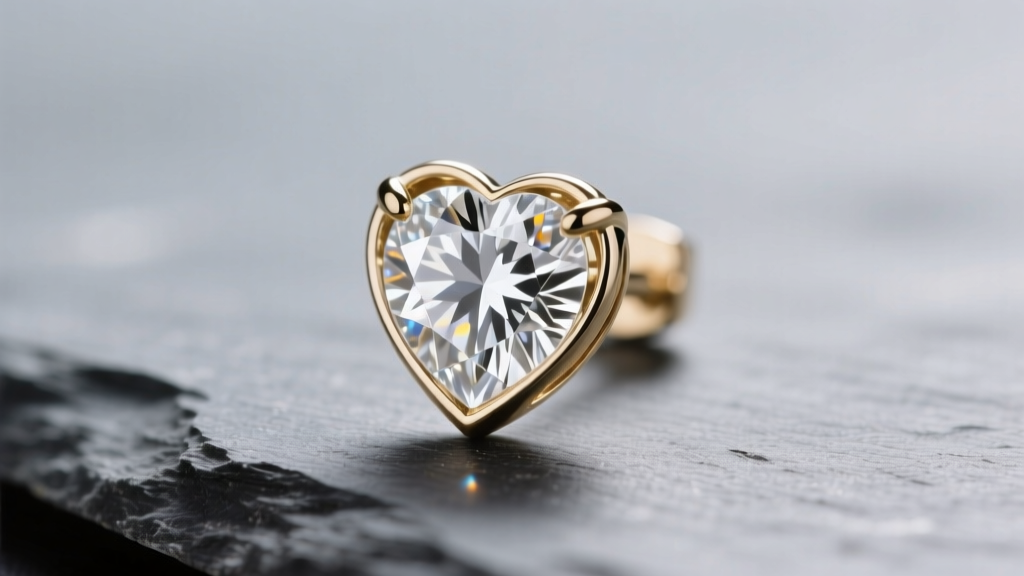
Heart-shaped diamond earrings are undeniably romantic, but their complex geometry makes them structurally demanding. Unlike round brilliants or princess cuts, a heart-cut diamond features a deep cleft at the top and a sharp, fragile point at the bottom. When set into earring mountings, these two anatomical features become primary failure points for snagging, chipping, and dirt accumulation. If your favorite pair of diamond heart earrings has suddenly become a hassle to wear, losing its fire, or irritating your skin, the issue usually traces back to the setting's architecture or the metal alloy. This guide provides deep-dive troubleshooting protocols to restore your earrings to their original brilliance and comfort.
The Anatomy of a Snag: Why Heart Shapes Catch on Fabric
The most frequent complaint regarding heart-shaped studs and dangles is snagging on knitwear, lace, or hair. This is almost exclusively caused by improper prong selection at the bottom point of the stone.
Diagnosing the Prong Failure
Standard round prongs are sufficient for the curved lobes of the heart, but the bottom point requires a specialized V-prong. If your jeweler used a standard round prong to secure the tip, the metal will either sit too high (creating a snag hazard) or leave the diamond's tip exposed to chipping. According to the Gemological Institute of America (GIA), the pointed tips of fancy shapes align with the diamond's natural cleavage planes, making them highly susceptible to fracturing if struck against a hard surface.
- The Loupe Test: Use a 10x jeweler's loupe to inspect the bottom tip. The V-prong should completely wrap around the point, with the metal flush against the diamond's pavilion facets.
- The Lifted Prong: If the V-prong is present but still snagging, it has likely been lifted away from the stone due to daily wear. A lifted prong acts like a tiny hook.
- The Cleft Trap: The top cleft of the heart is another snag zone. Ensure the gallery wire supporting the cleft is smoothed and polished, not left with sharp casting lines.
Diagnosing Dullness: Is It the Diamond or the Setting?
Diamonds are highly lipophilic, meaning they naturally attract and bind to oils, sebum, and lotions. In heart-shaped settings, the gallery (the metal basket holding the stone) is often deeper and more enclosed than in round settings to support the unusual shape. This creates a microscopic trap for dead skin cells and cosmetic residue, blocking light from entering the pavilion and killing the stone's scintillation.
The Safe At-Home Revival Protocol
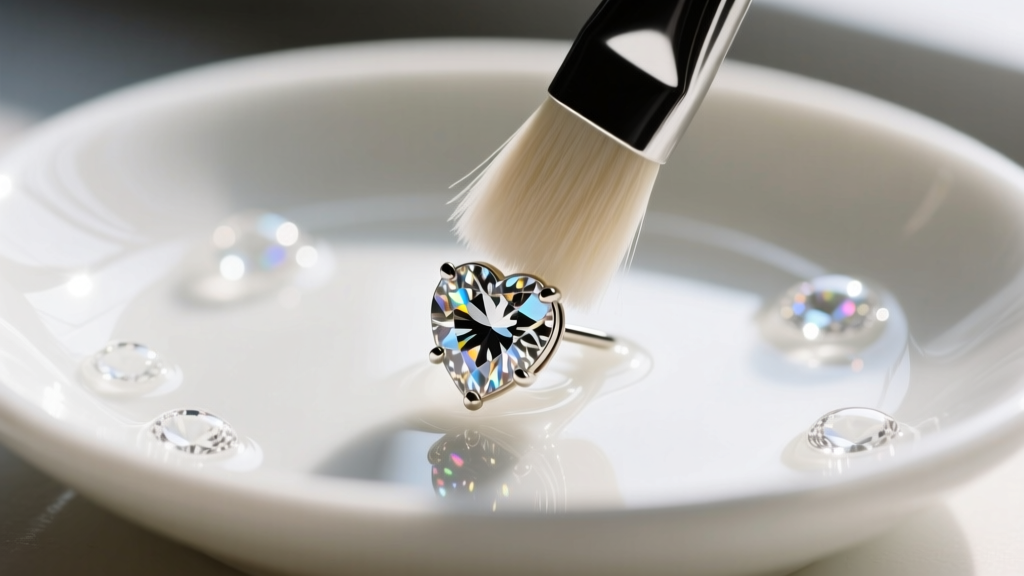
Before assuming your diamond has degraded in quality, perform a targeted deep clean. Avoid ultrasonic cleaners if your diamond is fracture-filled or has significant surface-reaching inclusions, as the high-frequency vibrations can widen internal fissures.
- The Solution: Mix three drops of mild, ammonia-free dish soap (like Dawn) into a bowl of lukewarm distilled water. Avoid hard tap water, which leaves calcium deposits.
- The Agitation: Submerge the earrings for 15 minutes to soften the lipid buildup. Use a baby toothbrush (which has ultra-soft bristles that won't scratch 14k or 18k gold) to gently sweep the underside of the cleft and the pavilion facets.
- The Rinse & Dry: Rinse under a gentle stream of distilled water. Do not dry with a paper towel, which can leave micro-scratches and lint in the cleft. Use a blast of compressed air or a dedicated jewelry drying cloth.
Metal Allergies & Irritation: Troubleshooting the Post and Backing
If your earlobes are itching, turning red, or developing a rash specifically where the earring post enters the piercing, you are likely experiencing contact dermatitis. As of 2026, the jewelry industry is still transitioning away from nickel-heavy alloys, but many legacy and mass-market white gold earrings still contain nickel as a whitening agent.
The Rhodium Plating Deception
White gold is naturally yellowish-gray. To achieve a bright white finish, it is flash-plated with rhodium. This plating is typically only 0.75 to 1.0 microns thick. With daily wear, friction from the earring back and exposure to skin acidity will wear through the rhodium in 6 to 14 months, exposing the nickel-alloyed gold underneath directly to your piercing tract.
If your white gold diamond heart earrings have taken on a faint yellowish tint near the post and clutch, the rhodium has worn off, and your skin is likely reacting to the exposed nickel alloy.
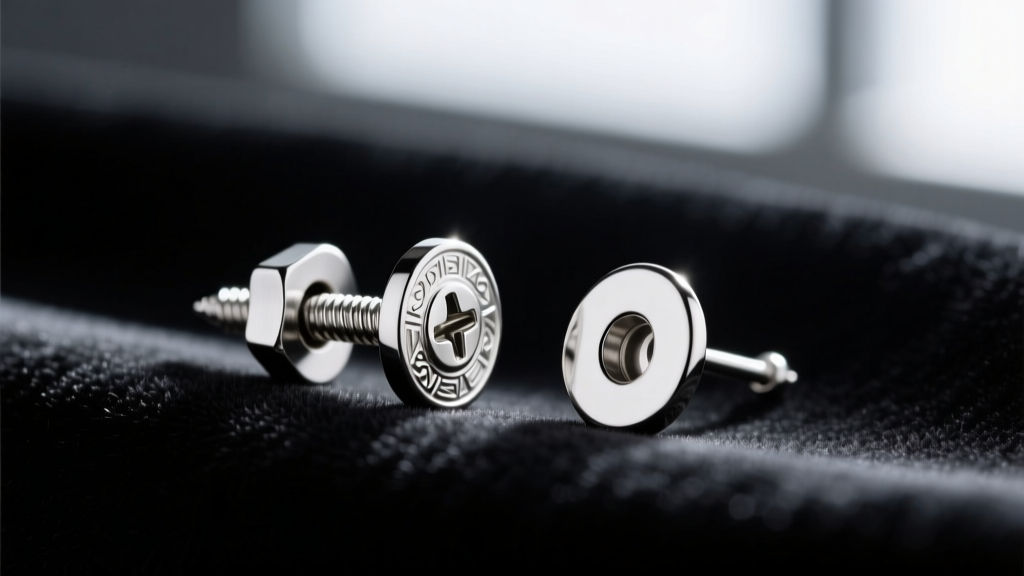
The Fix: Take the earrings to a bench jeweler for a professional rhodium re-plate. For a permanent solution, consider having the posts laser-welded and replaced with platinum or 18k palladium-white gold (which is naturally white and 100% nickel-free). Ensure the post gauge is appropriate for your piercing; standard studs use a 20-gauge (0.81mm) or 18-gauge (1.02mm) post. Thinner 22-gauge posts can cause the heavy heart setting to droop, irritating the lower earlobe.
Quick-Reference Troubleshooting Matrix
Use this diagnostic table to quickly identify the root cause of your earring issues and determine the appropriate intervention level.
| Symptom | Probable Root Cause | At-Home Intervention | Professional Jeweler Fix |
|---|---|---|---|
| Catching on sweaters/hair | Lifted V-prong or sharp gallery wire | None (risk of further bending) | Prong tightening, filing, and polishing |
| Stone looks cloudy/yellow | Lipid/sebum buildup in the pavilion | Dawn soap soak & baby brush | Professional steam cleaning |
| Earlobe itching/redness | Rhodium wear exposing nickel alloy | Switch to plastic post covers temporarily | Rhodium re-plating or post replacement |
| Earring droops forward | Post bent or clutch too loose/wide | Gently bend post up 5 degrees | Solder a heavier post, provide screw-backs |
| Visible chip at the cleft | Impact on a diamond cleavage plane | None | Re-cutting or laser drilling (if salvageable) |
Professional vs. At-Home Repairs: When to See a Jeweler
While cleaning and swapping out earring backs can be done at home, structural repairs require a master bench jeweler. If you notice that the diamond heart rattles slightly within the basket when you tap the earring, stop wearing it immediately. A rattling stone indicates that the prongs have worn down below the stone's girdle, and the diamond is at imminent risk of falling out.
Furthermore, if the heart shape has suffered a micro-chip at the top cleft—a common occurrence if the earrings are dropped on a tile floor—a jeweler can sometimes use laser welding to build up the metal setting to hide and protect the chip, preventing it from expanding. According to the Federal Trade Commission (FTC) Jewelry Guides, any significant repair or alteration to the metal content, such as replacing a gold post with platinum, must be accurately disclosed and hallmarked by the repairing jeweler to maintain the piece's integrity and resale value. Always request a loupe inspection with your jeweler post-repair to ensure the V-prong is perfectly flush and the gallery is completely snag-free.


