How to Convert Pierced Earrings to Clip Ons Safely & Securely
Learn how to convert pierced earrings to clip ons using screw-back adapters, magnetic pads, and silicone cushions. Expert tips on weight and metals.

The Physics and Metallurgy of Earring Conversion
For jewelry enthusiasts with unpierced ears, sensitive lobes, or torn piercing holes, the modern market can feel exclusionary. The vast majority of contemporary fine and fashion jewelry is designed exclusively for pierced ears. However, learning how to convert pierced earrings to clip ons is not merely a matter of swapping a backing; it requires an understanding of leverage, weight distribution, and metallurgical compatibility. When you attempt to adapt a standard post earring for non-pierced wear, you are fundamentally altering the physics of how the jewelry interacts with the earlobe.
A standard pierced earring post is typically 20-gauge (0.81mm) or 18-gauge (1.02mm) and is designed to rest within the fistula (the piercing hole), where the surrounding tissue supports the shear stress. In a clip-on configuration, the earring is subjected to a bending moment. The post acts as a lever arm, and the clamping mechanism becomes the fulcrum. If the receiving tube of your clip-on adapter does not perfectly match the gauge of the post, the resulting micro-movements will cause 'wobble fatigue,' eventually snapping the post at the solder joint. Therefore, precision in adapter selection is paramount.
Types of Clip-On Converters: A Technical Breakdown
Not all converters are engineered equally. The market is flooded with cheap, nickel-plated brass adapters that compromise both the structural integrity of the earring and the health of your skin. Below is a technical analysis of the three primary conversion mechanisms available to jewelers and consumers.
1. Screw-Back Paddle Adapters
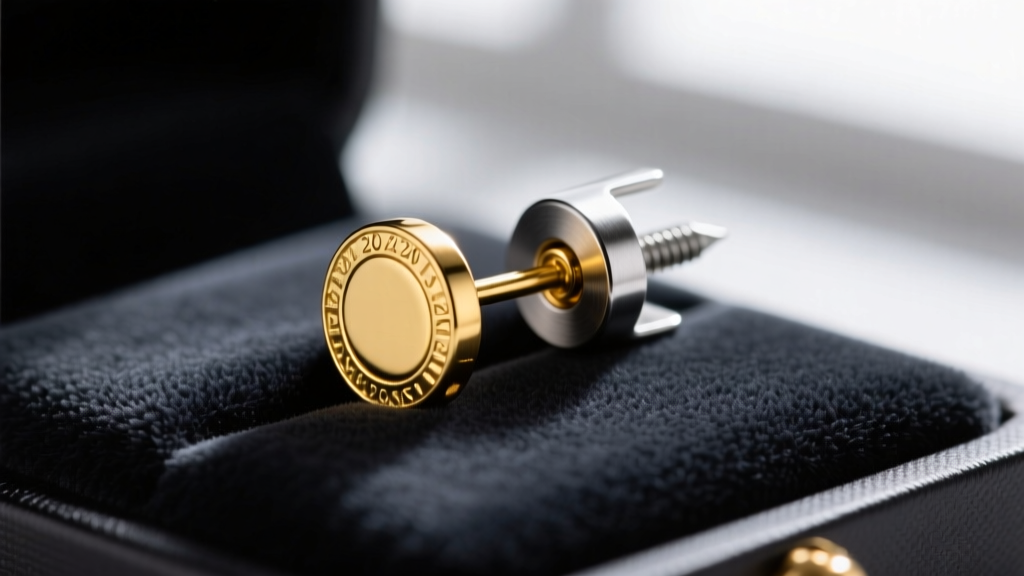
Screw-back adapters feature a threaded spindle that pushes a flat, padded paddle against the back of the earlobe. These are the gold standard for converting heavy dangles and drop earrings. High-quality screw-backs are machined from 316L surgical stainless steel or ASTM F136 implant-grade titanium. The paddle should feature a replaceable silicone or polyurethane cushion with a durometer rating of Shore 30A to 40A, providing enough grip to prevent sliding without causing pressure necrosis on the earlobe capillaries. Over-tightening the screw creates a clamping force exceeding 15 PSI, which restricts blood flow; a properly adjusted screw-back should allow a single sheet of paper to slide between the pad and the skin.
2. Magnetic Conversion Discs
Magnetic converters utilize dual N52-grade neodymium magnets that sandwich the earlobe, with the earring post secured into a receiving hole on the front magnet. While they offer a sleek, low-profile aesthetic, they are strictly limited by weight. The magnetic flux density of N52 magnets is incredibly strong, but the sheer force can pinch the lobule tissue, leading to ischemia if worn for more than four continuous hours. Furthermore, magnetic converters are highly susceptible to failure if the earring exceeds 4 grams, as the lateral drag of a heavy drop earring will overcome the magnetic shear strength.
3. Silicone Tension Pads
For lightweight studs (under 2 grams), silicone tension pads are an effective, non-mechanical solution. These pads feature a slit that grips the earring post via friction, while the broad, domed back rests against the ear. They rely entirely on the compressive elasticity of the silicone. While they eliminate the risk of metal-on-skin contact dermatitis, they lack the structural rigidity required for anything larger than a simple gemstone stud.
Step-by-Step: Converting Drop and Dangle Earrings
Converting complex styles like chandeliers or long dangles requires a meticulous approach to preserve the jewelry and ensure wearer comfort. Follow this professional protocol:
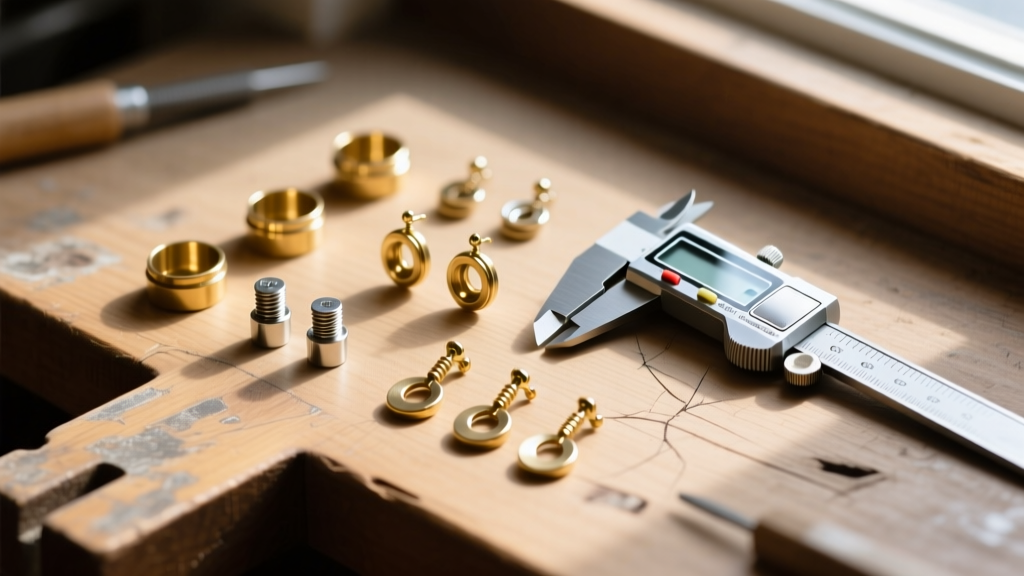
- Measure the Post: Use a digital caliper to measure the post diameter. Do not guess. A 0.8mm post will wobble in a 1.0mm adapter tube.
- Select the Adapter: Choose a screw-back paddle adapter with an internal tube diameter matching your measurement.
- Insert Without Bending: Insert the post straight into the adapter tube. Never bend the post to 'lock' it in place; this work-hardens the metal and guarantees a future snap.
- Secure the Mechanism: If the adapter uses a set-screw to hold the post, tighten it using a micro-jeweler's screwdriver (usually 0.8mm or 1.0mm flathead) until snug, but do not strip the threads.
- Adjust the Tension: Place the earring on the ear and turn the main screw-back dial until the paddle makes firm contact. Back it off exactly one-quarter turn to ensure capillary blood flow is maintained.
Weight Distribution & Counterbalancing Heavy Styles
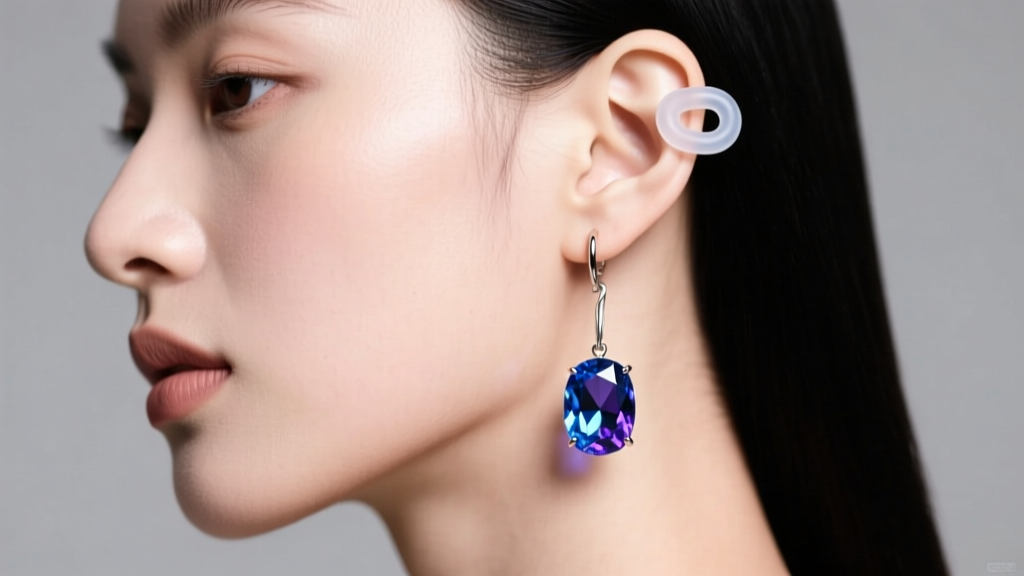
The most common failure mode when users convert pierced earrings to clip ons is the 'forward tilt.' Because the clip-on mechanism sits on the surface of the ear rather than passing through its center of mass, heavy front-facing elements will pull the earring downward. To counteract this, expert jewelers employ counterbalancing techniques.
| Converter Type | Max Weight Capacity | Ideal Earring Style | Primary Failure Mode | Material Recommendation |
|---|---|---|---|---|
| Screw-Back Paddle | 12 - 15 grams | Chandeliers, Heavy Drops | Thread stripping, lobe pinching | 316L Steel or Titanium |
| Magnetic Disc | 3 - 4 grams | Medium Hoops, Cluster Studs | Magnetic shear slip, tissue ischemia | N52 Neodymium / Resin |
| Silicone Tension | 1 - 2 grams | Solitaire Studs, Small Huggies | Friction loss, post slippage | Medical-grade Silicone |
| Resin Clip Cushion | 5 - 7 grams | Vintage Clips, Button Earrings | Resin cracking, adhesive failure | Hypoallergenic Epoxy |
If you are converting a heavy gemstone drop, consider adding a small, discreet counterweight to the back of the adapter paddle. Some specialized adapters feature a secondary hook on the rear paddle specifically for hanging a tiny brass or steel bead to shift the center of gravity backward, keeping the earring perfectly upright.
Material Compatibility and Skin Sensitivities
When introducing a new mechanical device to the skin, metallurgy is a critical health factor. The American Academy of Dermatology notes that nickel is the most common cause of allergic contact dermatitis in jewelry. Many inexpensive earring converters imported from overseas are cast from nickel-silver or plated brass. When the plating wears off from the friction of the screw mechanism, the underlying nickel is exposed to sweat and skin oils, resulting in severe rashes.
Always verify the material composition of your converters. According to guidelines often referenced by the Jewelers of America, items meant for prolonged skin contact should be crafted from nickel-free alloys. Look for adapters explicitly stamped as 316L stainless steel, niobium, or titanium. If you must use a base-metal adapter for a specific vintage piece, apply a micro-thin layer of clear polyurethane jewelry guard to the paddle and post-tube to create an impermeable barrier between the metal and the epidermis.
Troubleshooting Common Conversion Failures
Even with the best equipment, converting jewelry can present mechanical challenges. Here is how to troubleshoot the most frequent issues encountered on the jeweler's bench:
The Post is Too Short: Standard posts are often 10mm long. If the adapter's receiving tube is 8mm deep, the post won't seat fully, leaving the decorative head flush against the adapter and preventing the earring from hanging correctly. Solution: Use a spacer ring or select a 'shallow-tube' adapter designed specifically for short posts.
The Earring Constantly Slips Down: This is almost always a failure of friction, not clamping force. Tightening the screw further will only cause pain. Solution: Clean the earlobe with isopropyl alcohol to remove natural sebum, and apply a microscopic dot of jeweler's museum wax to the silicone paddle to increase the coefficient of friction without damaging the skin.
Mastering how to convert pierced earrings to clip ons safely and securely opens up the entire world of fine jewelry to non-pierced individuals. By respecting the physics of leverage, selecting biocompatible metals, and matching the adapter to the specific weight of the earring, you can achieve a comfortable, secure fit that rivals the stability of a traditional piercing.


