Red Heart Earring Materials: Enamel, Gemstone & Resin Compared
Discover the best red heart earring materials. We compare vitreous enamel, ruby, and resin for durability, weight, and skin safety.

The Anatomy of a Red Heart Earring: Beyond the Aesthetic
The red heart earring is a ubiquitous symbol in jewelry, transcending seasonal trends to remain a staple in both minimalist and maximalist collections. However, beneath the romantic silhouette lies a complex matrix of material science. When you purchase a crimson heart-shaped stud, drop, or huggie charm, you are not just buying a shape; you are investing in specific chemical compounds, metallurgical pairings, and structural tolerances. In 2026, consumers are more educated than ever about material longevity, hypoallergenic properties, and ethical sourcing. This guide deconstructs the primary materials used to craft the perfect red heart earring—vitreous enamel, cold enamel (resin), and natural or lab-grown gemstones—providing a definitive framework for your next purchase.
The Color Battle: Vitreous Enamel vs. Cold Enamel (Resin)
The most common way to achieve a bold, opaque, and uniform red in heart-shaped jewelry is through enameling. Yet, not all enamel is created equal. The distinction between traditional vitreous enamel and modern cold enamel dictates the lifespan, colorfastness, and value of your jewelry.
Vitreous Enamel (Hard Enamel)
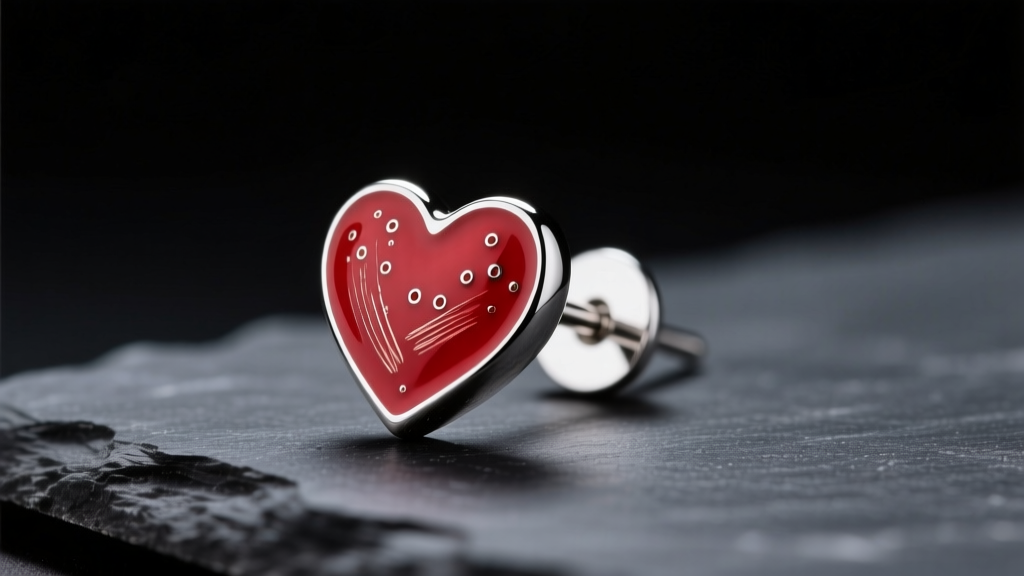
Vitreous enamel is essentially glass fused to metal. Artisans apply finely ground glass powder to a metal base (usually copper, silver, or gold) and fire it in a kiln at temperatures exceeding 1400°F (760°C). The result is a brilliant, scratch-resistant red surface that will not yellow or fade under UV exposure. A high-quality vitreous enamel red heart earring will maintain its glossy, candy-apple finish for generations. However, its primary failure mode is torsion: because glass is brittle, if the earring is dropped on a hard tile floor or bent, the enamel can fracture or flake away from the metal substrate.
Cold Enamel and Epoxy Resin
Cold enamel is a misnomer; it is actually a two-part epoxy resin tinted with red pigment. It cures at room temperature and is significantly cheaper to produce. While it allows for intricate gradients and a slightly more forgiving, shatter-resistant finish, resin is highly susceptible to UV degradation. Over a period of 12 to 24 months of daily wear, a resin red heart earring will inevitably begin to yellow, shifting from a vibrant ruby tone to a muddy brick orange. Furthermore, resin can peel away from the metal setting if exposed to harsh chemicals like chlorine or alcohol-based perfumes.
Gemstone Hearts: Ruby, Garnet, and Red Jasper
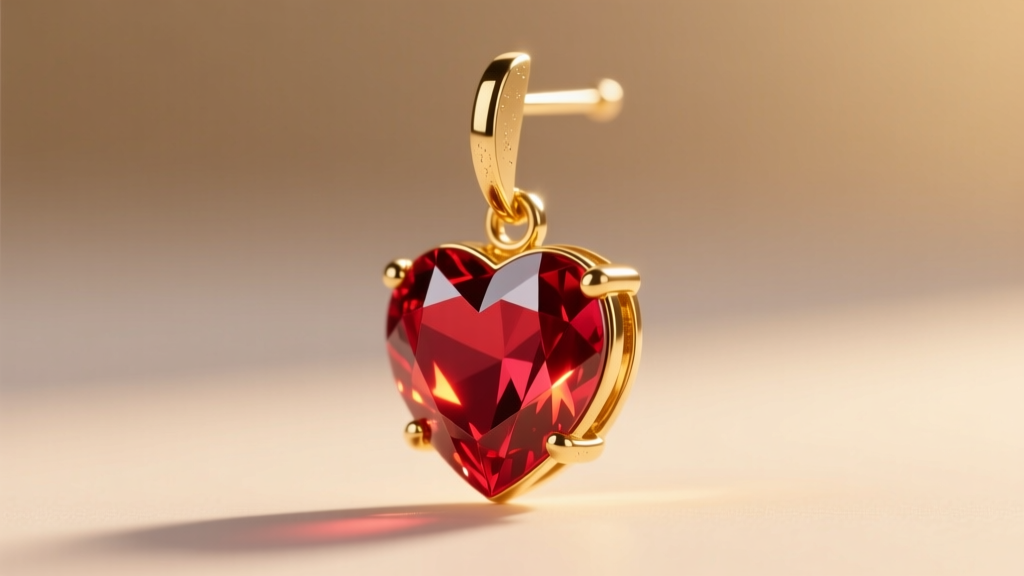
For those seeking translucency, optical brilliance, and natural inclusions, gemstones are the premier choice. Carving a gemstone into a heart shape requires significant lapidary skill, as the cleft of the heart is a natural weak point prone to chipping during the faceting process. Here is how the top three red gemstones compare in a heart silhouette.
Ruby (Corundum)
According to the Gemological Institute of America (GIA), ruby is a variety of corundum with a Mohs hardness of 9, making it exceptionally durable for daily wear. A faceted ruby red heart earring offers unparalleled light return and a deep, pigeon-blood red hue. However, natural rubies are heavily included and often heat-treated or glass-filled to improve clarity. For a flawless, vibrant heart shape without the exorbitant price tag, lab-grown synthetic rubies (created via the Verneuil flame fusion process) offer identical chemical and optical properties at a fraction of the cost.
Garnet and Red Jasper
Pyrope and Almandine garnets offer a darker, more wine-red tone with a Mohs hardness of 6.5 to 7.5. While beautiful, garnets lack the cleavage planes that make diamonds easy to split, but they can chip at the sharp inner V of a heart shape if struck against a hard surface. Red Jasper, an opaque microcrystalline quartz (Mohs 7), is often cut into smooth cabochon hearts. It provides a matte, earthy aesthetic and is highly resistant to chipping, making it ideal for heavier, oversized hoop charms.
Material Comparison Matrix
| Material | Mohs Hardness | Specific Gravity (Weight) | UV Resistance | Estimated Price Range (Stud Pair) |
|---|---|---|---|---|
| Vitreous Enamel | 5.5 - 6.5 (Glass) | 2.5 (Depends on base metal) | Excellent | $45 - $150 |
| Epoxy Resin | 2.0 - 3.0 | 1.1 - 1.2 (Very Light) | Poor (Yellows) | $15 - $40 |
| Lab-Grown Ruby | 9.0 | 4.00 (Heavy) | Excellent | $60 - $200 |
| Pyrope Garnet | 7.0 - 7.5 | 3.7 - 4.1 (Heavy) | Excellent | $50 - $120 |
| Red Jasper | 7.0 | 2.6 (Moderate) | Excellent | $20 - $60 |
Base Metal Pairings: What Holds the Red Heart?
The red element of the earring is only half the equation; the metal post and setting dictate the skin safety and structural integrity of the piece. Contact dermatitis from cheap jewelry alloys is a widespread issue. The American Academy of Dermatology notes that nickel is the most common culprit for jewelry-induced allergic reactions, often hidden in the solder or base alloys of plated metals.
- ASTM F136 Implant-Grade Titanium: The gold standard for sensitive ears and fresh piercings. Titanium is entirely nickel-free, lightweight, and will not tarnish. If you are buying a heavy gemstone heart, a titanium post ensures the metal will not bend under the weight.
- 925 Sterling Silver: An excellent, hypoallergenic choice for vitreous enamel, as silver provides a bright, reflective undercoat that makes the red glass pop. However, silver requires occasional polishing to remove sulfide tarnish.
- 14k Gold Vermeil: Vermeil consists of a thick layer of 14k or 18k gold over a sterling silver base. It offers the luxurious look of solid gold at a lower price point, but the gold layer will eventually wear away at the friction points where the ear nut rubs against the post.
Gauge Sizing and the "Droop" Factor
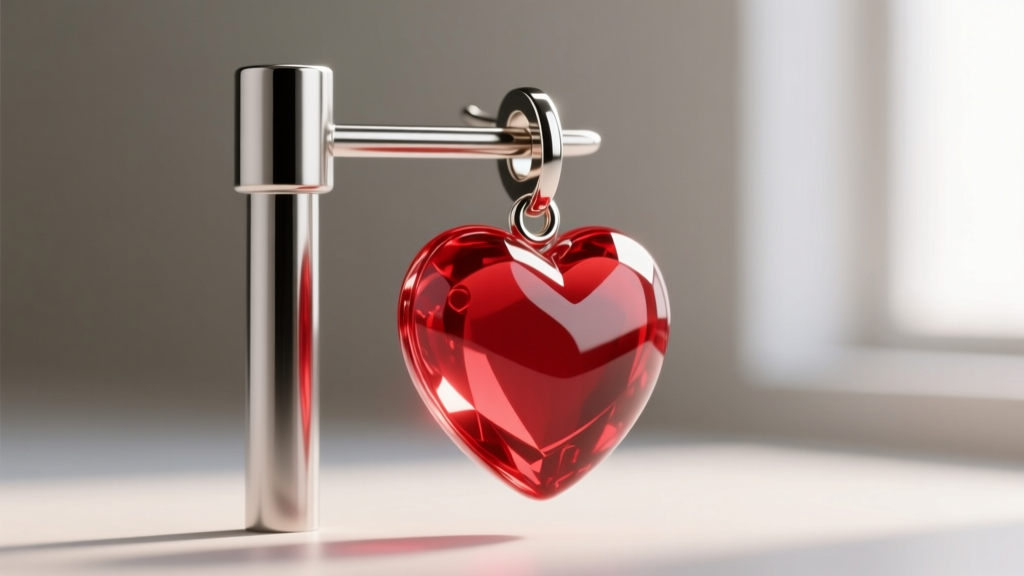
A frequently overlooked aspect of earring design is the relationship between the weight of the heart charm and the gauge (thickness) of the post. Standard lobe piercings are typically done at 20-gauge (0.81mm) or 18-gauge (1.02mm).
Jeweler's Insight: "A solid 14k gold and ruby heart earring can easily weigh over 3 grams per ear. If mounted on a flimsy 22-gauge wire, the post will bend, causing the heart to point downward—a phenomenon we call 'the droop.' Always verify the post gauge for heavy statement pieces."
For lightweight resin or enamel studs, a standard 20-gauge post is perfectly adequate. However, if you are investing in a dense, solid gemstone red heart earring, ensure the setting utilizes an 18-gauge or even 16-gauge (1.29mm) post. Additionally, pairing heavy hearts with jumbo silicone ear backs or specialized locking clasps (like La Pousette backs) will distribute the weight more evenly across the earlobe, preventing stretching and tearing over time.
Care, Maintenance, and Failure Modes
To maximize the lifespan of your jewelry, tailor your care routine to the specific material. Vitreous enamel and gemstones should be cleaned with warm water, a drop of mild dish soap, and a soft-bristled baby toothbrush. Avoid ultrasonic cleaners for enamel, as the high-frequency vibrations can cause microscopic fractures in the glass. Resin pieces should never be exposed to alcohol-based hand sanitizers or acetone, which will instantly cloud the glossy surface and degrade the epoxy matrix. By understanding the precise material properties of your jewelry, you ensure that your favorite accessories remain as vibrant and structurally sound as the day you bought them.


