Material Guide: Choosing the Best Earrings Back Stud
Discover the best earrings back stud materials for sensitive ears. Compare titanium, gold, and steel properties, gauge sizes, and secure fits.

The Hidden Importance of the Earrings Back Stud Assembly
When curating a fine jewelry collection, enthusiasts often obsess over the carat weight of a diamond or the cut of a gemstone, entirely neglecting the component that actually secures the piece to the body. The earrings back stud mechanism is the unsung hero of ear piercing. It bears the mechanical tension of daily wear, interfaces directly with the healing or healed fistula (the piercing channel), and is the most common culprit behind allergic contact dermatitis. In 2026, with advancements in metallurgical passivation and precision machining, understanding the material properties of your earring backs is no longer optional—it is essential for long-term tissue health and jewelry security.
A poorly manufactured earrings back stud component can lead to lost diamonds, torn lobes, and chronic inflammation. This comprehensive guide breaks down the exact material grades, gauge tolerances, and mechanical failure modes of modern stud earring backs, providing a definitive framework for both jewelers and consumers.
Anatomy and Mechanical Function
Before comparing materials, we must define the mechanical forces at play. A standard stud assembly consists of the post (the wire that passes through the ear) and the backing (the clutch, screw, or locking mechanism). The backing must maintain a precise clamping force against the post. Too little tension, and the earring falls out; too much tension, and the post deforms or the earlobe suffers from pressure necrosis.
- Friction Backs (Butterfly Clutches): Rely on the spring tension of two folded metal loops gripping the post. Prone to metal fatigue over time.
- Screw Backs: Utilize a threaded post and a internally tapped backing. Offers superior security but requires precise alignment to avoid cross-threading.
- Laclutch / Locking Backs: Feature a patented internal locking mechanism (often a tiny ball bearing or precision sleeve) that clicks into a groove on the post.
Material Comparison Chart
The table below outlines the standard materials used for the earrings back stud component, graded by biocompatibility, mechanical hardness, and market availability.
| Material | Standard / Grade | Nickel Content | Vickers Hardness (HV) | Security & Tension Retention |
|---|---|---|---|---|
| Commercially Pure Titanium | ASTM F67 | 0% | ~200 HV | Excellent (Low fatigue) |
| Alloyed Titanium | ASTM F136 (Ti6Al4V ELI) | 0% | ~350 HV | Superior (Industry standard) |
| 14k Gold (Palladium Alloy) | Nickel-Free 14k | 0% | ~130-150 HV | Good (Requires thicker gauge) |
| 18k Gold | Nickel-Free 18k | 0% | ~110-120 HV | Fair (Prone to bending) |
| Surgical Stainless Steel | 316L / 316LVM | 8% - 10.5% | ~150-200 HV | Good (High risk of allergy) |
| Medical-Grade Silicone | Platinum-Cured | 0% | N/A (Shore A ~40) | Poor (Degrades with sebum) |
Deep Dive: Hypoallergenic Metals (Titanium vs. Gold)
For individuals with sensitive ears or healing piercings, the choice of metal is paramount. The Association of Professional Piercers (APP) strictly recommends implant-grade materials for any jewelry that resides inside the body. When it comes to the post and the corresponding earrings back stud mechanism, Titanium and specific Gold alloys dominate the premium market.
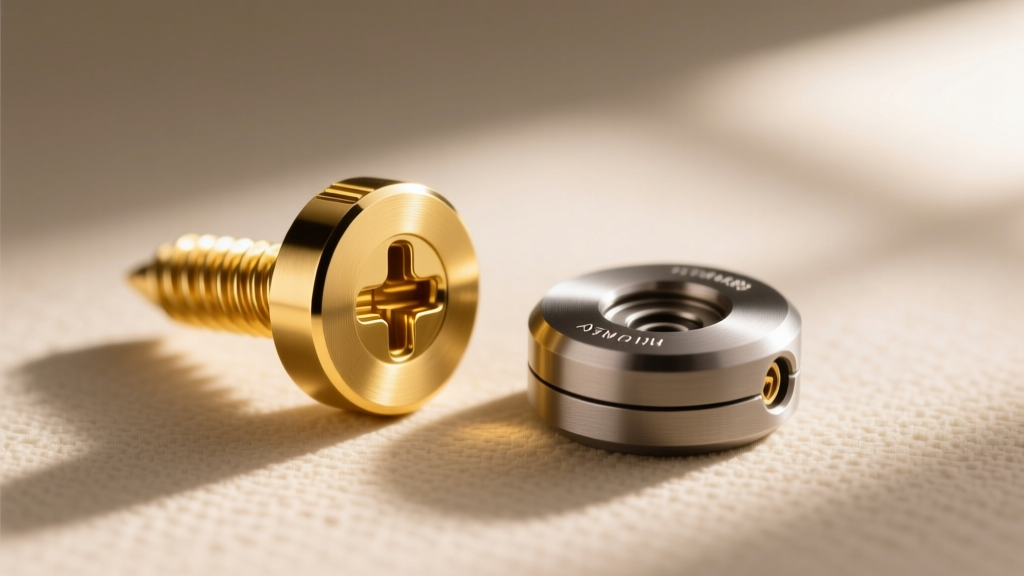
ASTM F136 Titanium: The Undisputed Champion
ASTM F136 (Ti6Al4V ELI) is an implant-grade titanium alloy. Its superiority lies in its passivation layer—a microscopic shield of titanium dioxide that forms instantly upon exposure to oxygen. This layer prevents any ion exchange between the metal and the body's tissues. Furthermore, its high Vickers hardness (~350 HV) means that a titanium friction back will not suffer from metal fatigue as quickly as gold or steel. The loops of a titanium butterfly clutch retain their spring tension for years, ensuring the earring remains securely fastened without needing constant adjustment.
The Gold Conundrum: Hardness vs. Purity
Gold is inherently soft. Pure 24k gold is entirely unsuitable for an earrings back stud component because it would bend under the slightest pressure. To create functional jewelry, gold is alloyed. However, traditional white gold is often alloyed with nickel to achieve a silver color and increase hardness, which is a massive trigger for contact dermatitis. Modern high-end jewelers now use palladium or silver to create nickel-free white gold. While 18k gold is prized for its rich color in the front setting, its lower hardness makes it a poor choice for the backing mechanism. A friction back made of 18k gold will quickly lose its grip on the post. Therefore, the industry standard for premium gold studs is to use 14k gold for the post and backing (for structural integrity) or to utilize a screw-back mechanism which relies on threads rather than metal tension.
The Surgical Steel Trap: Nickel Leaching and Friction
316L and 316LVM (Vacuum Melted) stainless steels are ubiquitous in commercial jewelry. They are strong, relatively cheap, and take a high polish. However, they contain between 8% and 10.5% nickel. While the chromium oxide passivation layer on 316L steel generally traps the nickel inside the alloy, this layer is vulnerable to mechanical wear.
The act of pushing a friction back onto a post, and the subsequent micro-movements of the earring against the earlobe throughout the day, creates friction. Over time, this friction wears away the microscopic passivation layer on the post and the inside of the clutch. Once exposed, the nickel leaches into the skin. According to the American Academy of Dermatology, nickel allergy is one of the most common causes of allergic contact dermatitis. Many consumers mistakenly believe they are allergic to "earrings" in general, when in reality, they are reacting to the degraded passivation layer of a cheap steel earrings back stud assembly. If you experience itching, flaking, or weeping behind the earlobe, discard steel backs immediately.
Silicone and Plastic Backs: Pros, Cons, and Failure Modes
To bypass metal allergies, many consumers turn to silicone O-rings or plastic bullet clutches. While these materials are entirely nickel-free and offer a comfortable, cushioned feel against the back of the ear, they introduce severe hygienic and mechanical vulnerabilities.
The Porosity Problem
Silicone and soft plastics are inherently porous at a microscopic level. The environment behind the earlobe is warm, dark, and prone to accumulating sebum, dead skin cells, and hair products. Silicone O-rings act like sponges, absorbing these organic materials. Over a period of weeks, this trapped debris breeds bacteria and emits a foul odor (often referred to as "ear cheese"). Furthermore, the oils in sebum cause silicone to swell, degrade, and eventually tear, leading to sudden earring loss.
Tension Inconsistency
Plastic friction backs rely on a tiny internal metal spring to grip the post. If that internal spring is made of low-grade steel, it will rust when exposed to moisture from showering or swimming, eventually seizing up or snapping. For long-term wear, solid metal hypoallergenic backs are vastly superior to silicone alternatives.
Matching Post Gauge to Backing Tension
The mechanical success of an earrings back stud relies heavily on the gauge (thickness) of the post. In the fine jewelry industry, the vast majority of commercial studs are manufactured at 20-gauge (0.81mm) or 18-gauge (1.02mm).
- 20-Gauge (0.81mm): Extremely thin. While it slides easily through the ear, it provides very little surface area for a friction back to grip. 20g posts are highly susceptible to bending, which permanently ruins the friction fit of the backing. If you must wear 20g studs, screw-backs are highly recommended over friction clutches.
- 18-Gauge (1.02mm): The sweet spot for fine jewelry. It offers enough structural rigidity to resist bending during daily wear, while providing ample surface area for a Laclutch or heavy-duty titanium butterfly clutch to maintain a secure grip.
- 16-Gauge (1.29mm) and thicker: Usually reserved for body jewelry or heavy diamond solitaires. Requires specialized, heavy-duty backs that are often difficult to source from standard commercial jewelers.
Expert Troubleshooting: Lost Backs and Bent Posts
Even with premium materials, mechanical issues can arise. Understanding how to troubleshoot your earring backs will save you from losing valuable jewelry.
How to Fix a Loose Friction Back
If your titanium or gold butterfly clutch is sliding off the post too easily, the metal loops have succumbed to fatigue. Do not use standard steel pliers to squeeze them back together, as the hard steel teeth will gouge and scratch the precious metal. Instead, use nylon-jaw pliers. Gently squeeze the two loops of the clutch closer together. Test the tension on the post; you should feel a distinct "bump" as the loops pass over the end of the post or the small groove machined near the tip.
Dealing with Cross-Threaded Screw Backs
Screw backs offer incredible security, but if forced at an angle, they will cross-thread, permanently damaging the post. Always start threading a screw back by turning it counter-clockwise (lefty-loosey) until you feel a tiny "click" as the threads align. Only then should you begin turning clockwise to tighten. If a screw back becomes stuck due to sebum buildup, do not use brute force. Soak the assembly in a small cup of warm water and mild dish soap for ten minutes to dissolve the oils, then gently unscrew.
Final Verdict on Material Selection
The ideal earrings back stud component balances biocompatibility with mechanical resilience. For everyday wear, especially for sensitive lobes, an ASTM F136 Titanium friction back or Laclutch paired with an 18-gauge post is the gold standard of modern jewelry engineering. It eliminates the risk of nickel exposure, resists mechanical fatigue, and provides the peace of mind that your precious gemstones will remain exactly where they belong. By prioritizing the metallurgy of the backing as much as the aesthetics of the front, you ensure both the longevity of your jewelry and the health of your piercings.


