How to Clean and Restore Gold Filigree Hoop Earrings Safely
Learn how to safely clean, restore, and maintain delicate gold filigree hoop earrings without damaging the intricate wirework or clasps.

The Hidden Fragility of Filigree Wirework
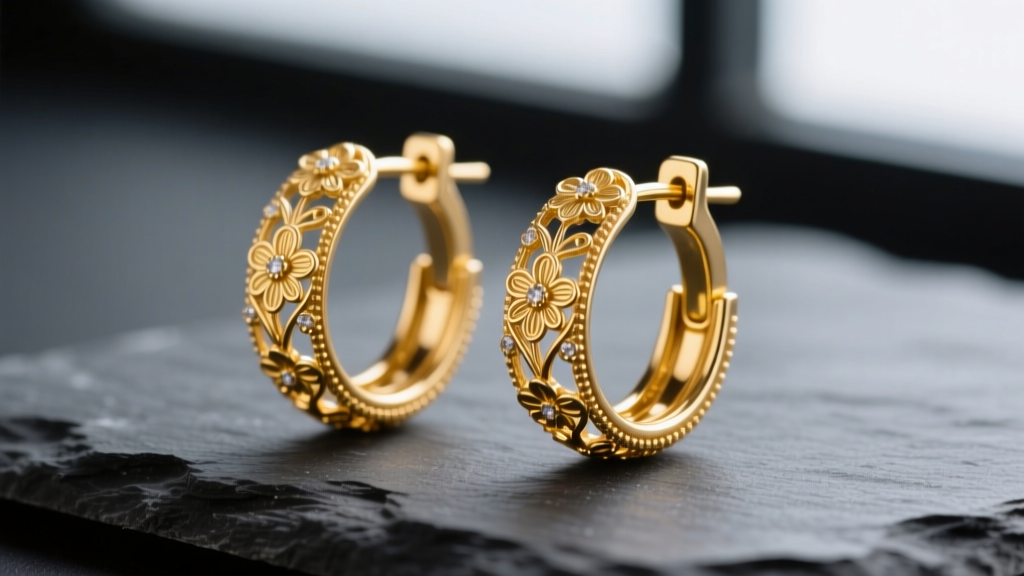
Gold filigree hoop earrings are a masterclass in metallurgical artistry, featuring intricate, lace-like patterns created by twisting and soldering microscopic threads of gold. However, this breathtaking delicacy is precisely what makes them a nightmare to maintain. The wirework in authentic filigree typically ranges from 24-gauge to 28-gauge (0.5mm to 0.3mm in thickness). At this scale, the gold wires are highly susceptible to bending, snagging, and trapping dead skin cells, lotions, and environmental dust.
Furthermore, the structural integrity of these hoops relies on dozens of micro-solder joints. According to the Gemological Institute of America (GIA), the alloys used in karat gold solder have different melting points and chemical resistances than the primary wire. Using the wrong cleaning methods can cause stress corrosion cracking or literally vibrate these tiny solder joints apart. This comprehensive 2026 guide will walk you through the exact, professional-grade steps to clean, restore, and preserve your gold filigree hoops without causing catastrophic damage.
Essential Tools for Safe Filigree Maintenance
Before you begin, you must assemble the correct tools. Avoid commercial jewelry dips, which often contain harsh thiourea compounds that can strip the finish from high-karat gold and weaken solder points.
- Distilled Water: Tap water contains chlorine and hard minerals that can leave microscopic calcified deposits inside the filigree curls.
- pH-Neutral Dish Soap: A mild, phosphate-free liquid soap (like original Dawn) acts as a gentle surfactant to lift oils.
- Baby Toothbrush: You need a brush with ultra-soft, rounded bristles. Standard adult toothbrushes are too abrasive and can scratch 18k or 22k gold wires.
- Wooden Toothpicks: For dislodging stubborn debris from tight rosettes without scratching the metal.
- Lint-Free Microfiber Cloths: To pat dry without snagging the wires.
- Compressed Air Duster: To blow moisture out of the densest filigree clusters.
Step-by-Step Guide: Deep Cleaning Your Hoops
Step 1: The Dry Dusting Phase
Never introduce water to filigree that is heavily caked with dry debris, as this creates a mud-like paste that gets pushed deeper into the solder joints. Hold the hoop earring by its thickest structural point (usually the bottom curve or the post base) and use short bursts of compressed air from a distance of six inches. Angle the air to blow from the back of the earring toward the front, forcing dust out of the intricate floral or geometric patterns.
Step 2: The Ultrasonic Warning & Soak Method
CRITICAL WARNING: Never place gold filigree hoop earrings in an ultrasonic cleaner. The Jewelers of America explicitly warns against using ultrasonic cavitation on fragile, micro-soldered jewelry. The high-frequency sound waves create microscopic bubbles that collapse with immense localized force, which can easily snap a 26-gauge filigree wire or shatter a delicate solder joint.
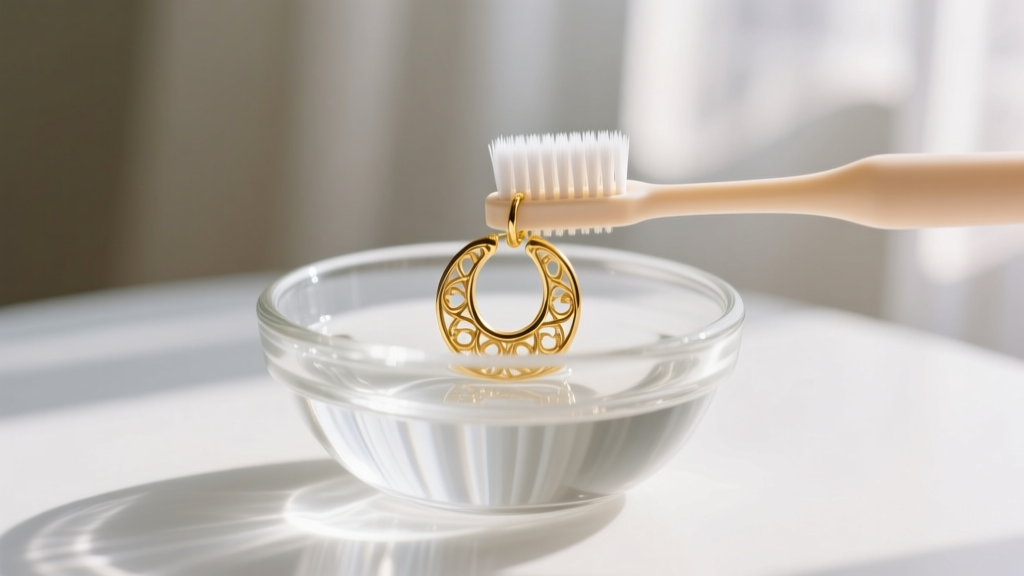
Instead, prepare a lukewarm soak. Mix one cup of distilled water with three drops of pH-neutral dish soap in a small glass bowl. Submerge the earrings and let them soak for exactly 10 to 15 minutes. This allows the surfactant to break down sebum and cosmetic residues without requiring aggressive mechanical scrubbing.
Step 3: Precision Brushing and Rinsing
Remove the earrings from the soak. Using your baby toothbrush, gently brush the filigree using small, circular motions. Do not scrub back and forth in straight lines, as this increases the risk of catching a bristle on a wire loop and bending it. Pay special attention to the area where the hoop post meets the main body, as this is a primary trap for lotion buildup.
Rinse the earrings under a gentle stream of lukewarm distilled water. Immediately pat them dry with a microfiber cloth, then use the compressed air duster to blow out any remaining water droplets trapped inside the tight wire curls. Air-drying filigree often results in water spots that are difficult to remove without re-washing.
Restoring Tension to Bent Hoop Posts
A common failure mode for filigree hoops is the loss of tension in the ear wire (the post that clicks into the clutch or omega back). Because filigree earrings are lightweight, manufacturers often use thinner 20-gauge or 22-gauge posts to save weight and match the delicate aesthetic. Over time, taking the earrings on and off bends this post upward, resulting in a loose fit that risks losing the earring.
To restore the tension, you will need a pair of nylon-jaw pliers (never use bare metal pliers, which will mar the gold). Grip the base of the post where it attaches to the hoop body with your fingers to stabilize it. Use the nylon pliers to gently bend the post downward by a fraction of a millimeter. Test the click against the earring back. Repeat micro-adjustments until the satisfying, secure "snap" is restored. If the post is deeply creased or shows signs of metal fatigue (a white stress line in yellow gold), stop immediately and take it to a jeweler for a post replacement.
Troubleshooting Common Filigree Issues
| Issue | Root Cause | Actionable Solution |
|---|---|---|
| White, chalky residue in curls | Hard water minerals or dried soap | Soak in a 50/50 mix of distilled water and white vinegar for 3 minutes, then rinse with distilled water. |
| Darkened or blackened solder joints | Oxidation of copper/zinc alloys in the solder | Use a specialized gold polishing cloth (impregnated with rouge) to gently dab the joints. Do not rub the wire. |
| Snagged or pulled wire loop | Catching on hair or knit fabrics | Do not pull it back. Use two pairs of nylon pliers to gently squeeze the loop back into its original circular shape. |
| Earring feels heavy and sags | Stretched earlobe or bent hoop base | Use an earring support patch behind the lobe, or have a jeweler add a discreet clear silicone o-ring to the post. |
Proper Storage to Prevent Wire Bending
How you store your gold filigree hoop earrings is just as critical as how you clean them. Tossing them into a communal jewelry box guarantees that heavier items will crush the 24-gauge wirework. Furthermore, exposure to ambient humidity and sulfur in the air can accelerate the tarnishing of the alloy metals present in 14k and 18k gold.
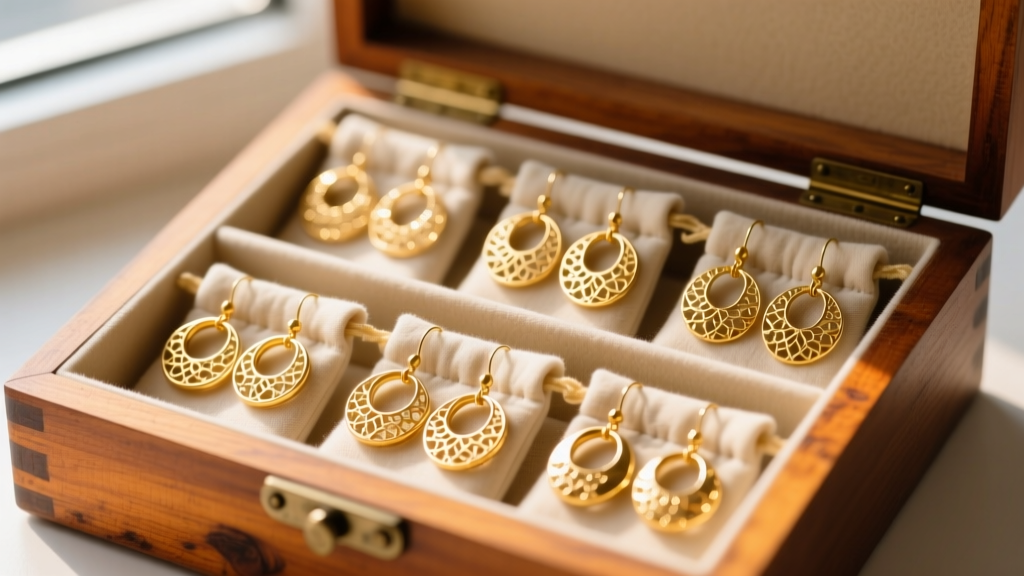
Always store filigree hoops individually in soft, anti-tarnish flannel pouches. These pouches are treated with microscopic silver or zinc particles that absorb sulfur compounds before they can react with the gold alloys. Place the pouches in a dedicated compartment of your jewelry box where they will not be crushed. If you are traveling, use a hard-shell jewelry roll with rigid, padded slots specifically designed to prevent hoops from being compressed in your luggage.
When to Seek a Professional Jeweler
While routine cleaning and minor post adjustments can be handled at home, certain situations require professional intervention. If you notice a visible gap in a solder joint, a completely severed wire, or if the earring has been exposed to chlorine (such as swimming in a heavily chlorinated pool), take them to a master jeweler immediately. Chlorine causes irreversible stress corrosion cracking in karat gold, and a professional will need to assess the structural integrity of the piece, potentially re-tipping solder joints with a laser welder to avoid melting the surrounding antique-style filigree details.
By treating your gold filigree hoop earrings with the meticulous care their delicate architecture demands, you ensure they remain a stunning, wearable heirloom for decades to come.


