Troubleshooting Gold Heart Hoop Earrings: A Repair Guide
Learn how to fix bent wires, repair broken hinges, and prevent tarnish on your gold heart hoop earrings with our expert jewelry troubleshooting guide.

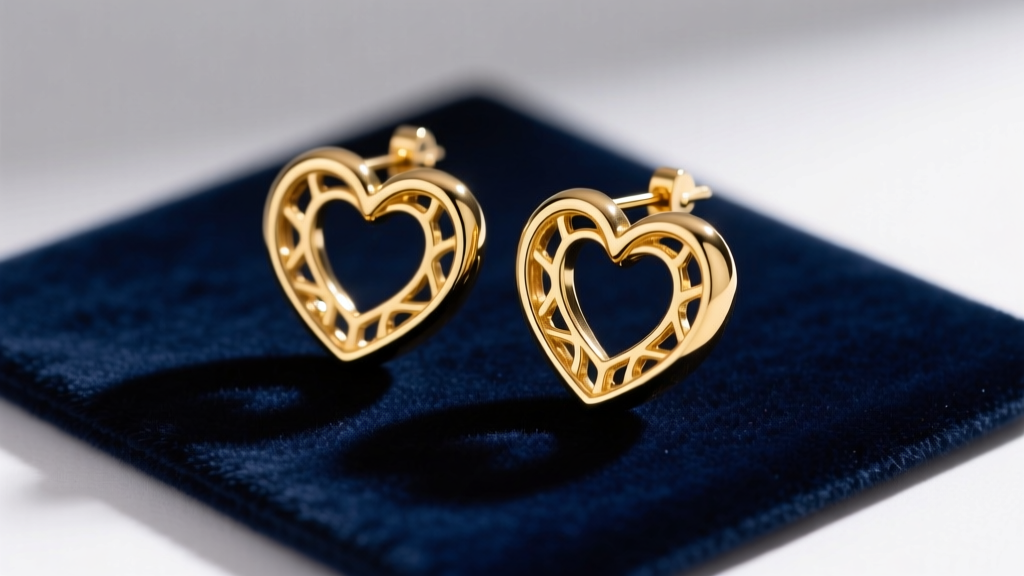
The Anatomy of Gold Heart Hoop Earrings (and Where They Fail)
Gold heart hoop earrings are a beloved staple in modern jewelry boxes, blending the timeless appeal of the hoop with the romantic geometry of the heart. However, their unique structural profile—specifically the sharp vertex at the bottom and the dual-lobed curve at the top—makes them highly susceptible to warping, clasp failure, and uneven weight distribution. Whether you are dealing with a vintage 14k pair that has lost its symmetry or a modern 18k clicker that refuses to stay closed, troubleshooting these issues requires an understanding of metallurgy and jewelry mechanics. In this comprehensive guide, we will diagnose the most common failures associated with gold heart hoop earrings and provide actionable, professional-grade solutions to restore them.
To effectively troubleshoot, you must first understand how these earrings are constructed. Unlike standard circular hoops that distribute stress evenly along a continuous curve, heart-shaped hoops have distinct stress concentration points. The bottom "dip" of the heart acts as a fulcrum, meaning any pressure applied to the front or back of the earring will force the metal to bend at this lowest vertex. Furthermore, the method of manufacturing dictates the repair strategy. Solid wire heart hoops (typically 16-gauge or 18-gauge) are easier to reshape but prone to bending. Conversely, hollow-cast or tubular heart hoops are lightweight and resist bending better, but if they dent or crush, they are nearly impossible to repair without specialized laser welding and resin filling.
Troubleshooting Common Structural Issues
1. The Warped Heart Shape (Bending & Reshaping)
The most frequent complaint with gold heart hoop earrings is the distortion of the heart silhouette. This is heavily dependent on the gold alloy used. Pure 24k gold is far too malleable for jewelry, so it is alloyed with metals like copper, silver, and zinc. According to the Gemological Institute of America (GIA), 18k gold (75% pure gold) has a Vickers Hardness (HV) of roughly 120, making it noticeably softer and more prone to elongation than 14k gold, which boasts an HV of around 150. If your 18k heart hoops have stretched into a teardrop shape, you must reshape them using specialized tools.
Never use standard steel-jaw pliers, as they will permanently gouge and scratch the soft gold. Instead, invest in nylon-jaw pliers. Secure a small steel ring mandrel or a conical wooden dowel that matches the desired width of the heart's upper lobes. Gently apply pressure with the nylon pliers to coax the bottom vertex back into a sharp point while rounding the top curves against the mandrel. Work in millimeter increments to avoid work-hardening the metal to the point of snapping.
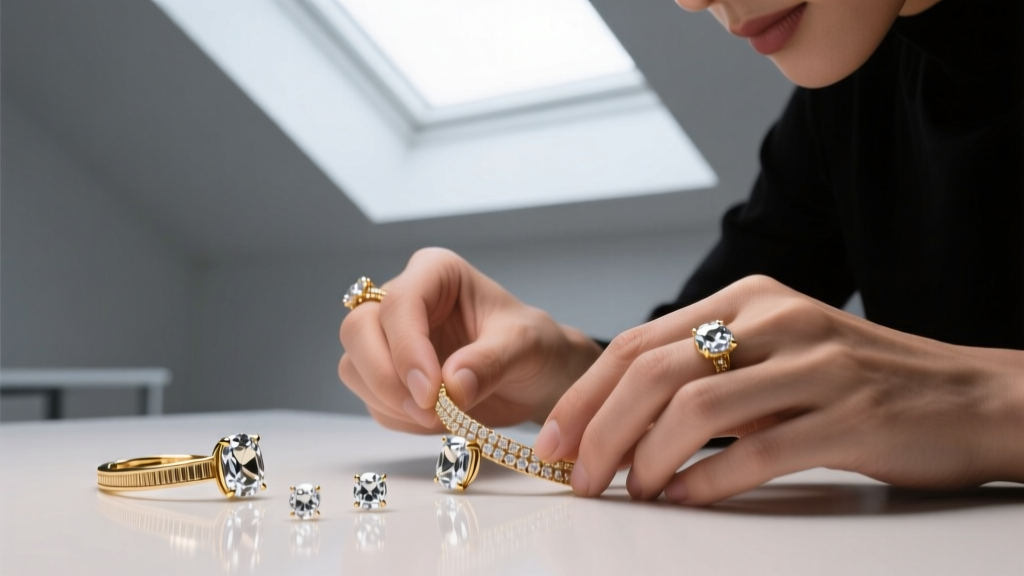
2. Hinge and Clasp Malfunctions
The closure mechanism is the second most critical failure point. Most heart hoops utilize a latch-back (V-wire) or a clicker hinge. Latch-backs feature a thin, V-shaped wire that snaps into a grooved catch. Over time, the repetitive friction of opening and closing wears down the microscopic notch on the V-wire, or the wire itself loses its upward tension, causing the earring to pop open unexpectedly.
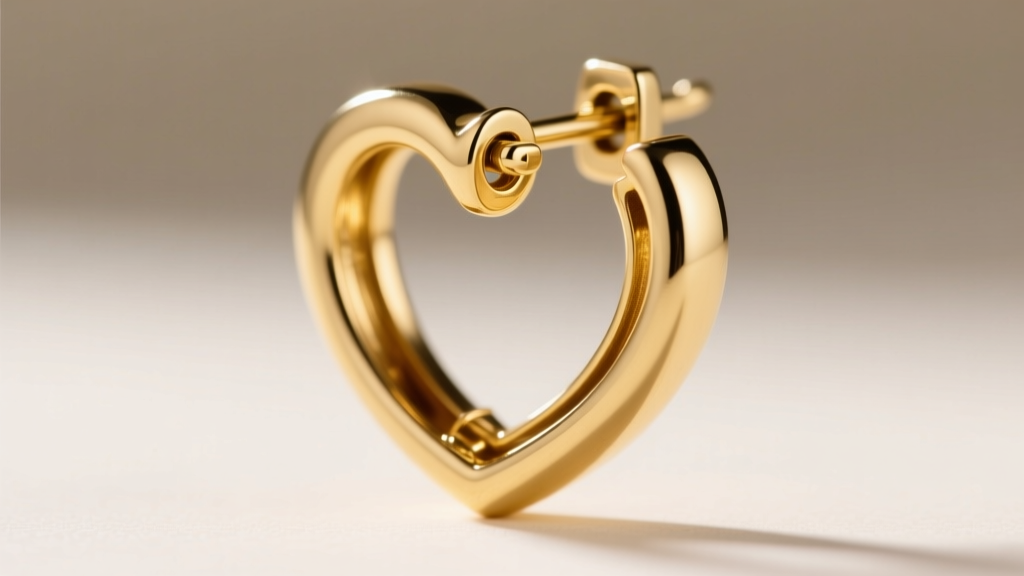
To fix a loose V-wire, do not simply bend it upward, as this weakens the structural integrity of the hinge joint. Instead, use a steel burnisher to gently compress and work-harden the metal at the base of the V-wire, restoring its natural spring tension. For clicker hinges, the internal tension arm can become flattened. A jeweler can use a micro-pry tool to lift the internal arm by a fraction of a millimeter, restoring the satisfying "click" and secure lock. If the hinge pin itself is loose, causing the hoop to wobble side-to-side, the pin must be carefully peened with a micro-hammer or replaced entirely by a professional.
Material Degradation: Tarnish, Discoloration, and Allergies
While gold itself is a noble metal that does not oxidize, the alloys mixed into 10k, 14k, and even 18k gold are highly reactive. Copper, commonly used to create rose gold and yellow gold, oxidizes when exposed to moisture and skin acids, leading to the dreaded "green skin" effect. Silver, another common alloy, reacts with sulfur in the air and cosmetics to form silver sulfide, which appears as a dark, blackish tarnish in the crevices of the heart design.
| Gold Karat | Gold Purity | Alloy Composition | Durability (Vickers Hardness) | Tarnish Risk & Troubleshooting |
|---|---|---|---|---|
| 10k Gold | 41.7% | High Copper/Silver/Zinc | ~160 HV (Very Hard) | High tarnish risk. Requires frequent polishing. Best for active wear. |
| 14k Gold | 58.3% | Moderate Copper/Silver | ~150 HV (Hard) | Moderate tarnish risk. The ideal balance of structural integrity and color. |
| 18k Gold | 75.0% | Low Copper/Silver | ~120 HV (Soft) | Low tarnish risk, but highly prone to warping and scratching. |
| 22k Gold | 91.6% | Trace Copper/Silver | ~70 HV (Very Soft) | No tarnish, but structurally unsuited for heart hoop tension points. |
Cleaning Protocol: For routine tarnish removal on solid gold heart hoops, use a few drops of mild dish soap (free of harsh detergents or moisturizers) in warm water and a baby-bristle toothbrush. Gently scrub the inner curves of the heart where sebum and dead skin cells accumulate. Warning: Never place hollow-cast gold heart hoops in an ultrasonic cleaner. The high-frequency cavitation can cause the thin gold shells to implode or trap water inside the hollow cavity, leading to internal corrosion and irreversible damage.
Solving the "Heavy Lobe" Problem
Because the heart shape is inherently bottom-heavy, the center of gravity sits lower than a standard circular hoop. This causes the earring to pull forward, stretching the piercing and making the heart flip upside down or sit awkwardly on the earlobe. This is especially problematic for older piercings or those with naturally thin lobes.
- Silicone O-Rings: The most cost-effective troubleshooting method. Slide a small, medical-grade silicone O-ring onto the back of the V-wire or post before closing the clasp. This creates friction against the back of the earlobe, preventing the hoop from sliding forward.
- Earring Lifters (Patch Backs): These are adhesive silicone patches that stick to the back of your earlobe, providing a reinforced, thicker surface for the earring to rest against. They distribute the weight of the bottom-heavy heart across a wider area of cartilage and tissue.
- French Wire Conversion: If the hoop's structural integrity is compromised at the top lobes due to heavy pulling, consider taking the earrings to a bench jeweler. They can snip the top curve and solder a sturdy 18-gauge French wire (fishhook) to the top of the heart, converting the hoop into a drop earring. This eliminates the stress on the hinge entirely while maintaining the heart aesthetic.
Professional vs. DIY Repairs: When to See a Jeweler
According to Jewelers of America, attempting complex structural repairs at home often leads to irreversible damage. While reshaping a solid wire hoop with nylon pliers or cleaning tarnish with a microfiber cloth are safe DIY tasks, certain red flags require professional intervention.
If your gold heart hoop features a crack near the bottom vertex, do not attempt to glue it or wrap it in wire. Gold soldering requires precise temperature control; a jeweler will use a laser welder to fuse the crack without melting the surrounding detailed edges of the heart. Similarly, if the earring features pave-set diamonds along the heart's border, any reshaping or ultrasonic cleaning must be avoided, as the prongs are likely already weakened by the setting process. A professional will tighten the prongs under a microscope before attempting any structural realignment.
By understanding the metallurgical properties of your gold alloys and the mechanical realities of the heart shape, you can extend the lifespan of your favorite earrings. Proper storage—keeping them in individual soft pouches to prevent the bottom vertex from scratching other pieces—combined with mindful wear, will ensure your gold heart hoops remain a timeless fixture in your collection for decades to come.


