The Ultimate Earrings Display Buying Guide for 2026
Discover the ultimate earrings display buying guide. Learn about anti-tarnish materials, exact sizing, and stability for your jewelry collection.

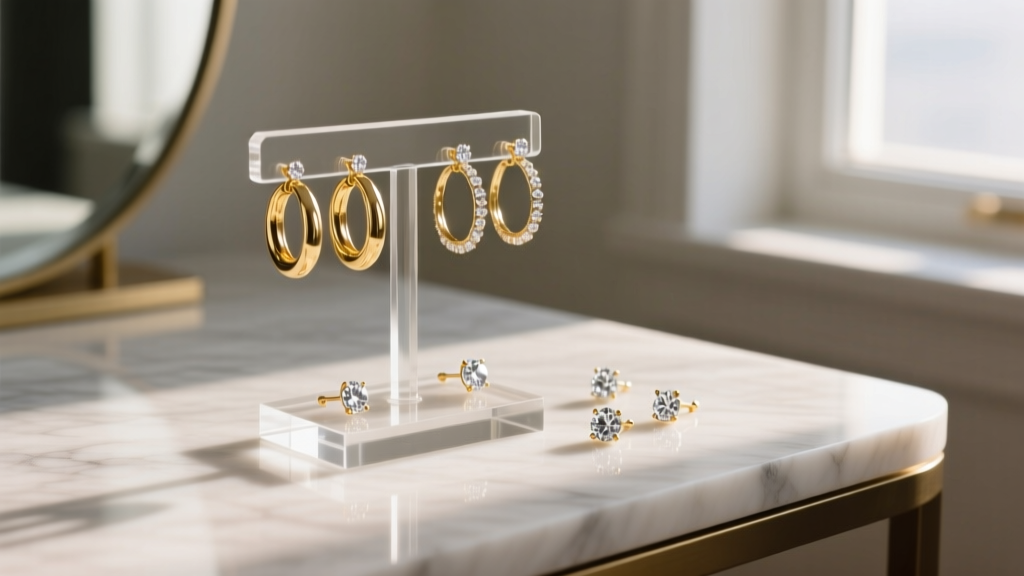
Organizing a jewelry collection is about far more than simple aesthetics; it is an exercise in material science, spatial geometry, and preservation. When it comes to ear wear, the wrong storage solution can lead to bent posts, tangled chains, and accelerated tarnishing. Whether you are a dedicated collector with hundreds of pairs, a boutique owner merchandising high-end goods, or someone simply trying to keep their daily studs from vanishing into a drawer, selecting the right earrings display requires a strategic approach.
In this comprehensive 2026 buying guide, we move past generic advice and dive deep into the exact specifications, material grades, and structural requirements you need to evaluate before purchasing an earring organizer. From the precise millimeter sizing required for different gauges to the chemical realities of anti-tarnish fabrics, here is everything you need to know to protect and showcase your collection.
The Anatomy of a Perfect Earrings Display
A high-quality display unit must balance three core pillars: material inertness, dimensional accuracy, and physical stability. Many mass-produced organizers fail on at least one of these fronts. For instance, a beautifully carved wooden tree might look elegant, but if the wood is unsealed, it will off-gas acidic vapors that actively corrode sterling silver and copper alloys. Similarly, an acrylic block with poorly drilled 1-millimeter holes will cause friction against standard earring posts, potentially loosening the gemstone settings over time.
According to the Gemological Institute of America (GIA), proper storage is the first line of defense against environmental damage to jewelry. Pieces should be stored individually to prevent scratching, and the storage medium itself must be chemically neutral. Let us break down exactly what to look for in the market.
Material Matters: Preventing Tarnish and Scratches
The material of your earrings display dictates the chemical environment your jewelry lives in. Tarnish on silver is primarily caused by a reaction with sulfur compounds and moisture in the air, but acidic off-gassing from certain display materials can drastically accelerate this process.
| Material | Pros | Cons & Failure Modes | Best For |
|---|---|---|---|
| Cast Acrylic | Optically clear, UV resistant, chemically inert. | Can scratch if cleaned with abrasive cloths; heavy. | Diamond studs, high-end hoops, retail merchandising. |
| Extruded Acrylic | Cost-effective, lightweight. | Prone to UV yellowing over 2-3 years; internal stress fractures. | Budget-friendly daily wear organizers. |
| Sealed Hardwood | Aesthetically warm, sturdy, durable. | Must be polyurethane sealed; raw wood emits corrosive acids. | Gold and platinum pieces, boho-chic aesthetics. |
| Pacific Silvercloth | Embedded with fine silver particles to absorb sulfur gases. | Requires a sealed outer container to remain effective long-term. | Sterling silver collections, heirloom pieces. |
| Powder-Coated Metal | Modern industrial look, highly durable. | Raw brass or iron will rust/tarnish and transfer to jewelry. | Statement dangles, heavy geometric pieces. |
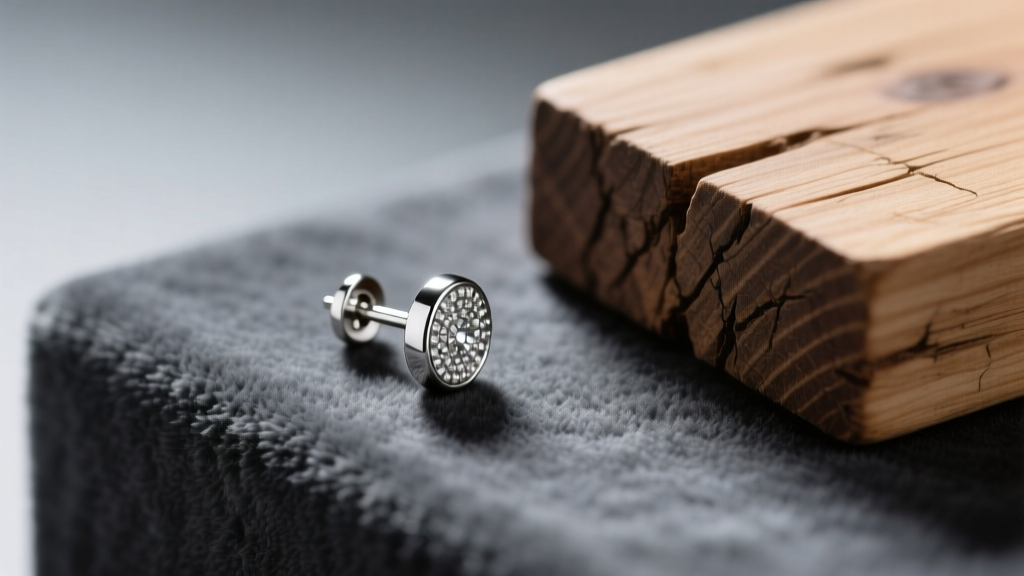
When shopping for fabric-lined displays, avoid standard synthetic velvets, which can generate static electricity and attract dust. Instead, look for displays lined with anti-tarnish flannel or treated microfiber, which are specifically woven to trap airborne pollutants before they reach your metals.
Sizing and Geometry: Matching the Display to the Earring Type
The most common point of failure in an earrings display is improper sizing. Earring posts, wires, and hoops come in specific gauges and diameters. If the display holes or slots are too tight, you risk bending the metal or scratching the finish. If they are too loose, the earrings will droop, putting uneven stress on the backing or the display itself.
Studs, Huggies, and Flat Backs
Standard earring posts typically range from 20-gauge (0.81mm) to 18-gauge (1.02mm). However, the friction backs or butterfly clutches add bulk. A premium display should feature holes drilled to exactly 2.0mm to 2.5mm in diameter. This provides enough clearance for the post to slide in effortlessly without the clutch scraping against the acrylic or wood. For flat-back labret studs (common in cartilage piercings), look for displays with recessed back channels so the flat disc sits flush and doesn't wobble.
Dangles and Drop Earrings
Gravity is the enemy of dangling earrings. If a drop earring rests on the base of the display, the wire can bend, or the bottom gemstone can suffer micro-abrasions. You must measure the longest dangle in your collection. A high-quality display should offer a minimum of 5.5 inches (14 cm) of vertical clearance between the insertion hole and the base. For chandelier earrings, look for tiered displays that offer staggered heights, ensuring that longer pieces on the bottom tier still have adequate breathing room.
Hoops and Ear Cuffs
Hoops require vertical slots rather than round holes. The ideal slot width is 1.5mm, allowing the hoop wire to pass through while keeping the earring upright. If you collect thick, tubular hoops or huggies, ensure the display features wider, graduated slots (up to 4mm) at the bottom edge to accommodate the thicker metal without forcing it. Ear cuffs, which lack posts entirely, require specialized grooved velvet inserts or angled acrylic ridges to hold them securely in place.
Stability and Weight Distribution: Avoiding the Topple Effect
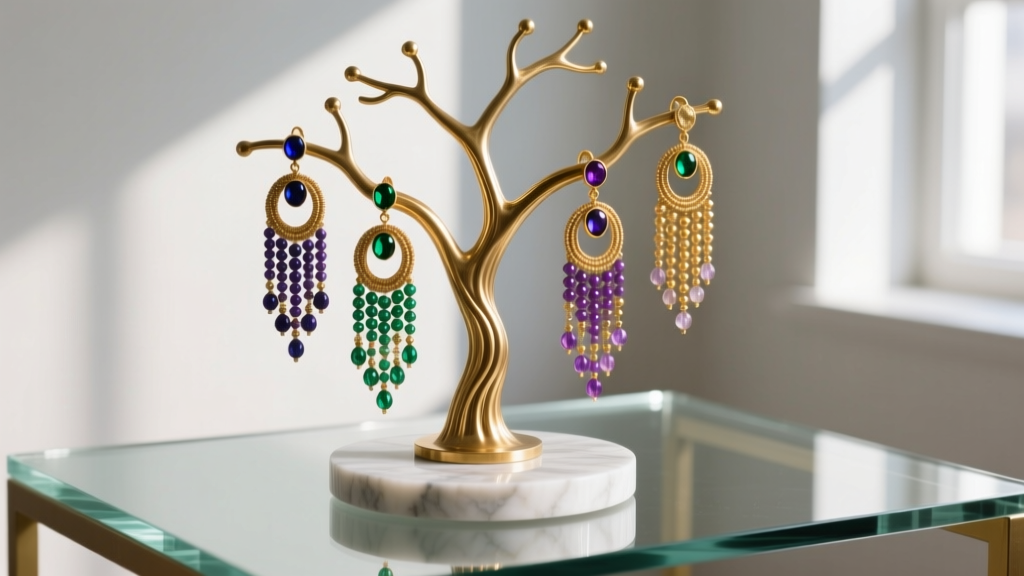
A beautifully designed earrings display is useless if it tips over every time you remove a heavy pair of statement earrings. The physics of display stability relies on the center of gravity and the base-to-height ratio.
When evaluating a freestanding display tree or T-bar stand, apply the 60% Rule: the diameter (or width) of the base should be at least 60% of the total height of the display. For example, a 10-inch tall display tree requires a base that is at least 6 inches wide. Furthermore, the base material should be dense. Cast iron, solid marble, or weighted resin bases provide the necessary ballast to counteract the lateral force applied when you pull a tight friction-back stud off the top peg.
Retail vs. Personal Use: Choosing the Right Format
Your use case will dictate the form factor of the display you should purchase. The requirements for a boutique owner differ vastly from those of a home collector.
- Personal Vanity Storage: Opt for enclosed, dust-proof acrylic boxes with pull-out drawers or hinged lids. Dust contains silica and skin cells, which can dull gemstones and accelerate tarnish. Enclosed displays with silicone gasket seals offer the best protection for high-wear daily pieces.
- Boutique Merchandising: Prioritize modular, stackable displays with neutral backgrounds (matte black, white, or light grey). Avoid highly reflective mirrors or bright neon acrylics, which create glare and distract from the jewelry. Look for displays with standard 45-degree angled faces, which ergonomic studies show is the optimal viewing angle for customers standing across a counter.
- Travel and Mobile Vendors: Weight and durability are paramount. Look for roll-up canvas or leather displays with individual snap-button straps. These distribute weight evenly in a bag and prevent metal pieces from clinking together during transit.
Lighting and UV Protection Considerations
If your earrings display is situated on a vanity near a window or in a sunroom, UV radiation is a silent threat. Prolonged UV exposure can fade organic gemstones like amethyst, kunzite, and turquoise, and it will rapidly degrade extruded plastics. If your display will be in direct sunlight, you must choose UV-filtering cast acrylic (often labeled as UF-3 or UF-5 grade), which blocks up to 95% of harmful ultraviolet rays while maintaining optical clarity. Never place dyed jade, opals, or pearls in a sunlit display, regardless of the material, as the heat and light will cause irreversible structural damage to the stones.
Final Verdict: Building Your Display Ecosystem
There is no single "perfect" earrings display that accommodates every type of ear wear flawlessly. The most effective approach is to build a modular ecosystem. Invest in a heavy, sealed hardwood or marble-base tree for your daily rotation of hoops and dangles, utilizing the 60% stability rule. Pair this with a UV-filtering, gasket-sealed cast acrylic drawer unit lined with anti-tarnish cloth for your sterling silver studs and heirloom pieces.
By paying strict attention to hole diameters, material inertness, and structural geometry, you transform your jewelry storage from a cluttered dumping ground into a professional-grade preservation environment. Your earrings will not only look spectacular when displayed, but they will also remain in pristine, ready-to-wear condition for decades to come.


