Earrings Shell Care Guide: Cleaning Mother of Pearl & Abalone
Master earrings shell care with our expert guide. Learn safe cleaning methods for mother of pearl, abalone, and organic nacre to prevent damage.

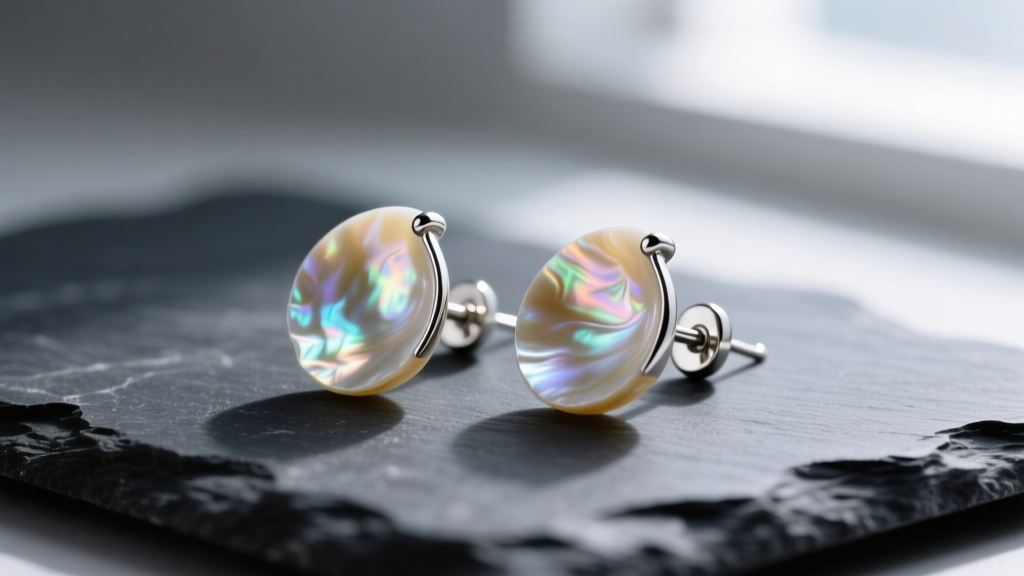
Organic gemstones have experienced a massive resurgence in fine and fashion jewelry, with intricate shell carvings and iridescent inlays becoming staple pieces in modern collections. However, when it comes to maintaining these delicate treasures, standard jewelry cleaning routines can be catastrophic. If you own earrings shell designs—ranging from classic mother of pearl (MOP) studs to vibrant Paua abalone drops—understanding the unique mineralogy of nacre is the first step in preserving their luster.
Unlike crystalline gemstones such as sapphires or diamonds, shell is an organic biomineral composite. It requires a highly specific, gentle approach to cleaning, hydration, and storage. This comprehensive guide breaks down the material science of shell earrings and provides an actionable, expert-level maintenance protocol to keep your pieces pristine for decades.
The Vulnerability of Organic Nacre: Why Shell Requires Special Care
To properly care for shell earrings, you must understand what they are made of. Shell is primarily composed of calcium carbonate (in the form of aragonite or calcite crystals) bound together by an organic protein matrix called conchiolin. According to the Mindat Mineral Database, aragonite is highly sensitive to acidic environments and thermal shock.
On the Mohs scale of mineral hardness, shell ranks between 2.5 and 4.0. This makes it exceptionally soft and prone to micro-scratching. Furthermore, the porous nature of the conchiolin protein means that shell acts like a microscopic sponge, readily absorbing harsh chemicals, perfumes, and even the natural acidic oils from your skin.
| Material | Mohs Hardness | Porosity | Ultrasonic Safe? |
|---|---|---|---|
| Mother of Pearl | 2.5 - 4.0 | High | Strictly No |
| Abalone / Paua | 2.5 - 4.0 | High | Strictly No |
| Conch Shell | 3.0 - 4.0 | Moderate | Strictly No |
| Diamond (Compare) | 10.0 | None | Yes |
| Jade (Compare) | 6.5 - 7.0 | Low | Caution |
Step-by-Step Cleaning Protocol for Shell Earrings
Never use commercial jewelry dips, ultrasonic cleaners, or steamers on shell earrings. Ultrasonic cavitation creates microscopic shockwaves that will delaminate the nacre layers, causing the shell to peel or shatter. Steam introduces thermal shock, which leads to 'crazing' (a network of fine internal cracks). Instead, follow this manual cleaning protocol:
- Prepare a Safe Solution: Mix two cups of distilled water (never tap water, as the minerals can leave hard water spots) with three drops of pH-neutral baby shampoo or pure liquid castile soap. Avoid any soap containing citrus extracts, as citric acid will etch the calcium carbonate.
- Targeted Wiping: Dip a lint-free microfiber cloth or a soft cosmetic sponge into the solution and wring it out until it is barely damp. Gently wipe the surface of the shell in a circular motion. Do not submerge the earrings, especially if they feature glued inlays or porous wooden components.
- Detailing the Settings: Use a soft-bristled baby toothbrush dipped in the solution to gently clean the crevices of carved shell earrings. Apply zero pressure; let the bristles do the work.
- Rinsing: Dampen a fresh cloth with pure distilled water and wipe away any soapy residue.
- Drying: Pat dry immediately with a clean, dry microfiber towel. Allow the earrings to air dry completely on a paper towel in a well-ventilated room before storing.
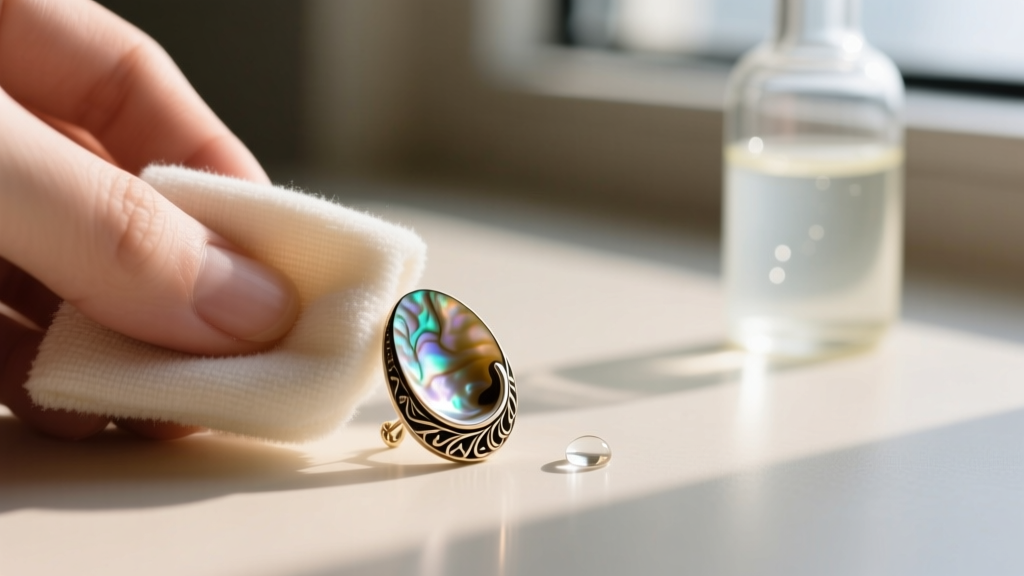
The Metal vs. Shell Dilemma: Cleaning Mixed-Material Settings
Most shell earrings are set in sterling silver, gold-filled, or brass hardware. This creates a maintenance dilemma: the chemicals required to polish tarnished silver will destroy the shell. Standard silver dips contain thiourea and strong acids that will instantly dissolve the outer layer of nacre, leaving a dull, chalky white haze that cannot be reversed.
How to Polish the Hardware Safely
To clean the metal settings without harming the shell, you must use a localized application method. Apply a tiny amount of non-ammonia silver polish (such as a specialized jeweler's rouge or a mild baking soda paste) to a cotton swab. Carefully trace the metal bezel or the earring post, ensuring the swab does not touch the shell. Once the tarnish is removed, use a separate, clean swab dampened with distilled water to rinse the metal, and dry immediately. For routine maintenance, use a treated anti-tarnish polishing cloth on the metal hardware only.
Preventative Maintenance: Hydration and UV Protection
Because shell contains the organic protein conchiolin, it can dry out over time, especially in low-humidity environments or when exposed to excessive heat. Dehydration leads to structural brittleness and a loss of the material's natural iridescent 'orient' (the play of color caused by light refracting through the nacre layers).
Expert Tip: Once every 12 to 18 months, apply a single drop of food-grade mineral oil to a soft cloth and gently buff the surface of your shell earrings. This mimics the natural hydration of the ocean environment, prevents crazing, and deeply enhances the color saturation of abalone and MOP.
Additionally, prolonged exposure to ultraviolet (UV) light can bleach certain types of shell. Conch pearls and vibrant pink or green abalone hues are particularly susceptible to UV fading. Always remove your shell earrings before spending extended time in direct sunlight or using UV tanning beds.
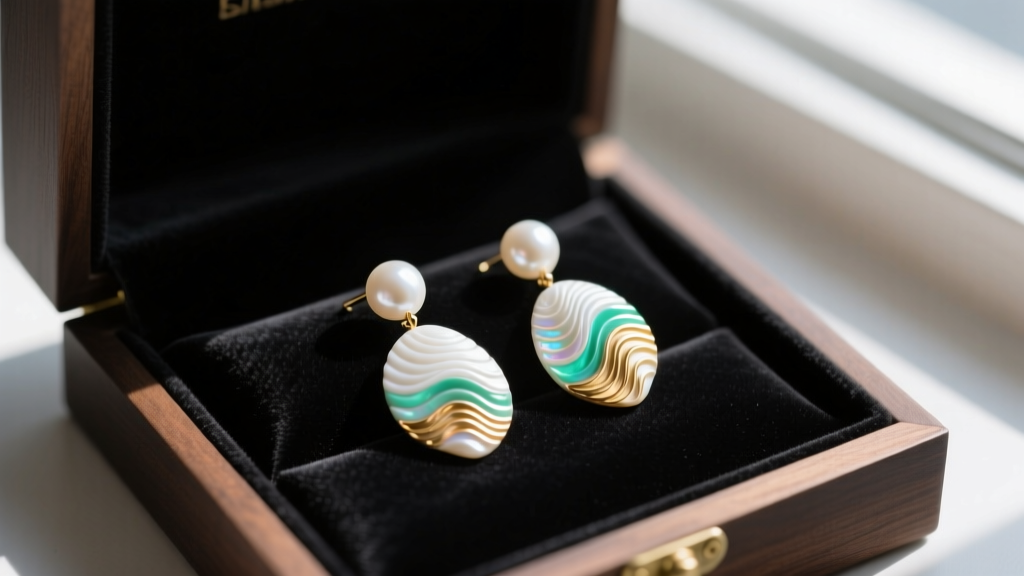
Storage Solutions to Prevent Micro-Scratches and Fading
Proper storage is just as critical as proper cleaning. Tossing shell earrings into a communal jewelry box is a guaranteed way to scratch the soft nacre against harder metals and gemstones.
- Individual Pouches: Store each pair of shell earrings in its own soft flannel or microfiber pouch. Avoid plastic baggies, which can trap moisture and promote mold growth on the organic proteins.
- Climate Control: Keep your jewelry box in a room with stable humidity (ideally between 40% and 50%). Avoid storing shell earrings in the bathroom, where fluctuating heat and humidity from showers can degrade the conchiolin matrix.
- Anti-Tarnish Strips: Place 3M anti-tarnish strips in your jewelry box to protect the metal hardware, but ensure the strips do not physically touch the shell material.
Quick Troubleshooting Guide for Common Shell Earring Issues
Issue: The Shell Looks Chalky or Cloudy
A chalky appearance is usually the result of chemical etching from perfume, hairspray, or acidic skin oils. If the damage is superficial, a professional jeweler can sometimes lightly polish the nacre with a specialized, ultra-fine jeweler's rouge to restore the luster. However, if the etching is deep, the structural integrity of the nacre may be permanently compromised.
Issue: White Crust Around the Bezel
This is typically a buildup of hard water minerals, dead skin cells, and soap scum. Soak a cotton swab in pure white vinegar for exactly five seconds, then gently dab the crusty buildup on the metal (avoiding the shell). The mild acetic acid will dissolve the calcium deposits. Immediately neutralize the area with a swab dipped in distilled water and dry thoroughly.
Issue: The Shell Inlay is Lifting
Many shell earrings feature thin slices of MOP or abalone glued into metal channels using jeweler's epoxy. Exposure to hot water, steam, or harsh solvents can degrade this adhesive. If you notice lifting, stop wearing the earrings immediately to prevent moisture from getting trapped underneath, which will cause mold. Take them to a bench jeweler for a professional epoxy reset. For more information on organic gemstone stability, refer to the GIA Gem Encyclopedia guidelines on organic materials.
By treating your earrings shell pieces with the respect their organic origins demand, you ensure that their iridescent beauty remains vibrant and structurally sound for a lifetime of wear.


