2026 Earrings Size Type Trends: Finding Your Perfect Fit
Discover 2026 earrings size type trends, from architectural drops to micro-huggies. Learn how to match gauge, weight, and style to your face shape and anatomy.
The 2026 Shift: Architectural Minimalism in Earrings Size Type
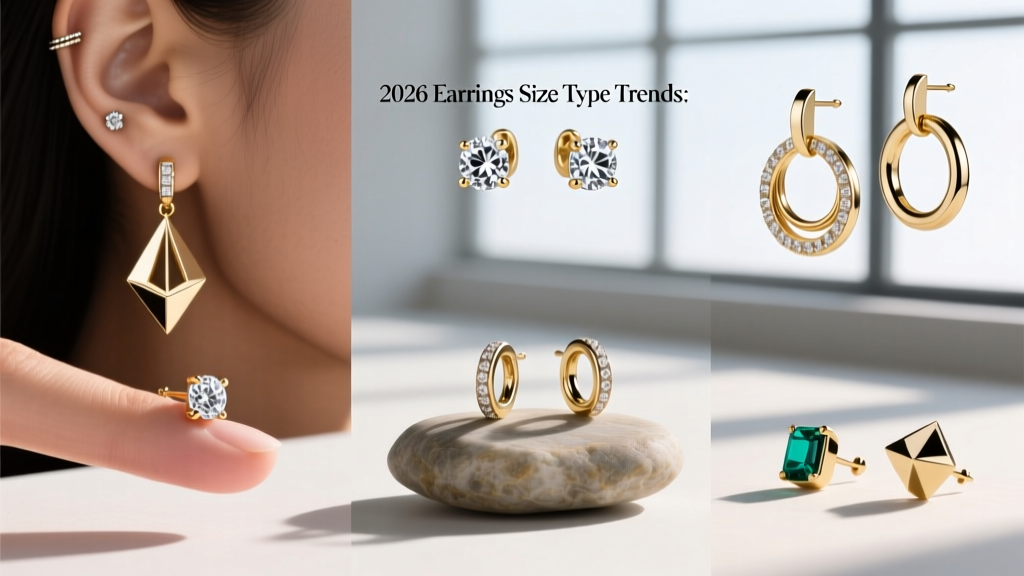
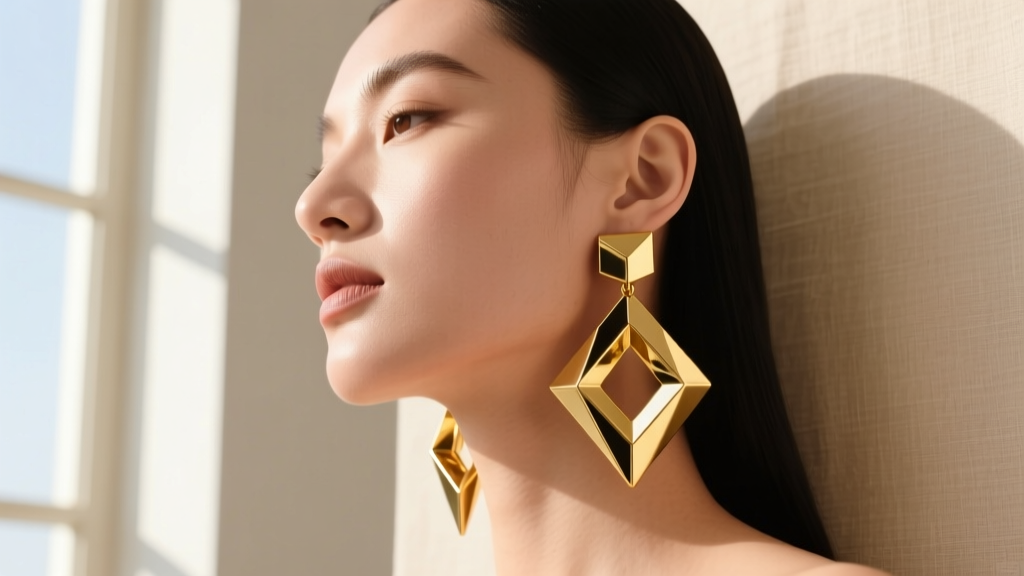
The jewelry landscape has undergone a radical transformation as we move through 2026. The chaotic, maximalist 'ear party' trend of the early 2020s—characterized by lobe overcrowding and mismatched aesthetic clutter—has officially retired. In its place, a highly intentional, precision-driven approach has taken over. When analyzing the modern earrings size type landscape, the dominant theme is 'Architectural Minimalism.' Consumers and stylists alike are no longer asking 'how many piercings can I show off?' but rather 'how does the exact proportion of this single piece interact with my anatomy?'
This shift has fundamentally changed how we evaluate jewelry. The focus is now on structural integrity, precise millimeter measurements, and the interplay of negative space. Mid-size geometric drops (ranging strictly from 1.25 to 1.75 inches) and ultra-thick, low-profile huggies (8mm to 10mm in diameter with a 2.5mm tube width) are dominating the market. These pieces are engineered to catch the light without overwhelming the wearer's natural features, proving that the right earrings size type is less about visual volume and more about calculated placement.
Decoding Earrings Size Type by Facial Geometry
Selecting the correct proportions is not merely a matter of personal preference; it is an exercise in facial geometry. The wrong size can exaggerate sharp angles or obscure delicate features, while the correct dimensions create a harmonious visual balance. Below is a definitive 2026 matrix for matching your facial structure to the ideal dimensions and silhouettes.
| Face Shape | Ideal Earrings Size Type | Recommended Dimensions | Styles to Avoid |
|---|---|---|---|
| Oval | Angular Drops, Geometric Studs | 1.0" - 2.0" drops; 6mm - 10mm studs | Overly long, narrow dangles that elongate the face excessively. |
| Square | Curved Hoops, Soft Teardrops | 12mm - 20mm hoops; 1.5" rounded drops | Boxy, sharp-edged geometric shapes that mirror the jawline. |
| Round | Linear Dangles, Rectangular Drops | 1.5" - 2.5" linear drops; narrow 4mm width | Large, wide circular hoops or clustered button studs. |
| Heart | Bottom-Heavy Drops, Chandeliers | 1.25" teardrops; 10mm bottom-weighted studs | Inverted triangles or top-heavy statement pieces. |
| Diamond | Stud Clusters, Medium Huggies | 8mm - 14mm huggies; 7mm multi-stone studs | Extremely narrow, long dangles that emphasize cheekbone width. |
The Weight Factor: Why Grams Matter More Than Inches
A critical, often overlooked component of the earrings size type equation is physical weight. In 2026, fine jewelry designers are utilizing advanced CAD modeling to hollow out the interiors of large statement pieces, reducing mass without sacrificing visual footprint. According to guidelines referenced by the Association of Professional Piercers (APP), a standard healed earlobe fistula can comfortably support 5 to 7 grams for an 8-hour wear period.
When drop earrings exceed 12 grams per ear, the continuous downward traction causes micro-tears in the collagen matrix of the lobe. Over time, this leads to irreversible elongation and migration of the piercing hole. If you are investing in a 2.5-inch architectural drop, ensure the designer specifies a weight under 8 grams, or opt for styles that feature an 'ear jacket' or upper-cartilage cuff to distribute the kinetic load across multiple anchor points.
Cartilage vs. Lobe: Gauge and Size Limitations
The anatomical real estate of the ear dictates strict limitations on what size and type of jewelry can be safely worn. While lobes are highly vascular and forgiving, cartilage piercings (helix, conch, tragus, daith) are avascular and prone to hypertrophic scarring if subjected to improper jewelry dimensions.
- Standard Lobe Piercings: Typically pierced at 20-gauge (0.81mm) or 18-gauge (1.02mm). They can accommodate heavy, large-diameter hoops (up to 30mm) and long dangles, provided the backing mechanism (like a secure screw-back or locking clutch) prevents the earring from drooping forward.
- Helix & Flat Piercings: Usually pierced at 16-gauge (1.29mm) or 14-gauge (1.63mm). The ideal earrings size type here is the micro-huggie (6mm-8mm inner diameter) or a flat-back labret stud (3mm-5mm top). Large, heavy hoops in a helix piercing act as a lever, catching on hair and clothing, which can warp the fistula angle and cause chronic irritation bumps.
- Conch Piercings: Because the conch sits in the deep 'bowl' of the ear, standard huggies will not close properly due to the curvature of the tissue. The correct size type is a large-diameter clicker ring (10mm-14mm) or a specialized conch cuff that requires no piercing at all.
Material Grades & Pricing Tiers for 2026
As the demand for precision-engineered jewelry grows, so does the necessity for biocompatible materials. The era of mystery-metal fashion jewelry causing contact dermatitis is ending. The Gemological Institute of America (GIA) and global metallurgical standards now heavily influence consumer expectations, with buyers demanding verifiable metal purities.
"In 2026, the hallmark of true luxury in earrings isn't just the carat weight of the diamond; it's the ASTM certification of the titanium post holding it. Consumers are educated, and they know that implant-grade materials are non-negotiable for long-term wear." — Journal of Contemporary Jewelry Design
Investment Breakdown by Material & Tier
When building a curated collection based on the correct earrings size type, allocate your budget according to these industry-standard tiers:
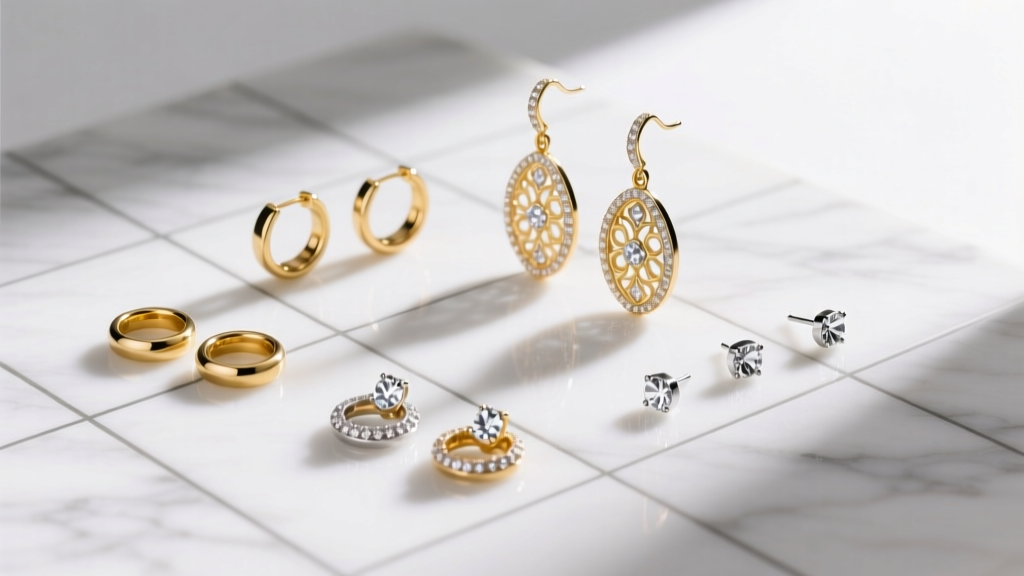
- Entry-Level Biocompatible ($40 - $90): Implant-grade titanium (ASTM F-136) and anodized niobium. These are the gold standards for fresh piercings and hyper-sensitive ears. They offer lightweight durability, making them ideal for larger, 1.5-inch hoop styles that would be too heavy in solid gold.
- Bridge Fine Jewelry ($150 - $350): 14k solid gold (yellow, white, or rose). At this tier, you are paying for the alloy's stability and the precision of the stone setting. Look for 14k gold micro-pavé huggies or 10mm geometric studs. Avoid gold-plated or gold-vermeil options for daily wear, as the friction from earring backs will wear through the microscopic gold layer within months.
- Heirloom & High Jewelry ($600 - $2,500+): 18k solid gold and platinum, featuring VS-clarity natural or lab-grown diamonds. At this price point, the earrings size type tends to skew toward sophisticated, mid-size drop earrings with complex, articulated hinges that move fluidly with the wearer's head movements.
The Mechanics of the Backing: Securing Your Size
The final, crucial element of the earrings size type analysis is the securing mechanism. A 2-inch drop earring weighing 6 grams will inevitably tilt forward if secured with a standard friction 'butterfly' back. For mid-to-large size types, you must demand mechanical security. Look for La Pousette backs (which use a mechanical spring-lock system similar to a camera lens), screw-backs (which thread directly onto the post), or hinged snap-locks for hoops. These mechanisms ensure that the earring remains perfectly perpendicular to the earlobe, maintaining the architectural silhouette the designer intended.
Final Thoughts on Curating Your 2026 Collection
Mastering your personal style this year requires moving beyond generic trends and understanding the intimate relationship between jewelry dimensions, material science, and your unique anatomy. By prioritizing the correct earrings size type—balancing facial geometry with gram-weight limitations and biocompatible metals—you transition from simply wearing accessories to curating a deliberate, sophisticated aesthetic. Whether you are opting for a single, bold 14mm titanium huggie or a pair of hollow-engineered 1.75-inch 18k gold drops, the power lies in the precision of your choice.


