Earrings Types of Backs: Technical Guide to Secure Fits
Explore the engineering, metallurgy, and mechanics of earrings types of backs. Learn gauge tolerances, thread pitches, and failure modes.

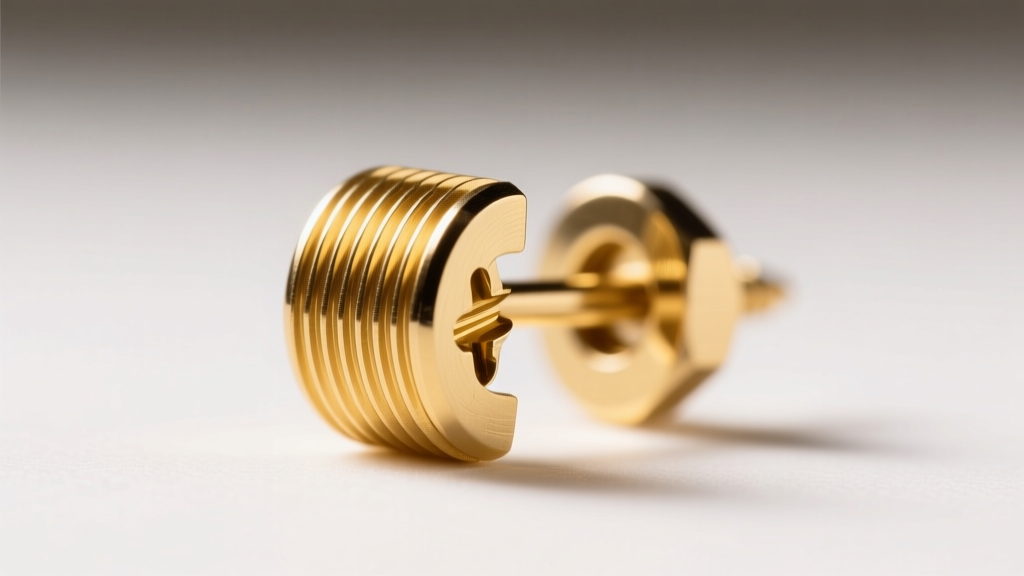
The Hidden Engineering of Earrings Types of Backs
When collectors and jewelers evaluate fine jewelry, the primary focus often lands on the carat weight of a gemstone or the purity of a precious metal alloy. However, a technical analysis of earrings types of backs reveals that the securing mechanism is frequently the most critical point of structural failure. The backing system must endure continuous biomechanical stress, thermal expansion, and exposure to sebum and cosmetic chemicals. In this expert deep dive, we deconstruct the metallurgy, mechanical tolerances, and failure modes of modern earring securing systems, moving beyond basic aesthetics into the realm of precision engineering.
Metallurgy and Galvanic Compatibility
The interaction between the earring post and the backing is a prime environment for galvanic corrosion if dissimilar metals are used. When a 14k yellow gold post (an alloy containing copper and silver) is secured with a standard 316L stainless steel friction back, the presence of moisture and salt from the skin creates an electrolytic cell. Over time, this accelerates the degradation of the less noble metal, leading to pitting and structural weakness.
Expert Standard: Always match the backing alloy to the post alloy. For hypoallergenic requirements, ensure both components are machined from Ti6Al4V ELI (ASTM F136 Grade 23 Titanium) or solid 14k/18k nickel-free gold. The Association of Professional Piercers (APP) strictly mandates implant-grade titanium or solid gold for initial and long-term wear to prevent contact dermatitis.
Furthermore, under the EU Nickel Directive (EN 1811:2011), post assemblies intended for prolonged skin contact must not release more than 0.2 µg/cm²/week of nickel. Many commercial 'gold-plated' backs fail this test once the microscopic plating layer wears away at the friction point, exposing a brass or nickel-silver core.
Friction vs. Screw Backs: Tolerances and Thread Pitch
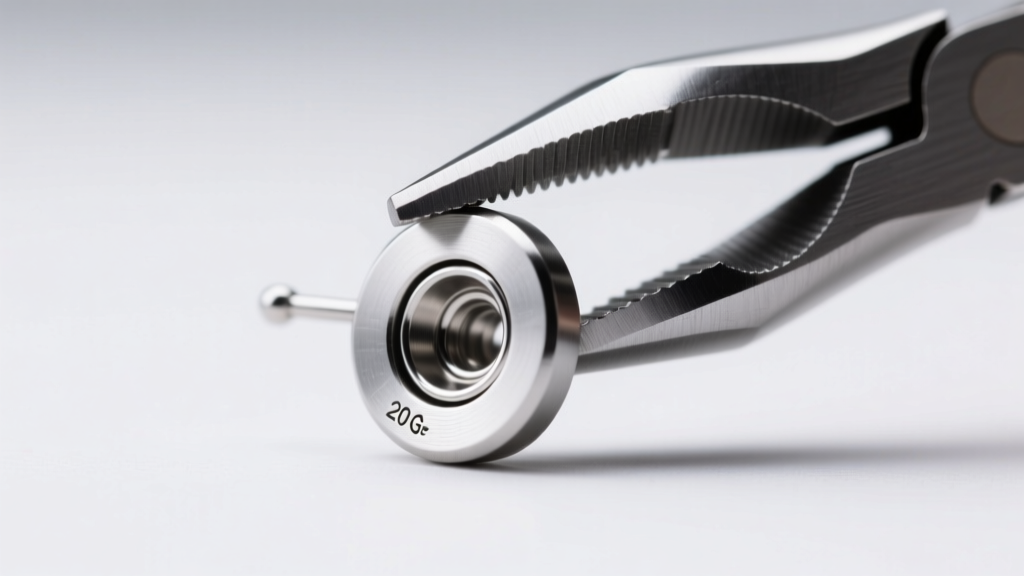
Friction backs, commonly known as butterfly backs, rely on a precise interference fit. The post is typically manufactured in standard wire gauges: 20G (0.81mm), 18G (1.02mm), or 16G (1.29mm). The backing features a central aperture with a stamped dimple designed to snap into a 0.15mm indentation grooved into the post. The primary failure mode here is metal fatigue in the stamped wings, which lose their spring tension after repeated compression, resulting in a backing that slides off with minimal lateral force.
Screw backs offer a vastly superior mechanical lock by utilizing a machined thread. High-end jewelers typically employ an M0.8 or M1.0 metric thread pitch on an 18G or 16G post. Unlike cast threads, which are prone to micro-porosity and stripping, CNC-machined screw threads provide a toleranced fit that resists vibrational loosening. According to manufacturing data analyzed by the Gemological Institute of America (GIA), precision-machined screw backs reduce accidental loss by over 85% compared to standard friction clasps, making them the mandatory choice for high-value diamond studs.
Hinged, Latch, and Clicker Mechanics
For hoops, huggies, and cartilage rings, the securing mechanism is integrated directly into the jewelry's circumference. Hinged segment rings and clickers utilize a spring-loaded pin or a tensioned wire that engages with a machined receptacle. The audible 'click' is the result of a micro-bevel snapping past a retention lip.
The engineering challenge in clickers is maintaining the structural integrity of the hinge pin, which is often less than 0.6mm in diameter. Repeated opening and closing, especially when subjected to the lateral torque of sleeping on a cartilage piercing, can cause the hinge pin to shear. Premium manufacturers mitigate this by using beryllium copper alloys for the internal spring components, which offer exceptional fatigue resistance compared to standard brass.
Omega and Clip-On Backs: Pressure Distribution
Non-pierced earrings rely on clamping force to remain secured to the earlobe. The omega back features a hinged, curved wire that applies continuous pressure against a padded saddle. The critical metric here is the clamping force, measured in Newtons (N). If the force exceeds 1.5N, it restricts capillary blood flow in the lobule, leading to pressure necrosis and severe discomfort within hours.
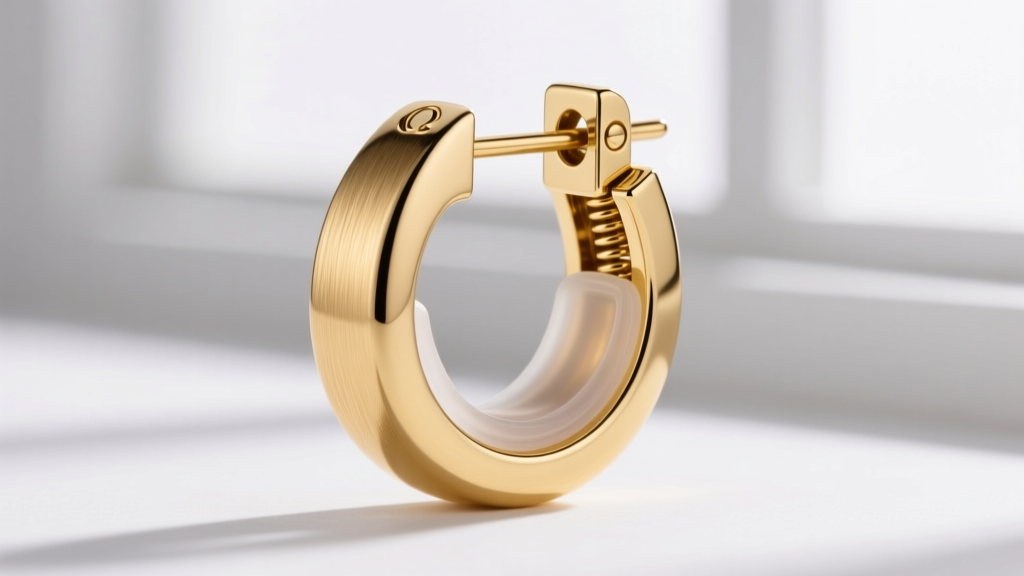
To optimize ergonomics, modern omega backs are fitted with medical-grade silicone sleeves that increase the surface area of contact, thereby reducing the pressure (P = F/A) exerted on the tissue. Adjusting the tension of an omega back requires specialized techniques; bending the wire without a mandrel will inevitably warp the structural alignment and ruin the hinge geometry.
Technical Comparison Matrix
| Back Type | Mechanism | Optimal Gauge | Primary Failure Mode | Security Rating |
|---|---|---|---|---|
| Friction (Butterfly) | Stamped dimple interference | 20G - 18G | Wing metal fatigue | 4/10 |
| Screw Back | M0.8 / M1.0 threaded lock | 18G - 16G | Thread stripping (if cast) | 9/10 |
| La Pousette | Spring-loaded dual pushers | 18G - 14G | Spring corrosion / debris jam | 10/10 |
| Clicker / Hinge | Tensioned wire into receptacle | 16G - 12G | Hinge pin shearing | 7/10 |
| Omega Clip | Hinged wire clamping force | N/A (Non-pierced) | Saddle pad degradation | 5/10 |
Troubleshooting Mechanical Failures
As a bench jeweler or informed collector, diagnosing and repairing backing failures requires specific protocols. Below are actionable troubleshooting steps for the most common mechanical issues:
- Loose Friction Backs: Do not use standard steel pliers to squeeze the wings of a butterfly back, as this will mar the rhodium or gold plating. Instead, use nylon-jaw pliers to gently compress the wings inward, restoring the tension against the post groove. If the aperture has stretched beyond 0.9mm on a 20G post, the backing must be replaced.
- Stripped Screw Threads: If a screw back cross-threads, it is usually due to sebum and cosmetic debris trapped in the post grooves. Submerge the post and back in an ultrasonic cleaner operating at 40kHz for three minutes in a mild enzymatic solution. Use a fine brass brush to clear the flutes. Never force a threaded back; if it does not spin freely after two rotations, the threads are compromised.
- Clicker Latch Slippage: When a huggie or segment ring fails to 'click' shut, the retention lip is likely worn, or the tension wire has bent outward. Using a rawhide mallet and a steel ring mandrel, gently tap the hinge area to realign the housing. If the internal wire is bent, use a 0.5mm micro-pry tool to apply slight inward pressure to the tension arm.
- Omega Back Slippage: If the clamping force is insufficient, the hinge pin may be loose. Inspect the rivet heads on the hinge. If they are flush and tight, the issue lies in the omega wire's curvature. The wire must be carefully annealed, bent to a tighter radius using a step-jaw plier, and then work-hardened to retain the new shape.
Understanding the intricate mechanics of earrings types ofbacks transforms how you purchase, wear, and maintain fine jewelry. By prioritizing CNC-machined tolerances, matched metallurgy, and ergonomic pressure distribution, you ensure that the structural foundation of your jewelry is as flawless as the gemstones it holds.


