The Best Metals for Earrings with Cuffs: Grip, Tension, and Alloys
Discover how metal properties affect the grip, weight, and safety of earrings with cuffs. Compare titanium, silver, and gold alloys for cartilage.

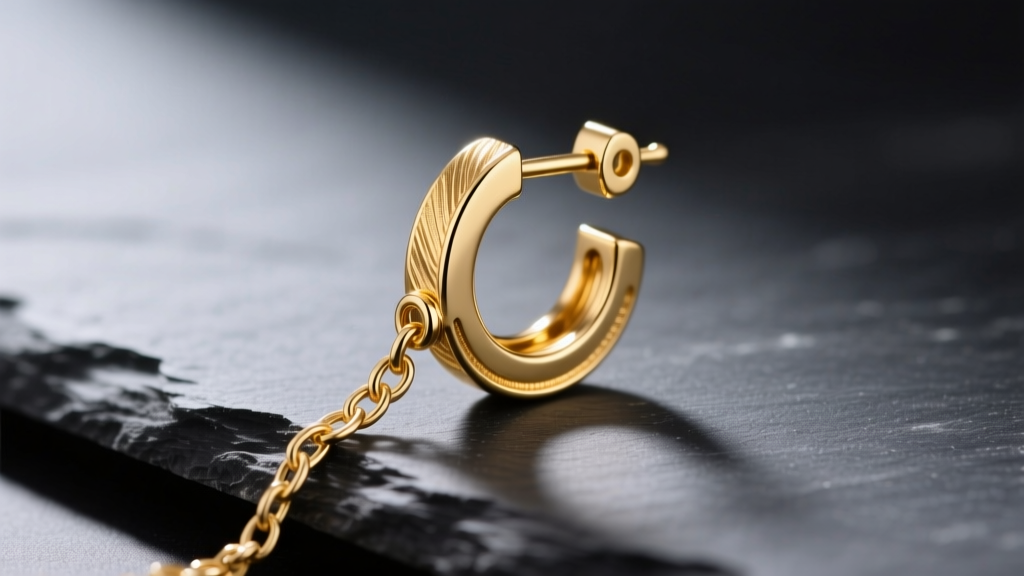
When exploring the architecture of modern ear styling, earrings with cuffs represent a unique engineering challenge. Unlike standard studs or hoops that rely entirely on the structural support of a pierced fistula, earrings that incorporate cuffs—such as lobe-to-helix chain connectors or integrated cuff-hoops—must balance the biomechanics of tension, friction, and weight distribution. The metal alloy chosen for these designs is not merely an aesthetic decision; it dictates the jewelry's grip strength, its susceptibility to metal fatigue, and its long-term biocompatibility against the thin skin of the outer ear.
In this comprehensive material guide, we analyze the metallurgical properties that make or break the functionality of ear cuffs, providing you with a data-driven framework for selecting pieces that offer secure wear without compromising cartilage health.
The Biomechanics of Ear Cuffs: Why Material Dictates Grip
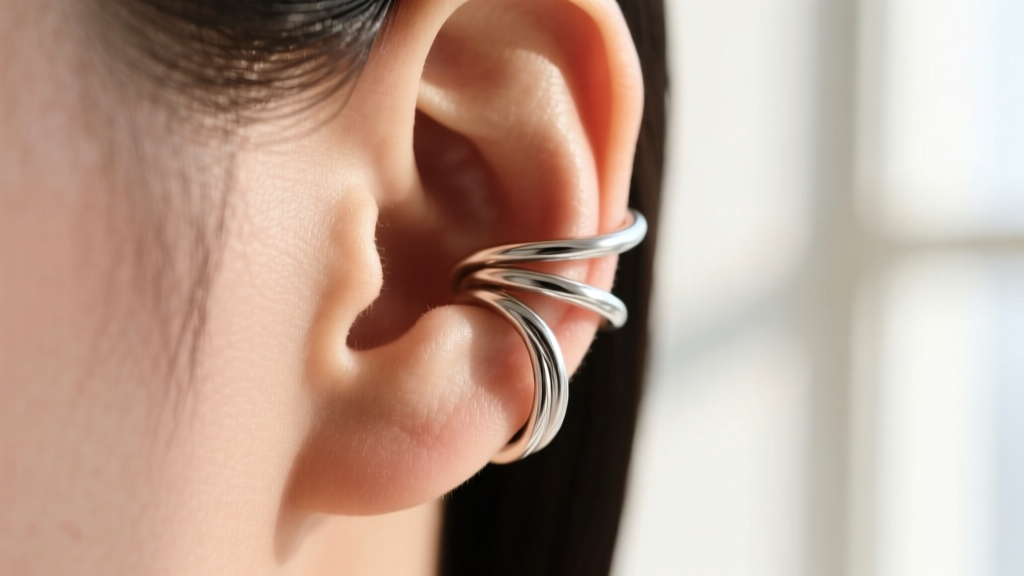
An ear cuff relies on radial tension to stay affixed to the auricular cartilage (typically the helix or conch rim). This requires a metal that possesses specific yield strength and elasticity. If a metal is too rigid, it will not conform to the unique curvature of the wearer's ear, resulting in a loose fit and inevitable slippage. Conversely, if a metal is too soft, the constant micro-adjustments and friction will cause the cuff to warp, lose its tension, and eventually snap.
The Cantilever Effect in Connected Earrings
Earrings with cuffs often feature a connecting chain or rigid bar linking a lobe piercing to a cartilage cuff. This creates a cantilever effect. If the cuff material lacks sufficient grip and slides down the ear, the entire kinetic load of the chain and dangle components is suddenly transferred to the lobe piercing. This sudden yanking can cause tissue tearing, migration, or the dreaded 'cheese-cutter' effect. Therefore, the coefficient of friction between the metal and the skin, combined with the metal's ability to maintain its clamping force, is critical for the safety of the primary piercing.
Wire Gauge and Tension Thresholds
The thickness of the wire used to form the cuff loop directly impacts its mechanical behavior. According to jewelry manufacturing standards, the optimal wire gauge for adjustable ear cuffs falls between 18-gauge (1.02mm) and 20-gauge (0.81mm).
- 18-Gauge (1.02mm): Provides excellent structural integrity for cuffs that support heavy chains or multiple gemstone settings. However, it requires significant manual force to adjust, making it less ideal for wearers with limited dexterity or highly sensitive cartilage.
- 20-Gauge (0.81mm): Offers superior malleability, allowing the wearer to gently squeeze the cuff for a custom fit. It is the industry standard for minimalist, lightweight chain-connected earrings, though it is prone to warping if subjected to lateral stress.
Material Breakdown for Earrings with Cuffs
Not all metals behave equally under the continuous stress of a tension-fit cuff. Below is a comparative analysis of the most common alloys used in cuff manufacturing, evaluating their mechanical and chemical properties.
| Material Alloy | Standard Gauge | Malleability & Memory | Oxidation Risk | Best Application |
|---|---|---|---|---|
| Grade 23 Titanium (Ti-6Al-4V ELI) | 18g - 16g | Low malleability, high elastic memory | Zero (Highly inert) | Fixed-size cuffs, hinged mechanisms |
| 925 Sterling Silver | 20g - 18g | High malleability, low memory | Moderate (Tarnishes with sulfur) | Adjustable minimalist cuffs |
| 14k / 18k Solid Gold | 20g - 18g | Moderate malleability, high durability | Zero (Does not tarnish) | Premium everyday wear, heavy chains |
| Brass / Copper Base | 20g - 18g | Very high malleability, zero memory | High (Reacts to skin pH) | Costume jewelry (Not recommended) |
The Work Hardening Failure Mode in Sterling Silver
Sterling silver (92.5% silver, 7.5% copper) is the most popular choice for adjustable ear cuffs due to its ease of manipulation. However, it suffers from a metallurgical phenomenon known as work hardening. Every time you bend a sterling silver cuff to adjust the fit, the crystal lattice of the metal becomes strained. Over time, this repeated bending causes micro-fractures within the wire. According to the Association of Professional Piercers (APP), while silver is acceptable for healed piercings, its structural fatigue makes it a liability for tension-based cuffs that require frequent resizing. If you own silver cuffs, adjust them once to fit your ear and avoid repeatedly opening and closing the loop.
Titanium's Elastic Memory Challenge
Implant-grade titanium (Ti-6Al-4V ELI) is the gold standard for biocompatibility, but its high yield strength makes it incredibly difficult to use for *adjustable* cuffs. If you bend a titanium cuff, it will aggressively spring back to its original shape due to its elastic memory. Therefore, when purchasing titanium earrings with cuffs, look for designs that utilize a micro-hinge or a factory-calibrated tension spring, rather than a simple bendable wire loop.
Navigating Contact Dermatitis and Oxidation
The outer ear is highly susceptible to contact dermatitis. The cuff mechanism traps sebum, sweat, and dead skin cells against the cartilage, creating a humid microenvironment that accelerates galvanic corrosion in reactive metals.
The Hidden Dangers of Base Metal Alloys
Many fast-fashion brands manufacture earrings with cuffs using brass or nickel-silver (an alloy containing no actual silver, but high in copper and nickel). When the acidic pH of human sweat interacts with copper, it produces copper chloride, resulting in the infamous green discoloration on the skin. More dangerously, the American Academy of Dermatology notes that nickel is the leading cause of allergic contact dermatitis. Because cuffs apply continuous pressure to the skin, any nickel leaching from a base metal alloy will cause a much more severe and rapid allergic reaction compared to a loosely fitting dangle earring.
Plating Thickness and PVD Coatings
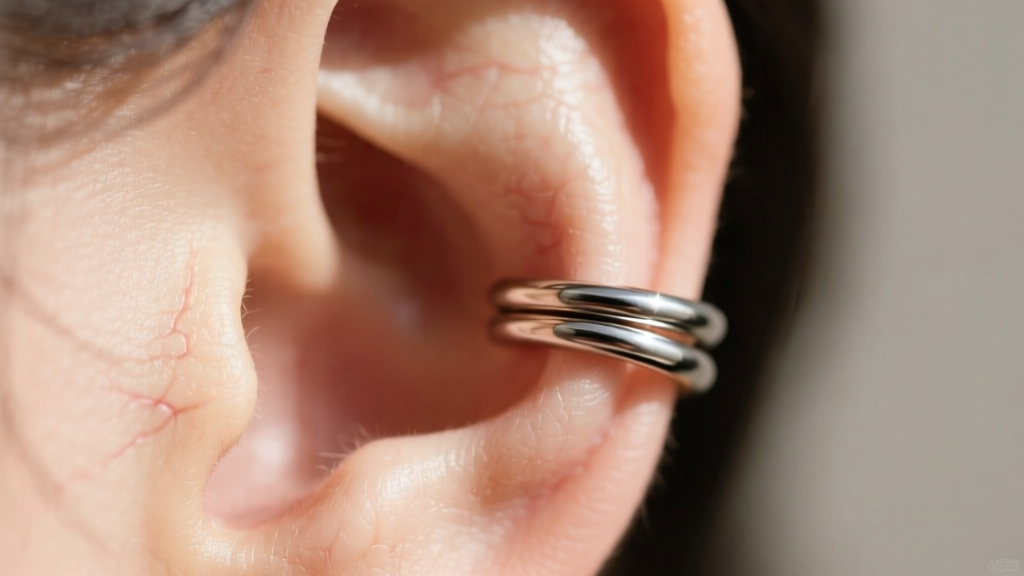
If you prefer the look of gold but require the strength of stainless steel or titanium, understanding plating is essential. Standard electroplated gold vermeil (which must be at least 2.5 microns thick over a sterling silver base) will eventually wear away at the friction points where the cuff grips the ear. Once the silver is exposed, it will tarnish and require polishing.
For superior longevity in cuff mechanisms, seek out PVD (Physical Vapor Deposition) coatings. PVD bonds gold or rose gold to a 316L surgical steel or titanium base at a molecular level in a vacuum chamber. PVD coatings are up to 10 times more resistant to friction and sweat corrosion than traditional electroplating, ensuring the cuff maintains its grip and color even with daily wear.
Expert Framework: Selecting the Right Alloy for Your Cartilage
To ensure your earrings with cuffs remain secure, comfortable, and structurally sound, use the following decision framework based on your wearing habits and ear anatomy:
- For Active Lifestyles & Humid Climates: Opt for Grade 23 Titanium with a PVD finish. The titanium provides a hypoallergenic, sweat-proof base, while the PVD coating offers the desired aesthetic without the risk of friction-induced tarnishing. Ensure the design features a hinged cuff rather than a bendable loop.
- For Delicate or Thin Helix Rims: Choose 20-gauge 14k Solid Gold. The 14k alloy provides enough copper and zinc to give the wire a slight 'bite' and memory, allowing it to grip thin cartilage securely without the aggressive spring-back of titanium or the fatigue-prone nature of sterling silver.
- For Heavy Lobe-to-Cuff Chains: Avoid sterling silver entirely. The kinetic pull of a heavy chain will slowly warp a silver cuff, causing it to slide off. Invest in 18-gauge solid gold or surgical steel to maintain the structural integrity of the cuff loop under lateral tension.
"The success of an ear cuff relies entirely on the harmony between the metal's yield strength and the wearer's cartilage thickness. A well-engineered cuff should feel like a gentle embrace, not a vice grip, and the chosen alloy must be capable of maintaining that precise tension indefinitely."
By prioritizing metallurgical properties over fleeting aesthetics, you can curate a collection of earrings with cuffs that offer both avant-garde style and uncompromising structural reliability.


