White Opal Earrings: 2026 Gift Guide & Style Match
Discover the perfect white opal earrings for any 2026 occasion. Our expert gift guide covers grades, settings, and pricing for flawless gifting.

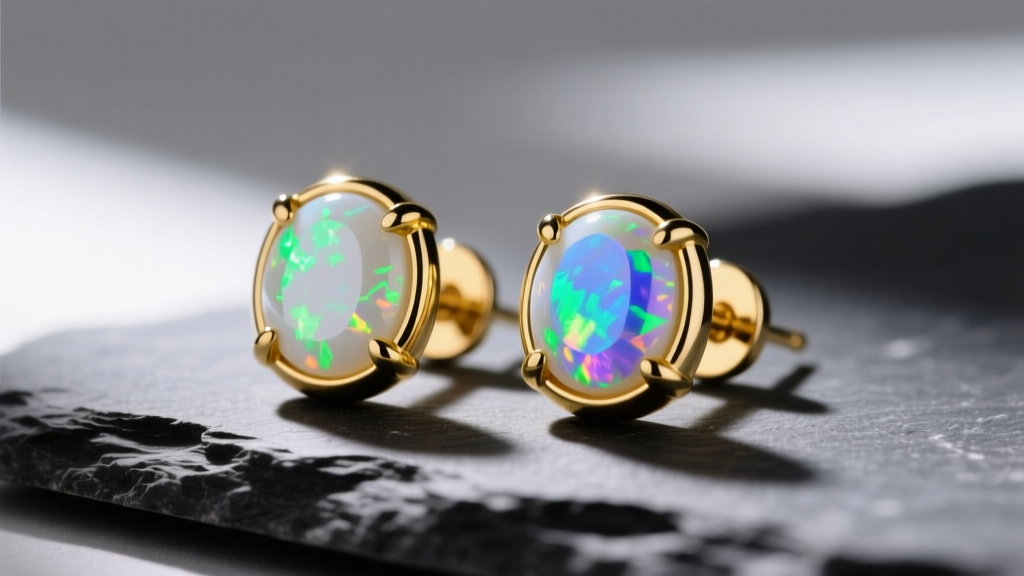
Why White Opal Earrings Make the Ultimate Gift
When selecting a gift that balances ethereal beauty with deep personal meaning, white opal earrings stand in a league of their own. As the official gemstone for the 14th wedding anniversary and the birthstone for October, opals carry a rich tapestry of symbolism. However, gifting opal jewelry in 2026 requires more than just an eye for aesthetics; it demands a solid understanding of gemology, structural integrity, and the recipient's lifestyle. Unlike diamonds or sapphires, opals are delicate, water-sensitive, and structurally unique. This guide will equip you with the exact specifications, material grades, and styling frameworks needed to choose the perfect pair of white opal earrings for any milestone.
Decoding Opal Grades and Origins: What Are You Buying?
The term "white opal" refers to the stone's base body color, which ranges from translucent to a milky, pale white (classified on the GIA scale as N7 to N9). The magic lies in the "play-of-color"—the spectral flashes that dance across the surface. But not all white opals are created equal, and the origin drastically dictates how the earrings should be worn and cared for.
Australian vs. Ethiopian: The Hydrophane Factor
This is the most critical E-E-A-T distinction in modern opal gifting. Most white opals on the market today originate from either Australia (primarily Coober Pedy) or Ethiopia (the Welo region).
- Australian Solid Opals: These are non-porous and highly stable. They can withstand occasional contact with water and are the gold standard for everyday stud earrings.
- Ethiopian Welo Opals: These are hydrophane, meaning they are highly porous and absorb liquids. If the recipient showers, swims, or even sweats heavily while wearing Ethiopian opals, the stones will temporarily absorb the moisture, turning cloudy and losing their fire until they fully dry out. Furthermore, they can absorb oils and lotions, leading to permanent discoloration.
Gift-Giving Rule: If the recipient leads an active lifestyle or prefers to never take her jewelry off, you must purchase solid Australian opals. If she is meticulous with her accessories and reserves them for evening wear, Ethiopian opals offer a more intense, neon 3D play-of-color at a lower price point.
Beware of Doublets and Triplets
When shopping, you will encounter assembled stones. A doublet consists of a thin slice of opal glued to a dark backing (often black onyx or glass) to enhance the color contrast. A triplet adds a clear quartz or glass dome on top for protection. While these are affordable and visually striking, they should never be gifted as "solid" opals, and they must never be submerged in water, as the adhesive layers will delaminate and ruin the stone.
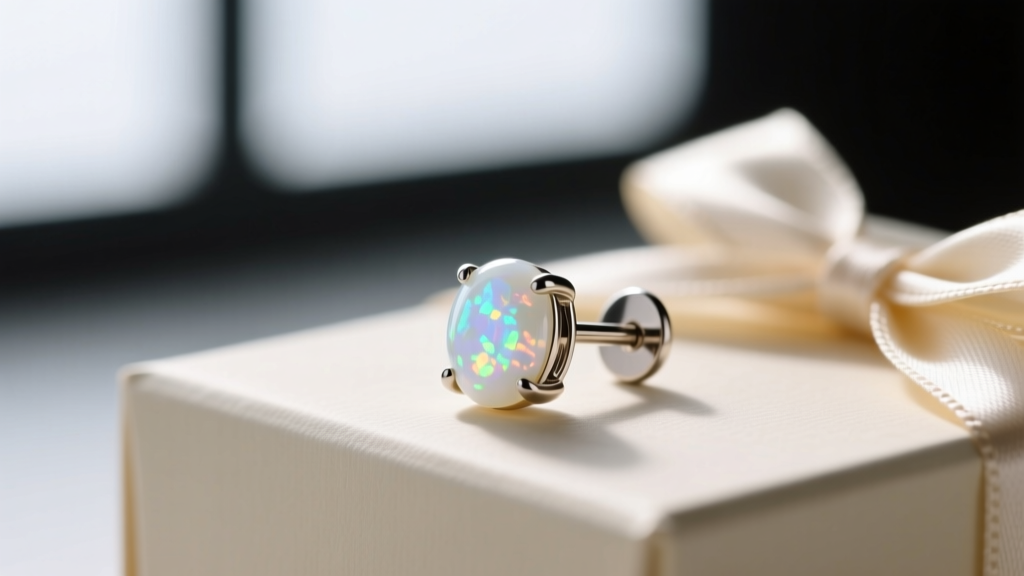
Matching Earring Silhouettes to Face Shapes
A truly thoughtful gift considers how the jewelry will interact with the recipient's natural features. Matching the earring silhouette to her face shape elevates the present from a simple accessory to a personalized compliment.
- Round Faces: Benefit from angular drops or elongated dangles to create vertical lines and lengthen the profile. Avoid large, circular hoops or wide cluster studs.
- Square Faces: Look best with rounded studs, curved huggies, or teardrop shapes to soften a strong, angular jawline.
- Oval Faces: Can pull off almost any style, but geometric ear cuffs or modern asymmetrical drops add a contemporary edge.
- Heart-Shaped Faces: Should opt for teardrop or chandelier opal earrings that are wider at the bottom to balance a narrower chin.
- Long or Elongated Faces: Avoid extremely long dangles, as they will drag the features downward. Instead, opt for wider, horizontally oriented designs like opal ear climbers or cluster studs that add visual width and balance to the facial proportions.
Occasion Matching: Style and Setting Framework
Matching the earring style to the specific occasion ensures your gift feels deeply considered. Here is a breakdown of the best white opal earring styles based on the milestone you are celebrating.
| Occasion | Recommended Style | Opal Type & Grade | Estimated Price Range |
|---|---|---|---|
| 14th Anniversary | Bezel-Set Studs or Halos | AAA Solid Australian (N7 Base) | $300 - $800 |
| October Birthday | Dangle or Drop Earrings | AA Ethiopian Welo (High Fire) | $80 - $250 |
| Graduation / Career | Ear Cuffs or Huggies | AA Solid Australian or Doublets | $120 - $350 |
| Bridesmaid Gifts | Delicate Threaders | A-Grade Ethiopian or Lab-Created | $40 - $120 |
The 14th Anniversary: Prioritizing Longevity
For a 14th wedding anniversary, the gift must symbolize endurance. Because opals rank between 5.5 and 6.5 on the Mohs hardness scale according to the Gemological Institute of America (GIA), they are prone to scratching and chipping. Avoid prong settings, which leave the edges of the cabochon exposed. Instead, opt for a bezel setting in 14k or 18k gold, where a continuous rim of metal completely encircles the opal's girdle, protecting it from lateral impacts.
Birthdays and Fashion Milestones
For birthdays or fashion-forward gifting, you have more freedom to experiment with structural designs like opal ear cuffs or huggie hoops. Cartilage piercings (like the helix or tragus) typically require a slightly thicker post for stability. While standard lobe studs use a 20-gauge (0.81mm) post, cartilage huggies often utilize an 18-gauge (1.0mm) or 16-gauge (1.2mm) wire to prevent the "cheese-cutter effect" that thin wires can cause in delicate cartilage tissue.

Metal Pairings for Sensitive Ears
Opals are often set in yellow gold to enhance their warm, fiery flashes, but metal choice is critical if the recipient has nickel allergies or sensitive lobes.
- 14k or 18k Yellow Gold: The classic pairing. The warm undertones amplify the red and orange spectral flashes within white opals.
- Platinum or 14k White Gold: Ideal for highlighting the cool blue and green pinfire patterns. Ensure white gold is rhodium-plated to prevent nickel exposure.
- Implant-Grade Titanium (ASTM F-136): The ultimate choice for fresh piercings or hyper-sensitive ears. Titanium is lightweight, completely nickel-free, and provides a sleek, modern contrast to the milky white base of the opal.
Care and Maintenance: The Hidden Cost of Ownership
A responsible gift guide must address maintenance. Gifting opal earrings means gifting a high-maintenance gemstone. Include a care card with your present to ensure the stones survive for decades.
Expert Warning on Crazing: Australian opals contain a small amount of water (typically 3% to 10%). If exposed to extreme heat, sudden temperature changes, or very dry environments over long periods, they can develop a network of fine cracks known as "crazing." When storing opal earrings in a safety deposit box or a dry safe, place them in a sealed ziplock bag with a damp cotton ball to maintain ambient humidity.
Furthermore, never clean opal earrings in an ultrasonic or steam cleaner. The high-frequency vibrations can easily fracture the stone's internal silica spheres, permanently destroying the play-of-color. A simple wipe with a soft, damp microfiber cloth is all that is required to remove skin oils and restore the stone's luster. It is also vital to remove opal earrings before applying hairspray, perfumes, or cosmetics. The chemicals in these products can dull the polish of the cabochon and, in the case of Ethiopian stones, seep into the porous surface and cause irreversible yellowing.
Sourcing Ethically and Avoiding Synthetics
As lab-grown gemstones surge in 2026, buyers must be vigilant. Synthetic opals (like the Gilson process opals) have the exact same chemical composition as natural opals but exhibit a tell-tale "columnar" or "snakeskin" pattern when viewed under magnification due to the lack of natural silica sphere randomness. While synthetics are a budget-friendly alternative (often under $50), they should never be passed off as natural. Always request a certificate of authenticity or purchase from reputable jewelers who disclose whether the stone is natural, lab-created, or an assembled doublet/triplet. For more on identifying assembled stones and ethical sourcing, consult the American Gem Society's opal buying guide.
By understanding the nuances of hydrophane properties, bezel protections, and gauge specifications, you can confidently select a pair of white opal earrings that will be cherished for a lifetime. Whether celebrating a 14th anniversary or an October birthday, the right knowledge transforms a beautiful gift into an enduring heirloom.


