Black and White Pearl Earrings: 2026 Style Trends
Discover 2026 style trends for black and white pearl earrings. Learn to mix Tahitian and Akoya pearls, luster grades, and face-shape styling.

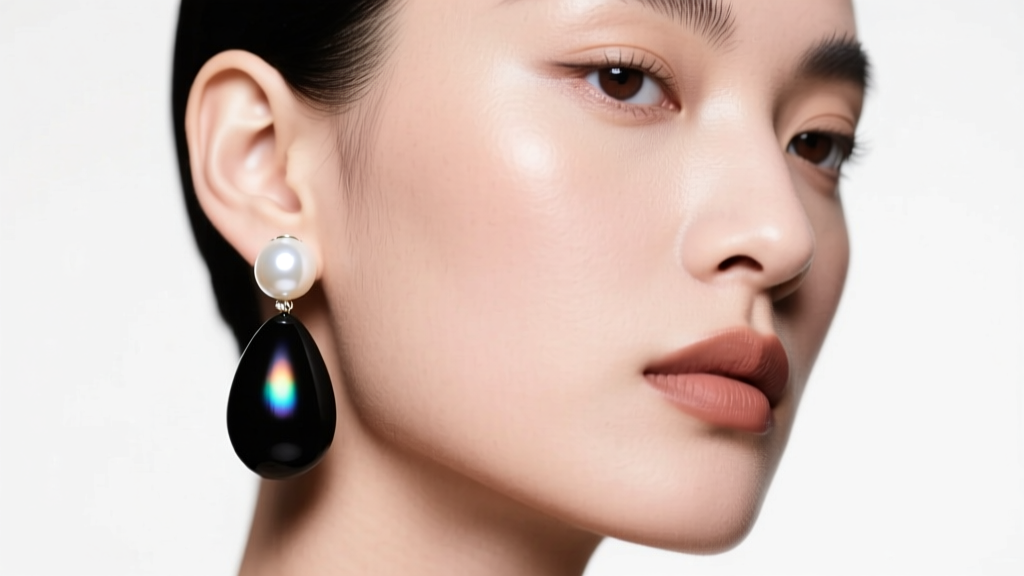
The jewelry landscape of 2026 has decisively moved away from safe, uniform matching sets. Today’s most compelling ear curation relies on high-contrast juxtapositions, and nothing captures this ethos quite like black and white pearl earrings. By pairing the deep, mysterious overtones of Tahitian pearls with the brilliant, mirror-like luster of white Akoya pearls, designers and style enthusiasts are creating striking visual tension. This guide breaks down the gemological nuances, structural considerations, and styling frameworks you need to master the monochrome pearl trend this year.
The Resurgence of Monochrome Pearl Contrast
Historically, pearl jewelry demanded strict uniformity. A strand or a pair of studs had to match in size, color, and overtone. However, as outlined in Vogue's recent jewelry trend reports, the 2026 aesthetic champions intentional dissonance. Black and white pearl earrings represent the pinnacle of this shift. The visual weight of a dark pearl grounds the earlobe, while a bright white pearl reflects light, creating a dynamic interplay that draws the eye. This dual-tone approach allows for greater versatility, bridging the gap between daytime minimalism and evening avant-garde styling.
Decoding the Pearls: Tahitian vs. Akoya
To curate a high-quality pair of black and white pearl earrings, you must understand the gemological differences between the two primary pearl types used in this trend. According to the Gemological Institute of America (GIA), these pearls originate from entirely different mollusk species and possess distinct structural properties.
The Black Pearl: Tahitian (*Pinctada margaritifera*)
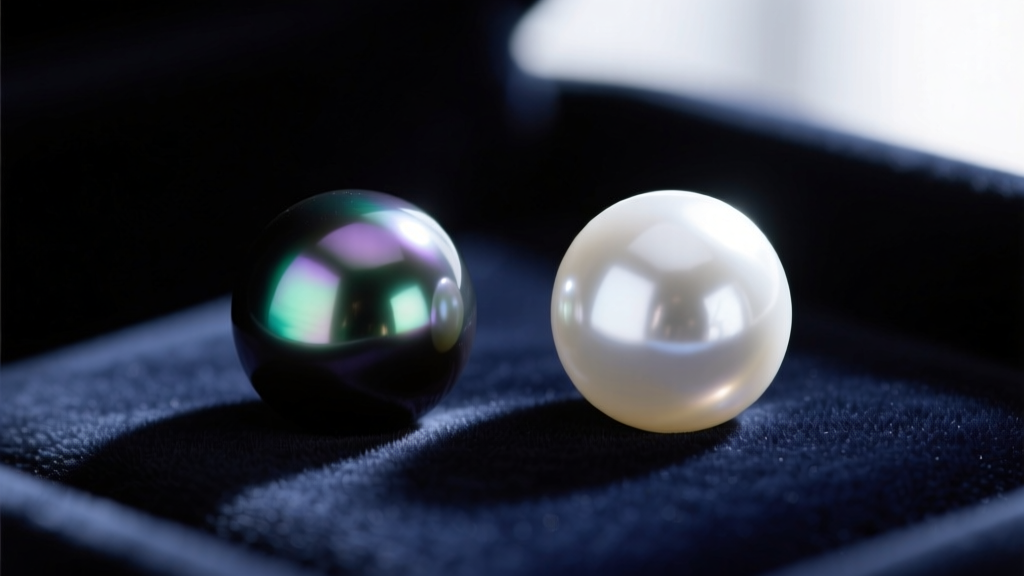
True black pearls are not dyed; they are naturally produced by the black-lipped oyster. They typically range from 8mm to 14mm in diameter. The most prized Tahitian pearls feature a dark charcoal or greenish-black body color with a "peacock" overtone—a shimmering iridescence of purple, green, and blue. When selecting a Tahitian pearl for an earring, look for a minimum nacre thickness of 0.8mm to ensure durability and deep luster.
The White Pearl: Akoya (*Pinctada fucata martensii*)
Akoya pearls are the gold standard for brilliant white pearls. Ranging from 6mm to 9mm, they are smaller than Tahitians but boast a sharper, more mirror-like luster due to the dense, crystalline structure of their nacre. Premium Akoya pearls often undergo a gentle bleaching and enhancing process (maeshori) to achieve a pure white body color with delicate rose or silver overtones. For the highest quality, seek out Hanadama-certified Akoya pearls, which guarantee exceptional luster and a minimum nacre thickness of 0.4mm.
2026 Silhouette Trends: Asymmetry and Ear Curation
The way we wear black and white pearl earrings has evolved beyond the traditional matched stud. This year, the focus is on architectural silhouettes and multi-piercing curation.
The Mismatched Drop
Asymmetry remains a dominant force in 2026. A popular configuration involves wearing a heavy, 11mm Tahitian drop earring on the left lobe, balanced by a delicate, 7mm Akoya stud on the right. To prevent the heavier Tahitian pearl from pulling the earlobe downward, it is crucial to use La Pousette locking backs or omega-backs, which distribute the weight more evenly across the cartilage and lobe tissue.
Tension-Set Ear Cuffs and Huggies
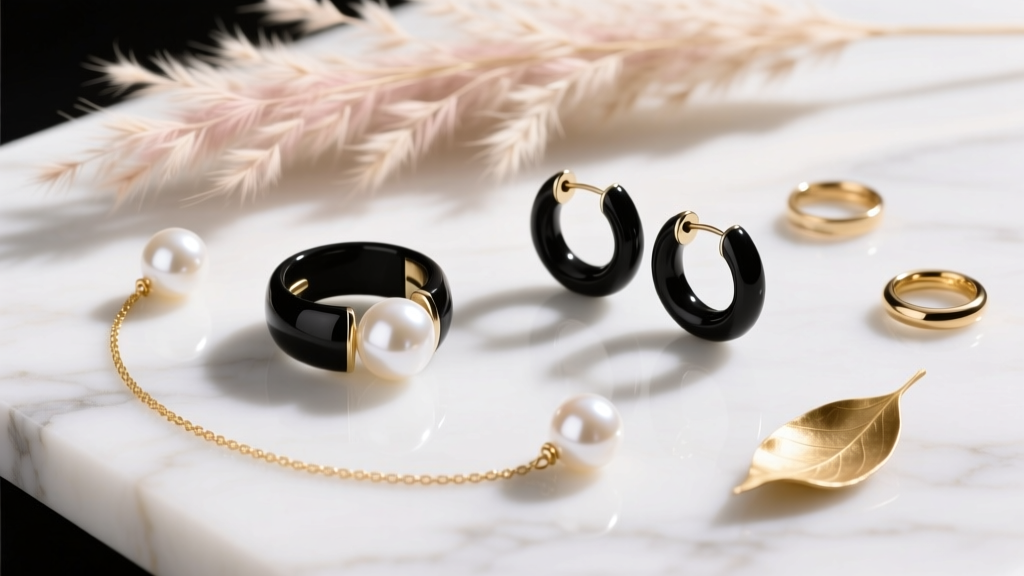
For those without cartilage piercings, tension-set ear cuffs featuring a single black pearl climbing the helix, paired with a white pearl huggie on the primary lobe piercing, offer a non-committal way to embrace the trend. Ensure that cartilage huggies are crafted in 16-gauge (1.29mm) wire to fit standard upper ear piercings snugly without causing migration or irritation.
Metal Pairings: Gold vs. Platinum
The metal chosen to set black and white pearls drastically alters the final aesthetic. In 2026, mixed-metal settings are highly prevalent. Setting the white Akoya pearl in platinum or white gold enhances its icy, silver overtones, while setting the black Tahitian pearl in 18k yellow gold creates a warm, luxurious contrast that highlights its peacock or aubergine undertones. This mixed-metal approach bridges the gap between warm and cool jewelry wardrobes, making the earrings incredibly versatile for everyday wear.
Sizing, Luster, and Pricing Matrix
Understanding the market value of these gemstones is critical for making informed purchasing decisions. The pricing of black and white pearl earrings is heavily dictated by size, luster grade, and surface cleanliness. Below is a comprehensive breakdown of what to expect in the current luxury market.
| Pearl Type | Typical Size (mm) | Luster Grade | Price Range (USD) | Best Earring Style |
|---|---|---|---|---|
| White Akoya | 6.0 - 8.5 | Hanadama / AAA | $300 - $1,200 | Classic Studs, Huggies |
| Black Tahitian | 8.0 - 12.0 | AAA (Peacock) | $800 - $3,500 | Dangles, Asymmetrical Drops |
| Mixed Contrast | 7.0 - 10.0 | AA+ / AAA | $1,500 - $5,000 | Ear Curations, Mismatched |
Note: Prices reflect 2026 market averages for 18k gold or platinum settings. Silver settings will reduce the baseline price by approximately 30-40%.
Styling for Face Shapes and Skin Undertones
The high-contrast nature of black and white pearl earrings makes them an incredible tool for facial contouring and color theory.
- Round Faces: Opt for long, linear drop earrings that feature a white Akoya pearl at the top and a teardrop Tahitian pearl at the bottom. The vertical line elongates the face, while the dark bottom pearl creates a visual anchor that slims the jawline.
- Angular/Square Faces: Choose curved silhouettes, such as black and white pearl hoop earrings or circular huggies. The soft, rounded geometry of the pearls will offset sharp jawlines and prominent cheekbones.
- Cool Undertones: Look for white Akoya pearls with distinct silver or icy-blue overtones, paired with Tahitian pearls that lean toward a cool, steely charcoal or blue-green peacock.
- Warm Undertones: Select Akoya pearls with warm, creamy rose overtones and Tahitian pearls that exhibit rich aubergine, copper, or pistachio overtones to complement golden skin tones.
Care and Maintenance for Dual-Tone Pearls
Pearls are organic gemstones with a Mohs hardness of just 2.5 to 4.5, making them highly susceptible to scratching and chemical damage. Maintaining the striking contrast of your black and white pearl earrings requires a meticulous care routine.
Expert Rule of Thumb: Always put your pearls on last and take them off first. Hairsprays, perfumes, and cosmetics contain alcohols and volatile organic compounds (VOCs) that will rapidly degrade the nacre's crystalline structure, dulling the luster of both the black and white pearls.
After each wear, gently wipe the pearls with a damp, lint-free microfiber cloth to remove skin oils and environmental pollutants. Never use ultrasonic cleaners, steamers, or harsh jewelry dips, as these will strip the nacre and potentially dissolve the epoxy used to secure the pearls to their metal posts. Store your earrings in a soft silk pouch separate from harder gemstones like diamonds or sapphires, which will easily scratch the pearl's delicate surface. Finally, because pearls need moisture to prevent cracking, avoid storing them in airtight plastic bags or overly dry environments like safety deposit boxes for extended periods.
By understanding the gemological distinctions, structural requirements, and styling nuances of black and white pearl earrings, you can confidently navigate this sophisticated 2026 trend. Whether you opt for a subtle mismatched stud configuration or an avant-garde ear curation, the interplay of light and dark pearls offers a timeless yet thoroughly modern aesthetic.


