How to Pair Gold Earrings with Silver Necklace: 2026 Guide
Master the mixed-metal trend. Our buying guide reveals how to flawlessly pair gold earrings with a silver necklace using karat and finish rules.


The outdated rule that your jewelry suite must perfectly match is officially dead. In 2026, the hallmark of advanced personal styling is intentional contrast. However, learning how to successfully pair gold earrings with silver necklace pieces requires more than just throwing two different metals together. Done poorly, it looks like a morning rush mistake; done correctly, it creates a curated, editorial aesthetic that draws the eye and highlights your unique features.
As a senior style analyst for Jewel Style Radar, I have tested hundreds of mixed-metal combinations. This comprehensive buying guide will walk you through the exact material grades, karat weights, proportional scaling rules, and undertone matrices you need to know before investing in your next mixed-metal jewelry wardrobe.
The Undertone Matrix: Matching Gold Karats to Silver Finishes
Not all gold is created equal, and the specific alloy mix of your earrings will dictate how they interact with the cool tones of a silver necklace. According to the Gemological Institute of America (GIA), the purity of gold (measured in karats) drastically alters its color profile due to the copper and silver alloys used in the mixture.
14k vs. 18k Yellow Gold
When wearing a bright, rhodium-plated sterling silver necklace, 18k yellow gold (75% pure gold) can sometimes clash. Its high copper content gives it a rich, orange-leaning warmth that can look muddy against the icy blue-white reflectivity of polished silver. Instead, opt for 14k yellow gold (58.3% pure gold). The higher silver and zinc alloy content in 14k gold yields a paler, more subdued yellow that bridges the temperature gap beautifully, creating a harmonious contrast rather than a jarring one.
Rose Gold and Oxidized Silver
If your silver necklace features oxidized (darkened) details or a brushed matte finish, rose gold earrings are your best investment. The copper-heavy pink hue of rose gold complements the vintage, gritty texture of oxidized silver, creating a cohesive, neo-gothic or bohemian aesthetic that feels deeply intentional.
| Earring Metal | Ideal Silver Necklace Finish | Vibe / Aesthetic |
|---|---|---|
| 14k Yellow Gold | High-Polish Rhodium Plated | Modern, Clean, Minimalist |
| 18k Yellow Gold | Matte or Hammered Silver | Warm, Earthy, Artisan |
| Rose Gold | Oxidized or Brushed Silver | Vintage, Romantic, Edgy |
| White Gold (Unplated) | Satin-Finish Sterling | Subtle, Monochromatic, Sleek |
Proportional Scaling: Earring Silhouettes vs. Necklace Weights
The most common failure point when mixing metals near the face and neck is a clash in visual weight. If you wear a heavy, 10mm sterling silver Cuban link chain, pairing it with massive gold chandelier earrings will overwhelm your facial structure and make the mixed metals look chaotic.
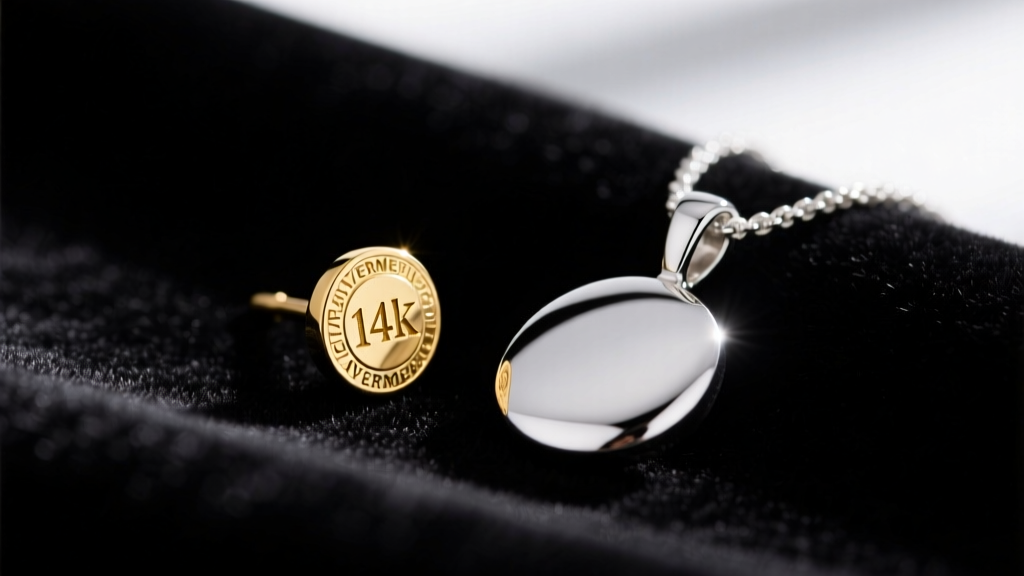
To master proportional scaling, use the Anchor and Accent framework:
- The Heavy Anchor: If your silver necklace is a statement piece (e.g., a chunky 15-gram paperclip chain), your gold earrings must act as delicate accents. Choose 14k gold huggies (10mm-12mm diameter) or minimalist gold threader earrings. The silver commands the chest, while the gold subtly frames the jawline.
- The Delicate Anchor: If you are wearing a whisper-thin 1.2mm silver satellite chain, you have the visual real estate to wear chunky gold tube hoops (25mm-30mm) or heavy gold drop earrings. The delicate silver acts as a subtle shimmer on the collarbone, allowing the gold earrings to take center stage.
Material Integrity: Avoiding the Mixed-Metal Trap
When buying gold earrings to pair with a sterling silver necklace, you must understand the base metals to avoid skin reactions and uneven tarnishing. The Federal Trade Commission (FTC) Jewelry Guides strictly regulate how metals can be marketed, and knowing these terms will save you from buying cheap, mismatched sets.
Why Base Metals Matter
Never buy gold-plated brass or copper earrings to wear with a sterling silver necklace. Brass reacts to skin pH and sweat entirely differently than the 7.5% copper alloy in sterling silver. Within hours, the brass-based earrings may leave a green residue on your lobes, while your silver necklace remains pristine, instantly highlighting the cheapness of the earrings and ruining the illusion of a curated mixed-metal look.
The Vermeil Standard
If you are buying on a budget, seek out Gold Vermeil earrings. By legal definition, vermeil must consist of a 925 sterling silver base coated with at least 2.5 microns of 10k or higher gold. Because the base metal is identical to your silver necklace (sterling silver), the pieces will age, tarnish, and react to your body chemistry at the exact same rate, maintaining a cohesive look over time. Expect to pay between $45 and $120 for high-quality vermeil studs or small hoops.
Expert Storage Warning: Never store your gold earrings and silver necklace tangled together in a humid bathroom. When dissimilar metals touch in the presence of moisture and salts, it can trigger galvanic corrosion, accelerating the tarnish on your silver and degrading the gold plating. Store them in separate anti-tarnish cloth pouches.
The 'Bridge Piece' Strategy
If you feel that your gold earrings and silver necklace are too visually disconnected, introduce a 'bridge piece.' This is a secondary jewelry item that contains both metals, acting as a visual translator for the eye.
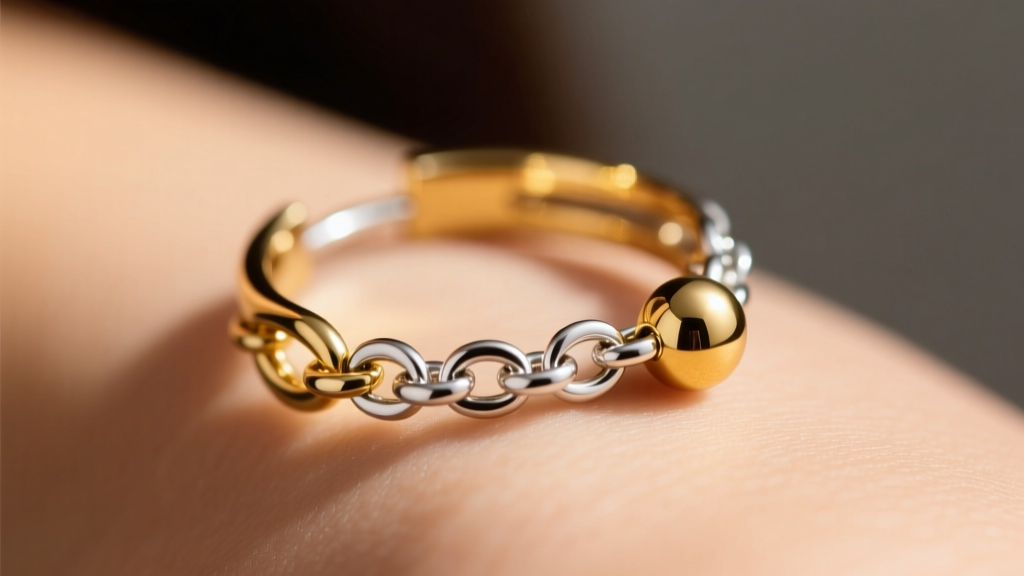
For example, if you are wearing 14k gold stud earrings and a plain silver chain necklace, add a mixed-metal ear cuff to your upper cartilage (typically 18g or 16g thickness). An ear cuff that features a silver band with a small gold bezel-set gemstone will perfectly tie the lobe and the neckline together. Alternatively, you can slide a two-tone gold-and-silver pendant onto your silver chain to draw the gold tone down toward the chest.
Face Shape & Metal Reflectivity
Metals interact with light differently, which impacts how they frame your face. According to Encyclopedia Britannica, silver possesses the highest electrical and thermal conductivity of all metals, which translates optically into a highly reflective, bright, and cool surface. Gold, conversely, absorbs more blue light, resulting in a warmer, softer reflectivity.
- Round Faces: Use long, linear silver drop necklaces to elongate the neck and torso, while utilizing warm gold drop earrings to soften the jawline. The cool silver draws the eye vertically, while the warm gold adds flattering dimension to the cheeks.
- Angular/Square Faces: Opt for circular gold hoops to soften sharp jawlines, paired with a shorter, choker-style silver necklace. The silver sits higher on the neck, balancing the strong horizontal lines of the jaw.
Final 2026 Buying Checklist
Before you add to cart, run your selections through this quick E-E-A-T verified checklist:
- Check the Stamps: Ensure the necklace is stamped '925' and the earrings are stamped '14k' or '925' (if vermeil).
- Verify the Finish: Match high-polish gold with rhodium-plated silver; match matte gold with brushed silver.
- Assess the Weight: Ensure one piece is the 'anchor' and the other is the 'accent' to avoid visual clutter.
- Confirm the Base: Avoid brass or copper bases for the gold pieces; stick to sterling silver bases or solid gold to ensure uniform aging.
Mastering the art of wearing gold earrings with silver necklace combinations is about understanding the science of alloys and the art of proportion. By focusing on material integrity and intentional contrast, you will build a versatile, modern jewelry collection that transcends fleeting trends.


