Emerald Baguette Earrings: 2026 Geometric Trend Analysis
Discover why emerald baguette earrings are dominating 2026 jewelry trends. Explore setting architecture, stone origins, and geometric styling frameworks.

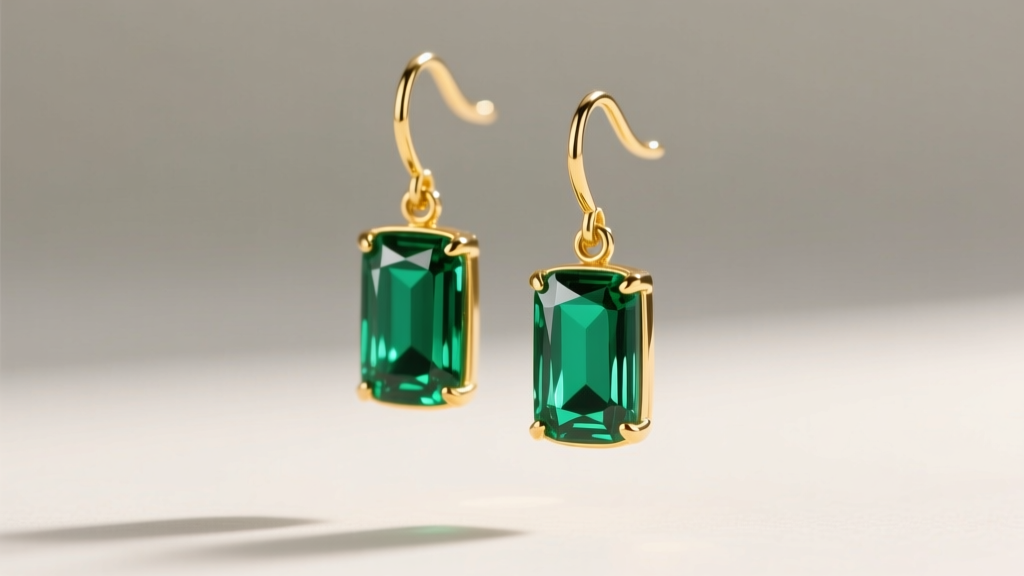
The landscape of fine jewelry has undergone a radical transformation as we move through 2026. While the brilliant-cut diamond dominated the previous decade, the current zeitgeist favors architectural precision, quiet luxury, and structural geometry. At the forefront of this movement are emerald baguette earrings. Combining the rich, verdant history of the emerald gemstone with the sleek, hall-of-mirrors faceting of the baguette cut, these pieces represent the pinnacle of modern ear styling. This analysis breaks down the gemological, structural, and stylistic nuances of the emerald baguette trend, offering a definitive guide for collectors and stylists alike.
The 2026 Shift: Why Geometric Emeralds Are Dominating
The transition toward step-cut gemstones is rooted in a broader cultural shift toward "architectural luxury." Unlike brilliant cuts, which utilize 57 or 58 facets to maximize light return and scintillation, a standard baguette cut features just 14 facets. This step-cutting technique creates broad, flat planes that emphasize a stone's clarity, color saturation, and internal geometry rather than its sparkle.
The Visual Impact of Step-Cuts
When applied to emeralds, the baguette cut acts as a window into the stone's soul. Because the faceting is less forgiving, inclusions (often romantically referred to as jardin or garden) are highly visible. Consequently, the 2026 market demands higher clarity grades for baguette emeralds compared to their cabochon or round-cut counterparts. The result is an earring that offers a sophisticated, understated flash of green that catches the light in linear, geometric bands rather than chaotic bursts.
Stone Sourcing: Zambian vs. Colombian Baguettes
Not all emeralds are created equal, and the geographic origin of the rough crystal heavily dictates how it will perform when cut into a precise baguette shape. According to the Gemological Institute of America (GIA), the trace elements present during crystal formation alter both the color profile and the structural integrity of the final gem.
| Origin | Color Profile | Clarity & Inclusions | Avg. Price Range (Per Carat) | Best Setting Style |
|---|---|---|---|---|
| Colombian | Warm, pure grassy green with high fluorescence. | Heavily included; requires fracture filling (cedar oil/Opticon). | $3,500 - $8,000+ | Bezel or protective V-prong. |
| Zambian | Cool, bluish-green undertone; deeper saturation. | Generally higher natural clarity; less reliant on heavy oiling. | $1,200 - $3,000 | Channel or minimalist prong. |
| Lab-Grown | Highly controlled, vivid green; consistent tone. | Eye-clean (VS to VVS equivalent); no structural fissures. | $300 - $800 | Any, including tension or exposed corner. |
For 2026, Zambian emeralds are seeing a surge in popularity for baguette cuts. Their naturally higher clarity and cooler bluish undertones pair exceptionally well with 18k white gold and platinum settings, which are currently trending in minimalist ear curation.
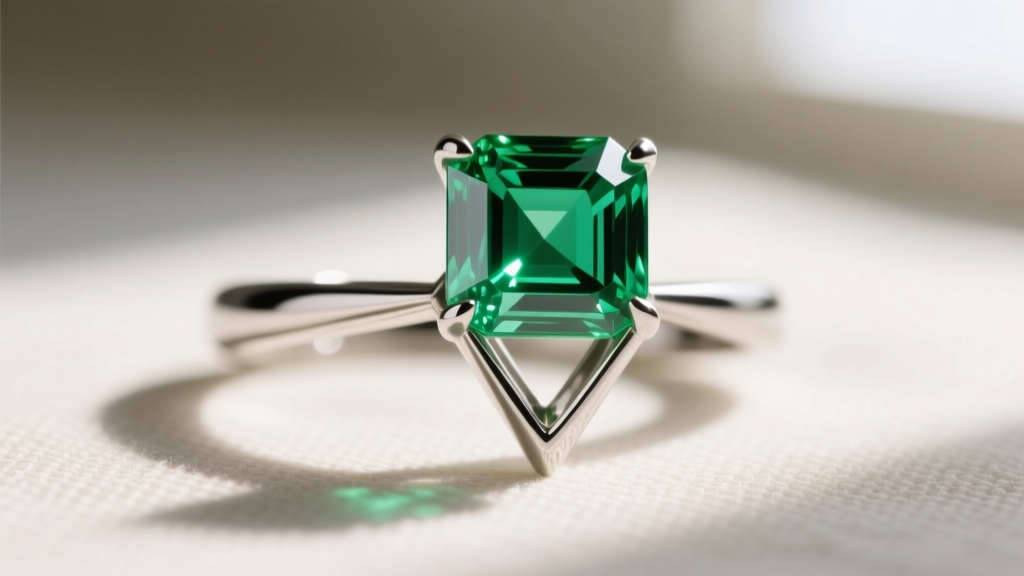
Setting Architecture: Protecting Brittle Corners
Emeralds rank between 7.5 and 8 on the Mohs scale of hardness. While this makes them resistant to scratching, they possess poor toughness due to natural fissures and inclusions. When cut into a baguette, the stone features sharp 90-degree corners that are highly susceptible to chipping from everyday impacts.
V-Prong vs. Bezel: A Structural Comparison
- The V-Prong Setting: This is the industry standard for protecting baguette corners. A V-shaped metal cradle wraps entirely around the 90-degree angle, distributing pressure away from the stone's weakest points. For 18k yellow gold, which is relatively soft (75% pure gold), V-prongs must be crafted slightly thicker to prevent wear-over-time.
- The Full Bezel: A rim of metal completely encircles the girdle of the emerald. While this offers the ultimate protection, it can obscure the linear beauty of the step-cut facets. In 2026, we are seeing a rise in half-bezel or open-corner bezel settings, which protect the long sides of the baguette while leaving the short ends exposed for a modern, deconstructed look.
- Channel Settings: Ideal for multi-stone hoop or huggie earrings, channel settings suspend baguettes between two parallel walls of metal. This eliminates prongs entirely, creating a seamless ribbon of green.
Anatomical Styling: Gauges, Weights, and Placements
Styling emerald baguette earrings requires an understanding of ear anatomy and structural physics. A pair of 2-carat total weight (CTW) baguette drops exerts significant downward leverage on the earlobe.
The Gauge Imperative
Standard commercial earrings often utilize 20-gauge (0.81mm) or even 22-gauge (0.64mm) posts. For heavy geometric drops, these thin posts will bend, causing the earring to droop forward and the butterfly back to slip. Master jewelers recommend upgrading to 18-gauge (1.02mm) or 17-gauge (1.14mm) posts for emerald baguette drops. This thicker wire provides the necessary rigidity to keep the geometric lines perfectly vertical against the lobe.
Curated Ear Configurations
- The Lobe Climber: A single, elongated baguette emerald set horizontally, curving upward along the outer rim of the lobe. This mimics the look of multiple piercings while requiring only a single standard lobe hole.
- The Helix Bar: A bezel-set baguette emerald oriented vertically in the upper helix cartilage. Because cartilage is thicker, a 16-gauge (1.29mm) post or a clicker hoop mechanism is required for safe healing and long-term wear.
- The Architectural Cuff: For non-pierced styling, 2026 has introduced tension-based ear cuffs featuring a single, horizontally set baguette emerald that snaps onto the thinnest part of the helix, providing a striking pop of color without structural risk to the gemstone.
Care Protocols: Avoiding the Ultrasonic Trap
The most common cause of catastrophic failure in emerald jewelry is improper cleaning. As noted in GIA's care guidelines, the vast majority of natural emeralds undergo clarity enhancement. Fissures reaching the surface are filled with colorless oils, waxes, or synthetic resins to improve transparency.
"Never place an oil-treated emerald in an ultrasonic cleaner or expose it to steam. The high-frequency vibrations and heat will literally boil the cedar oil out of the stone's natural fissures, leaving you with a cloudy, heavily fractured gem that requires professional re-oiling."
— Master Gemologist Appraiser, National Jewelry Institute
To maintain the pristine, mirror-like facets of your emerald baguette earrings, use only a soft, untreated microfiber cloth and lukewarm water with a drop of mild, non-detergent soap. Gently wipe the step-cut planes, ensuring no soap residue dries in the sharp corners where the metal meets the stone.
Final Verdict: An Investment in Geometry
Emerald baguette earrings are not merely a fleeting trend; they are a return to the structural elegance of the Art Deco era, reimagined for the modern minimalist. Whether you opt for the warm, included charm of a Colombian stone or the crisp, cool precision of a Zambian cut, prioritizing protective settings and proper gauge thickness will ensure your architectural masterpieces endure. As 2026 continues to champion intentionality in design, the emerald baguette stands as a testament to the power of clean lines and profound color.


