Ethiopian Opal Earrings Care: Cleaning & Maintenance Guide
Learn how to safely clean, store, and maintain your Ethiopian opal earrings. Expert tips to protect hydrophane gems from water damage and crazing.

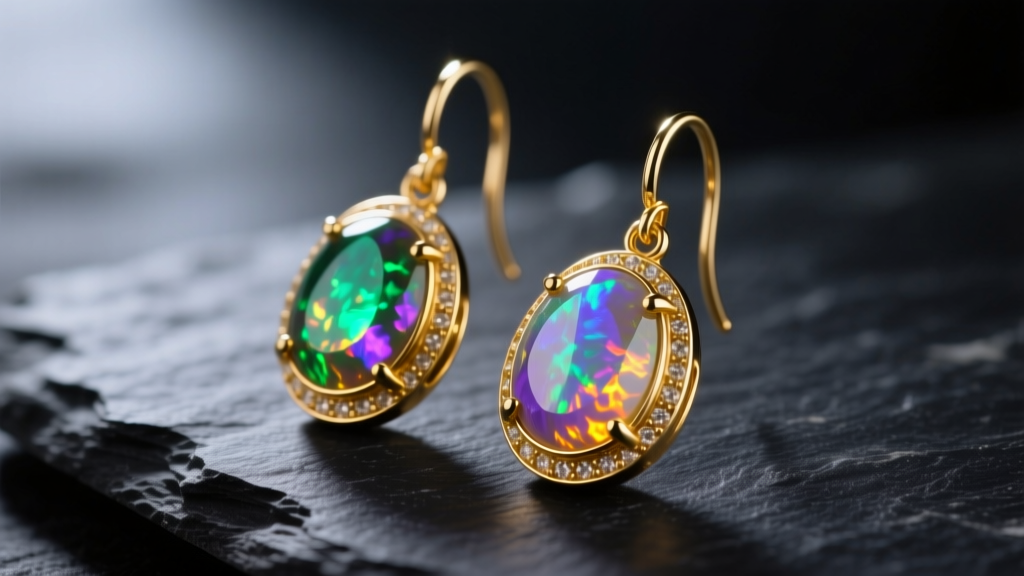
The Unique Science of Ethiopian (Hydrophane) Opals
Ethiopian opals, primarily sourced from the Welo province, are celebrated for their breathtaking, neon-like play-of-color and intricate fire patterns. However, their stunning beauty comes with a unique geological caveat: they are hydrophane. This means they are highly porous and can absorb water up to 8% of their total weight. While this property makes them fascinating to gemologists, it makes cleaning and maintaining Ethiopian opal earrings a highly specific endeavor compared to other gemstone jewelry.
On the Mohs scale of mineral hardness, opals rank between 5.5 and 6.5. This makes them significantly softer than diamonds, sapphires, or even the quartz dust found in everyday household air (which ranks at 7). Because your earrings are worn near the hair and neck—areas prone to accumulating hairspray, perfume, and natural skin sebum—establishing a meticulous, safe cleaning routine is critical to preserving their structural integrity and optical brilliance.
Step-by-Step Cleaning Routine for Ethiopian Opal Earrings
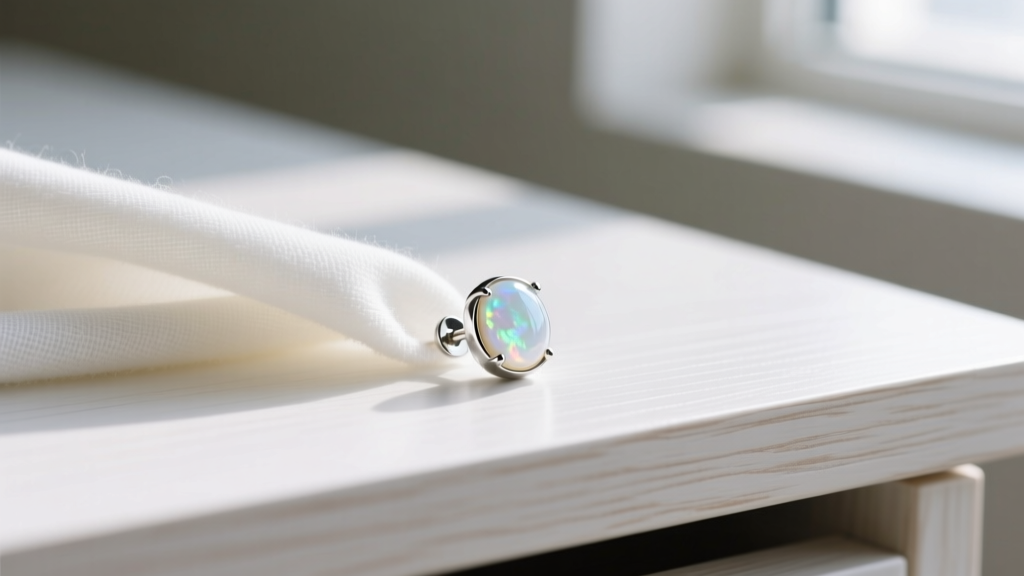
Unlike diamond or cubic zirconia earrings, you cannot simply drop Ethiopian opals into a bowl of warm soapy water. Submerging a hydrophane opal can cause it to absorb the liquid, temporarily turning the gem transparent, yellowish, or completely dulling its fire. Worse, if the gem dries too quickly or unevenly, it can develop 'crazing'—a network of permanent micro-fractures that ruins the stone.
The Dry-Wipe Method (Your Daily Defense)
For routine maintenance after wearing your earrings, the dry-wipe method is the gold standard.
- Use an Untreated Microfiber Cloth: Avoid jewelry polishing cloths that are treated with chemical compounds or abrasives, as these can lodge in the opal's microscopic pores.
- Gentle Pressure: Wipe the cabochon gently to remove skin oils and cosmetic residue. Do not press hard against the prongs, as opals are prone to chipping at the girdle (the edge of the stone).
- Clean the Metal Separately: If the gold or silver setting is tarnished, use a specialized metal polishing cloth on the metal only, taking extreme care not to let the treated side of the cloth touch the opal.
Dealing with Stubborn Grime
If your Ethiopian opal earrings have accumulated stubborn dirt or lotion buildup that a dry cloth cannot remove, you must use a highly controlled damp method.
- Dampen a corner of a clean microfiber cloth with distilled water only. Never use tap water, as the chlorine, fluoride, and dissolved minerals can be absorbed into the porous opal and cause permanent cloudiness.
- Gently dab the soiled area of the gemstone. Do not rub aggressively.
- Immediately dry the opal with the dry portion of the cloth.
- Allow the earrings to air-dry at room temperature, away from direct sunlight, heating vents, or hair dryers. Rapid temperature changes cause thermal shock, leading to instant crazing.
Critical Mistakes That Ruin Hydrophane Opals
According to the Gemological Institute of America (GIA), the most common cause of opal destruction in jewelry is improper cleaning methods that ignore the stone's porosity and sensitivity to thermal shock.
To protect your investment, completely avoid the following cleaning methods:
- Ultrasonic Cleaners: The high-frequency vibrations will shatter the internal structure of an Ethiopian opal almost instantly. Never place these earrings in an ultrasonic bath.
- Steam Cleaners: The combination of intense heat and forced moisture will cause catastrophic thermal shock and irreversible crazing.
- Chemical Solvents: Bleach, ammonia, rubbing alcohol, and even mild dish soaps can strip the gem's natural moisture balance or leave chemical residues trapped inside the pores.
- The 'Soaking' Myth: Some outdated internet guides suggest soaking opals to 'rehydrate' them. For hydrophane Ethiopian opals, soaking is incredibly dangerous and will degrade the play-of-color.
Proper Storage and Humidity Control
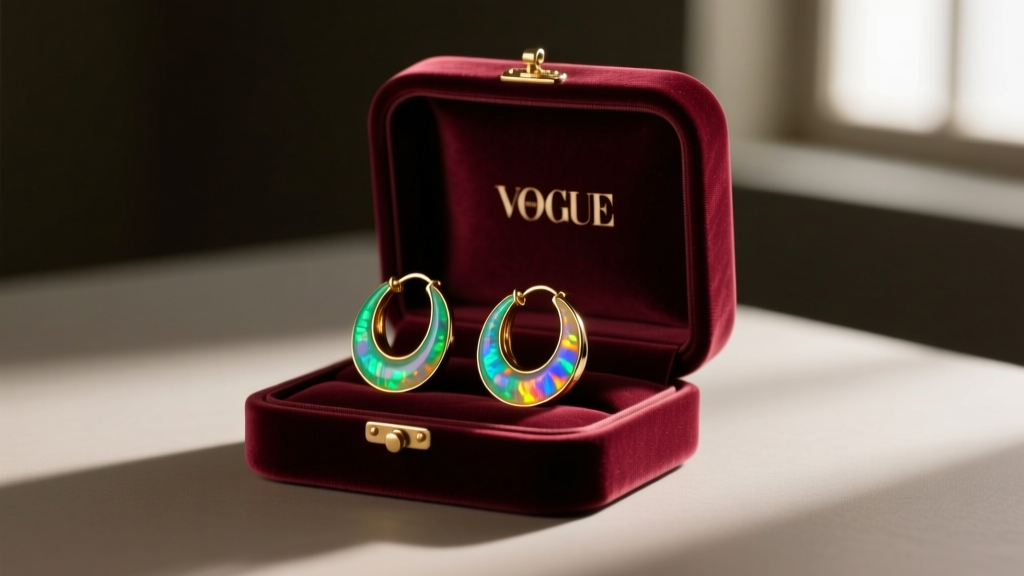
How you store your Ethiopian opal earrings when they are not being worn is just as important as how you clean them. The International Gem Society notes that opals are sensitive to extreme environmental shifts.
Humidity and Temperature
Store your earrings in a climate-controlled environment. Avoid leaving them in bathrooms (where humidity fluctuates wildly from hot showers) or in cars parked in direct sunlight. Ideal storage humidity is around 40% to 50%. If you live in an extremely arid climate, storing the earrings in a fabric-lined jewelry box with a small, sealed damp cotton ball (not touching the jewelry) can prevent the opals from drying out and cracking over time.
Physical Protection
Because opals are relatively soft, they must be stored separately from harder gemstones. Keep your Ethiopian opal earrings in individual soft pouches or dedicated compartments in your jewelry box to prevent scratches from diamond, sapphire, or topaz pieces.
Ethiopian vs. Australian Opal Care Comparison
Understanding the difference between Ethiopian and Australian opals is vital, as advice meant for one can destroy the other. Below is a quick reference chart for jewelry owners.
| Care Feature | Ethiopian (Hydrophane) Opal | Australian (Non-Hydrophane) Opal |
|---|---|---|
| Water Absorption | High (Porous) | Very Low (Non-porous) |
| Submersion Safe? | Never | Briefly, in mild soapy water |
| Ultrasonic Safe? | Never | Never (Risk of fracture) |
| Primary Enemy | Water absorption & rapid drying | Hard impacts & extreme heat |
| Reaction to Oils | Absorbs oils, causing yellowing | Surface oils only, easily wiped |
Earring Settings: Prongs vs. Bezels
When maintaining your earrings, pay close attention to the metal setting. Ethiopian opals are frequently set in prong settings to maximize light entry and enhance their fire. However, prongs can snag on hair and clothing, which not only bends the metal but can also chip the delicate edges of the opal.
During your monthly cleaning routine, use a jeweler's loupe (10x magnification) to inspect the prongs. If a prong is lifted even slightly away from the gemstone, stop wearing the earrings immediately and take them to a professional jeweler for tightening. For those who are highly active or plan to wear their opal earrings daily, consider having a jeweler upgrade the setting to a bezel setting, which wraps a continuous band of metal around the gem's perimeter, offering superior protection against edge chipping and dirt accumulation.
When to Seek Professional Jeweler Help
If your Ethiopian opal earrings have lost their fire due to deep cosmetic contamination, or if you notice a network of fine lines (crazing) developing inside the stone, do not attempt DIY fixes. A master jeweler with experience in hydrophane gems can sometimes gently re-polish the surface of the cabochon to remove superficial scratches or oil stains. However, this requires specialized lapidary knowledge, as removing too much material can alter the stone's optical geometry and diminish its signature play-of-color. Always consult a professional who explicitly advertises experience with porous, hydrophane gemstones.


