The Anatomy of Fine Cactus Earrings: Enamel, Gems, and Gauge
Discover the technical anatomy of fine cactus earrings. We explore champlevé enamel, tsavorite setting, and structural gauge requirements for lasting wear.

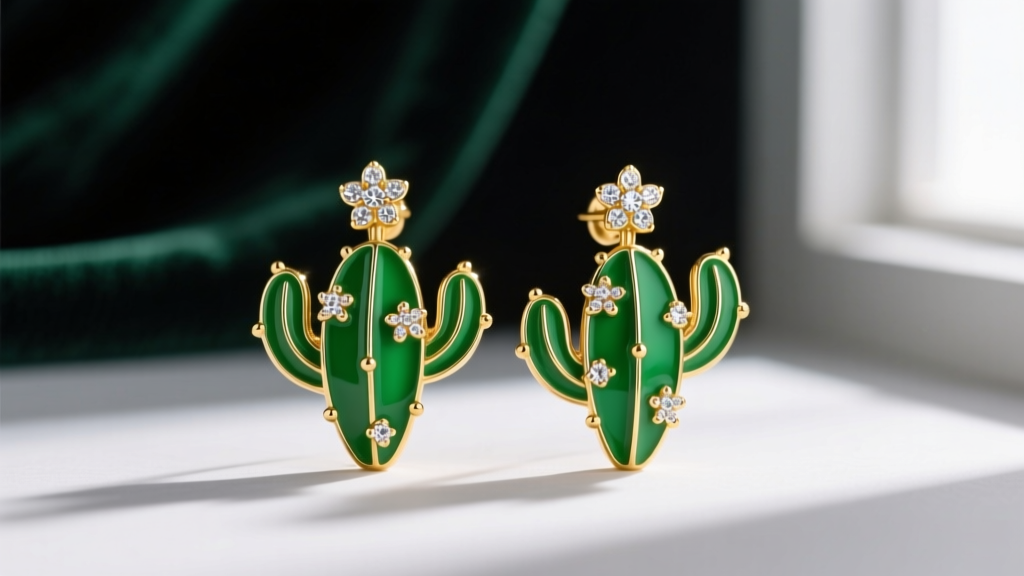
The Evolution from Novelty to Heirloom Metallurgy
For decades, desert botanical motifs were largely confined to the realm of mass-produced, base-metal novelty jewelry. However, as of 2026, the landscape of artisanal jewelry has elevated the cactus earrings category into a masterclass of complex metallurgy, advanced enameling, and precision gem-setting. Moving beyond simple stamped silver silhouettes, contemporary fine jewelers are engineering heirloom-quality botanical pieces that require a deep understanding of structural integrity and material science.
The transition from novelty to high jewelry demands a rigorous approach to design. A saguaro or prickly pear motif is not merely a shape; it is a complex topographical map of varying thicknesses, sharp protrusions (spines), and deep recesses (areoles). Crafting these elements in precious metals requires balancing the Vickers hardness of the alloy with the fluid dynamics of lost-wax casting. According to industry analyses by JCK Online, botanical motifs have seen a 40% increase in high-jewelry collections over the last three years, driven by collectors seeking hyper-detailed, nature-inspired wearable art.
Base Metal Selection and Allergic Contact Dermatitis
Because cactus earrings often feature intricate, textured surfaces that trap skin oils and environmental debris, the choice of base metal is critical for dermatological health. While sterling silver (925) is common in entry-level pieces, it is prone to sulfide tarnishing, which can be difficult to remove from the microscopic crevices of a cast cactus body. For fine jewelry, 18k yellow gold (75% pure gold, alloyed with copper and silver) remains the gold standard. The copper content not only provides a warm hue that complements green enamel but also increases the alloy's tensile strength, which is vital for supporting the weight of gemstone-set flowers.
For the earring posts themselves, experts strongly recommend ASTM F136 implant-grade titanium. Unlike standard nickel-containing white gold posts, titanium eliminates the risk of Allergic Contact Dermatitis (ACD), ensuring that heavy, intricate cactus drops can be worn comfortably for extended periods without triggering localized inflammation.
Mastering the Spines: Structural Integrity and Gauge Limits
The most significant engineering challenge in designing fine cactus earrings is the execution of the spines. In cheap manufacturing, spines are merely surface-level textures stamped into sheet metal. In high jewelry, they are fully three-dimensional, protruding elements that are highly susceptible to bending, snapping, or snagging on textiles.
To achieve structural permanence, jewelers must adhere to strict wire gauge and casting thickness ratios. Modern 5-axis CNC milling, combined with traditional CAD modeling, allows artisans to reinforce the base of each spine with microscopic buttresses that are invisible to the naked eye but drastically increase the shear strength of the protrusion.
| Spine Classification | Wire/Cast Gauge | Thickness (mm) | Structural Use Case & Limitations |
|---|---|---|---|
| Micro-Areole Relief | 24-Gauge | 0.51mm | Decorative, flat-relief textures. High risk of deformation if subjected to lateral pressure. |
| Standard Spine | 20-Gauge | 0.81mm | Suitable for light wear and short protrusions. Requires careful handling during polishing. |
| Structural Heirloom | 18-Gauge | 1.02mm | Optimal for high-end, snag-resistant pieces. Can withstand standard jewelry ultrasonic cleaning. |
| Reinforced Prong-Spine | 16-Gauge | 1.29mm | Used when the spine doubles as a structural prong holding a melee diamond or sapphire. |
When evaluating a pair of artisanal cactus earrings, gently run a cotton swab over the spines. If the cotton catches or the spines flex under minimal pressure, the piece has been under-cast or poorly supported in the CAD phase, indicating a high risk of long-term failure.
Color Theory in Desert Botanicals: Enamel and Gemstone Pairings
The visual success of botanical jewelry hinges on the accurate representation of the plant's natural pigmentation. While mass-market pieces rely on opaque, cold-painted epoxies that yellow and chip within months, fine jewelry utilizes vitreous enamel—a powdered glass fused to metal at temperatures exceeding 1450°F (788°C).
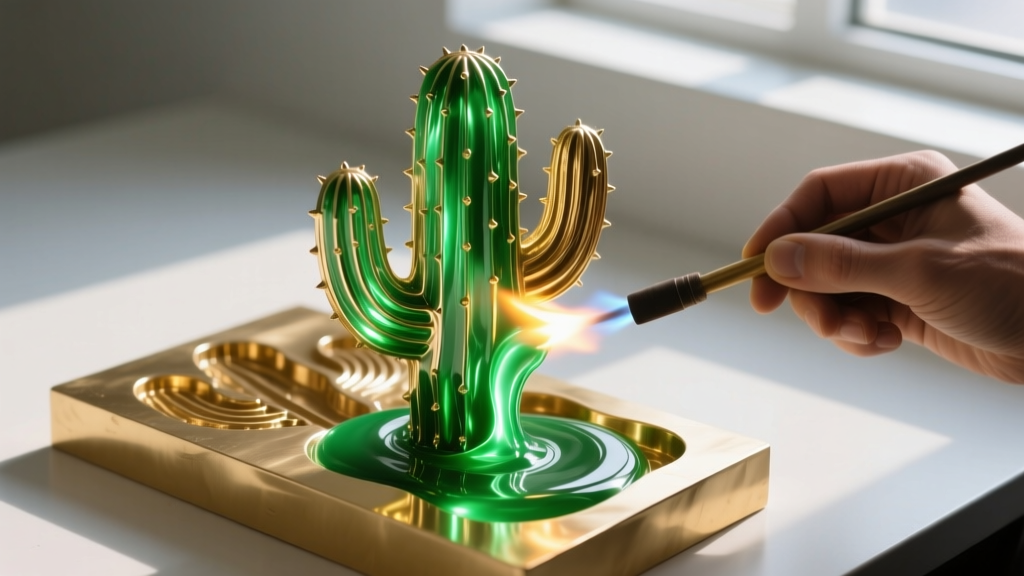
Champlevé vs. Plique-à-Jour Enameling
The two dominant techniques for fine cactus earrings are champlevé and plique-à-jour. Champlevé involves carving deep cells into the gold body and filling them with opaque or translucent enamel. This technique is ideal for the thick, fleshy body of a barrel or saguaro cactus, providing a rich, velvety green surface that mimics the plant's natural matte cuticle.
Conversely, plique-à-jour (resembling stained glass) is used for the delicate, translucent wings of desert wildflowers or the thin, webbed sections of a cholla cactus skeleton. Because plique-à-jour lacks a metal backing, it requires a master-level understanding of surface tension to keep the molten glass suspended within the gold framework during firing. The Gemological Institute of America (GIA) notes that properly fired vitreous enamel is highly resistant to UV degradation, ensuring the vibrant greens and pinks will not fade over decades of wear.
Precision Stone Setting for Cactus Flowers
The blooms of a desert cactus are famously vivid, and replicating this in fine jewelry requires strategic gemstone selection. Tsavorite garnet is the premier choice for the green stems and calyxes, offering a Mohs hardness of 7 to 7.5 and a high refractive index that outperforms emerald in durability. For the neon pinks and magentas of the prickly pear flowers, jewelers increasingly rely on untreated pink sapphires or rubellites, set using micro-pavé techniques that minimize the visibility of metal prongs, allowing maximum light return.
"The true mark of a master botanical jeweler is not just the color match, but the seamless integration of the stone's pavilion into the enamel work. A poorly set tsavorite will cast a dark shadow onto the surrounding green glass, killing the illusion of a living plant." — Master Enamelist & CAD Designer, 2026 Artisan Guild Symposium.
Ergonomics and Weight Distribution in Asymmetrical Designs
Cactus earrings, particularly drop and dangle styles featuring asymmetrical saguaro arms or heavy clustered flowers, present a unique ergonomic challenge: top-heaviness and lobe stress. A solid 18k gold cactus drop earring with vitreous enamel and melee diamonds can easily weigh between 6 and 12 grams per ear.
Standard butterfly friction backs are entirely inadequate for this weight, leading to earlobe drooping, post bending, and eventual loss of the earring. Expert designers mitigate this through several structural interventions:
- Omega Clip Backs: Provides a wide, hinged surface area that grips the earlobe, distributing the 12-gram load across the cartilage rather than concentrating it on the piercing hole.
- Counter-Balancing: Designing the earring with a heavier upper lobe component (like a solid gold flower cluster) that rests directly on the earlobe, while the lighter, hollowed-out enamel cactus body hangs below.
- Flattened Post Geometry: Utilizing a slightly flattened or square post profile near the base to prevent the heavy earring from rotating and twisting out of alignment.
Maintenance: Preventing Enamel Crazing and Prong Snagging
Owning high-end botanical jewelry requires a departure from standard cleaning routines. The primary failure mode for vintage and contemporary enamel cactus earrings is "crazing"—a network of microscopic cracks in the glass caused by thermal shock or ultrasonic cavitation.
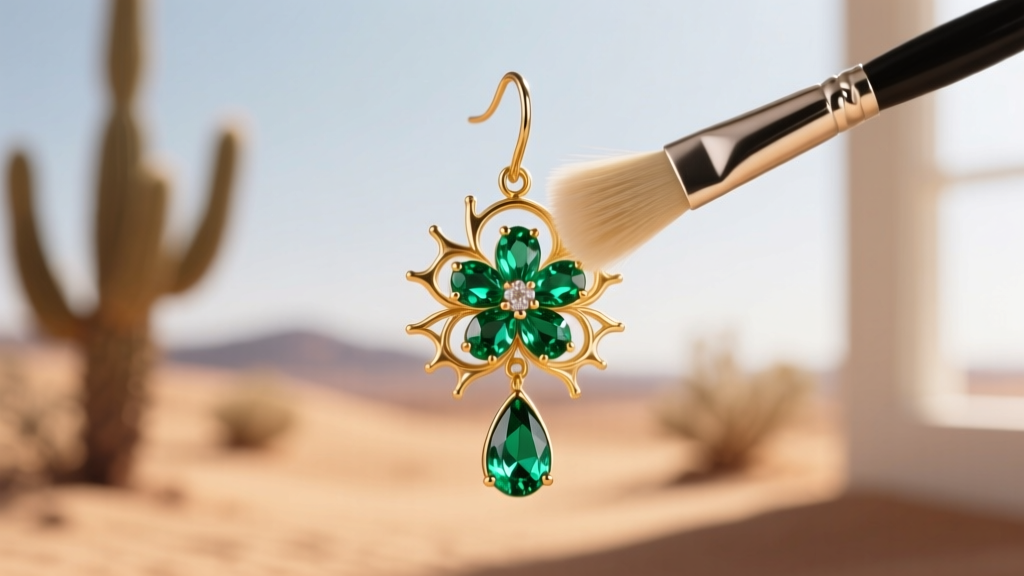
To maintain the structural and aesthetic integrity of your pieces, never place vitreous enamel in an ultrasonic cleaner. The high-frequency vibrations can shatter the glass-to-metal bond, especially at the delicate tips of the cactus spines. Instead, use a solution of lukewarm water and a few drops of pH-neutral dish soap. Agitate the water, submerge the earrings for three minutes, and use a remarkably soft, sable-hair makeup brush to gently dislodge debris from the areoles and beneath the gemstone settings. Dry immediately with a microfiber cloth to prevent water spots on the high-polish gold spines.
Final Verdict: Investing in Artisanal Botanical Jewelry
The market for fine cactus earrings has matured into a highly technical niche that rewards collectors who understand the intersection of metallurgy and art. When evaluating a piece, look beyond the aesthetic appeal. Inspect the gauge of the spines, verify the presence of vitreous enamel over cold paint, and ensure the hardware is rated for the specific gram-weight of the design. By prioritizing these technical details, you secure not just a beautiful accessory, but a structurally sound heirloom capable of surviving the harsh realities of daily wear while perfectly capturing the resilient beauty of the desert.


