The Ultimate Fish Hook Earring Buying Guide: Fit, Metals & Security
Discover what to look for when buying fish hook earrings. Learn about wire gauges, hypoallergenic metals, and security backs to keep your jewelry safe.

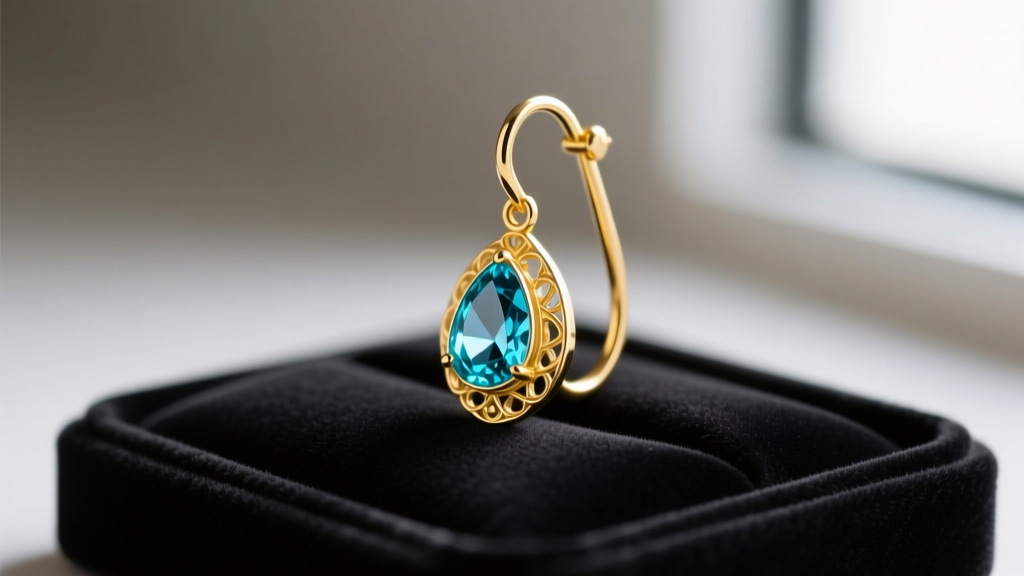
The Anatomy and Appeal of the Fish Hook Earring
The fish hook earring—frequently referred to as a French hook, shepherd's hook, or ear wire—is a foundational pillar of fine and fashion jewelry. Characterized by its elegant, J-shaped wire that threads seamlessly through the earlobe, this design is the undisputed champion of dangle and drop earrings. Unlike leverbacks or hinged hoops, the open-back nature of the fish hook allows for fluid, uninterrupted movement, giving suspended gemstones and pearls a kinetic, light-catching quality that closed-back findings simply cannot replicate.
However, the very simplicity that makes the fish hook earring so visually appealing also introduces structural vulnerabilities. From wire fatigue and metal allergies to the perpetual frustration of losing an earring to a tangled sweater, buying the right pair requires a technical understanding of jewelry mechanics. In this comprehensive 2026 buying guide, we break down the exact specifications, material grades, and security modifications you need to evaluate before adding your next pair of French hooks to your collection.
Wire Gauge Matters: Preventing the "Cheese Cutter" Effect
The most critical, yet frequently overlooked, specification when purchasing a fish hook earring is the wire gauge. The gauge dictates the thickness of the metal passing through your piercing. If the wire is too thin and the suspended drop is too heavy, you risk the "cheese cutter effect"—a phenomenon where the thin wire slowly migrates through the tissue of the earlobe, causing discomfort, elongation of the piercing hole, and eventual tearing.
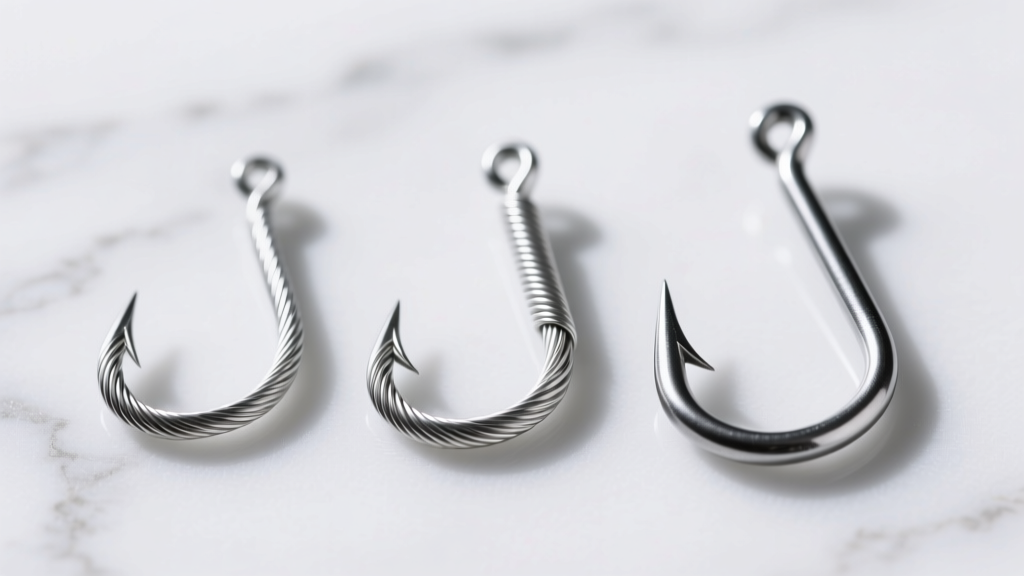
Understanding the exact millimeter thickness of your ear wire ensures both comfort and longevity. Below is the industry-standard gauge breakdown for drop earrings:
| Gauge Size | Millimeter (mm) | Best Application | Durability & Risk |
|---|---|---|---|
| 22-Gauge | 0.64 mm | Ultra-lightweight charms, hollow beads | High Risk: Bends easily, causes tissue migration with heavy drops. |
| 20-Gauge | 0.81 mm | Standard dangles, medium-weight pearls | Industry Standard: Excellent balance of comfort and structural integrity. |
| 18-Gauge | 1.02 mm | Heavy gemstone drops, chandelier styles | Highly Secure: Will not bend under weight; requires fully healed standard lobes. |
Expert Tip: Always check the product specifications for the exact gauge. Many mass-market retailers default to 22g to save on precious metal costs. For any fish hook earring supporting a solid gemstone drop exceeding 3 grams, insist on an 18g or a reinforced 20g wire.
Material Breakdown: Navigating Hypoallergenic Claims
Contact dermatitis is the primary reason consumers abandon specific jewelry brands. The term "hypoallergenic" is largely unregulated in the jewelry industry, making it imperative to look past marketing buzzwords and examine the exact metallurgical composition of the ear wire. Because the fish hook sits continuously inside the fistula (the piercing channel), the metal must be biocompatible.
Implant-Grade Titanium (ASTM F136)
According to the Association of Professional Piercers, ASTM F136 implant-grade titanium is the gold standard for sensitive ears and healing piercings. It contains zero nickel and is highly resistant to corrosion from skin oils and environmental moisture. If you have a known nickel allergy, titanium fish hooks are non-negotiable.
Niobium
Niobium is a highly reactive, nickel-free elemental metal that is exceptionally malleable. Jewelers favor niobium fish hooks because they can be anodized to produce vibrant, permanent colors without using surface dyes or plating that might flake off inside the piercing.
Solid Gold (14k and 18k)
When buying gold fish hook earrings, the alloy mixture is just as important as the karat weight. The Gemological Institute of America (GIA) notes that 14k gold is 58.5% pure gold, while 18k is 75%. The remaining percentage consists of alloy metals like copper, silver, zinc, or nickel. Avoid white gold fish hooks unless the manufacturer explicitly states they are alloyed with palladium rather than nickel, as traditional nickel-based white gold is a leading trigger for localized allergic reactions.
Sterling Silver (925)
While sterling silver is a staple in jewelry, it is 7.5% copper. Copper oxidizes when exposed to the sulfur and moisture in the ear canal, which can cause the ear wire to tarnish rapidly and potentially leave a dark residue on the skin. Sterling silver fish hooks are best reserved for fully healed, non-sensitive piercings and require regular polishing.
Security Mechanisms: How to Stop Losing Your Earrings
The inherent design flaw of the fish hook earring is its lack of a built-in locking mechanism. Friction, hair brushing, and the act of removing winter clothing are notorious culprits for snagging open ear wires. To protect your investment, you must employ secondary security measures.
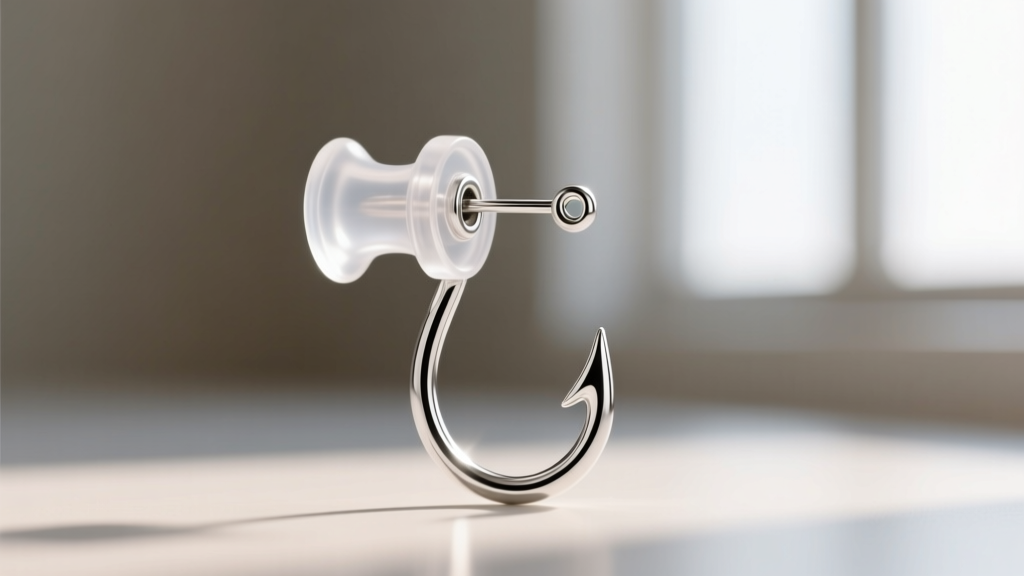
- Silicone Earring Stoppers: The most cost-effective and universally compatible solution. These tiny, hypoallergenic silicone discs slide onto the back of the hook, creating a high-friction barrier that prevents the earring from slipping out. They are virtually invisible and should be replaced every 6 to 12 months as the silicone degrades.
- French Wire Clutches: These are small, domed metal or plastic findings with a coiled metal interior designed specifically to grip the curve of a fish hook. They offer a more premium aesthetic than silicone and are less likely to collect hair and lint.
- Locking Ear Wires (The Ultimate Upgrade): Many contemporary fine jewelers now offer "locking" or "secure" fish hooks. These feature a tiny, hinged clasp at the posterior end of the wire that snaps into a small notch near the front curve, completely closing the loop. If you are purchasing high-value diamond or sapphire drops, always opt for locking fish hooks to guarantee the security of your gemstones.
Styling Proportions: Matching Hooks to Face Shapes
The length of the fish hook itself dictates where the decorative "drop" begins. A standard hook drops the ornament just below the earlobe, while an extended or "long" fish hook drops it an additional half-inch. Use this mechanical detail to your advantage when styling for your face shape:
- Round Faces: Opt for extended fish hooks paired with linear, geometric drops. The extra length of the wire elongates the neck and jawline, drawing the eye vertically.
- Square Faces: Choose standard-length hooks with curved, organic drops like pearls or teardrop briolettes. The softer starting point of the standard hook helps balance strong jawlines without adding harsh angles.
- Heart-Shaped Faces: Utilize standard hooks with chandelier or wider-bottomed drops to add visual weight and balance to a narrower chin.
Troubleshooting and Maintenance
Even high-quality 18k gold or titanium fish hooks can occasionally bend if snagged on a towel or hairbrush. Never use your fingers to bend the wire back into place. Repeated bending with bare hands introduces microscopic stress fractures and work-hardens the metal, leading to sudden snapping.
Instead, keep a pair of nylon-jaw pliers in your jewelry kit. The soft nylon grips the wire securely without marring the polished finish or scratching precious metal alloys. Gently apply pressure to reshape the J-curve. If the wire has been bent back and forth more than twice, retire the earring to a jeweler for a professional wire replacement to avoid losing the attached gemstone to metal fatigue.
By prioritizing correct wire gauges, verifying biocompatible alloys, and utilizing modern security stoppers, you can confidently invest in fish hook earrings that offer both breathtaking movement and reliable, everyday security.


