Troubleshooting 10mm Earrings Men: Fix Fit, Weight, and Gauge
Struggling with tight hoops or heavy studs? Our expert guide to troubleshooting 10mm earrings men covers gauge fixes, lobe pinch, and metal allergies.

The 10mm Dilemma: Why Proportions and Fit Go Wrong
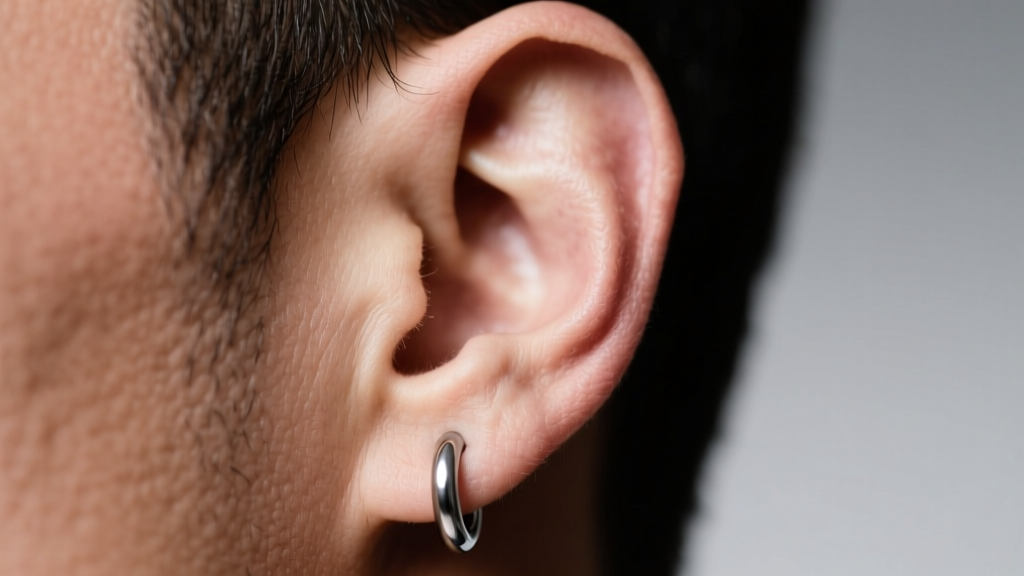
When men shop for earrings, the 10mm size represents a critical transitional threshold. In the realm of hoops, a 10mm diameter creates a tight 'huggie' style that sits flush against the ear. For studs and plugs, 10mm refers to the width of the decorative front or the diameter of a stretched plug—roughly the size of a standard dime. While this size offers a bold, masculine aesthetic, it is notoriously difficult to fit correctly. The most common complaints we see at Jewel Style Radar involve the 'lobe pinch' in hoops, the 'forward flop' in heavy studs, and severe gauge mismatches. Troubleshooting 10mm earrings men requires a technical understanding of ear anatomy, jewelry mechanics, and metallurgy. Below, we break down the exact failure modes of 10mm jewelry and provide actionable, expert-level solutions to fix your fit.
Troubleshooting 10mm Hoops (The Lobe Pinch Effect)
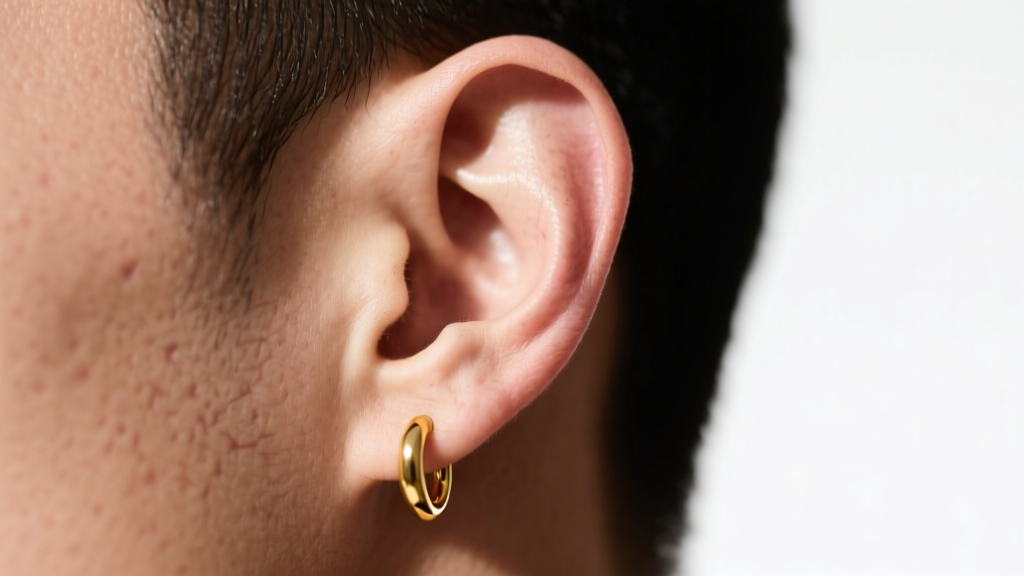
The most frequent issue with 10mm hoop earrings for men is the 'lobe pinch.' Many buyers confuse the Outer Diameter (OD) with the Inner Diameter (ID). When a retailer lists a hoop as 10mm, they are almost always referring to the ID. However, the thickness of the wire (gauge) and the thickness of the male earlobe dictate whether that 10mm hoop will sit comfortably or dig painfully into the flesh.
Calculating Inner Diameter vs. Lobe Thickness
The average male earlobe thickness ranges from 6mm to 9mm. If your lobe is 8mm thick and you wear a 10mm ID hoop, you are left with only 2mm of total clearance (1mm at the front, 1mm at the back). This leaves zero room for natural swelling, temperature changes, or sleeping. The result is a hoop that constantly chafes the piercing channel, leading to hypertrophic scarring or irritation bumps.
- The Fix: Use digital calipers to measure your lobe thickness at the piercing site. If your lobe exceeds 7mm, abandon 10mm hoops entirely and size up to a 12mm or 14mm ID.
- The Wire Gauge Factor: A 10mm hoop made from 12-gauge (2.0mm) wire will physically reduce the inner clearance compared to a 20-gauge (0.8mm) wire. Always subtract the wire thickness from your clearance calculations.
Fixing the Forward Flop in 10mm Studs and Plugs
When dealing with 10mm stud earrings, the primary mechanical failure is the 'forward flop.' A 10mm wide decorative front has a high center of gravity and significant surface weight. When paired with a standard, thin post and a cheap butterfly friction back, the heavy front pulls the earring downward, causing the post to angle sharply toward the floor. This not only looks sloppy but places uneven torque on the piercing fistula.
Post Length and Backing Mechanics
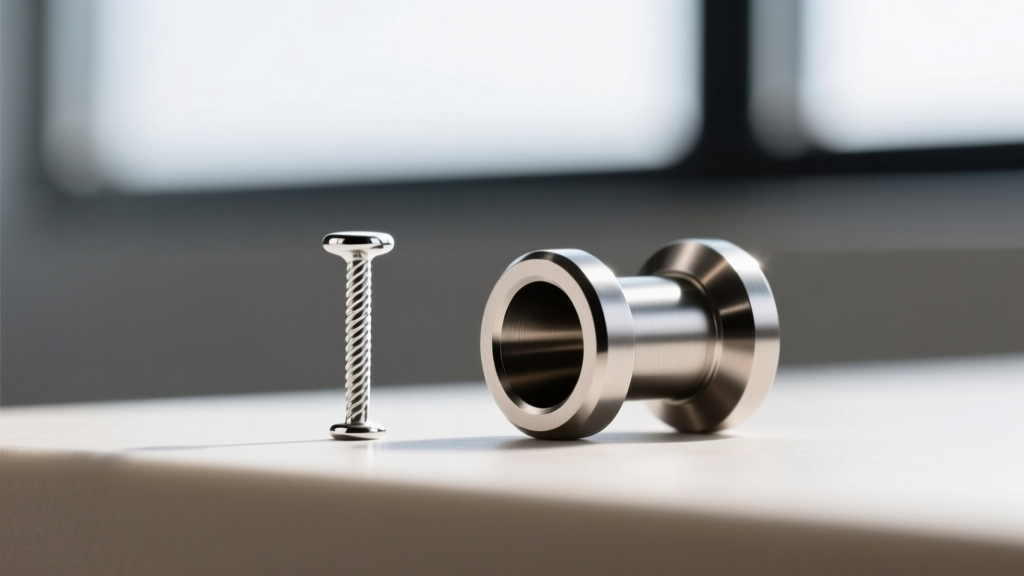
To stabilize a heavy 10mm front, you must upgrade the anchoring system. Standard 4mm or 5mm posts are too short to accommodate the swelling that heavy jewelry can cause, while posts longer than 8mm act as a lever, exacerbating the flop. The optimal post length for a standard male lobe is 6mm to 7mm. Furthermore, you must abandon butterfly backs in favor of flat-back labret posts or threadless (push-pin) systems.
| Symptom | Root Cause | Hardware Solution |
|---|---|---|
| Stud points downward | Post too long / Backing too light | Switch to 6mm flat-back labret post |
| Front spins constantly | Friction back lacks grip | Upgrade to internally threaded or threadless pin |
| Skin indentation behind lobe | Butterfly back digging in | Use a 5mm or 6mm silicone O-ring flat disc |
| Piercing hole stretching vertically | Excessive weight of 10mm front | Switch to hollowed-out titanium or acrylic fronts |
Gauge Confusion: Standard Lobes vs. Stretched Piercings
The term '10mm' causes massive confusion when men transition from standard piercings to stretched lobes. A 10mm stud is a surface measurement, but a 10mm plug or tunnel is a gauge measurement (equivalent to 00g). Attempting to force standard 10mm earrings into a stretched piercing, or vice versa, results in severe tissue trauma.
The Gauge Conversion Reality
Standard mall-kiosk piercings for men are typically done at 20G (0.8mm) or 18G (1.0mm). If you are buying a 10mm wide stud, ensure the post is 18G or 16G (1.2mm) for structural integrity; a 20G post supporting a 10mm wide head will easily bend. Conversely, if you are buying 10mm plugs (tunnels) for stretched ears, you are looking at 00g jewelry. According to the Association of Professional Piercers (APP), jumping gauge sizes too quickly causes blowouts. If your lobe is currently at 2G (6mm), do not force a 10mm (00g) plug. Use PTFE tape to slowly stretch the tissue over several weeks.
Material Upgrades to Prevent Contact Dermatitis
A 10mm earring—whether a wide stud or a thick huggie hoop—presents a massive surface area against the skin. This increased contact area exponentially raises the risk of contact dermatitis if the jewelry contains reactive alloys. Many inexpensive 'surgical steel' earrings contain up to 10% nickel. When a 10mm nickel-alloy stud sits flush against the neck or cheek, sweat and friction break down the passive oxide layer, leaching nickel ions directly into the epidermis.
The Mayo Clinic's guidelines on contact dermatitis explicitly identify nickel as the leading cause of allergic skin reactions. To troubleshoot chronic itching, redness, or weeping around a 10mm earring, you must immediately swap the material.
- ASTM F136 Implant-Grade Titanium: The absolute gold standard for men with sensitive skin. It is entirely nickel-free, lightweight (reducing the forward flop), and highly polished to prevent bacterial adhesion.
- Niobium: An excellent, hypoallergenic alternative that can be anodized to dark, masculine colors like gunmetal or black without using reactive paints or platings.
- 14k or 18k Solid Gold: Ensure it is nickel-free white gold or yellow gold. Avoid gold-plated brass, as the 10mm surface area will wear through the thin plating within weeks, exposing the reactive base metal.
Final Diagnostic Checklist
Before purchasing or troubleshooting your next pair, run through this expert checklist to ensure a flawless fit:
- Verify the ID: Confirm if the 10mm measurement refers to the inner diameter (hoops) or the decorative face width (studs).
- Measure the Lobe: Use calipers to ensure your lobe thickness leaves at least 3mm of clearance for hoops.
- Check the Post: Demand 6mm-7mm flat-back posts for heavy 10mm studs to eliminate the forward flop.
- Confirm the Gauge: Match the post thickness to your piercing (18G/16G for standard, exact mm for stretched).
- Audit the Alloy: Reject 316L surgical steel for large surface-area jewelry; insist on ASTM F136 Titanium or solid gold.
By treating jewelry sizing as a precise mechanical equation rather than a guessing game, you can comfortably rock 10mm earrings with a clean, secure, and irritation-free fit.


