Styling Purple and Gold Earrings: A Beginner's Guide
Discover how to choose, style, and care for purple and gold earrings. Our beginner guide covers gemstones, gold karats, and face-shape matching.


The combination of regal purple and luminous gold is a staple in fine jewelry, but navigating the nuances of gemstone hardness, metal purity, and face-shape styling can be overwhelming for newcomers. As we move through 2026, the trend of mixing rich, moody gemstones with warm metals continues to dominate both everyday street style and red-carpet elegance. Whether you are looking at vintage-inspired dangles or modern minimalist huggies, understanding the mechanics behind purple and gold earrings ensures you invest in pieces that last.
This beginner-friendly explainer will decode everything you need to know, from the Mohs hardness scale of popular violet gems to the exact gauge sizes required for different piercings.
The Color Theory: Why Purple and Gold Works
On the traditional color wheel, purple and yellow-gold sit opposite each other, making them complementary colors. This high contrast creates a visual vibration that makes both the gemstone and the metal appear more saturated and vibrant. However, the undertone of the purple dictates which type of gold you should choose:
- Red-Purples (e.g., Rubellite, Garnet): Pair beautifully with warm 18k yellow gold.
- Blue-Purples (e.g., Tanzanite, Iolite): Shine best against the slightly cooler, softer hue of 14k rose gold or white gold.
- True Violets (e.g., Amethyst, Sugilite): Versatile enough for any gold alloy, but pop dramatically in high-polish 14k yellow gold.
Decoding the Gemstones: Hardness and Durability
Not all purple stones are created equal. When shopping for purple and gold earrings, you must consider the Mohs scale of mineral hardness to determine if a piece is suitable for daily wear or occasional use.
Amethyst (Mohs 7)
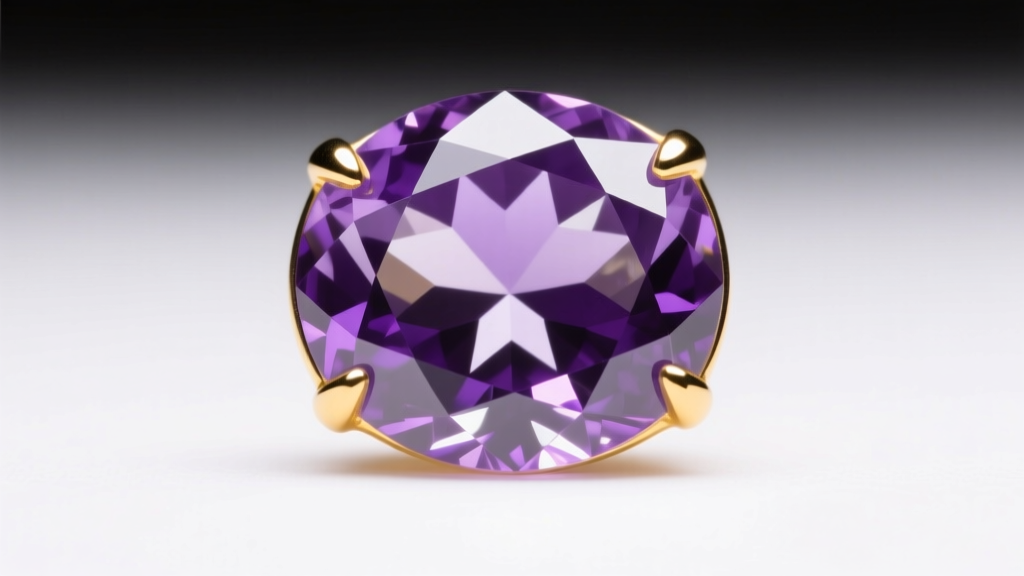
Amethyst is the most accessible and durable purple gemstone. Rated at a 7 on the Mohs scale, it resists scratching from everyday dust (which contains quartz, rated at 7). However, amethyst is prone to color fading if exposed to prolonged direct UV sunlight. Pro Tip: If you buy amethyst studs, store them in a dark jewelry box when not in use.
Tanzanite (Mohs 6 to 7)
Tanzanite offers a mesmerizing blue-violet hue but comes with a structural vulnerability: perfect cleavage. This means a single hard knock against a granite countertop can cause the stone to split or chip. According to the Gemological Institute of America (GIA), tanzanite requires protective settings like bezels or thick halos, especially in dangle earrings that swing and hit surfaces.
Vitreous Enamel (Glass Fused to Metal)
For a budget-friendly, opaque pop of purple, enamel is a fantastic choice. High-quality vitreous enamel is fired at extreme temperatures, fusing glass powder to the gold base. While it won't fade, it can chip if dropped on tile floors. Expect to pay between $40 and $150 for high-quality gold-plated or vermeil enamel hoops.
Understanding the Gold: Karats, Vermeil, and Plating
The metal setting is just as critical as the stone. The Federal Trade Commission (FTC) strictly regulates gold terminology, and knowing the difference will save you from premature tarnishing and skin irritation. The FTC Jewelry Guides mandate specific thicknesses for gold overlays to protect consumers.
| Gold Type | Composition | Durability | Price Range (Studs) | Best For |
|---|---|---|---|---|
| 14k Solid Gold | 58.5% Pure Gold | High (Tarnish resistant) | $150 - $400 | Everyday wear, sensitive ears |
| 18k Solid Gold | 75% Pure Gold | Medium (Softer, scratches easily) | $250 - $600+ | Special occasion, rich color |
| Gold Vermeil | 2.5+ microns of gold over Sterling Silver | Medium (Lasts 1-3 years with care) | $60 - $120 | Trend-driven styles, budget-conscious |
| Gold Plated | Thin gold flash over Brass/Copper | Low (Tarnishes quickly) | $20 - $50 | Costume jewelry, rare wear |
Matching Purple and Gold Earrings to Your Face Shape
The silhouette of your earrings can dramatically alter the perceived proportions of your face. Here is a structural framework for matching earring drops to your bone structure:

- Round Faces: Avoid large, circular hoops or button studs, which emphasize width. Instead, opt for long, angular purple and gold dangle earrings (like a geometric amethyst drop) to draw the eye downward and elongate the jawline.
- Square Faces: Soften a strong jawline with curved silhouettes. Oval-shaped tanzanite and gold drop earrings or rounded huggies with purple enamel accents work beautifully.
- Heart-Shaped Faces: Balance a narrower chin with wider, bottom-heavy earrings. Teardrop or chandelier styles featuring clusters of purple sugilite beads set in gold will add visual weight to the lower half of the face.
- Oval Faces: The most versatile shape. You can confidently pull off everything from heavy gold and purple ear cuffs to minimalist threader earrings.
Sizing and Gauge: What Beginners Need to Know
One of the most common mistakes beginners make is buying earrings that do not fit their specific piercing gauge. The "gauge" refers to the thickness of the wire or post that goes through your ear.
Standard Lobe Piercings
Most standard lobe piercings done with a gun are 20G (0.81mm), while those done by a professional piercer with a needle are usually 18G (1.0mm) or 16G (1.2mm). If you are buying gold and purple studs, a 20G or 18G post will fit seamlessly.
Cartilage and Helix Piercings
If you want to wear purple and gold huggies or clickers in your upper cartilage, you must check the gauge and inner diameter. Cartilage is typically pierced at 16G (1.29mm) or 14G (1.6mm). Furthermore, cartilage huggies require a smaller inner diameter (usually 8mm to 10mm) compared to lobe hoops (12mm to 15mm) to ensure they hug the ear tightly without drooping.
Care and Maintenance to Prevent Damage
Proper maintenance ensures your purple gems retain their saturation and your gold retains its luster. Follow these strict care protocols:
- Never use ultrasonic cleaners on Tanzanite or Enamel. The high-frequency vibrations can shatter tanzanite along its cleavage planes and crack vitreous enamel. Ultrasonics are only safe for solid amethyst and plain gold.
- Clean with a mild solution. Mix a few drops of Dawn dish soap in lukewarm water. Use a baby toothbrush to gently scrub the back of the gemstone (the pavilion), where lotion and dead skin cells accumulate and block light refraction.
- Apply the "Last On, First Off" rule. Hairspray, perfumes, and makeup can degrade gold plating and leave a cloudy film on porous stones like sugilite. Always put your earrings on after your beauty routine is complete, and take them off before washing your face.
By understanding the interplay between gemstone durability, metal purity, and facial proportions, you can confidently curate a collection of purple and gold earrings that are not only visually striking but structurally sound for years to come.


