Troubleshooting Cobalt Blue Earrings: Allergies, Fading & Fixes
Experiencing skin irritation or color loss? Learn how to troubleshoot cobalt blue earrings, identify safe materials, and fix chipped enamel or fading.

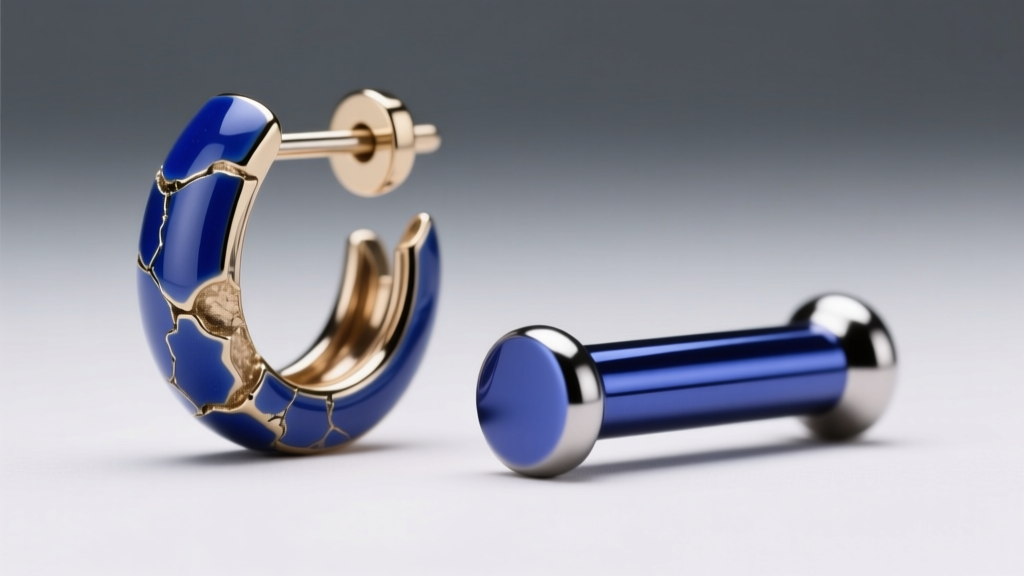
The Root of the Problem: Why Cobalt Blue Earrings Fail
Cobalt blue is one of the most striking, highly sought-after colors in jewelry design. Its deep, saturated hue catches the light beautifully, making it a staple for everything from delicate huggie hoops to bold statement dangles. However, as any seasoned jewelry collector or professional piercer knows, cobalt blue earrings are notoriously prone to specific failure modes. From sudden color shifts and flaking enamel to severe contact dermatitis, the issues surrounding this specific shade are rarely just cosmetic.
To effectively troubleshoot these problems, we must first understand that 'cobalt blue' in the jewelry industry refers to a color, not a single material. The pigment used to achieve this shade can be derived from actual cobalt oxides, synthetic dyes, or even structural light refraction. When your earrings begin to fail, the troubleshooting path depends entirely on the underlying material science. This guide will walk you through diagnosing the exact cause of your jewelry woes and provide actionable, expert-level solutions to restore or replace your favorite pieces.
Material Breakdown: What is Actually Making Your Earrings Blue?
Before attempting any repairs or treating a skin reaction, you must identify the material composition of your earrings. The method used to achieve the cobalt blue color dictates both the failure mode and the solution. Below is a diagnostic matrix of the four most common cobalt blue jewelry materials.
| Material Type | Color Source | Common Failure Mode | Allergy Risk | Avg. Price Range |
|---|---|---|---|---|
| Anodized Titanium | Oxide layer light refraction | Surface contamination (turns grey/purple) | Extremely Low (ASTM F136) | $25 - $80 |
| Vitreous Enamel | Fused silica and cobalt oxide | Mechanical chipping from impacts | Low (if on fine metal base) | $60 - $250+ |
| Cold Enamel (Epoxy) | Tinted synthetic resin | UV yellowing, peeling, scratching | Moderate (base metal dependent) | $15 - $45 |
| Cobalt Glass / Lampwork | Cobalt oxide melted into glass | Shattering under pressure | None (glass is inert) | $30 - $120 |
Troubleshooting Contact Dermatitis and the 'Green Ear' Effect
One of the most frequent complaints regarding cobalt blue earrings is the sudden onset of itchy, red, and flaky earlobes, often accompanied by a dark green or black stain on the skin. This is a classic presentation of allergic contact dermatitis or galvanic corrosion.
The Cobalt Allergy Misconception
Many consumers mistakenly believe they are allergic to the 'cobalt' in their cobalt blue earrings. In reality, true cobalt allergy—while a documented medical condition within the nickel-cobalt-chromium triad—is rarely the culprit behind cheap fashion jewelry reactions. According to the American Academy of Dermatology, nickel is the most common cause of allergic contact dermatitis.
Mass-produced, inexpensive cobalt blue earrings are typically made from a zinc or brass alloy that is electroplated. To make the bright blue dye or cold enamel adhere properly and appear vibrant, manufacturers often use a nickel underplate. When the thin top layer of blue plating wears away from friction, the nickel is exposed to your skin's natural acids and sweat, triggering a severe allergic response. The 'green ear' effect is simply the oxidation of copper or brass in the base alloy reacting to your skin's pH.
The Fix: If your ears are reacting, immediately remove the earrings and cleanse the area with a mild, fragrance-free soap. Do not attempt to 'seal' the earrings with clear nail polish, as this traps bacteria and degrades quickly. Instead, upgrade to earrings where the blue color is intrinsic to the material, such as anodized titanium or solid cobalt glass, which completely eliminates the risk of a nickel underplate.
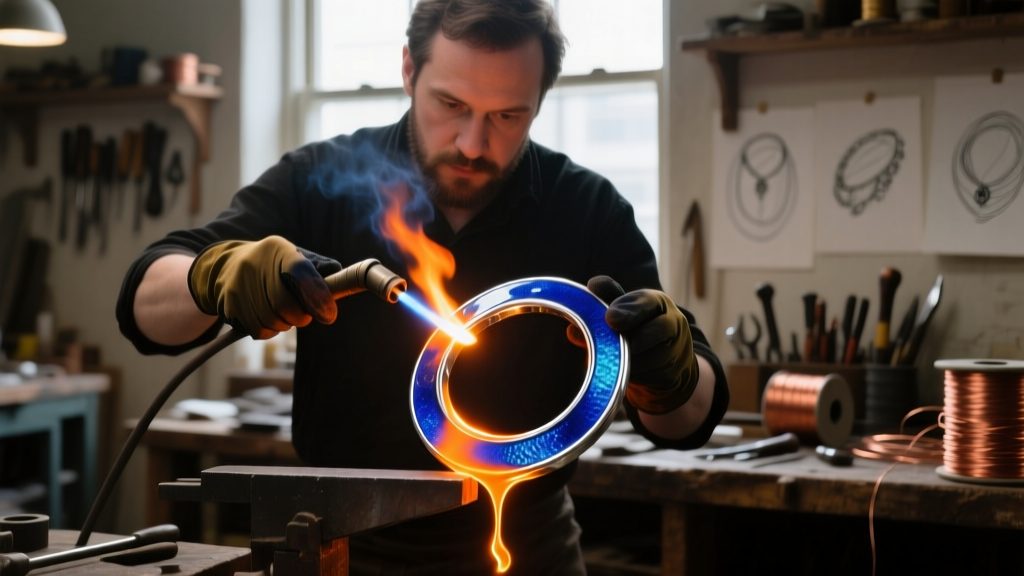
The Science of Fading: Anodized Titanium vs. Enamel
Fading is a highly specific issue that manifests differently depending on the material. If you own high-quality body jewelry or cartilage studs, you likely own anodized titanium pieces.
Why Anodized Titanium 'Fades' (And How to Reverse It)
Anodized titanium does not use dyes or paints. The cobalt blue color is created by passing an electrical current through the metal in an electrolyte bath, which builds up a microscopic layer of titanium dioxide on the surface. The specific voltage applied (typically between 90 and 110 volts for a deep cobalt blue) dictates the exact thickness of this oxide layer. This thickness refracts light, producing the blue color.
If your anodized cobalt blue earrings suddenly look grey, dull, or purple, the color has not actually faded. Instead, the microscopic oxide layer has become contaminated with skin oils, lotions, or hard water minerals, which alters the refractive index of the light passing through it.
Expert Insight: Never use harsh chemicals, ultrasonic cleaners, or abrasive polishes on anodized titanium. You will physically strip the oxide layer and ruin the color permanently. Simply soaking the jewelry in 91% isopropyl alcohol for five minutes and gently wiping it with a microfiber cloth will remove the oils and instantly restore the vibrant cobalt blue refraction.
Cold Enamel Degradation
If your earrings are made of cold enamel (a two-part epoxy resin tinted with blue pigment), fading is a permanent chemical degradation. Cold enamel is highly susceptible to UV radiation. Prolonged exposure to sunlight breaks down the polymer chains in the epoxy, causing the resin to yellow. When yellowed resin overlaps with blue pigment, the earrings will inevitably take on a sickly green or teal hue. There is no way to reverse UV degradation in cold enamel; the piece must be professionally stripped and re-poured, or replaced.
Step-by-Step Restoration Guide for Chipped Vitreous Enamel
Vitreous enamel is essentially glass fused to a metal base (usually sterling silver or gold) at extreme temperatures, often exceeding 1450°F. It is highly resistant to UV fading and chemicals, but it is brittle. A dropped earring can easily cause a micro-chip or a full fracture in the cobalt blue glass layer.
While true vitreous enamel requires a kiln and a master enamelist to properly repair, you can perform a high-quality temporary stabilization at home to prevent the chip from spreading and to restore the visual depth of the color.
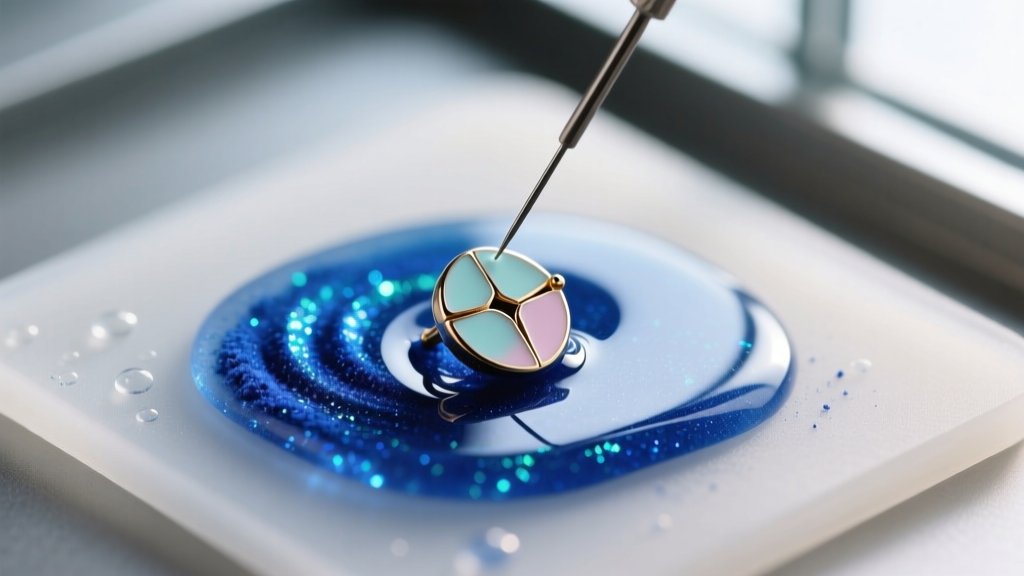
Materials Needed:
- Two-part jewelry-grade clear epoxy (e.g., Devcon 5-Minute Epoxy)
- Cosmetic-grade cobalt blue mica powder
- Fine needle or micro-dental applicator
- 99% Isopropyl alcohol and lint-free swabs
The Process:
- Prep the Surface: Clean the chipped area thoroughly with isopropyl alcohol to remove all oils. Allow it to dry completely.
- Mix the Pigment: Squeeze a tiny drop of the clear epoxy onto a palette. Use the needle to pick up a microscopic amount of cobalt mica powder and stir it into the resin until the color matches your earring.
- Fill the Chip: Using the needle, carefully wick the tinted resin into the chip. Do not overfill; capillary action will pull the resin into the microscopic fractures.
- Cure and Level: Allow the epoxy to cure for 24 hours. If a slight bump remains, gently buff it flush with a 3000-grit micro-mesh pad, being careful not to scratch the surrounding original enamel.
For those seeking information on safe metals for sensitive piercings that often accompany enameled jewelry, the Association of Professional Piercers provides excellent guidelines on implant-grade materials that pair safely with decorative elements.
Expert Buying Checklist for Long-Lasting Cobalt Blue
To avoid troubleshooting altogether, use this checklist when shopping for your next pair of cobalt blue earrings. Prioritizing material integrity over fast-fashion aesthetics will save your skin and your wallet in the long run.
- Check the Base Metal: If the earrings are enameled, ensure the base metal is stamped .925 (Sterling Silver), 14k/18k Gold, or Platinum. Avoid 'gold-plated' or 'brass' bases, as they will eventually corrode and pop the enamel off.
- Verify Titanium Grades: If buying anodized titanium, look for ASTM F136 or ASTM F67 certifications. This guarantees you are getting implant-grade, nickel-free titanium.
- The Temperature Test: Vitreous enamel feels cold to the touch, much like a glass window. Cold enamel (resin) feels closer to room temperature and slightly plastic-like. Always opt for vitreous for heirloom-quality pieces.
- Inspect the Prongs and Bezels: For cobalt glass or dichroic glass earrings, ensure the metal bezel is fully wrapped and flush. Exposed glass edges are prime targets for shattering upon impact.
By understanding the metallurgy and chemistry behind your jewelry, you can confidently diagnose issues, perform safe restorations, and curate a collection of cobalt blue earrings that remain as vibrant and safe as the day you bought them.


