How to Authenticate and Style Vintage Rolex Heart Earrings
Discover how to authenticate, price, and style vintage Rolex heart earrings. Learn to spot factory 18k gold hallmarks versus aftermarket customs.

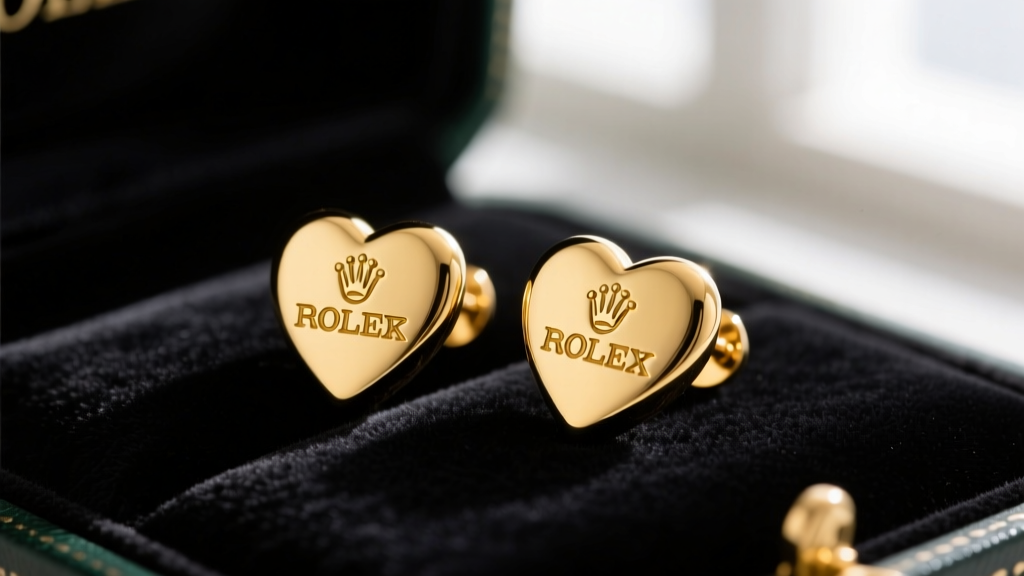
The secondary market for luxury jewelry is vast, but few niches are as misunderstood as Rolex heart earrings. While Rolex is globally revered for its horological mastery, its forays into standalone jewelry—particularly during the 1980s and 1990s—produced some highly sought-after, solid 18k gold pieces. Today, collectors and style enthusiasts actively hunt for these vintage heart motifs. However, the market is flooded with aftermarket customs, franken-pieces, and outright counterfeits.
If you are looking to acquire, authenticate, or style a pair of Rolex heart earrings, you need a meticulous, expert-driven approach. This step-by-step guide will walk you through the metallurgical realities, authentication checkpoints, and styling frameworks necessary to navigate this exclusive corner of the jewelry market in 2026.
The Market Reality: Factory Vintage vs. Aftermarket Customs
Before diving into authentication, it is crucial to understand what actually exists in the wild. Rolex is not a primary jewelry manufacturer. The authentic 'Rolex heart earrings' you see on auction sites are almost exclusively vintage pieces from the 1980s, a period when the brand produced a dedicated line of 18k yellow gold jewelry, including heart pendants, chain bracelets, and matching stud earrings.
Conversely, the modern market is saturated with 'custom' pieces. Independent jewelers often cast heart shapes and laser-etch the Rolex coronet, or they repurpose parts from damaged Rolex watches to create jewelry. While some of these aftermarket pieces use genuine precious metals, they are not factory-authorized Rolex jewelry. According to vintage experts at Bob's Watches, distinguishing between a factory-original 1980s piece and a modern aftermarket custom is the single most important factor in determining a piece's investment value and collector appeal.
Step-by-Step Guide to Authenticating Vintage Rolex Hearts
Authenticating vintage Rolex jewelry requires the same rigor as authenticating a Submariner or Daytona. You must examine the hallmarks, the stamping technique, and the hardware. Grab a 10x jeweler's loupe and follow these steps.
Step 1: Inspect the Coronet Stamp
On a genuine 1980s factory piece, the Rolex coronet (crown) logo is not laser-etched; it is deeply and cleanly stamped or cast in 3D. The five points of the crown should be distinct, with the center pearl slightly elevated. Fakes often feature a flat, muddy, or laser-etched coronet that lacks depth and precision.
Step 2: Verify the Gold Purity Hallmarks
Rolex heart earrings from this era were crafted in solid 18k gold. You must look for the '750' stamp, indicating 75% pure gold. Depending on the exact year and the market it was originally sold in, you may also find Swiss assay marks. The Gemological Institute of America (GIA) notes that legitimate Swiss 18k gold pieces from the late 20th century often feature the Helvetia profile or specific regional punch marks alongside the 750 stamp. If the piece only says '18k' without the '750' or Swiss assay marks, proceed with extreme caution.
Step 3: Examine the Post and Butterfly Back
The earring post and the friction clutch (butterfly back) are where counterfeiters often cut corners. A genuine vintage Rolex earring will feature a sturdy 18-gauge or 20-gauge post that is seamlessly soldered to the heart face. The butterfly back should bear a microscopic Rolex stamp or the 750 hallmark. If the back is a generic, unmarked brass piece plated in gold, the earrings are either fake or heavily compromised.
Comparison Chart: Factory vs. Aftermarket vs. Fake
Use this quick-reference table to evaluate potential purchases on the secondary market.
| Feature | Factory Vintage (1980s) | Aftermarket Custom | Replica / Fake |
|---|---|---|---|
| Coronet Stamp | 3D, deeply struck, crisp edges | Often laser-etched or shallow cast | Muddy, flat, poorly defined |
| Hallmarks | '750' + Swiss assay marks | '18k' or '750' (non-standard fonts) | Faint or completely missing |
| Weight (per earring) | 4.5g to 7.0g (heavy solid gold) | Varies (often lighter, 2g - 4g) | Under 2g (hollow or plated base metal) |
| Hardware | Stamped Rolex/750 butterfly back | Generic unmarked gold clutch | Cheap base metal friction back |
Sizing, Gauge, and Wearability
Vintage Rolex heart studs were designed with a specific, timeless proportion in mind. Most authentic pairs measure between 9mm and 11mm in width. This makes them substantial enough to be noticed but refined enough for daily boardroom or country club wear.
- Post Gauge: Typically 18-gauge (1.0mm thick). This is slightly thicker than standard modern fashion earrings (which are often 20g or 22g), meaning they may feel snug if your piercing was recently stretched or if you are used to ultra-fine wires.
- Weight: At roughly 5 grams per earring, they require a secure friction back. If you find a vintage pair with a loose back, have a professional jeweler replace the clutch with a high-quality 18k gold La Pousette (locking) back to prevent loss.
How to Style Heart Motif Earrings for Different Face Shapes
Heart-shaped earrings naturally draw the eye downward toward the jawline and neck. Because the vintage Rolex hearts are solid gold and lack the visual 'noise' of heavy diamond paving, they offer a clean, geometric silhouette that interacts differently with various face shapes.

Styling Framework by Face Shape
- Round Faces: The sharp bottom point of the heart earring creates a visual elongation, helping to balance the width of a round face. Wear your hair tucked behind the ears to maximize this lengthening effect.
- Oval Faces: The universal shape. Oval faces can carry the 10mm width of the vintage Rolex hearts effortlessly. Pair them with a sleek chignon to let the 18k yellow gold pop against the skin.
- Square Faces: The soft curves at the top of the heart motif help soften a strong, angular jawline. Avoid pairing them with heavy, square-cut geometric necklaces; let the earrings be the sole focal point.
- Heart-Shaped Faces: Wearing heart earrings on a heart-shaped face can sometimes over-emphasize the chin. If you have this face shape, opt to wear the Rolex hearts as a secondary piece, perhaps paired with softer, curved gold bangles to balance the upper-to-lower face ratio.
Sourcing and Pricing in the Secondary Market
Finding a genuine pair of factory Rolex heart earrings requires patience. You will rarely find them in standard retail jewelry stores. Your best avenues are specialized vintage Rolex dealers, high-end auction houses, and vetted secondary market platforms like Chrono24 or 1stDibs.
Expert Tip: Never purchase vintage Rolex jewelry based on photos alone. Always request high-resolution macro shots of the post, the butterfly back, and the inner curves of the heart where casting seams or laser etchings are most visible.
Current Pricing Benchmarks (2026):
- Mint Condition Factory Vintage (18k Yellow Gold): $3,500 – $6,000+ per pair, depending on provenance and original box/papers.
- Good Condition (Light Scratches, Generic Backs): $2,200 – $3,400.
- Aftermarket / Custom 'Rolex-Style' Hearts: $800 – $1,500 (Valued strictly on scrap gold weight and labor, lacking collector premium).
Care and Maintenance for 18k Gold Vintage Pieces
Preserving the integrity of vintage jewelry is paramount to maintaining its value. 18k yellow gold is an alloy containing 75% pure gold and 25% other metals (usually copper and silver) for strength. Over decades, these pieces develop a soft patina that collectors prize.
Do not over-polish. Aggressive machine polishing will round off the crisp edges of the heart silhouette and, worse, can erase the microscopic assay marks and coronet stamps on the post. For routine cleaning, use a few drops of mild dish soap in warm water and a soft-bristled baby toothbrush. Rinse thoroughly and dry with a microfiber cloth. Avoid ultrasonic cleaners if the piece has ever been repaired with lead solder, as the high-frequency vibrations can weaken vintage repair joints.
By understanding the historical context, mastering the authentication checkpoints, and styling them with intention, you can confidently add a pair of vintage Rolex heart earrings to your collection—securing a piece of horological and jewelry history that transcends fleeting trends.


