The Ultimate Troubleshooting Guide for Lauhala Earrings
Learn how to fix frayed strips, prevent moisture damage, and reattach hardware on your lauhala earrings with expert troubleshooting tips.

Understanding the Anatomy and Vulnerabilities of Lauhala
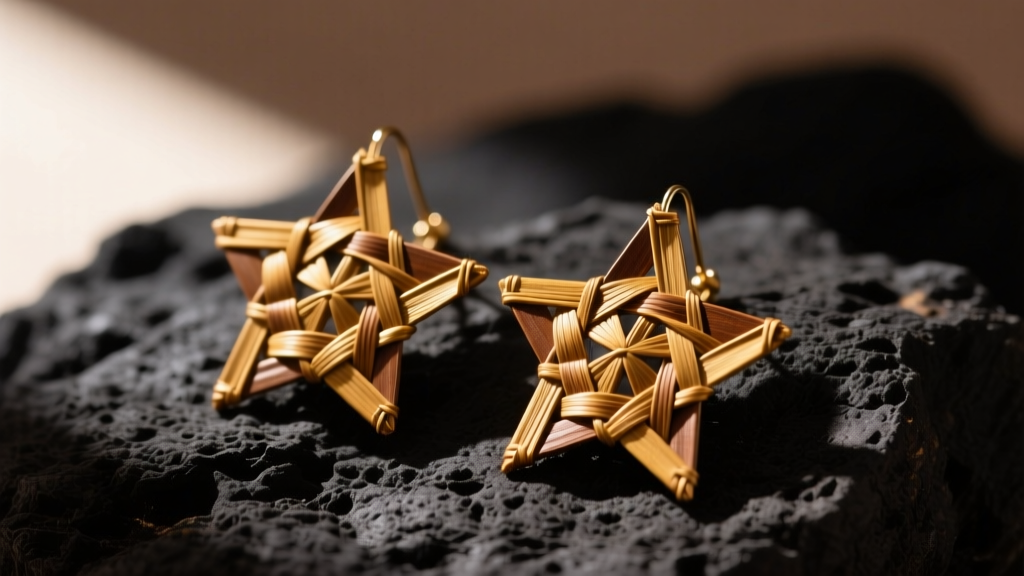
Lauhala, the traditional Hawaiian art of weaving the leaves of the hala tree (Pandanus tectorius), produces some of the most culturally significant and visually striking jewelry in the Pacific. When crafted into earrings, the natural golden-brown hues and intricate geometric patterns—such as the piko (star) or maka (diamond)—offer a lightweight, organic alternative to metal and stone. However, because lauhala is a cellulosic organic material, it is inherently vulnerable to environmental stressors. According to preservation guidelines from the Bernice Pauahi Bishop Museum, traditional hala leaves undergo rigorous preparation, including boiling, drying, and rolling, to stabilize the fibers. Despite this, modern wearers frequently encounter issues like fraying, warping, and hardware detachment.
Troubleshooting lauhala earrings requires an understanding of material science. The leaves are composed of cellulose, hemicellulose, and lignin. When exposed to fluctuating humidity, the hemicellulose absorbs moisture, causing the strips to expand and contract. Over time, this micro-movement weakens the fold lines, leading to splits. Furthermore, the natural oils in the leaf can degrade under prolonged UV exposure, making the material brittle. In this guide, we will address the most common structural and environmental failures in lauhala earrings and provide museum-grade conservation techniques to restore them.
Troubleshooting Frayed and Split Leaf Strips
Fraying is the most common issue with lauhala earrings, typically occurring at the sharp fold points of tight geometric patterns or at the loose ends tucked into the weave. The instinct for many is to reach for cyanoacrylate (super glue). This is a critical mistake.
Never use cyanoacrylate on organic leaf weaves. The chemical blooming will permanently frost the lauhala with a white haze, and the rigid bond will cause adjacent strips to snap under tension when the earring flexes.
Step-by-Step Repair for Frayed Edges
To properly mend a split or fraying strip without altering the earring's flexibility or color, you must use a conservation-grade, reversible adhesive.
- Material Selection: Use Jade 403 (a pH-neutral, flexible PVA adhesive) or a 5% solution of Paraloid B-72 (an acrylic resin used by the Getty Conservation Institute for organic artifacts). Both dry clear and remain slightly flexible.
- Application Tool: Do not use a brush, which can leave bristles or apply too much glue. Use a micro-spatula or the blunt end of a bamboo skewer.
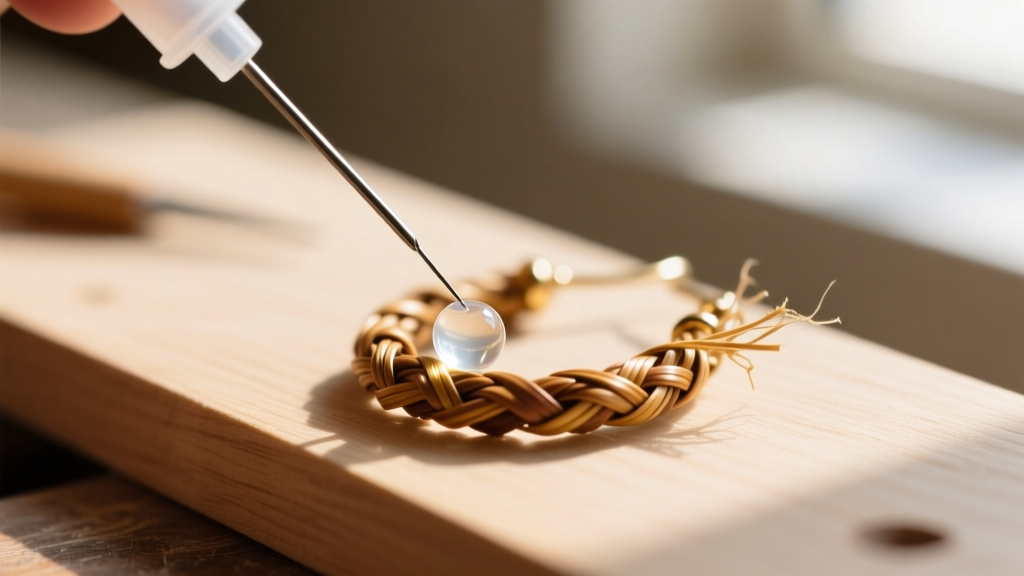
- The Mending Process: Dip the tip of your bamboo skewer into the PVA adhesive and carefully wick a micro-drop under the frayed leaf strip. Use a pair of silicone-tipped tweezers to press the strip flat against the underlying weave.
- Curing: Hold the strip in place for 60 seconds. Allow the earring to cure in a low-humidity environment for a full 24 hours before wearing.
Solving Moisture Warping and Mold Issues
Because lauhala is highly hygroscopic, moving from an arid, air-conditioned environment to a humid, tropical one can cause the earrings to warp, curl, or even develop surface mold. If your lauhala earrings have lost their flat, geometric shape, do not attempt to iron or heat-press them, as this will scorch the lignin and cause irreversible browning.
Re-flattening Warped Earrings
To correct warping, you must introduce controlled moisture and then apply even pressure. Place the earrings in a sealed plastic container with a damp (not wet) paper towel for exactly two hours. This allows the cellulose fibers to relax. Once pliable, remove the earrings and place them between two sheets of unbleached parchment paper. Sandwich the parchment between two heavy, flat books. Leave the setup in a room with a stable temperature of 68°F to 72°F (20°C to 22°C) for 48 hours. The slow, even drying process will reset the tension in the weave without causing new stress fractures.
Eradicating Surface Mold
White, powdery spots on lauhala are often mineral bloom from the boiling process, but fuzzy white or black spots indicate active fungal growth. To kill the spores without waterlogging the leaf, lightly dampen a cotton swab with 70% isopropyl alcohol. (Do not use 90% or higher; the 30% water content in 70% alcohol is necessary to penetrate the spore cell walls before the alcohol evaporates). Gently dab the affected areas. Allow the earrings to dry completely in a well-ventilated area, then store them with silica gel desiccant packets to maintain a relative humidity below 55%.
Hardware Failure: Reattaching Hooks and Posts
Lauhala earrings are incredibly lightweight, but the junction where the metal hardware meets the organic leaf is a notorious failure point. Most artisans use a small dab of jeweler's epoxy or glue a flat metal pad to the back of the weave to hold a stud post. Over time, the natural expansion and contraction of the leaf breaks this rigid bond.
Upgrading the Hardware Junction
If a stud post has popped out of your lauhala earring, simply re-gluing it to the leaf will result in another failure. You must create a mechanical anchor.
- Clean the Surface: Use 70% isopropyl alcohol to remove old adhesive from both the metal pad and the lauhala backing.
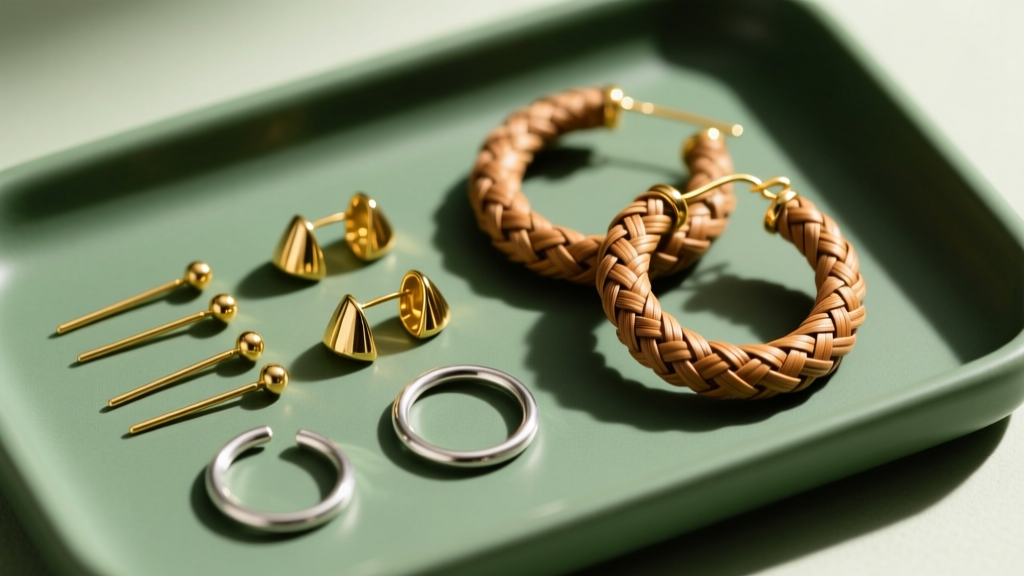
- Create a Backing Plate: If the earring lacks a metal backing plate, cut a small 6mm disc from 24-gauge sterling silver or brass sheet metal. This distributes the pulling force across multiple woven strips rather than concentrating it on one.
- Adhesive Selection: Use a two-part, slow-curing epoxy like Loctite EA 9460. Avoid 5-minute epoxies, as they become brittle and degrade under UV light. Mix the epoxy thoroughly and apply a thin layer to the metal plate.
- Curing and Reattachment: Press the plate onto the lauhala and secure it with painter's tape while it cures for 24 hours. Once set, attach your 20-gauge or 22-gauge ear wire or stud post to the metal plate using a jeweler's laser welder or a high-strength structural acrylic adhesive.
Troubleshooting Matrix: Quick Reference Guide
Use the table below to quickly diagnose and address common lauhala earring issues based on their specific symptoms and underlying causes.
| Symptom | Root Cause | Corrective Action | Materials Required |
|---|---|---|---|
| White frosty haze on leaf | Previous use of cyanoacrylate (super glue) | Lightly buff with a dry microfiber cloth; apply a micro-drop of jojoba oil to restore color. | Microfiber cloth, pure jojoba oil |
| Strips splitting at folds | UV degradation and loss of natural lignin flexibility | Wick conservation-grade PVA under the split; clamp with silicone tweezers. | Jade 403 PVA, bamboo skewer, tweezers |
| Earring curling or warping | Rapid humidity fluctuation causing uneven expansion | Relax fibers in a humidification chamber, then press flat under weight for 48 hours. | Sealed container, parchment paper, heavy books |
| Stud post pulling out of weave | Shear stress breaking rigid glue bond on organic material | Install a 6mm metal backing plate to distribute weight; bond with slow-cure epoxy. | 24g metal disc, Loctite EA 9460 epoxy |
| Fuzzy white or black spots | Fungal growth due to storage above 65% RH | Dab with 70% isopropyl alcohol; store with silica gel desiccant. | 70% isopropyl alcohol, cotton swabs, silica gel |
Preventative Maintenance for Longevity
The best troubleshooting strategy is proactive maintenance. To extend the life of your lauhala earrings by decades, implement a biannual conditioning routine. Avoid mineral oil or vegetable-based oils (like olive or coconut oil), as these will eventually oxidize, turn rancid, and attract dust. Instead, use pure, cold-pressed jojoba oil. Jojoba is technically a liquid wax ester that closely mimics human sebum; it will not go rancid and provides an excellent moisture barrier.
Apply a single drop of jojoba oil to a soft, lint-free cloth and gently buff the surface of the earrings. This restores the natural luster of the hala leaf and provides a slight hydrophobic coating that protects against ambient moisture and skin oils. Finally, always store your lauhala jewelry in a rigid, breathable cotton pouch rather than an airtight plastic bag, which can trap moisture and accelerate mold growth. Keep the pouch in a cool, dark drawer away from direct sunlight to prevent UV-induced cellulose breakdown.
Final Thoughts on Organic Jewelry Care
Lauhala earrings are more than just accessories; they are wearable pieces of botanical art and cultural heritage. By understanding the specific material properties of Pandanus tectorius and utilizing conservation-grade repair techniques, you can rescue damaged pieces and preserve their intricate geometry for years to come. Whether you are reattaching a 20-gauge gold-filled wire or mending a frayed piko pattern, patience and the right materials are your most valuable tools.


