What Is a Standard Earring Gauge? Material & Size Guide
Discover what is a standard earring gauge and how metal properties affect piercing health. Compare titanium, gold, and steel gauge strengths.

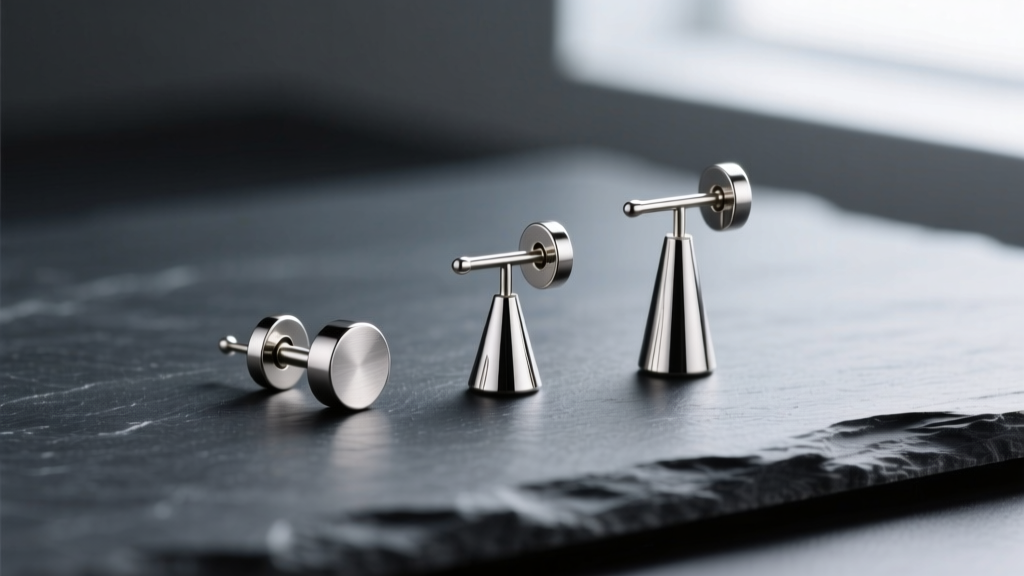
The Core Question: What Is a Standard Earring Gauge?
When navigating the world of fine jewelry and body modification, one of the most common points of confusion for consumers is the sizing system. If you have ever found yourself asking, what is a standard earring gauge, the answer depends entirely on the anatomy of the piercing and the physical properties of the metal being worn. In the American Wire Gauge (AWG) system, the smaller the gauge number, the thicker the jewelry. A standard earlobe piercing is typically done at 20-gauge (0.81mm) or 18-gauge (1.02mm), while cartilage piercings like the helix or tragus usually require a thicker 16-gauge (1.29mm) or 14-gauge (1.63mm) post to accommodate swelling and provide structural stability.
According to the Association of Professional Piercers (APP), initial piercings should never be performed with jewelry thinner than 18-gauge due to the risk of migration, tearing, and the "cheese cutter" effect. However, the safety of a specific gauge is inextricably linked to the metallurgical properties of the material. A 20-gauge post made of soft, pure silver will warp under the weight of a heavy pendant, whereas an 18-gauge post made of implant-grade titanium can easily support it.
| Gauge (AWG) | Millimeters (mm) | Inches | Standard Placement |
|---|---|---|---|
| 20G | 0.81 mm | 0.032" | Standard Earlobe (Fashion Jewelry) |
| 18G | 1.02 mm | 0.040" | Earlobe, Upper Lobe, Rook |
| 16G | 1.29 mm | 0.051" | Helix, Tragus, Conch, Daith |
| 14G | 1.63 mm | 0.064" | Industrial, Snug, Anti-Tragus |
How Material Properties Dictate Gauge Limits
You cannot separate gauge size from material science. The structural integrity of an earring is a product of its cross-sectional area and the tensile strength of its alloy. When a jeweler designs a piece, they must calculate the yield strength of the metal to ensure it will not permanently deform under the everyday stresses of sleeping, brushing hair, or accidental snags.
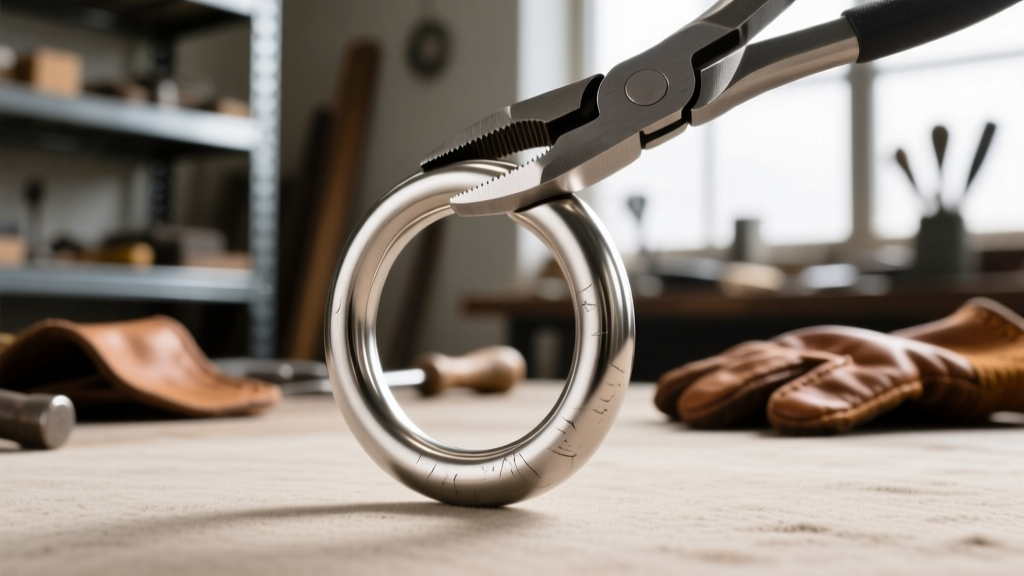
The Physics of the "Cheese Cutter" Effect
The "cheese cutter" effect occurs when a thin wire under tension slices through soft tissue. In physics, pressure is defined as force divided by area (P = F/A). If you hang a 5-gram gold pendant on a 14-gauge (1.63mm) post, the weight is distributed across a relatively wide surface area of the fistula. If you hang that exact same pendant on a 22-gauge (0.64mm) post, the surface area is cut by more than half, effectively doubling the pressure exerted on the tissue. Over time, this concentrated pressure causes the body to treat the jewelry as a foreign object, triggering an immune response that slowly rejects the jewelry, migrating it outward until it tears through the skin.
Metallurgical Grain Structure and Wire Drawing
To create thin-gauge earrings, metal rods are pulled through successively smaller tungsten carbide dies in a process called wire drawing. This cold-working process aligns the metal's crystalline grain structure, increasing its tensile strength but decreasing its ductility. If a jeweler attempts to draw 14-karat gold down to a 22-gauge wire without properly annealing (heating) it between passes, the metal becomes brittle. This is why cheap, ultra-thin fashion earrings often snap at the clasp or post joint—the metal has been work-hardened to the point of structural failure.
Hypoallergenic Metals Across Different Gauges
Material biocompatibility is heavily influenced by gauge thickness, primarily due to how surface area and polishing techniques interact with human tissue. The Cleveland Clinic notes that nickel allergy is one of the most common causes of contact dermatitis, often triggered by cheap earrings. However, the gauge of the earring plays a hidden role in allergic reactions.
Surface Porosity and Micro-Abrasions
Thinner gauges (20G and 22G) are frequently manufactured using high-speed, automated stamping and cutting processes that leave microscopic burrs and rough edges along the seam of hoops or the tip of posts. When inserted into a piercing, these micro-abrasions create tiny tears in the epithelial lining of the fistula. If the metal contains nickel or brass (common in low-grade fashion jewelry), these micro-tears provide a direct pathway for metal ions to enter the bloodstream, triggering an immediate allergic flare-up. Conversely, high-quality 16G and 14G body jewelry is typically CNC-machined and hand-polished to a mirror finish (Ra < 0.2 µm), ensuring a perfectly smooth surface that glides through the tissue without causing micro-trauma.
Threadless vs. Internally Threaded at Micro-Gauges
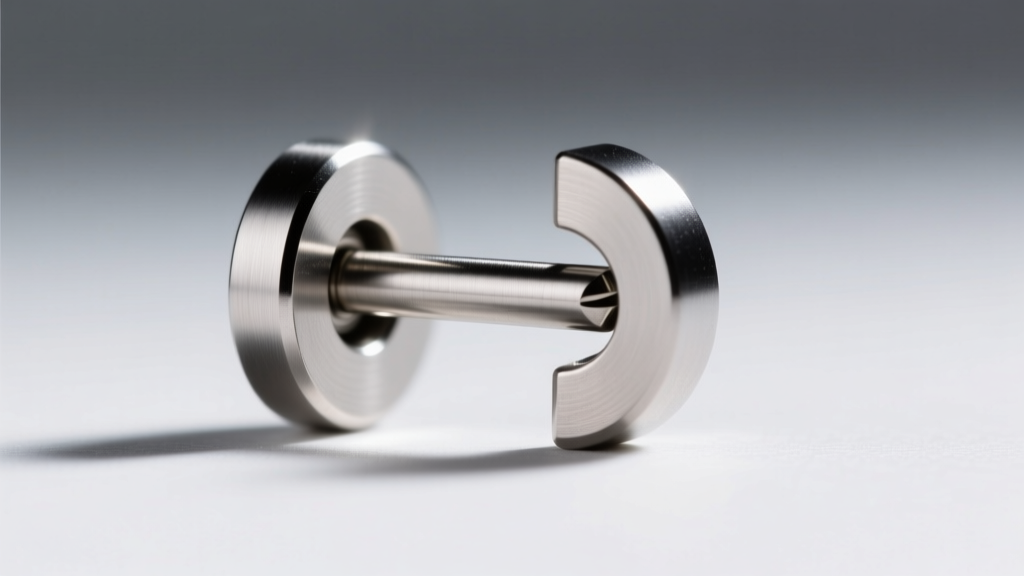
The connection mechanism of an earring is just as critical as the post itself, and gauge size dictates which mechanism is viable. In internally threaded jewelry, the screw is on the decorative end, and the post has a hollow threaded hole. At 18-gauge (1.02mm), drilling a threaded hole through the post leaves a metal wall thickness of less than 0.3mm. In softer metals like high-karat gold or niobium, this thin wall is highly susceptible to cross-threading and stripping.
This is where threadless (press-fit) jewelry excels. Threadless systems use a solid 18G or 20G post with a hollow interior, and a decorative end with a slightly bent pin that inserts into the post. The tension of the bent pin against the inner wall of the solid post creates a secure, mechanical lock. Because the post remains completely solid, threadless jewelry maintains 100% of the metal's structural integrity, making it the gold standard for thin-gauge cartilage and lobe piercings.
Expert Sizing & Material Matrix
To synthesize the relationship between material science and gauge sizing, refer to the matrix below. This framework should guide your purchasing decisions, ensuring you select a metal that can safely support the intended gauge without compromising your piercing health or the longevity of the jewelry.
| Material Grade | Minimum Safe Gauge | Best Application | Failure Mode if Sized Too Thin |
|---|---|---|---|
| ASTM F136 Titanium | 18G (1.02mm) | Initial piercings, sensitive cartilage | Warping under heavy decorative tops; tension-pin failure in threadless ends. |
| 14k / 18k Gold (Alloyed) | 16G (1.29mm) | Healed lobes, premium helix studs | Brittle snapping at the joint due to work-hardening during wire drawing. |
| 316LVM Surgical Steel | 16G (1.29mm) | Healed, non-sensitive lobes | Nickel ion leaching exacerbated by micro-abrasions from thin, poorly polished wire. |
| Niobium (99.9% Pure) | 16G (1.29mm) | Hypersensitive healed piercings, hoops | Severe bending and loss of circular shape; cannot be heat-treated to harden. |
The Golden Rule of Gauge and Material: Never sacrifice structural thickness for the sake of a delicate aesthetic. If you desire a fine, minimalist look, opt for a high-strength metal like implant-grade titanium at 18-gauge, rather than a soft, porous alloy at 22-gauge. Your tissue will reward you with a healthier, more stable piercing.
Understanding what is a standard earring gauge is only the first step in curating a high-quality jewelry collection. By respecting the physical limitations of precious metals and prioritizing biocompatible materials at appropriate thicknesses, you ensure that your earrings remain both beautiful and safe for decades to come. Whether you are stepping into a professional piercing studio or browsing a fine jeweler's catalog, always verify both the gauge and the specific alloy grade before making your selection.


