The Beginner's Guide to Sterling Silver Clover Earrings
Discover how to choose, style, and care for sterling silver clover earrings. A beginner-friendly guide to motifs, silver grades, and everyday wear.

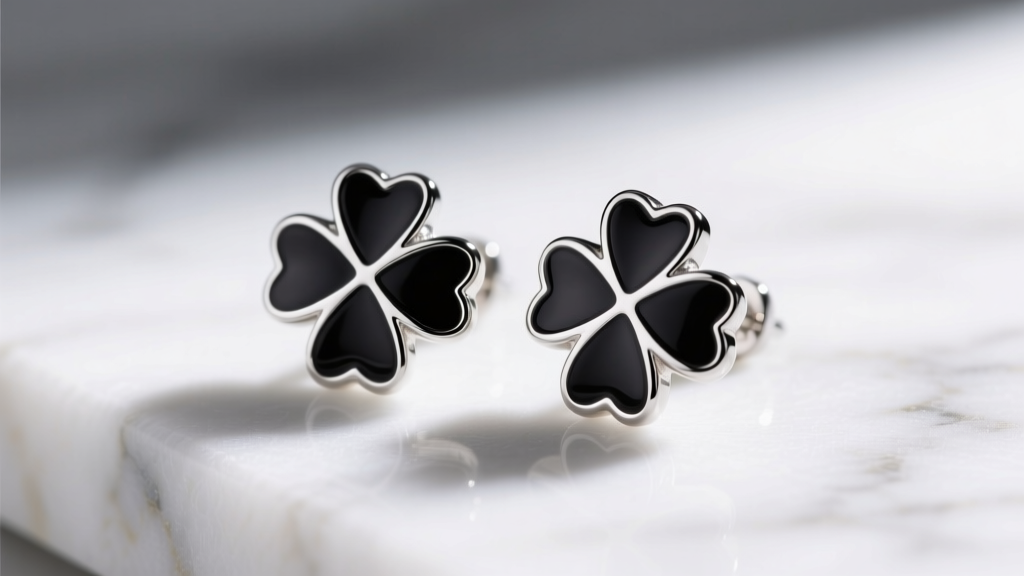
If you are building a versatile, everyday jewelry collection, sterling silver clover earrings are an essential starting point. The clover motif—ranging from the traditional three-leaf shamrock to the elegant four-leaf quatrefoil—bridges the gap between playful charm and sophisticated elegance. For beginners navigating the vast jewelry market, understanding the nuances of silver purity, motif history, and earring construction is crucial to making a smart, lasting purchase.
This comprehensive guide breaks down everything you need to know about selecting, wearing, and maintaining sterling silver clover earrings in 2026, ensuring your first purchase is one you will cherish for decades.
The Allure and History of the Clover Motif
Before diving into metals and gauges, it is worth understanding why the clover remains a dominant force in jewelry design. The four-leaf clover, often referred to in high jewelry as a quatrefoil, has roots tracing back to Gothic architecture, where it symbolized harmony and the four evangelists. In the 1970s, heritage French jewelry houses adapted this architectural motif into wearable art, permanently cementing the four-leaf clover as a symbol of luck, luxury, and timeless style.
Today, you will generally encounter two variations:
- The Shamrock (Three-Leaf): Deeply tied to Irish heritage, this design is often rendered in solid, textured silver with a slightly rustic or vintage appeal.
- The Quatrefoil (Four-Leaf): Symmetrical, balanced, and highly polished. This is the design most commonly associated with luxury-inspired silver studs, often featuring enamel or stone inlays.
Decoding the Metal: What '925 Sterling' Actually Means
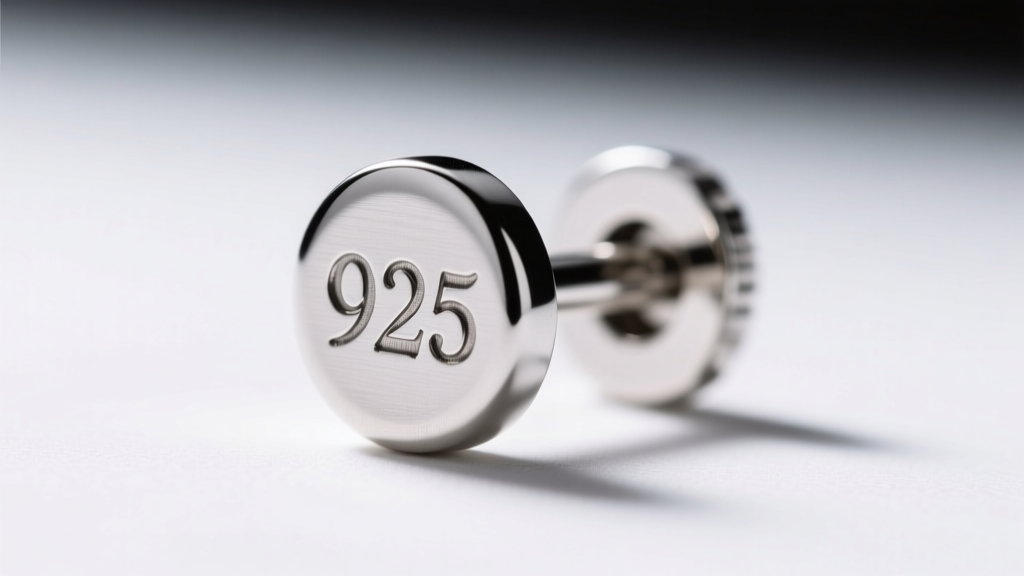
When shopping for sterling silver clover earrings, you will frequently see the number '925' stamped on the earring post or backing. But what does this actually mean for the longevity and safety of your jewelry?
According to the Gemological Institute of America (GIA), pure silver (999 fine silver) is far too soft for everyday jewelry. If an earring post were made of 999 silver, the simple friction of pushing a butterfly back onto the post would cause the metal to bend or snap. To solve this, metallurgists created Sterling Silver, an alloy consisting of exactly 92.5% pure silver and 7.5% base metals—most commonly copper.
The Copper Factor and Skin Sensitivities
That 7.5% copper is what gives sterling silver its necessary tensile strength, allowing a 20-gauge post to remain rigid. However, copper is also the culprit behind silver tarnish. Furthermore, while sterling silver is widely considered hypoallergenic, a small fraction of the population has a sensitivity to copper. If you have highly reactive skin, look for sterling silver clover earrings that feature a rhodium flash plating. Rhodium is a platinum-group metal that provides a bright, white-gold-like finish and creates a barrier between the copper alloy and your skin.
Expert Warning: Beware of jewelry labeled simply as 'Silver,' 'Tibetan Silver,' or 'Alpaca.' These are often base-metal alloys containing zero actual silver and high levels of nickel, which the American Academy of Dermatology identifies as the leading cause of contact dermatitis in jewelry wearers.
Sizing, Gauges, and Piercing Compatibility
A common mistake beginners make is ignoring the physical dimensions of the earring post and the face of the clover. Comfort is dictated by precise measurements.
Understanding Post Gauge and Length
The 'gauge' refers to the thickness of the metal wire that passes through your earlobe. Standard lobe piercings are typically done at 20G (0.81mm) or 18G (1.02mm). Most high-quality sterling silver clover studs will feature a 20G or 19G post to ensure they slide in smoothly without stretching the piercing.
Post length is equally important. A standard post is 10mm to 12mm long. If you have thicker earlobes, a standard 10mm post might leave insufficient room for the butterfly friction back, causing the earring to pinch the skin and restrict blood flow. If you fall into this category, seek out brands that offer 14mm 'long-post' options.
Clover Face Diameter
The visual weight of the earring depends on the face diameter. For a subtle, everyday look suitable for the office or the gym, opt for a clover face between 6mm and 8mm. For a bold, statement-making aesthetic that mimics high-jewelry proportions, look for diameters between 12mm and 15mm.
Comparing Clover Earring Styles and Materials
Sterling silver clover earrings are rarely just plain metal. The true beauty of the design often lies in the inlay. Below is a comparison of the most common inlay techniques you will encounter in the 2026 market.
| Inlay Type | Description & Process | Durability | Price Range (USD) |
|---|---|---|---|
| Solid Silver | No inlay; relies on milgrain edges, oxidized detailing, or high-polish finishes to define the clover leaves. | Excellent. Will not chip or crack. | $25 - $60 |
| Cold Enamel | An epoxy-based resin painted into the silver recesses. Available in vibrant colors like onyx black, malachite green, and ruby red. | Moderate. Can chip if dropped on hard tile. | $35 - $85 |
| Guilloché Enamel | Vitreous (glass) enamel fired at high temperatures over engine-turned silver. Creates a mesmerizing, translucent depth. | High, but glass can shatter under extreme impact. | $120 - $250+ |
| Mother of Pearl | Thin slices of iridescent shell hand-carved and set into the silver bezel. Offers a luxurious, organic luster. | Moderate. Porous; easily damaged by perfumes and acids. | $60 - $150 |
The Science of Silver Tarnish and Daily Care
Every beginner must understand that tarnish is not a defect; it is a natural chemical reaction. The copper in 925 sterling silver reacts with hydrogen sulfide and moisture in the air to form silver sulfide, which appears as a dull, yellowish, or black film on the surface of your clover earrings.
Actionable Maintenance Steps
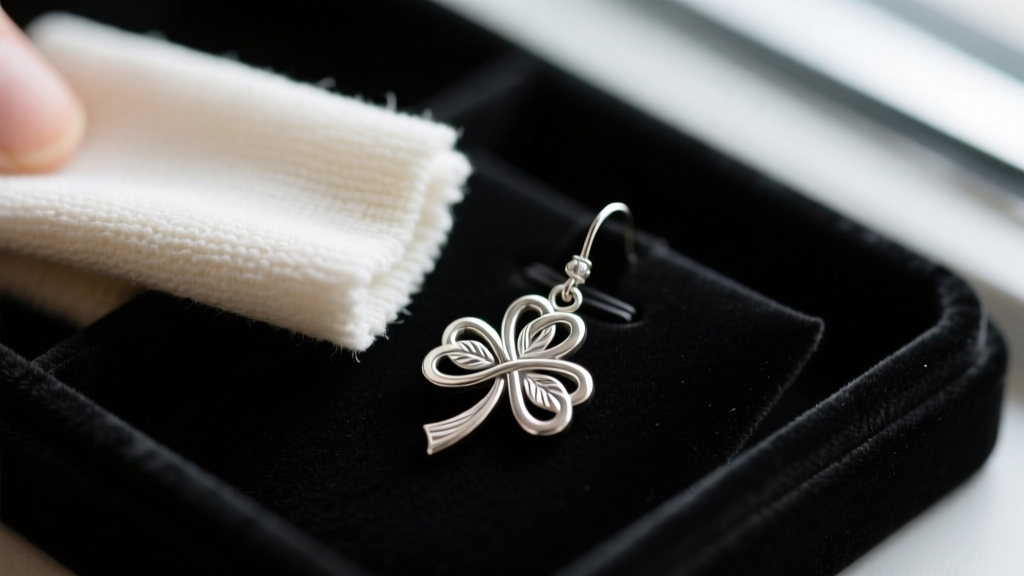
- The Polishing Routine: Never use toothpaste or baking soda to clean your silver. These are highly abrasive and will scratch the high-polish finish of the silver and dull any enamel inlay. Instead, use a treated microfiber cloth (such as a Sunshine cloth) to gently buff the metal back to a high shine.
- Proper Storage: Do not leave your earrings exposed on a bathroom vanity. The humidity accelerates tarnishing. Store them in an airtight ziplock bag with a 3M anti-tarnish strip, which absorbs airborne sulfur compounds before they can reach your jewelry.
- The 'Last On, First Off' Rule: Always put your sterling silver clover earrings on after applying hairspray, perfume, and lotions. The alcohols and volatile organic compounds (VOCs) in cosmetics can degrade cold enamel and strip rhodium plating over time.
Your First Purchase Checklist
Ready to buy your first pair? Run through this quick expert checklist before checking out:
- [ ] Does the product description explicitly state '925 Sterling Silver' rather than just 'silver-toned' or 'silver-plated'?
- [ ] Is the post gauge between 18G and 20G for comfortable lobe wear?
- [ ] If buying enamel, does the brand specify whether it is cold enamel (resin) or vitreous (fired glass)?
- [ ] Are the butterfly backs also stamped 925, or are they made of cheap base metals that could cause irritation?
- [ ] Does the retailer offer a clear return policy in case the post length is too short for your specific earlobe thickness?
Final Thoughts
Sterling silver clover earrings offer an incredible entry point into the world of fine jewelry. They provide the visual weight and historical elegance of luxury motifs without the prohibitive price tag of 18k gold. By prioritizing authentic 925 hallmarks, understanding the limitations of enamel inlays, and committing to a simple, non-abrasive cleaning routine, your clover earrings will remain a lucky, luminous staple in your wardrobe for years to come.


