Large Silver Hoop Earrings: 2026 Style & Trend Analysis
Discover 2026 trends for large silver hoop earrings. Expert styling tips, gauge guides, and face-shape matching for statement sterling silver hoops.

The 2026 Shift: From Micro-Huggies to Bold Minimalism
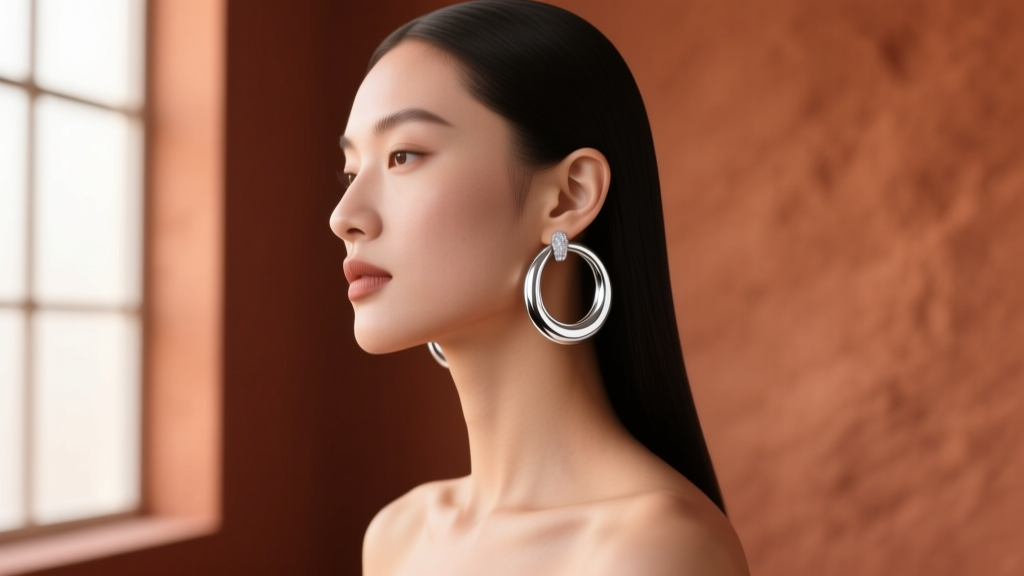
For the past few years, the jewelry market was dominated by the "quiet luxury" micro-huggie and barely-there stud. However, the 2026 style landscape has pivoted dramatically. Large silver hoop earrings have reclaimed their status as the ultimate anchor piece in modern ear styling. This isn't a return to the overly ornate, heavy boho-chic hoops of the early 2000s; instead, we are seeing a rise in "bold minimalism." Designers are focusing on architectural silhouettes, high-polish finishes, and fluid, liquid-metal textures that catch the light without relying on gemstone embellishments.
The appeal of the oversized silver hoop lies in its versatility. It bridges the gap between high fashion and everyday wearability, offering a striking visual frame for the face. But as diameters push past the 60mm threshold, wearers must navigate specific structural and material challenges to ensure both comfort and lobe longevity.
Material Grades and Weight Engineering
When shopping for large silver hoop earrings, understanding metallurgy is non-negotiable. Pure silver (999) is too soft to hold the structural integrity of a large hoop, which is why alloys are used. The industry standard is 925 Sterling Silver, comprising 92.5% silver and 7.5% copper. While durable, the copper content makes it highly susceptible to tarnishing when exposed to humidity and skin oils.
For 2026, forward-thinking jewelers are increasingly utilizing Argentium Silver. By replacing a portion of the copper alloy with germanium, Argentium offers exceptional tarnish resistance and a naturally whiter, brighter luster that mimics platinum. According to the Gemological Institute of America (GIA), these modern silver alloys are redefining durability standards in contemporary jewelry.
The Hollow Tubing Solution
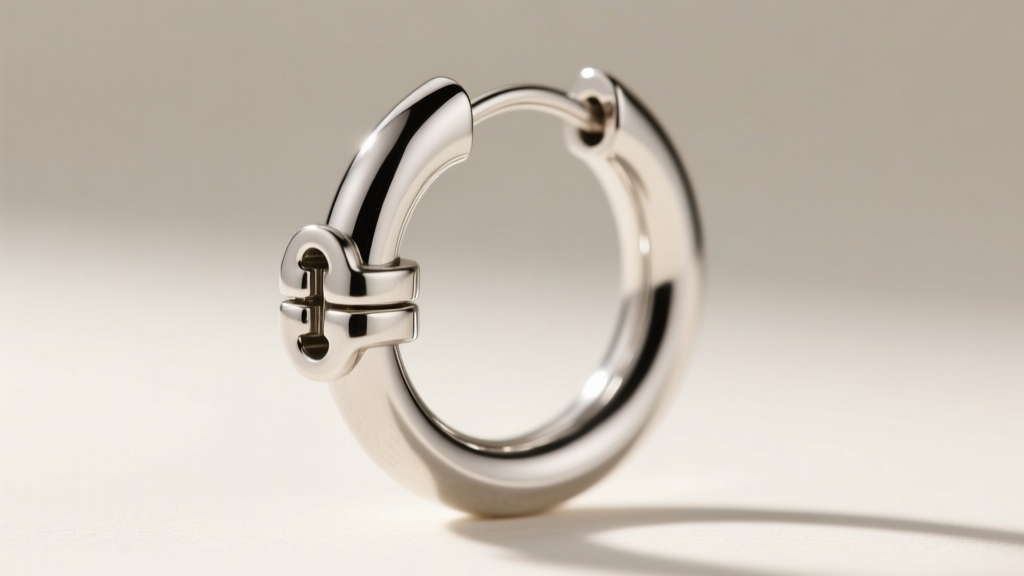
A solid wire hoop measuring 80mm in diameter would weigh upwards of 15 grams per ear—enough to cause significant discomfort and lobe stretching over an 8-hour wear period. To combat this, premium manufacturers use seamless silver tubing. This engineering technique creates a hollow core, reducing the weight of a 70mm hoop to a mere 3.5 to 5 grams while maintaining a thick, luxurious outer profile. Always check product specifications for "tubing" or "hollow core" constructions when purchasing hoops larger than 50mm.
The Cheese-Cutter Effect: Gauge Sizing & Lobe Health
The most common failure mode for large hoop wearers is the "cheese-cutter effect." This occurs when a thin wire bears too much weight, creating downward pressure that slowly slices through the earlobe tissue. To prevent this, the wire gauge (thickness) must scale proportionally with the hoop's diameter.
| Wire Gauge | Thickness (mm) | Best Hoop Diameter | Lobe Risk Level |
|---|---|---|---|
| 20G | 0.81mm | Under 40mm | High (Avoid for large hoops) |
| 18G | 1.02mm | 40mm - 55mm | Moderate |
| 16G | 1.29mm | 55mm - 75mm | Low (Ideal for statement sizes) |
| 14G | 1.63mm | 75mm+ | Lowest (Requires stretched piercing) |
If your lobes are pierced at a standard 20G or 18G but you want to wear a heavy 70mm hoop, look for designs that feature a tapered wire. These hoops have a thicker body for structural support but taper down to an 18G or 20G post at the clasp to fit standard piercings comfortably. Alternatively, utilizing a silicone O-ring earring back on a French-wire hoop can help distribute the weight more evenly across the back of the lobe.
Face Shape & Proportion Matrix
Large silver hoop earrings are a powerful tool for manipulating facial proportions. The key is to create contrast rather than echoing your natural face shape. Here is the 2026 framework for matching hoop geometry to your bone structure:
- Round Faces: Opt for elongated, oval-shaped hoops or hoops with a slight teardrop pull (e.g., 50mm wide by 70mm long). Avoid perfectly circular, wide hoops that emphasize cheek width.
- Square Faces: Embrace large, perfectly round hoops (60mm-80mm) with soft, high-polish edges. The curves will soften a strong jawline and angular cheekbones.
- Heart-Shaped Faces: Look for hoops that feature subtle detailing or a thicker gauge at the bottom half. This draws the eye downward, adding visual weight to a narrower chin.
- Oval Faces: The universal shape. You can confidently wear architectural, geometric, or perfectly round oversized hoops without throwing off your natural symmetry.
Styling Frameworks for the Modern Ear Party
The way we curate our ears has evolved. The haphazard "ear party" of the late 2010s has been replaced by intentional, balanced curation. When wearing large silver hoop earrings in the primary lobe piercing, the rest of the ear should act as a supporting cast, not a competing element.
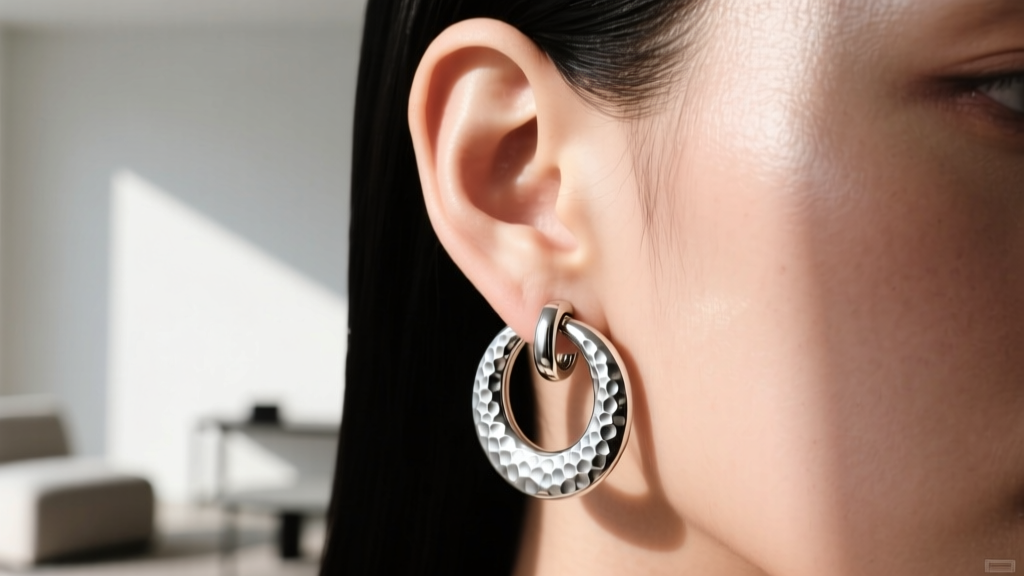
"In 2026, the rule of thumb is the 70/30 ratio. Let the large silver hoop command 70% of the visual weight, and use the upper cartilage and secondary lobes for the remaining 30%, utilizing flush studs or micro-huggies to create a gradient of scale." — Contemporary Jewelry Styling Guidelines
For a cohesive look, mix textures rather than metals. Pair a high-polish 70mm silver hoop in the main lobe with a matte-brushed or hammered silver huggie in the second hole. This creates depth and visual interest while maintaining a strict monochromatic palette, which is a hallmark of current high-end styling.
Maintenance & Tarnish Troubleshooting
Because large hoops have a massive surface area, tarnish becomes highly visible. The copper in 925 sterling silver reacts with sulfur compounds in the air and cosmetics, creating a dark layer of silver sulfide. While the Jewelers of America recommends commercial polishing cloths for light maintenance, large hoops require a more efficient approach to reach the inner curves without scratching the metal.
The Electrochemical Bath Method:


