Troubleshooting Green Hoop Earrings: Tarnish, Skin Stains & Fixes
Discover why your green hoop earrings cause skin stains and tarnish. Expert troubleshooting for enamel, malachite, and titanium hoops with lasting fixes.

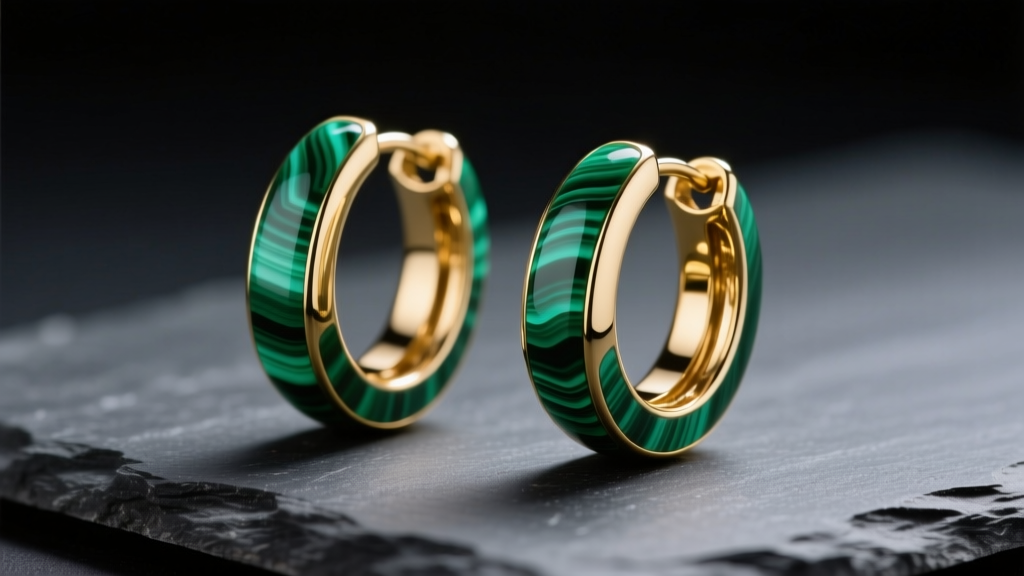
Green hoop earrings are a staple in modern jewelry wardrobes, offering everything from the deep, mysterious bands of malachite to the playful pop of vitreous enamel and the iridescent sheen of anodized titanium. However, these vibrant accessories frequently come with a unique set of maintenance nightmares. Whether you are dealing with the dreaded "green ear" skin stain, chipping enamel, or the structural degradation of soft gemstones, troubleshooting these issues requires an understanding of material chemistry and piercing biology.
This guide bypasses generic jewelry care advice to provide actionable, material-specific solutions for preserving your green hoops and protecting your piercings.
The Chemistry of the "Green Ear" Phenomenon
The most common complaint regarding green hoop earrings is the transfer of a dark, oxidized stain to the earlobe or cartilage. This is rarely an allergic reaction or an infection; it is a predictable chemical oxidation process.
When base metals containing copper (such as brass, bronze, or low-karat gold alloys) come into contact with the chlorides, lactic acid, and salts present in human sweat, they undergo a rapid oxidation reaction. This creates copper chloride, a green compound that easily transfers to the stratum corneum (the outermost layer of skin).
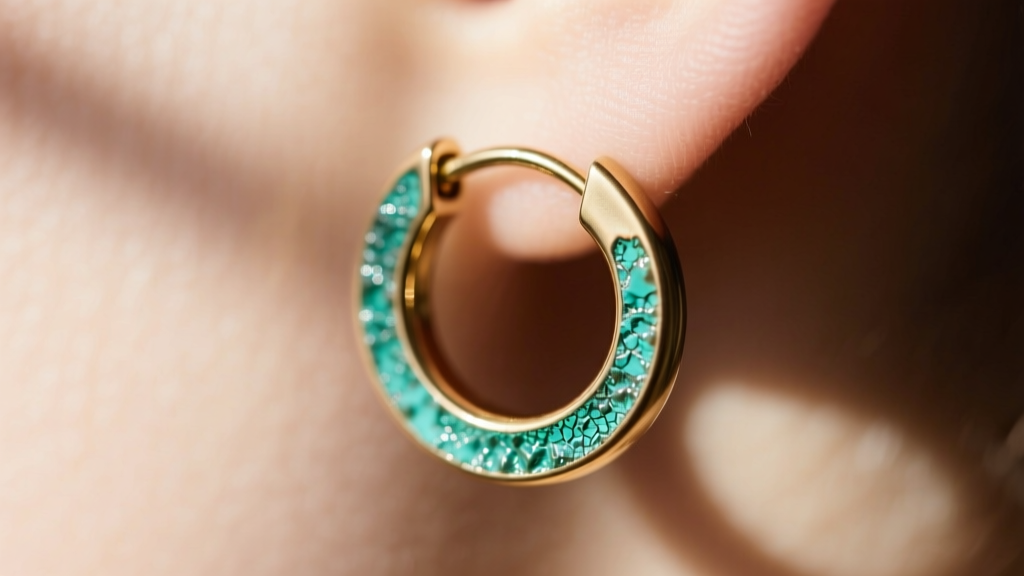
According to the American Academy of Dermatology, while copper staining is harmless and washes off with soap and water, it is often confused with contact dermatitis caused by nickel. If your skin is green, it is oxidation. If your skin is red, raised, and itching, you are likely reacting to nickel sulfates hidden in the base metal alloy beneath the green plating or enamel.
Material Breakdown: Vulnerabilities of Green Hoops
Not all green hoop earrings are created equal. The failure mode of your jewelry depends entirely on its material composition, gauge thickness, and structural integrity. Below is a troubleshooting matrix for the most common green hoop variations on the market.
| Material Type | Common Failure Mode | Standard Gauge | Price Range | Troubleshooting Fix |
|---|---|---|---|---|
| Enamel over Brass | Enamel chipping & severe skin staining | 18G - 20G | $20 - $65 | Apply nano-ceramic barrier coat |
| Malachite Inlay | Acid etching & stone dullness | 16G - 18G | $85 - $250 | Wipe with damp cloth; zero chemicals |
| Anodized Titanium | Color fading (oxide layer wear) | 16G - 14G | $30 - $90 | Re-anodize via professional piercer |
| Chrysoprase (Solid) | Micro-fractures from hoop tension | 18G - 20G | $120 - $400 | Store flat; avoid ultrasonic cleaners |
Step-by-Step Troubleshooting for Specific Failures
Fix 1: Stopping the Green Skin Stain (The Barrier Method)
The outdated advice of painting clear nail polish on earring posts is fundamentally flawed. Nitrocellulose lacquer (nail polish) yellows over time, chips within 48 hours of friction against the earlobe, and traps moisture against the metal, accelerating the very oxidation you are trying to prevent.
The 2026 Standard: Use a jewelry-specific nano-ceramic coating or a micro-crystalline wax like Renaissance Wax. Apply a microscopic layer to the post and the inner curve of the hoop using a cotton swab. Allow it to cure for 12 hours before wearing. This creates a breathable, friction-resistant barrier that prevents sweat from reaching the copper alloys.
Fix 2: Rescuing Malachite and Soft Gemstone Hoops
Malachite is a copper carbonate hydroxide mineral. Because it is literally composed of copper compounds, it is highly reactive to the acids in your skin and the environment. With a Mohs hardness of just 3.5 to 4.0, malachite is softer than a copper coin.
"Never use ultrasonic cleaners, steam, or commercial silver dips on malachite hoop earrings. The vibrations will shatter the internal banding structure, and the chemicals will strip the stone's natural polish, leaving it permanently chalky." — Gemological Institute of America (GIA) Care Guidelines
The Fix: If your malachite hoops have lost their luster, wipe them gently with a microfiber cloth slightly dampened with distilled water. Dry immediately. If the stone is deeply etched by sweat acids, it must be re-polished by a lapidary professional; home remedies will only worsen the pitting.
Fix 3: Addressing Fading in Anodized Titanium Hoops
Anodized titanium green hoops are the gold standard for sensitive ears. The green color is not a dye or plating; it is an oxide layer created by running an electrical current through the metal (typically at 50 to 60 volts to achieve a vibrant green). Over time, friction from hair, scarves, or sleeping can wear down this oxide layer, revealing the dull grey titanium beneath.
The Fix: You cannot "re-plate" this at home. Take the hoops to an APP-certified piercer. They can clean the jewelry in an ultrasonic bath and re-anodize it using a specialized voltage rectifier, restoring the green hue in minutes for a nominal fee.
Cartilage vs. Lobe: Upper Piercing Risks
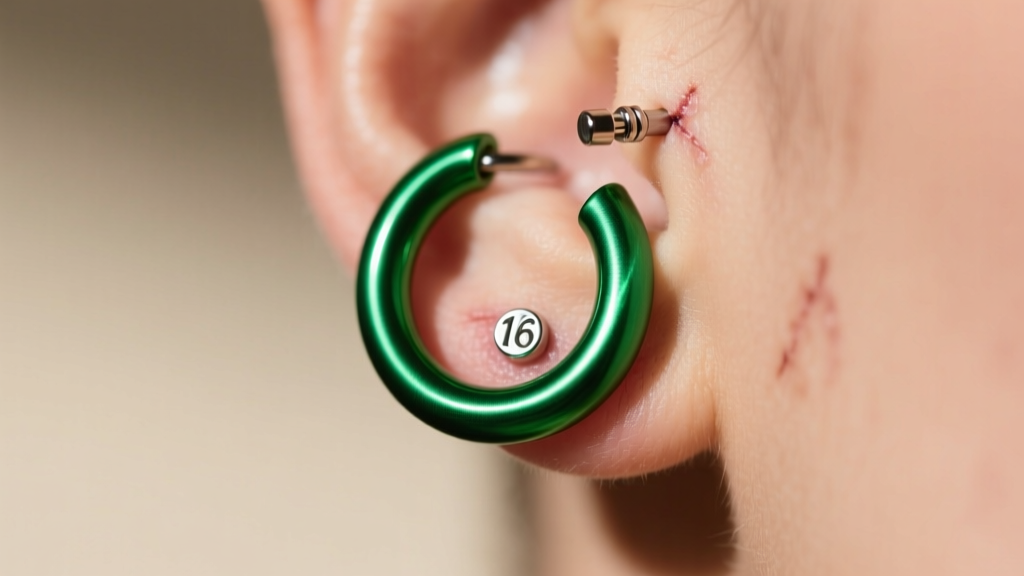
Wearing reactive green hoop earrings in cartilage piercings (such as the helix, conch, or tragus) introduces severe biological risks that do not apply to standard earlobes. Cartilage is avascular, meaning it lacks a direct blood supply and relies on surrounding tissue for healing and immune response.
If a brass or copper-alloy green hoop causes micro-abrasions or chemical irritation in a cartilage piercing, the body's inability to flush the area efficiently can lead to perichondritis (inflammation of the cartilage membrane) or the formation of hypertrophic scarring (irritation bumps).
The Association of Professional Piercers (APP) strictly mandates the use of implant-grade titanium (ASTM F136) or solid 14k/18k gold for any jewelry worn in healing or sensitive cartilage piercings. If you want green hoops for your cartilage, anodized ASTM F136 titanium is the only biologically safe option that will not trigger an immune response or degrade the piercing channel.
When to Retire Your Green Hoop Earrings
Troubleshooting can only take you so far. Certain failure modes indicate that the structural integrity of the earring is compromised, posing a risk of loss or injury. Retire your green hoops immediately if you observe:
- Enamel Flaking Near the Post: If the vitreous enamel is chipping near the hinge or post, the microscopic glass shards can become embedded in the piercing channel, causing severe granulomas.
- Malachite Inlay Separation: If you can catch a fingernail on the edge where the malachite meets the metal bezel, moisture is trapped underneath. This will cause the adhesive to fail, leading to the stone falling out and being lost.
- Hinge Tension Loss: If a huggie or clicker hoop no longer "snaps" securely, the metal has fatigued. A loose hoop will rotate constantly, dragging bacteria into the fistula (piercing hole) and causing chronic irritation.
By understanding the specific material science behind your jewelry, you can transition from reacting to ruined earrings to proactively maintaining them, ensuring your green hoops remain vibrant, safe, and structurally sound for years to come.


