Lobe Troubleshooting: The Woman With Pearl Earring Movie Effect
Learn how to prevent and repair lobe stretching caused by heavy statement drops, inspired by the iconic woman with pearl earring movie look.

The Cinematic Illusion vs. Anatomical Reality
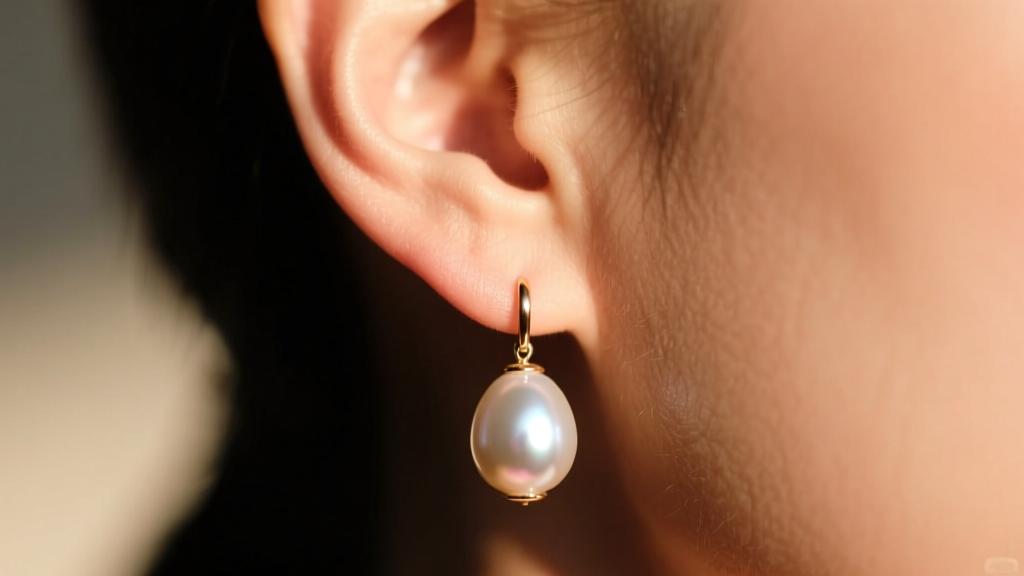
When jewelry enthusiasts and film buffs alike search for the woman with pearl earring movie, they are almost universally captivated by the iconic, impossibly luminous teardrop earring worn by Scarlett Johansson in the 2003 cinematic adaptation of Tracy Chevalier’s novel. The visual impact of that single, massive pearl drop is undeniable—it defines the character's aesthetic and anchors the film's visual identity. However, from a professional jewelry styling and dermatological perspective, that specific earring design represents a notorious real-world problem: severe earlobe ptosis (drooping) and fistula elongation caused by unsupported statement jewelry.
In the controlled environment of a film set, an actor might wear a heavy prop earring for only a few minutes during a close-up shoot before a costume assistant removes it. In the real world, wearing a 12mm to 15mm solid pearl drop for an eight-hour workday or a long evening event subjects the delicate collagen matrix of the earlobe to relentless, dynamic shear stress. The result? Micro-tears in the piercing channel, chronic inflammation, and the permanent elongation of the fistula. This guide serves as your comprehensive troubleshooting manual for achieving that iconic cinematic drop-earring look without sacrificing the structural integrity of your earlobes.
Material Density: Why Some Pearls Destroy Lobes
Not all pearls are created equal, and understanding material density is the first step in troubleshooting heavy earring syndrome. According to the Gemological Institute of America (GIA), the specific gravity and overall mass of a pearl vary wildly depending on its origin and composition. A standard 12mm round freshwater pearl might weigh roughly 3.5 grams. However, a 15mm teardrop South Sea pearl—the closest natural equivalent to the cinematic masterpiece—can easily exceed 7 grams. When you factor in a 14k or 18k gold setting, cap, and wire (adding another 1.5 to 2.5 grams), a single earring can approach 10 grams of localized weight.
To put this into perspective, a standard lobe piercing is not designed to bear 10 grams of swinging leverage. The swinging motion creates a pendulum effect, multiplying the downward force on the lower edge of the piercing hole. Over time, this mechanical stress breaks down the elastin fibers in the earlobe. If you are troubleshooting a painful or drooping lobe after wearing pearl drops, the first step is to weigh your jewelry. If a single earring exceeds 6 grams, you must implement mechanical support systems, which we will detail below.
The Troubleshooting Framework: Supporting Heavy Drops
If you refuse to compromise on the size and visual weight of your pearl drops, you must upgrade the hardware and support mechanisms. Relying on standard fashion earring components is a guaranteed path to lobe damage. Here is the professional troubleshooting framework for heavy drops.
1. Wire Gauge Upgrades
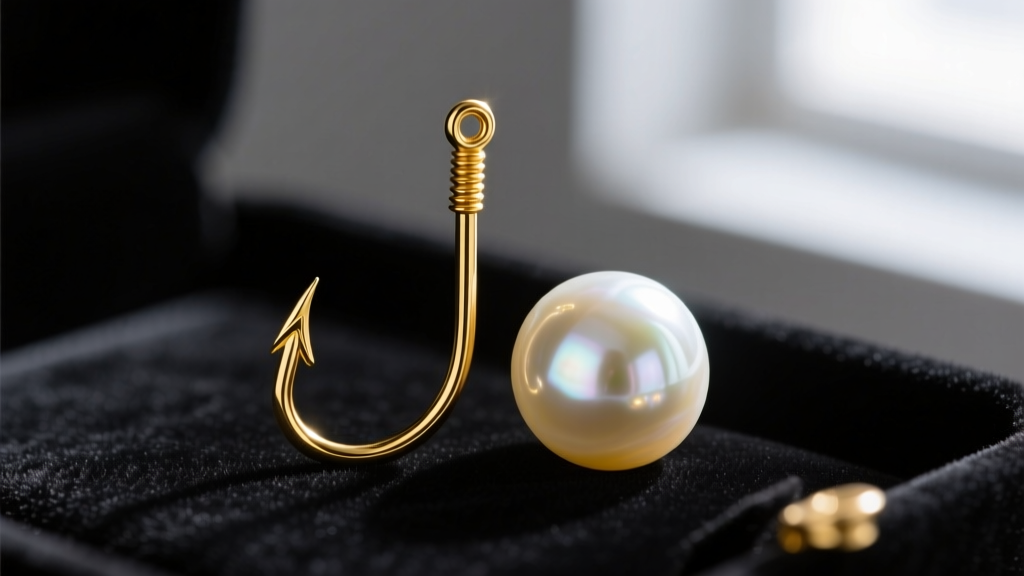
The most common point of failure in statement earrings is the wire gauge. Most commercial drop earrings are manufactured with 22-gauge (0.64mm) or 20-gauge (0.81mm) wire to save on precious metal costs and fit universally into standard piercings. However, a 20-gauge wire acting on a 10-gram pearl functions exactly like a cheese wire slicing through a block of cheddar. It concentrates all the gravitational force onto a microscopic surface area of the fistula.
The Fix: Take your heavy pearl drops to a master jeweler and have the wires replaced with 18-gauge (1.02mm) or 16-gauge (1.29mm) wire. This simple upgrade increases the surface area distributing the weight by up to 60%, drastically reducing the localized pressure on the lower rim of your piercing. Ensure the jeweler uses a hardening process or a sturdy alloy like 14k yellow gold, which offers a better balance of tensile strength and malleability than pure 24k gold.
2. Shear Stress Distribution Patches
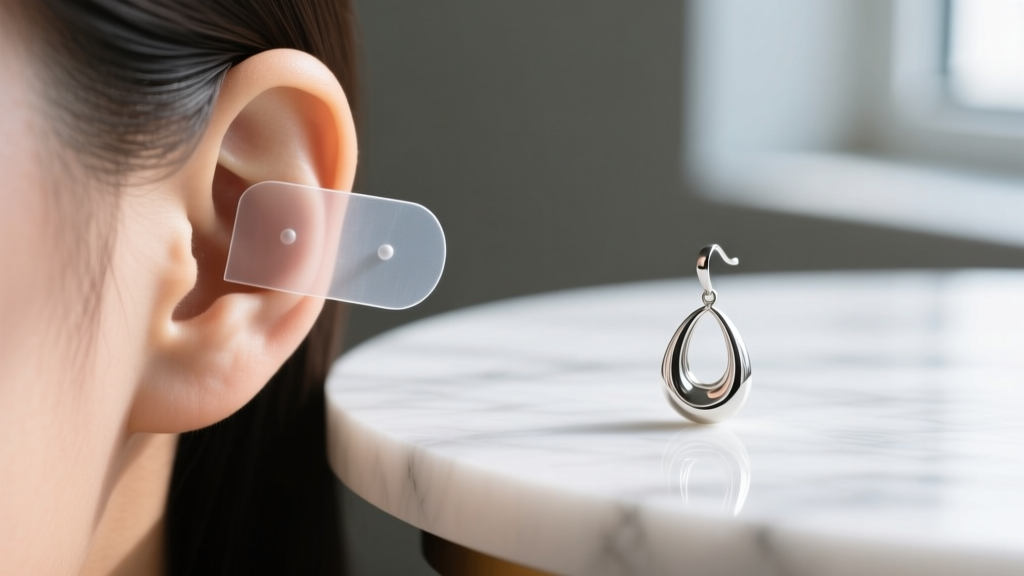
If upgrading the wire gauge is not an option, or if your lobes are already showing signs of thinning and elongation, you must artificially reinforce the earlobe tissue. Polyurethane-based earring support patches (such as LobeWonder or BlingDots) are non-negotiable tools for heavy earring wearers. These adhesive patches feature a pre-punched hole that aligns with your piercing. When applied to the back of the lobe, the patch distributes the downward shear stress across a 15mm diameter of skin rather than concentrating it on the 1mm fistula. This effectively eliminates the 'cheese wire' effect and keeps the pearl drop sitting flush and forward-facing, rather than drooping awkwardly downward.
3. Counterbalance and Backing Mechanics
The earring back is just as critical as the front. Standard butterfly friction backs are entirely inadequate for heavy pearls; they slip down the wire post, allowing the earring to tilt forward and pull on the upper edge of the piercing hole. For heavy drops, you must utilize mechanical locking systems or high-friction silicone alternatives that grip the wire securely and provide a wide base of support against the back of the lobe.
| Backing / Support Type | Mechanism of Action | Max Recommended Weight | Ideal For |
|---|---|---|---|
| Standard Butterfly Friction | Metal scroll tension on post | 2.5 grams | Lightweight studs, small hoops |
| Jumbo Silicone Discs | High-friction grip, wide surface area | 5.0 grams | Medium drops, everyday pearls |
| Locking Screw Backs | Threaded post with screw-on cap | 6.0 grams | Secure studs, diamond drops |
| Adhesive Lobe Patches | Distributes shear stress across skin | 12.0+ grams | Heavy statement pearls, cinematic drops |
| French Wire + Silicone Stopper | Hook design with high-grip barrier | 8.0 grams | Dangle earrings, teardrop hooks |
Rehabilitation: Fixing Already Stretched Piercings
If the damage is already done and your fistula has elongated into a visible slit, troubleshooting shifts from prevention to rehabilitation. The American Academy of Dermatology (AAD) notes that once the collagen network in the earlobe is permanently stretched, topical creams and serums will not reverse the structural damage. You have two primary clinical options for repair:
- Non-Surgical Dermal Fillers: Dermatologists can inject Hyaluronic Acid (HA) fillers, such as Restylane or Juvéderm, directly into the earlobe. This plumps the tissue, temporarily shrinking the appearance of the stretched hole and providing a denser cushion of tissue to support heavy earrings. This procedure typically costs between $600 and $900 per lobe and lasts 9 to 12 months. It is an excellent temporary fix for a specific event where you plan to wear heavy pearls.
- Surgical Lobuloplasty: For severe elongation or partial tears, a board-certified plastic surgeon can perform a lobuloplasty. This minor in-office procedure involves excising the stretched fistula tract and suturing the healthy tissue edges back together. According to data from the American Board of Plastic Surgery, this procedure generally costs between $500 and $1,500 per ear. The critical caveat is the healing timeline: you must wait a minimum of 8 to 12 weeks before re-piercing the lobe, and when you do, you must start with lightweight, 18-gauge titanium studs to allow the new fistula to mature properly.
Final Styling Verdict
The allure of the woman with pearl earring movie aesthetic is timeless, but the physics of gravity and human anatomy remain unforgiving. You do not have to sacrifice your favorite heavy pearl drops, nor do you have to accept stretched, painful lobes as the cost of admission for high-impact style. By auditing your jewelry weight, upgrading to 16-gauge or 18-gauge wires, utilizing polyurethane support patches, and selecting high-friction silicone or mechanical backings, you can safely wear cinematic statement pieces all day long. Remember that your earlobes are a finite resource; treat them with the same level of care and precision that you would the pearls themselves.


