Troubleshooting Long Black Earrings: Weight, Tarnish & Snags
Solve common issues with long black earrings. Learn expert fixes for lobe stretching, black plating tarnish, and hair snagging in this detailed guide.
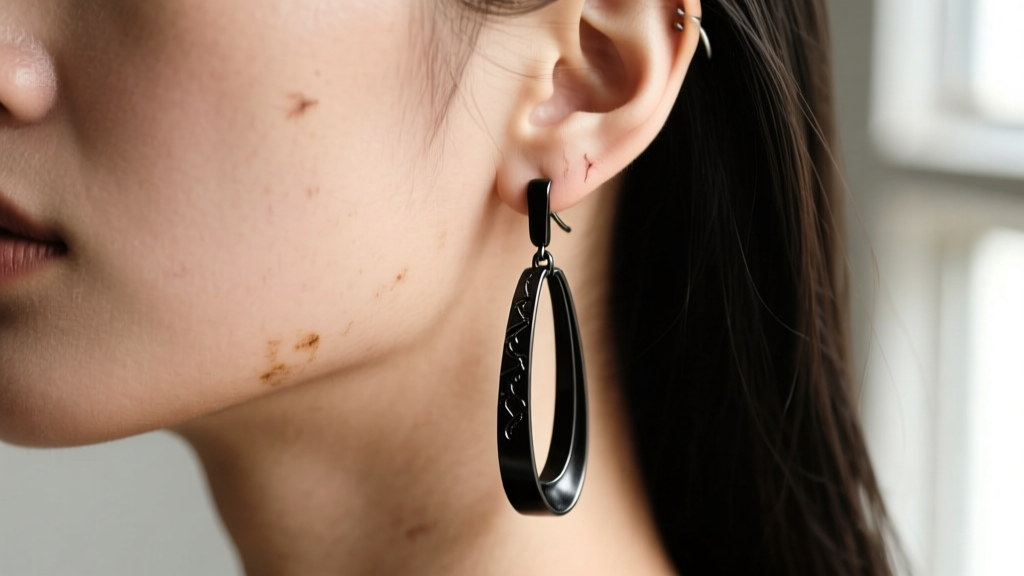
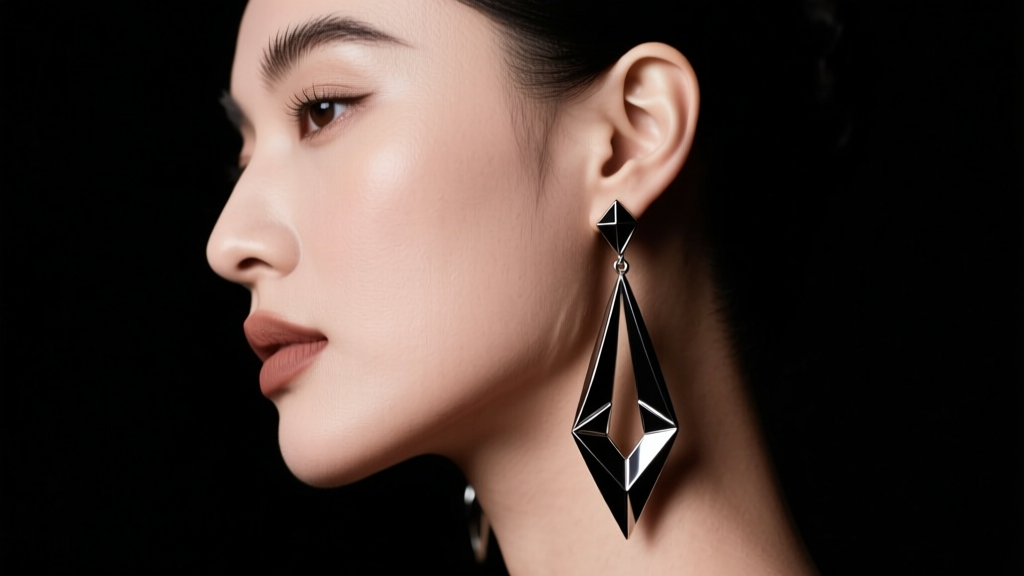
The Hidden Drawbacks of Dramatic Length
Long black earrings are a cornerstone of avant-garde fashion, evening wear, and modern minimalist styling. The stark contrast of dark metals or black gemstones against the skin creates an undeniable visual anchor. However, from a structural and metallurgical perspective, long black dangles and drop earrings present a unique matrix of wearability problems. Unlike lightweight gold studs or small silver hoops, extended black silhouettes often suffer from three critical failure modes: lobe fatigue due to pendulum weight, the inevitable degradation of black surface finishes, and severe hair snagging caused by improper wire gauges.
In this comprehensive troubleshooting guide, we deconstruct the mechanical and chemical realities of long black earrings. Whether you are dealing with a pair of vintage oxidized silver chandeliers or modern PVD-coated titanium drops, understanding the exact specifications of your jewelry will save your earlobes and your investment.
Troubleshooting Issue 1: Lobe Fatigue and Fistula Stretching
The human earlobe fistula (the piercing channel) is composed of dense connective tissue and skin, lacking the cartilaginous support found in upper ear piercings. According to dermatological guidelines on body modification and jewelry weight, a standard, healthy earlobe can comfortably support approximately 7 to 10 grams of static weight. However, the physics of a long earring introduce dynamic stress. As you walk, turn your head, or remove a sweater, a long earring acts as a pendulum, multiplying the downward force on the lower edge of the fistula. Many dramatic long black earrings crafted from solid brass or heavy glass easily exceed 15 to 25 grams, leading to micro-tears, chronic inflammation, and permanent lobe stretching.
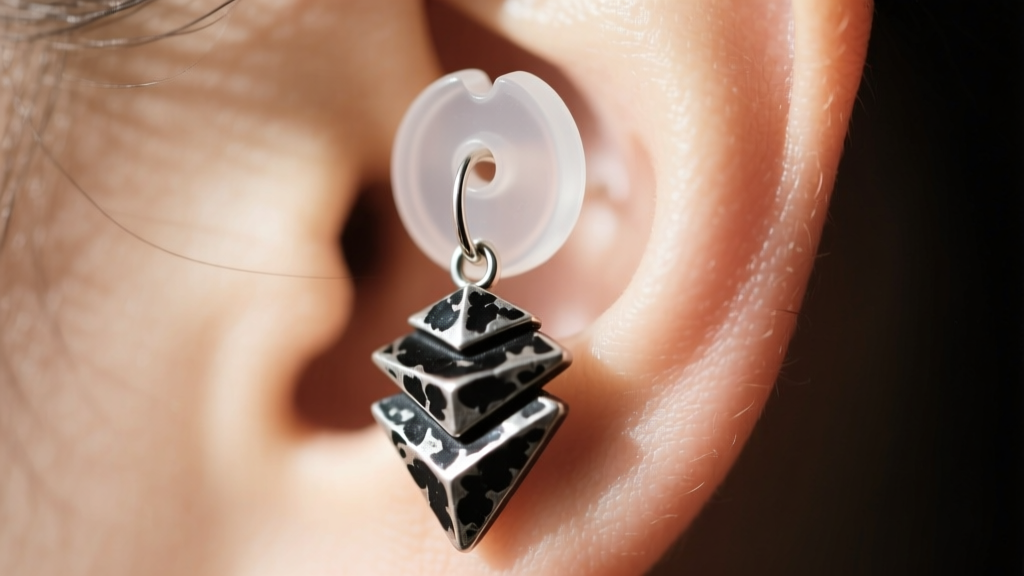
Weight Distribution and Support Hacks
If you refuse to compromise on the length and visual weight of your black earrings, you must alter how the load is distributed across the ear. Here are the most effective, expert-approved solutions:
- Clear Silicone Support Discs: Products like Lobe Wonder patches or generic silicone earring supports provide a wide, cushioned barrier behind the earlobe. This distributes the pendulum force across a 10mm surface area rather than a single 1mm point at the base of the piercing.
- Upgrade to Omega Backs or Clip-Ons: French wire hooks concentrate all the weight on the very bottom of the fistula. Swapping the earring components for Omega-backs (which grip the wider, thicker upper portion of the earlobe) or adding silicone clip-on converters shifts the center of gravity upward, relieving the vulnerable lower tissue.
- Hollow-Core Acrylic or Resin: If you are purchasing new long black earrings, seek out designs that utilize hollow-core acrylic, carved resin, or lightweight anodized aluminum. These materials can mimic the deep, light-absorbing aesthetic of black onyx or hematite while keeping the total weight under 5 grams per earring.
Troubleshooting Issue 2: The Black Plating Flaking Nightmare
The most frequent complaint regarding black jewelry is the eventual reveal of the base metal. "Black" is rarely a natural metal color in jewelry (with the exception of black spinel, onyx, or obsidian gemstones). It is almost always a surface treatment. When that treatment fails, you are left with a patchy, silver-or-brass-colored earring that cannot be easily restored. To troubleshoot this, you must first identify the exact metallurgical process used to create the black finish.
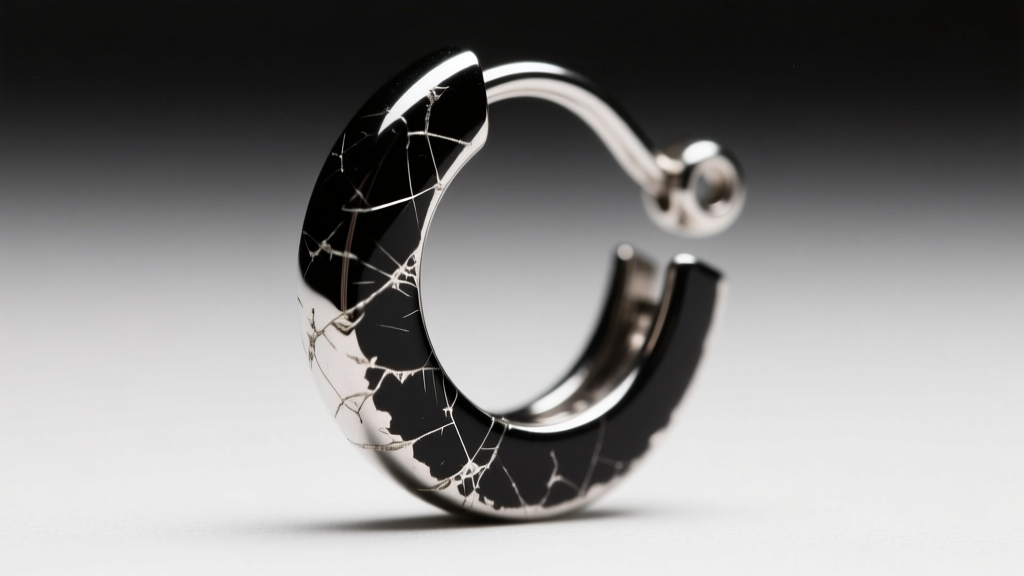
Material Breakdown: Why Your Black Earrings Are Tarnishing
According to manufacturing standards outlined by Rio Grande's metallurgy guides, jewelers rely on four primary methods to achieve black metal finishes. Each has a distinct failure mode:
| Black Finish Type | Base Metal | Durability | Primary Failure Mode |
|---|---|---|---|
| Black Rhodium | Sterling Silver, Gold | Low to Medium | Rubs off in 3-6 months on high-friction areas (posts, hooks). |
| Oxidized Silver | Sterling Silver | Medium | Patina wears away to bright silver; vulnerable to chemical stripping. |
| PVD Coating | Titanium, Surgical Steel | Extremely High | Virtually immune to tarnish; can only be removed by severe abrasion. |
| E-Coating / Enamel | Brass, Copper | Low | Chips, cracks, and peels when exposed to skin oils and friction. |
The PVD Advantage: If you are investing in premium long black earrings, Physical Vapor Deposition (PVD) is the undisputed gold standard for 2026. PVD uses a vacuum chamber to bond titanium carbonitride to the base metal at a molecular level. Unlike black rhodium, which is merely electroplated onto the surface and wears away with skin friction, PVD coatings are up to five times harder and will not turn your skin green or revert to a silver color. When shopping, explicitly look for "PVD black titanium" or "black ion-plated steel."
Oxidized Silver Care: If your long black earrings are oxidized sterling silver (treated with liver of sulfur to create a black patina), you must never use silver polishing cloths or ultrasonic cleaners. These will strip the intentional oxidation, leaving you with bright silver earrings. Clean them only with mild soap, water, and a soft baby toothbrush, avoiding the recessed areas where the dark patina provides contrast.
Troubleshooting Issue 3: Hair Snagging and Tension Breakage
Long earrings inherently interact with your hair. However, severe snagging, hair breakage, and bent earring wires are not inevitable; they are the direct result of poor wire gauge selection and inferior clasp geometry. The standard French wire hook (the shepherd's hook) is the most common culprit.
Wire Gauge and Clasp Mechanics
Most commercial long earrings are strung on 20-gauge (0.81mm) wire. While 20-gauge is standard for lightweight studs, it is entirely inadequate for long, heavy dangles. The thin wire easily bends out of shape, creating sharp, jagged edges that slice the fistula and act as hooks that catch and tear individual hair strands.
Expert Tip: Always inspect the wire gauge of long drop earrings. Upgrading to an 18-gauge (1.02mm) or 16-gauge (1.29mm) wire not only supports the weight of the earring but provides a smoother, more rigid surface that allows hair to slide off rather than catch.
The Leverback Solution: To completely eliminate hair snagging at the top of the earring, transition from open French wires to closed leverback clasps. A leverback features a hinged, closed loop that securely locks the earring in place, leaving no open gap for hair to slip into and tangle. For long black earrings, a black PVD-coated titanium leverback is the ultimate functional upgrade, combining the dark aesthetic with a snag-free, hypoallergenic closure. The Gemological Institute of America (GIA) frequently notes that secure, closed-back settings are essential for preserving the longevity of both the jewelry and the wearer's comfort.
Expert Maintenance Protocol for Black Finishes
To extend the life of your long black earrings, you must adopt a maintenance routine tailored to dark finishes. Standard jewelry cleaning protocols will actively destroy black jewelry.
- Avoid Ultrasonic Cleaners: The high-frequency vibrations in ultrasonic baths will cause black rhodium and e-coated finishes to peel and flake off in minutes. They will also strip the dark patina from oxidized silver.
- Manage Skin pH and Cosmetics: The acidity of your sweat, combined with the alkaline nature of hairsprays and perfumes, accelerates the breakdown of black plating. Always put your long black earrings on after applying cosmetics and perfumes. Wipe the posts and hooks with a dry, lint-free microfiber cloth immediately after taking them off to remove acidic skin oils.
- Storage Separation: Black finishes, particularly oxidized silver and black rhodium, are softer than bright metals. Store long black earrings individually in soft flannel pouches. If they are tossed into a jewelry box with diamonds or harder gemstones, the diamonds will easily scratch and scour the black finish away upon contact.
Final Thoughts on Wearability
Long black earrings do not have to be a source of physical discomfort or aesthetic disappointment. By understanding the anatomical limits of the earlobe, demanding superior metallurgical processes like PVD coating, and insisting on thicker, 18-gauge leverback wires, you can troubleshoot and prevent the most common failures associated with dramatic ear styling. For further reading on managing metal allergies and skin irritation from heavy jewelry, the American Academy of Dermatology provides excellent resources on recognizing and treating contact dermatitis caused by degrading base metals. Invest in the right materials, support your lobes, and wear your dramatic silhouettes with absolute confidence.


