Repair and Care Guide for Mother of Pearl Teardrop Earrings
Learn how to troubleshoot, repair, and clean mother of pearl teardrop earrings. Expert tips on fixing chips, preventing lobe stretch, and restoring luster.

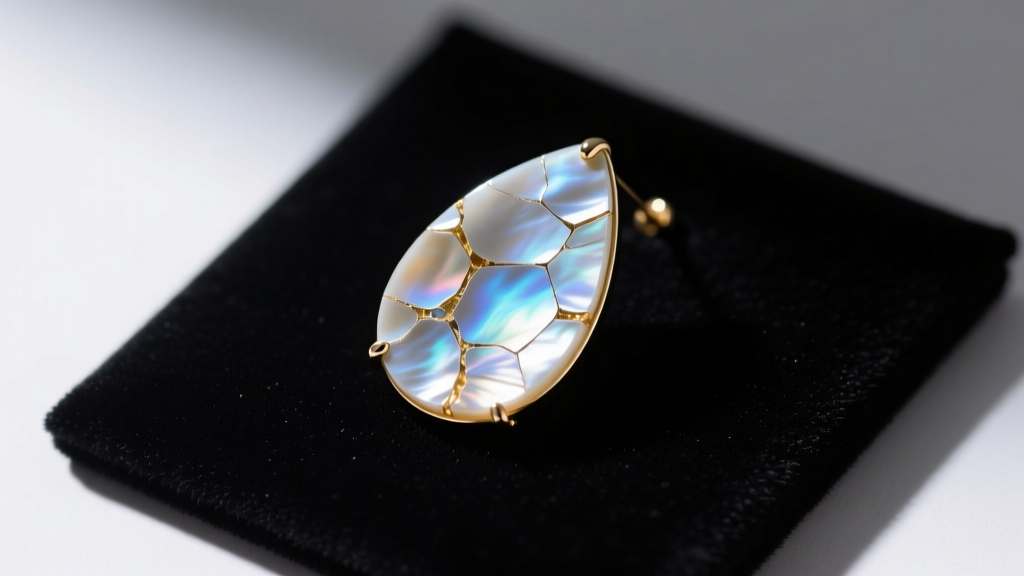
Mother of pearl teardrop earrings are a staple of elegant, organic jewelry design. The iridescent 'orient' of the nacre combined with the elongating, face-framing geometry of the teardrop shape makes them universally flattering. However, as any seasoned jeweler or gemologist will tell you, organic gemstones require highly specific care. When structural issues, cloudiness, or hardware failures occur, standard jewelry repair tactics can easily destroy the delicate nacre.
This comprehensive troubleshooting guide addresses the unique mechanical and chemical vulnerabilities of mother of pearl (MOP) teardrops. We will explore the physics of the teardrop shape, diagnose common failure points, and provide actionable, expert-level restoration protocols to save your favorite pieces.
The Unique Vulnerabilities of Mother of Pearl Teardrops
Mother of pearl is an organic-inorganic composite material produced by mollusks. It consists of microscopic hexagonal platelets of aragonite (a crystalline form of calcium carbonate) glued together by flexible biopolymers like conchiolin. According to the Gemological Institute of America (GIA), this layered structure gives MOP its remarkable toughness compared to solid crystals, but it still ranks a mere 2.5 to 4.5 on the Mohs hardness scale.
The teardrop shape introduces specific structural liabilities. Unlike a smooth cabochon or a round bead, a teardrop features a distinct apex (the pointed bottom) and a narrow neck (where the drilling or bail is located). These two areas act as stress concentrators. If the earring is dropped, the kinetic energy travels through the nacre and often results in micro-fractures at the apex or catastrophic splitting at the drill hole.
Physics of the Teardrop: The Pendulum Effect
When troubleshooting broken MOP earrings, you must consider the 'pendulum effect.' Teardrop earrings, especially those suspended from a hook or a jump ring, swing dynamically as the wearer moves. Every time the earring swings and abruptly stops, a micro-shockwave is sent up the stone to the point of attachment.
- Top-Drilled Teardrops: The drill hole is located at the narrow neck. The pendulum effect places immense shear stress on the thin walls of the drill hole. If the wire wrapping is too tight, or if the nacre is thin, the top will eventually snap off.
- Side-Drilled Teardrops: The hole runs horizontally through the widest part of the stone. This distributes the pendulum stress more evenly, but it makes the earring sit differently on the ear and limits certain setting styles.
- Bezel-Set Teardrops: The stone is secured by a metal rim. While this protects the edges, the metal can act as an anvil. If struck, the metal transfers the shock directly into the soft nacre, causing internal delamination.
Troubleshooting Common MOP Teardrop Issues
Below is a diagnostic matrix for the most frequent problems encountered with mother of pearl teardrop earrings, complete with immediate triage steps and long-term solutions.
| Problem | Primary Cause | Immediate Triage | Long-Term Solution |
|---|---|---|---|
| Cloudy, chalky surface | Acidic sweat or cosmetic exposure dissolving calcium carbonate | Wipe with a damp, pH-neutral microfiber cloth | Adopt a 'last on, first off' wearing protocol |
| Apex chipping | Impact damage from dropping or knocking against hard surfaces | Apply a micro-drop of Opticon fracture sealer to stabilize | Have a jeweler gently re-polish and round the apex |
| Split at the drill hole | Wire wrapping tension combined with pendulum swing stress | Remove wire immediately to prevent total stone loss | Re-drill at a wider gauge or convert to a glued peg setting |
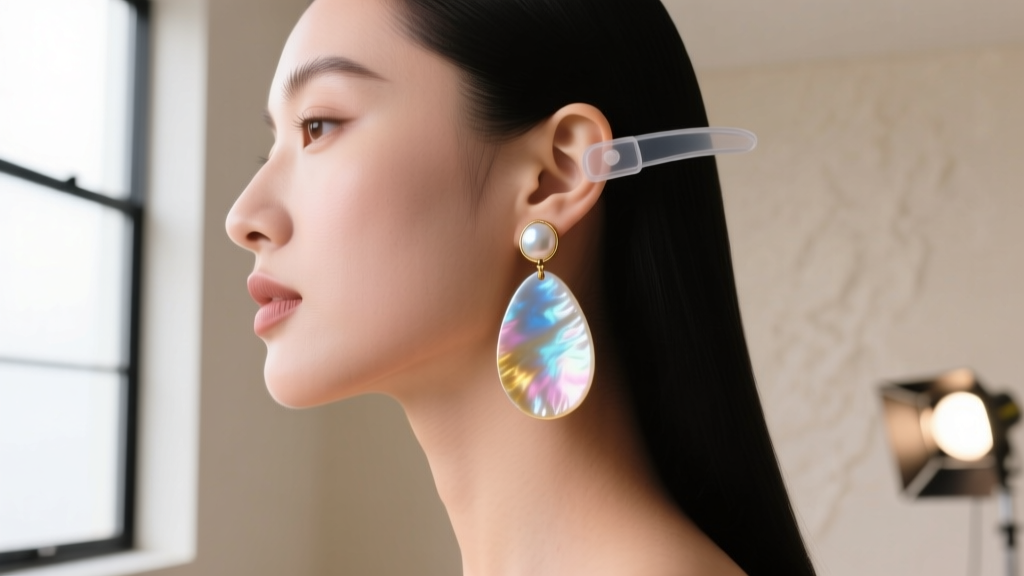
| Stretched earlobes | Heavy silver/gold bezel settings pulling on the piercing | Switch to lighter leverback findings | Use silicone ear support patches while wearing |
Issue 1: Micro-Fractures at the Apex
If you notice a hairline crack radiating from the bottom point of your teardrop, do not attempt to fill it with standard cyanoacrylate (super glue). Super glue contains solvents that can seep into the porous conchiolin matrix, leaving a permanent yellow stain that ruins the pearl's orient. Instead, use a specialized lapidary fracture sealer like Opticon. This two-part epoxy resin is designed to penetrate micro-fractures via capillary action and cures completely clear, stabilizing the stone without altering its optical properties.
Issue 2: Lobe Stretching from Heavy Bezel Settings
A standard MOP teardrop might weigh 3 grams, but when set in a thick sterling silver or 14k gold bezel with a heavy fishhook, the total weight can easily exceed 12 grams per ear. Over time, this causes the piercing fistula to stretch, leading to discomfort and an unflattering downward droop. To troubleshoot this without giving up your favorite earrings, invest in clear silicone ear lifter pads (such as those made by Lobe Wonder). These adhesive patches distribute the weight of the earring post across a wider surface area of the lobe, providing immediate relief and preventing permanent stretching.
The Chemistry of Nacre Degradation
To effectively troubleshoot cloudiness, you must understand the chemistry of nacre. Calcium carbonate is highly reactive to acids. Human sweat has a pH ranging from 4.5 to 7.0, and many popular skincare products (like vitamin C serums, AHAs, and BHAs) have a pH as low as 3.5. When these acids come into contact with MOP, they trigger a mild chemical reaction that etches the aragonite platelets.
This etching destroys the smooth, microscopic terraces on the surface of the pearl that are responsible for diffracting light (the 'orient'). Once the surface is etched, the earring will look dull, chalky, and lifeless. According to the GIA's Pearl Care Guidelines, ultrasonic cleaners and steamers are strictly forbidden for organic gems, as the high-frequency vibrations can shatter the conchiolin bonds, and the heat can cause the organic proteins to denature and crack.
Step-by-Step Restoration: Bringing Back the Orient
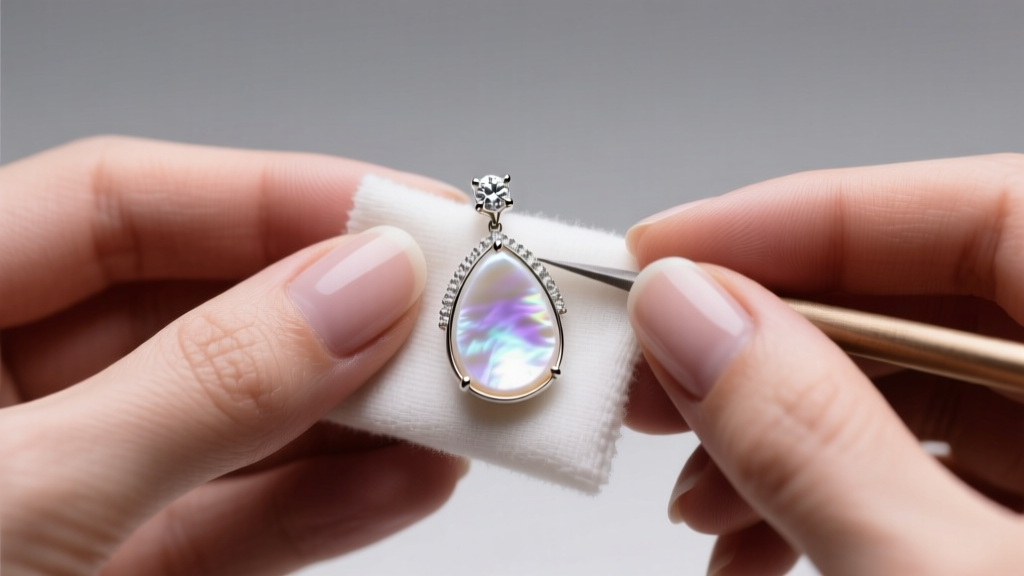
If your MOP teardrops have lost their luster due to mild surface etching or accumulated sebum, you can attempt a careful restoration at home. Note that deep chemical etching requires professional lapidary polishing, which removes a layer of nacre and is only viable for very thick stones.
- Initial Cleaning: Mix a few drops of pH-neutral castile soap into a bowl of distilled water. (Avoid tap water, as chlorine and hard water minerals can leave deposits).
- Gentle Agitation: Dip a baby-soft toothbrush or a high-density makeup sponge into the solution. Gently wipe the surface of the teardrop, moving in the direction of the stone's natural grain if visible.
- Rinsing: Quickly rinse the earring under a slow stream of distilled water. Do not let the metal hardware soak, especially if it contains iron or copper alloys that could oxidize.
- Drying: Pat dry immediately with a lint-free microfiber cloth. Ensure no moisture remains trapped in the drill hole or under the bezel, as trapped water can cause the metal post to rust or the adhesive in a peg-setting to fail.
- Oiling (Optional): For severely dried-out vintage MOP, a microscopic drop of pure mineral oil rubbed into the surface can temporarily restore luster by filling microscopic pores. Wipe away all excess.
Setting and Hardware Upgrades for Longevity
Many structural failures of MOP teardrops are actually hardware failures in disguise. If your earrings frequently catch on hair or clothing, the issue is likely the finding, not the stone.
Upgrade the Post and Back: Standard butterfly friction backs are notorious for slipping off heavy teardrops, leading to lost earrings. If the post is thick enough, switch to secure lock-backs (like La Pousette backs) or silicone disc backs with a metal core. If the earring uses a fishhook, have a jeweler solder a small, clear silicone stopper or add a tiny tension-loop to the wire to prevent it from sliding out of the ear.
Reinforce the Bail: If your teardrop hangs from a glued peg or a wire-wrapped bail, inspect the connection point monthly. Wire wrapping should be done with dead-soft 24-gauge gold-filled or sterling wire, which grips the stone without requiring excessive torque. If the wire is too hard (like half-hard or spring-hard), it will act like a knife against the soft nacre, eventually slicing through the drill hole.
Preventative Maintenance Checklist
Troubleshooting is only necessary when prevention fails. Integrate these specific habits into your jewelry routine to ensure your mother of pearl teardrop earrings remain pristine for decades:
- The 'Last On, First Off' Rule: Always put your MOP earrings on after applying makeup, hairspray, and perfume. Remove them immediately upon returning home, before washing your face or applying nighttime skincare acids.
- Isolated Storage: Never store MOP teardrops in a communal jewelry box. The aragonite surface will easily scratch against diamonds, sapphires, or even other metal jewelry. Store them in individual soft flannel pouches or acid-free tissue paper.
- Hydration Control: While you want to avoid liquid acids, you also must avoid extreme dryness. Storing organic gems in a bank safety deposit box or a climate-controlled safe with zero humidity can cause the conchiolin to dry out and shrink, leading to 'crazing' (a network of fine surface cracks). Keep a small silica gel packet (not completely desiccated) or a damp cotton ball in a separate, sealed compartment of your jewelry box to maintain a stable 40-50% ambient humidity.
- Annual Professional Checkup: Take your bezel-set or wire-wrapped teardrops to a master jeweler once a year. They can use a loupe to check for microscopic stress fractures at the drill hole and tighten any prongs before the stone becomes loose and falls out.
'Mother of pearl is a living record of the ocean. It demands respect and gentle handling. Treat it like fine silk, not like a diamond, and it will reward you with a lifetime of iridescent beauty.' — Master Lapidary Adage
By understanding the unique physical and chemical properties of mother of pearl, you can confidently troubleshoot issues, execute safe repairs, and maintain the breathtaking orient of your teardrop earrings for years to come.


