Bow Drop Earrings Troubleshooting: Fix Snags & Sag
Struggling with heavy, tangled, or tarnished bow drop earrings? Learn expert troubleshooting tips to fix sagging lobes, snags, and backing failures.


The resurgence of balletcore and coquette aesthetics has cemented bow drop earrings as a dominant staple in 2026 jewelry wardrobes. From delicate pavé ribbons to bold, oversized satin-finish hoops, the romantic silhouette is everywhere. However, beneath the glamorous exterior lies a mechanical nightmare for daily wearers. The structural design of a drop earring—specifically one with a wide, multi-looped 3D bow—creates unique physical stressors on the earlobe, the piercing fistula, and the metal itself. If you are dealing with stretched piercings, constant hair snags, or rapid tarnishing, you are not alone. This comprehensive troubleshooting guide dives deep into the physics, metallurgy, and practical maintenance of bow drop earrings to help you salvage your favorite pieces and protect your ears.
The Physics of the Drop: Why Your Lobes Are Sagging
The most common complaint with bow drop earrings is the 'droop' or forward tilt that occurs hours after putting them on. This is not necessarily a flaw in your earlobe thickness, but rather a matter of basic physics. Standard earlobe piercings are typically done at 20-gauge (0.81mm) or 18-gauge (1.0mm). When a bow is suspended 1.5 inches below the lobe via a thin wire or chain, it creates a lever-arm effect. A 6-gram bow hanging at that distance exerts the same tearing torque on the fistula as a 15-gram earring sitting flush against the ear. Over time, this constant downward and outward pull leads to the dreaded 'cheese-cutter effect,' where the thin post slowly migrates downward, thinning the tissue and causing permanent sagging.
Upgrading Your Backing Hardware
Standard butterfly friction backs are entirely inadequate for drop earrings weighing more than 4 grams. The tiny metal scrolls lose tension, allowing the heavy bow to slide down the post, which shifts the center of gravity and exacerbates the drooping. To troubleshoot this, immediately discard standard backs and upgrade to La Pousette locking backs or high-density silicone O-ring clutches. La Pousette backs feature a mechanical locking mechanism that grips the post groove securely, distributing the weight more evenly across the back of the earlobe and keeping the bow drop perfectly perpendicular to the floor.
The Lobe Support Patch Method
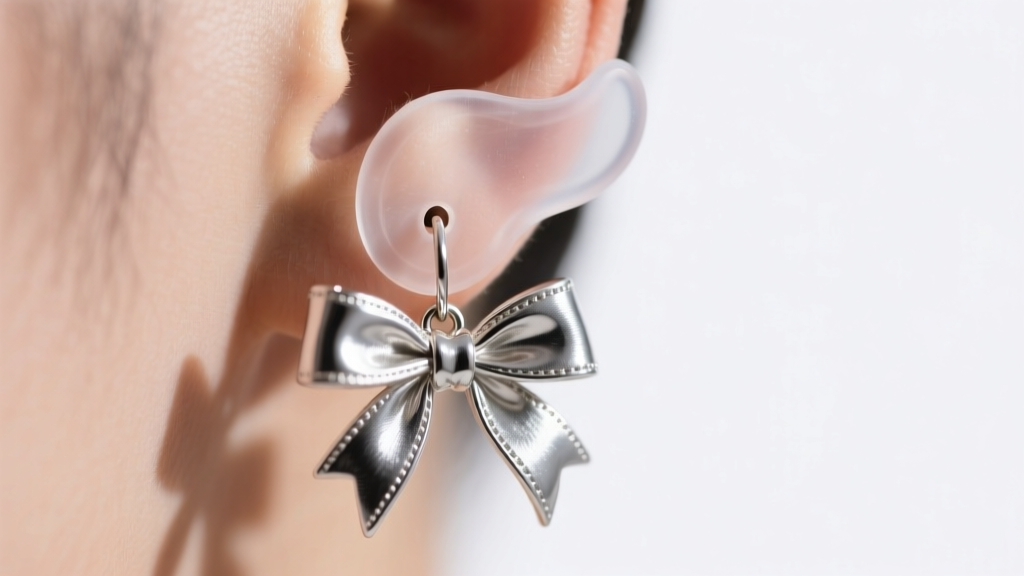
For oversized, statement bow drops that exceed 10 grams, hardware upgrades are not enough. You must reinforce the tissue itself. Dermatologists and professional piercers frequently recommend invisible silicone earring support patches. These are small, medical-grade adhesive discs with a pre-punched hole that slide over the earring post before the backing is applied. The patch spreads the localized torque of the heavy bow across a 15-millimeter surface area on the back of the earlobe, instantly eliminating the forward tilt and preventing long-term tissue tearing.
Solving the Snag and Tangle Dilemma
Bow designs inherently feature overlapping loops, knots, and trailing 'ribbons.' These geometric complexities are magnets for hair strands, which average a diameter of just 0.07 millimeters. Hair easily slips into the 1-to-2-millimeter gaps between cast metal loops and wedges into microscopic seam lines left by the jewelry mold's parting line. When you pull away, the hair pulls the earring, causing micro-trauma to the piercing.
Identifying and Smoothing Mold Parting Lines
Many mid-tier fashion jewelry brands utilize sand-casting or rubber mold casting for their bow designs. This leaves a faint, raised ridge of metal (the parting line) along the edges of the loops. This ridge acts like a microscopic saw, catching hair and fraying threads from winter scarves. The Fix: Take a fine-grit (600 to 1000) jeweler's polishing file or a buffing block and gently run it along the outer edges of the bow loops. Smoothing out these casting seams will reduce hair snagging by up to 80 percent without altering the visual design of the earring.
| Bow Material | Average Weight | Snag Risk | Troubleshooting Tip |
|---|---|---|---|
| Solid Cast Brass | 8g - 14g | High | File parting lines; use silicone backs. |
| Hollow 3D Resin | 2g - 4g | Medium | Keep away from UV light to prevent brittleness. |
| Wire-Wrapped Steel | 3g - 6g | Very High | Use clear nail polish to seal wire wrap gaps. |
| Enamel over Copper | 5g - 9g | Medium | Avoid ultrasonic cleaners to prevent chipping. |
Metallurgical Failures: Tarnish and Contact Dermatitis
If your bow drop earrings are turning your skin green or developing a dull, grayish-black patina after just a few weeks, you are likely dealing with Zamak 3 (a zinc-aluminum alloy) or low-grade brass that has been flash-plated. Flash plating deposits a microscopic layer of gold or silver—often less than 0.05 microns thick. Human sweat has a pH ranging from 4.5 to 7.0 and contains high levels of sodium chloride. When sweat breaches the microscopic pores of thin plating, it triggers a galvanic reaction with the base metal, causing rapid oxidation and 'blooming' that ruins the finish.
Furthermore, cheap alloy bows frequently contain nickel as a hardening agent or as a barrier layer beneath the gold plating. According to the American Academy of Dermatology, nickel allergy is one of the most common causes of allergic contact dermatitis, leading to itchy, red, and blistered earlobes. Research published in the National Center for Biotechnology Information (NCBI) confirms that prolonged exposure to sweat-dampened base metals significantly accelerates the leaching of nickel ions into the skin.
The Resin and Enamel Vulnerability
Not all bows are metal. Pastel resin and cold-enamel bows are highly popular for daytime wear, but they suffer from structural degradation. UV exposure and contact with alcohol-based perfumes or hairsprays cause the plasticizers in resin to evaporate. This makes the bow brittle, leading to catastrophic failure where the drop loop snaps off the main body of the bow. The Fix: Always apply perfumes and hairsprays before putting on your earrings, and store resin bows in opaque, UV-blocking jewelry boxes to preserve their structural integrity.
The Ultimate Bow Drop Troubleshooting Checklist
To keep your bow drop earrings in pristine, wearable condition, implement this routine maintenance protocol:
- Check the Jump Rings: The tiny metal ring connecting the bow to the ear wire is the weakest point. Use two pairs of flat-nose jewelry pliers to ensure the jump ring is closed flush, with no visible gap for chains or hair to slip through.
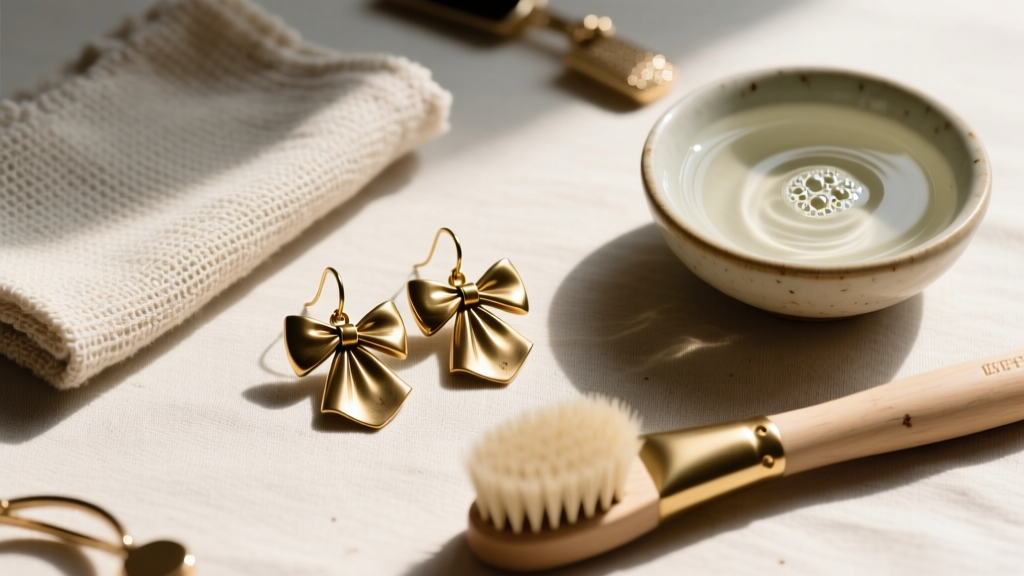
- Proper Cleaning: Never use ultrasonic cleaners on bow earrings. The high-frequency vibrations can shatter glued-in rhinestones and chip cold enamel. Instead, use a few drops of mild dish soap in lukewarm water and a soft-bristle baby toothbrush to gently agitate dirt out of the intricate bow loops.
- Storage Isolation: Because of their wide wingspan, bow drops easily become tangled with other chains. Store them individually in anti-tarnish flannel pouches to prevent both physical scratching and chemical oxidation.
- The Clear Coat Hack: If you have a beloved pair of fashion-alloy bows that irritate your ears, paint the posts and the back of the bows with two coats of clear, hypoallergenic polyurethane nail polish. This creates a physical barrier against nickel leaching and sweat corrosion.
Expert Insight: If you are investing in fine jewelry bow drops intended for daily wear, bypass gold vermeil and plated brass entirely. Opt for solid 14k gold or ASTM F136 implant-grade titanium. The initial cost is higher, but the material will never tarnish, cause dermatitis, or degrade under the mechanical stress of a drop silhouette.
By understanding the mechanical leverage, metallurgical composition, and geometric vulnerabilities of your jewelry, you can transform problematic bow drop earrings into comfortable, long-lasting statement pieces that elevate your style without compromising your ear health.