How to Fix Painful Clip Hoop Earrings: Troubleshooting Guide
Discover why your clip hoop earrings hurt or slip off. Learn expert troubleshooting tips, tension adjustments, and padding hacks for all-day comfort.

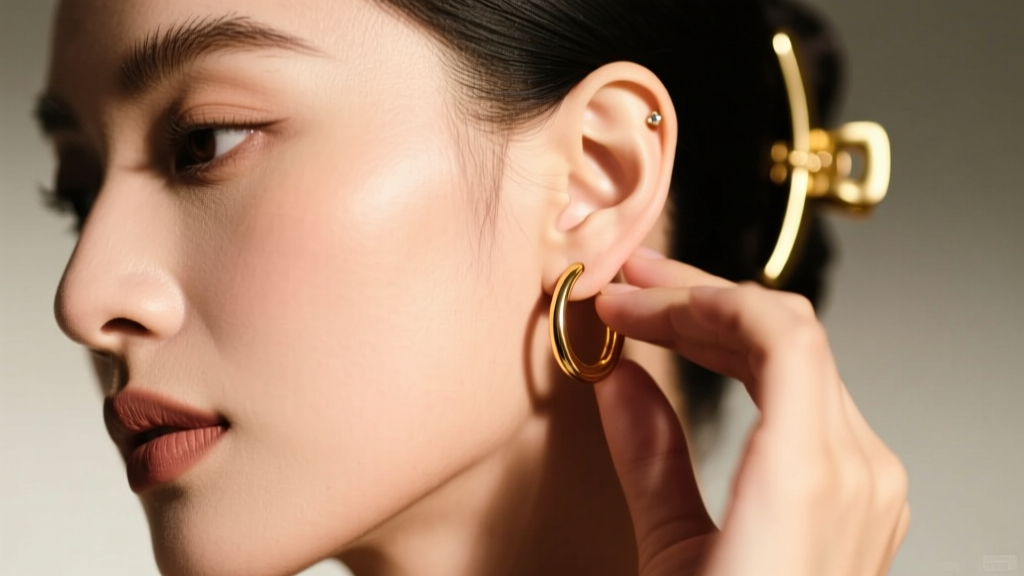
The Anatomy of Clip-On Hoop Discomfort
For those without pierced ears, the classic hoop silhouette is a timeless staple. However, the reality of wearing clip hoop earrings often involves a frustrating cycle of agonizing pinches, embarrassing drops, and metal fatigue. Unlike pierced hoops that distribute weight evenly through a fistula, clip-ons rely entirely on mechanical tension and friction against the soft tissue of the earlobe. When the physics of the hoop meet the biology of the ear, problems inevitably arise.
Before we can troubleshoot, we must understand the mechanics. A standard clip-on finding consists of a fulcrum, a tension arm, and a contact pad. The tension arm is typically stamped from 20-gauge or 18-gauge brass, or in higher-end findings, beryllium copper. Beryllium copper is prized for its 'springback' memory, allowing the clip to retain its grip over years of use. Cheap base-metal alternatives, however, suffer from rapid tension loss. Furthermore, the continuous circular shape of a hoop acts as a lever; any downward tug on the bottom of the hoop multiplies the rotational force at the clip hinge, causing the earring to pivot forward and slide off the lobe.
Troubleshooting the 'Slip and Slide' Problem
The most common complaint with clip hoop earrings is their tendency to slip off, especially when talking or turning the head. This is rarely a defect in the metal itself, but rather a failure of friction. The skin of the earlobe produces natural oils that turn smooth metal contact pads into slip-n-slides.
Upgrading the Contact Point
If your hoops are sliding, you must increase the coefficient of friction between the metal and your skin. The most effective, non-destructive method is the application of silicone earring cushions. These self-adhesive, 3mm thick medical-grade silicone pads conform to the earlobe and provide a high-grip barrier. For a more permanent solution, jewelers can solder a 'paddle' extension to the contact arm, increasing the surface area from a standard 4mm circle to a 10mm x 6mm oval, drastically reducing localized pressure and improving grip.
| Backing Type | Mechanism | Grip Reliability | Best For Hoop Weight |
|---|---|---|---|
| Paddle-Back | Spring tension with a flat, wide contact pad | High (if silicone padded) | Light to Medium (2g - 5g) |
| Screw-Back | Threaded barrel allowing manual tension adjustment | Very High | Medium to Heavy (5g - 10g) |
| Omega-Clip | Hinged, curved wire that snaps into a locking groove | Moderate (prone to loosening) | Light (Under 3g) |
| Magnetic | Neodymium magnets clamping through the lobe | Low (slips with heavy hoops) | Ultra-Light (Under 1.5g) |
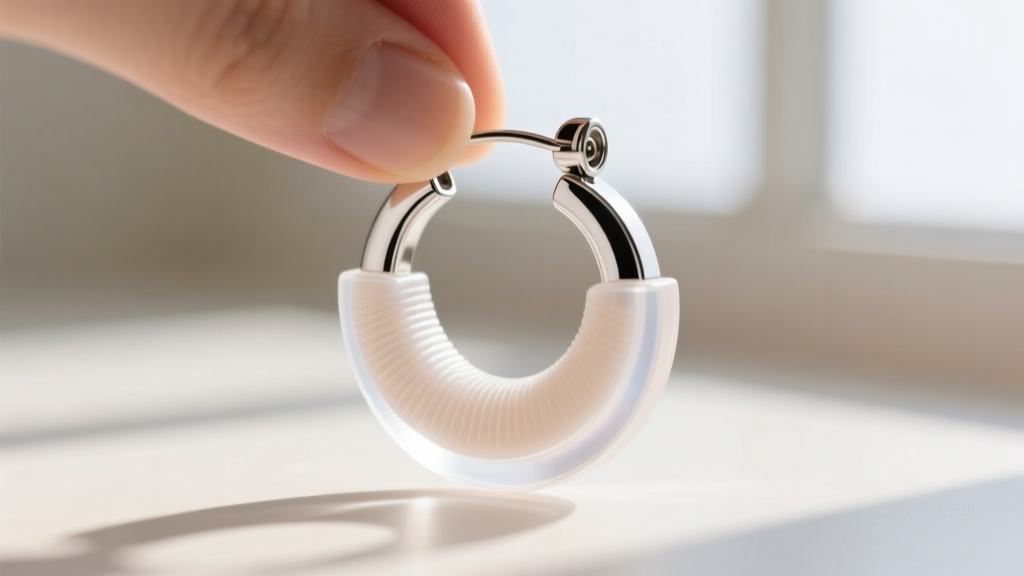
Solving the Pinch: Tension Adjustment Techniques
While slipping is annoying, pinching is painful. A clip-on that leaves a deep red indentation or causes a throbbing headache is applying too much localized clamping force. The goal is to achieve a 'Goldilocks' zone: enough tension to resist gravity, but loose enough to allow capillary blood flow in the earlobe.
How to Safely Bend the Tension Arm
Many wearers attempt to bend the clip arm outward with their bare thumbs. This is a mistake. Human hands apply uneven torque, which can warp the hinge pin or snap a brittle base-metal arm. To properly adjust the tension of your clip hoop earrings, you need a pair of nylon jaw pliers.
- Secure the Hinge: Hold the base of the earring (where the hinge meets the hoop) firmly with your non-dominant hand.
- Apply Outward Pressure: Using the nylon jaw pliers, gently grip the middle of the tension arm. Pull outward, away from the contact pad, by no more than 1 to 2 millimeters.
- Test and Iterate: Clip the earring onto a piece of thick felt or a silicone ear model. It should stay in place when shaken gently but slide off with a light downward tug.
Warning: Never attempt to adjust gold-plated or gold-filled clip arms by bending them back and forth. Repeated bending causes work-hardening, leading to micro-fractures and eventual snapping of the metal.
Weight Distribution & Material Physics
The fundamental flaw of many mass-market clip hoop earrings is poor weight distribution. A solid 30mm brass hoop can easily weigh 8 to 10 grams. When suspended from a clip-on finding, that weight creates a pendulum effect. Every time you walk, the hoop swings, generating kinetic energy that pries the clip open.
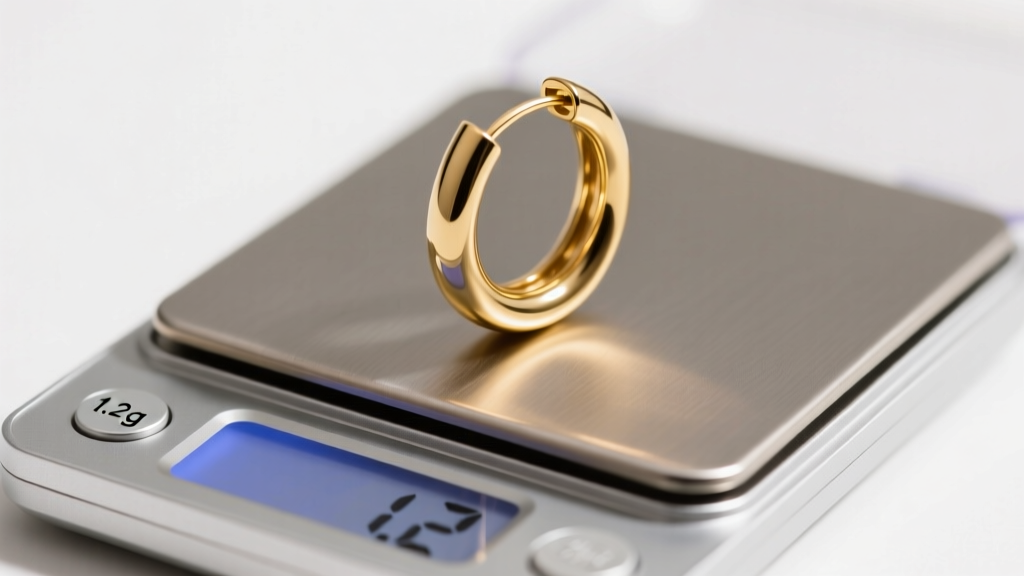
The Hollow Tube Solution
If you love the look of a thick, chunky hoop but suffer from clip-on fatigue, you must transition to hollow-tube or stamped-sheet designs. A 40mm hoop made from 14k gold-filled hollow tubing weighs a mere 1.8 grams, compared to the 12 grams of its solid wire counterpart. When shopping for clip hoops, always check the gram weight. For unpierced ears utilizing standard paddle-back clips, the total weight of the earring should never exceed 4 grams. Anything heavier requires a screw-back mechanism or a counter-weighted design.
Material Fatigue and Allergic Contact Dermatitis
Troubleshooting isn't just about mechanics; it is also about biology and metallurgy. Many wearers mistake the itching and burning of contact dermatitis for the 'pain' of a tight clip. According to the American Academy of Dermatology, nickel allergy is one of the most common causes of allergic contact dermatitis, affecting up to 18% of the population.
Cheap clip-on findings are frequently stamped from nickel-silver (which contains no actual silver, but high nickel content) or plated with thin layers of rhodium over a nickel barrier layer. When the plating wears off at the contact pad—the exact spot experiencing the most friction against your skin—the nickel leaches into the epidermis, reacting with sweat to form nickel salts. This causes severe blistering and itching.
The Fix: If your earlobes itch after wearing clip hoops, immediately coat the contact pad with a layer of clear, hypoallergenic nail polish or a specialized jewelry barrier coating like JewelSkin. For a permanent solution, have a jeweler laser-weld a small disc of implant-grade titanium (ASTM F136) or solid 18k gold over the existing contact pad. As noted by the Gemological Institute of America (GIA), upgrading the skin-contact metals is the only reliable way to prevent heavy metal dermatitis in costume and fashion jewelry.
Quick-Fix Hacks for Immediate Relief
When you are at an event and your clip hoop earrings begin to fail, you need immediate, improvisational solutions. Keep these three tricks in your emergency kit:
- Museum Wax: A tiny dab of microcrystalline museum wax applied to the contact pad will make the earring temporarily tacky, preventing slips without pulling the skin when removed.
- Moleskin Padding: Available in any pharmacy foot-care aisle, cutting a 3mm circle of adhesive moleskin and applying it to the clip arm provides instant, cushioned relief for pinching earrings.
- The Hair-Tie Trick: If the hoop is slipping forward due to weight, wrap a tiny, clear elastic hair tie around the top of the hoop (just below the clip hinge). This creates a microscopic counterweight and adds friction against the side of your face/hair, stabilizing the pendulum swing.
When to Convert: Magnetic and Ear Cuff Alternatives
Sometimes, the mechanics of a traditional clip-on simply cannot support the design of the hoop. If you have exceptionally thick earlobes (over 10mm at the base) or very thin, delicate lobes, standard spring-tension clips will never fit correctly. In these cases, consider having a jeweler remove the clip finding entirely and solder on a high-strength neodymium magnetic post. While magnets cannot support heavy hoops, they are virtually painless and invisible for lightweight, minimalist wire hoops. Alternatively, the modern 'ear cuff' hoop—which wraps around the outer helix cartilage rather than the lobe—bypasses the clip-on mechanism entirely, offering a secure, pain-free alternative for the unpierced.
Expert Takeaway: The secret to comfortable clip hoop earrings lies in the intersection of low gram-weight, high-friction silicone padding, and precise tension calibration. Stop enduring pain for fashion; adjust your mechanics and upgrade your metals.


