Fix a Stretched Earring Hole: Lobe Repair & Conceal Guide
Discover expert solutions for a stretched earring hole. Learn non-surgical concealment, lobe support patches, and surgical repair options.

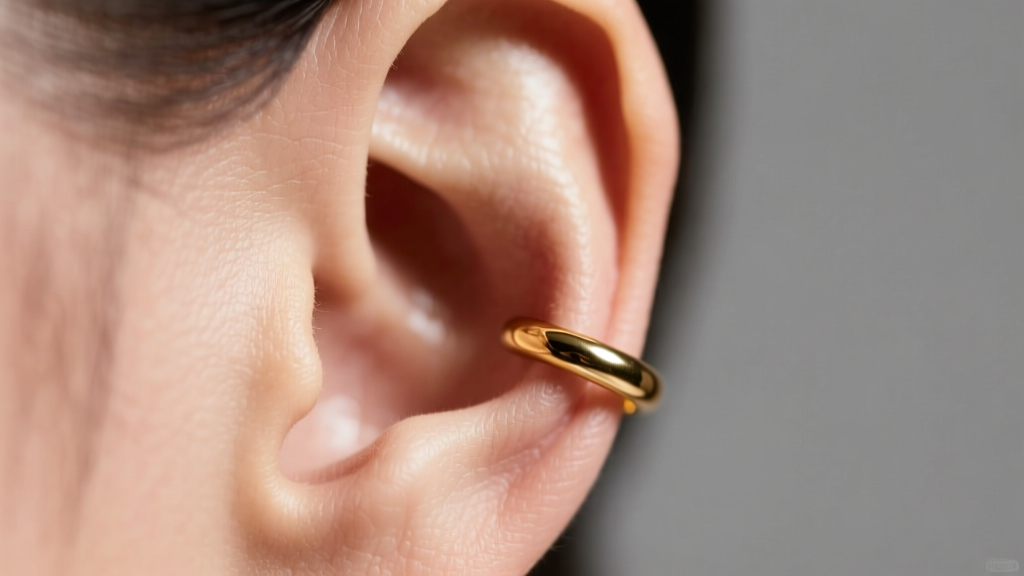
Earlobe tissue is uniquely vulnerable. Unlike the upper ear, the lobe contains no supportive cartilage—only adipose (fat) tissue, skin, and a delicate network of collagen. When subjected to the persistent downward pull of heavy dangles, gravity, or intentional gauging, this collagen matrix breaks down. The result is a stretched earring hole, a common structural issue that ranges from mild elongation to a complete tissue blowout. Whether your piercing has thinned due to years of wearing statement jewelry or you are downsizing from stretched gauges, addressing the problem requires a targeted approach. This guide breaks down the biomechanics of lobe damage, non-surgical concealment tactics, and definitive surgical repairs.
The Biomechanics of Lobe Elongation and Tissue Failure
To troubleshoot a stretched earring hole, you must first understand how the damage occurs. A standard ear piercing is typically performed at 20-gauge (0.81mm) or 18-gauge (1.02mm). At these sizes, the fistula (the tube of healed skin inside the piercing) easily supports lightweight studs. However, when you introduce heavy drop earrings exceeding 7 to 10 grams, the continuous tension causes micro-tears in the lower dermal layer.
Over time, the body struggles to repair these micro-tears faster than they accumulate. The skin thins, the circular hole warps into an oval or teardrop shape, and the distance between the bottom of the piercing and the edge of the lobe shrinks. If the tissue margin drops below 2 millimeters, the structural integrity is critically compromised, and a sudden snag can result in a complete lobe split.
Non-Surgical Concealment and Support Tactics
If your stretched earring hole is elongated but the bottom margin remains intact (thicker than 3mm), you can effectively conceal and support the piercing without medical intervention. The goal is to redistribute the weight of the jewelry across a wider surface area of the lobe.
1. Medical-Grade Lobe Support Patches
Products like Blomed EarLobe Support Patches or Levears are adhesive, medical-grade silicone or foam shields. You apply them to the back of the earlobe, pushing the earring post through the patch. The patch acts as a wide flange, dispersing the downward force of a heavy earring across the entire back of the lobe rather than concentrating it on the fistula. These are ideal for occasional wear of heavy bridal or statement earrings.
2. Upgrading to Locking or Jumbo Friction Backs
Standard butterfly backs concentrate pressure on a tiny 2mm point, which can slice through an elongated hole. Switch to jumbo silicone O-rings or locking earring backs (such as La Poussiere clutch backs). Locking backs feature a internal mechanism that grips the post securely and provides a wide, flat base that rests flush against the back of the lobe, offering superior vertical support.
3. Strategic Jewelry Selection
- Continuous Huggies: Small, tight-fitting hoops (10mm-12mm inner diameter) distribute their minimal weight evenly around the entire circumference of the fistula, preventing downward drag.
- Front-Back Earrings (Ear Jackets): These feature a large decorative back piece that sits behind the lobe. The wide surface area of the back piece acts as a built-in support shield, hiding the elongated hole while providing structural stability.
- Ear Climbers and Cuffs: Bypass the stretched hole entirely by utilizing tension-based cuffs on the cartilage or climbers that anchor in the standard piercing but draw the eye upward.
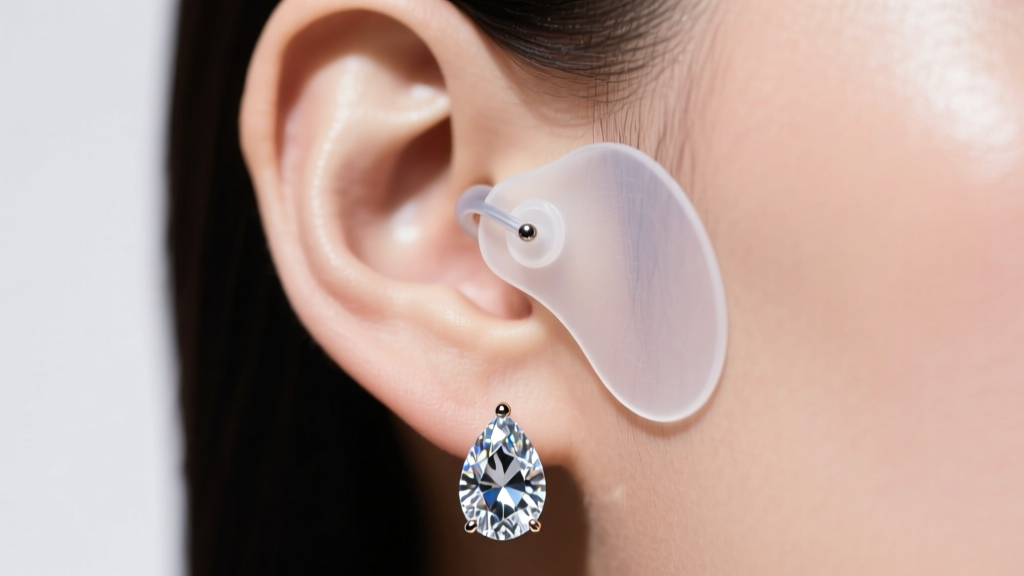
Assessing the Damage: The Tissue Margin Test
Before deciding on a permanent fix, perform the tissue margin test. Gently push the earring upward toward the top of the piercing hole. Measure the amount of skin remaining between the bottom of the stretched hole and the absolute edge of your earlobe.
The 3-Millimeter Rule: If the remaining skin margin is 3mm or thicker, non-surgical support and concealment methods are highly effective. If the margin is less than 2mm, the tissue is at imminent risk of tearing, and surgical intervention is the only safe long-term solution.
For those dealing with downsized intentional gauges, the Association of Professional Piercers (APP) notes that lobes stretched up to 2-gauge (6.5mm) will often shrink significantly on their own over 6 to 12 months, provided the jewelry is removed and the tissue is massaged with jojoba or vitamin E oil to promote elastin recovery. However, stretches beyond 0-gauge (8.2mm) rarely close completely without surgical assistance due to permanent cellular displacement.
Surgical Lobe Repair (Lobuloplasty)
When concealment fails or the lobe has completely split, a minor surgical procedure known as a lobuloplasty is required. This is an in-office procedure performed by a board-certified plastic surgeon or dermatologic surgeon under local anesthesia.
The Procedure and Healing Timeline
The surgeon excises the damaged, epithelialized skin lining the inside of the stretched earring hole (the fistula must be removed so raw tissue can fuse together). The lobe is then meticulously sutured in layers using deep absorbable sutures for structural strength and fine non-absorbable sutures for the surface. According to data on reconstructive ear procedures from the Cleveland Clinic, the initial healing takes 5 to 7 days for suture removal, but deep tissue remodeling takes 6 to 8 weeks.
Cost and Re-Piercing Protocols
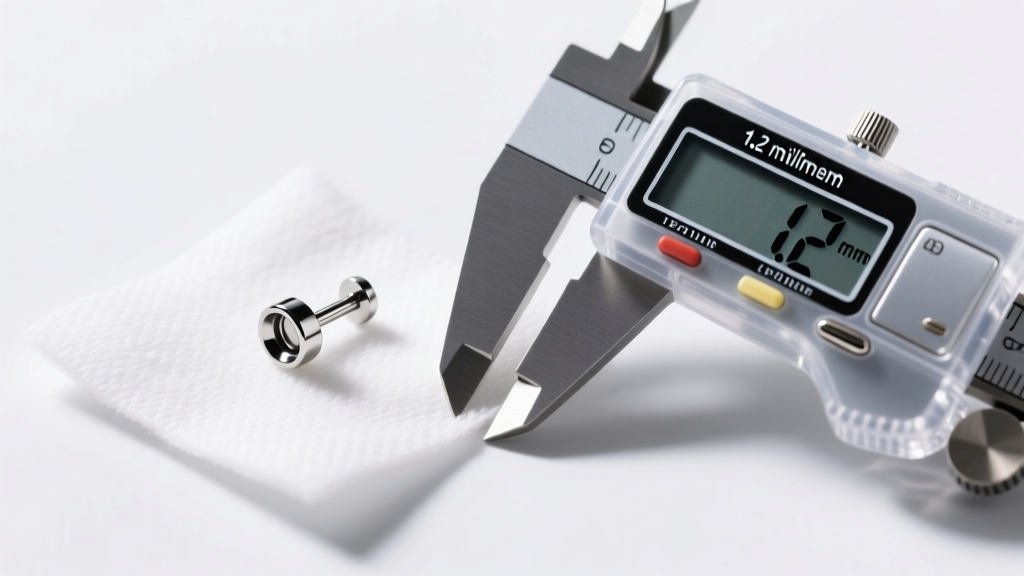
As of 2026, the cost for a unilateral lobuloplasty ranges from $500 to $1,200, depending on the complexity of the tear and geographic location. If you wish to re-pierce the lobe, you must wait a minimum of 3 to 6 months. When re-piercing, insist on an implant-grade titanium (ASTM F-136) flat-back labret stud at 16-gauge or 14-gauge to provide a thicker, more durable fistula for future wear.
Repair Method Comparison Chart
| Method | Best For | Est. Cost | Downtime | Durability |
|---|---|---|---|---|
| Lobe Support Patches | Occasional heavy earring wear | $10 - $20 / pack | None | Single-use (Temporary) |
| Locking Backs / O-Rings | Mild elongation, daily wear | $15 - $40 | None | Long-term (Requires use) |
| Downsizing & Oil Massage | Gauges 2G and smaller | $10 (Oil cost) | 6-12 Months | Permanent (Partial shrinkage) |
| Lobuloplasty (Surgery) | Complete splits, margins <2mm | $500 - $1,200 | 7 Days (Surface) | Permanent |
Prevention: Managing Weight and Material
Fixing a stretched earring hole is only half the battle; preventing recurrence is critical. Implement these strict parameters for your jewelry wardrobe:
- The 7-Gram Limit: For daily wear, keep the weight of your earrings under 7 grams per ear. Reserve anything heavier for events where you will wear them for less than four hours.
- Avoid Hollow-Forged Hoops: Large, thin hoops easily catch on hair and clothing, creating sudden, high-velocity tension that can instantly rip through a weakened lobe. Opt for hinged, segmented, or clicker hoops with a secure closure mechanism.
- Nighttime Removal: Never sleep in dangles or heavy hoops. The friction against a pillow creates lateral torque that stretches the fistula horizontally. Switch to 18-gauge titanium sleepers or flat-back labrets for overnight wear.
Frequently Asked Questions
Can a stretched earring hole shrink back to normal on its own?
If the stretching is mild (e.g., warped from 20G to 16G due to heavy earrings), removing the weight and allowing the tissue to rest for several months can result in significant tightening. However, the skin's elastin has limits; once the fistula becomes permanently epithelialized at a larger size, it will not shrink back to a perfect 20G circle without surgical excision.
Are silicone ear plugs safe for hiding stretched holes?
While silicone plugs are lightweight and can hide a stretched gauge, porous silicone can harbor bacteria and cause contact dermatitis in compromised tissue. If you must wear plugs during a healing or shrinking phase, opt for polished glass or implant-grade titanium eyelets, which are non-porous and biocompatible.
Does the type of metal affect lobe stretching?
The metal itself does not cause stretching—weight and gravity do. However, heavier metals like solid platinum or thick 14k gold will accelerate tissue fatigue compared to lightweight alternatives like hollow-tube gold, anodized titanium, or high-quality enamel pieces. Always check the gram weight before purchasing statement drops.


