Mexican Hoop Earrings: Material Grades & Properties Guide
Discover the material properties of authentic Mexican hoop earrings. Compare Taxco silver grades, wire gauges, and gold alternatives in our expert guide.

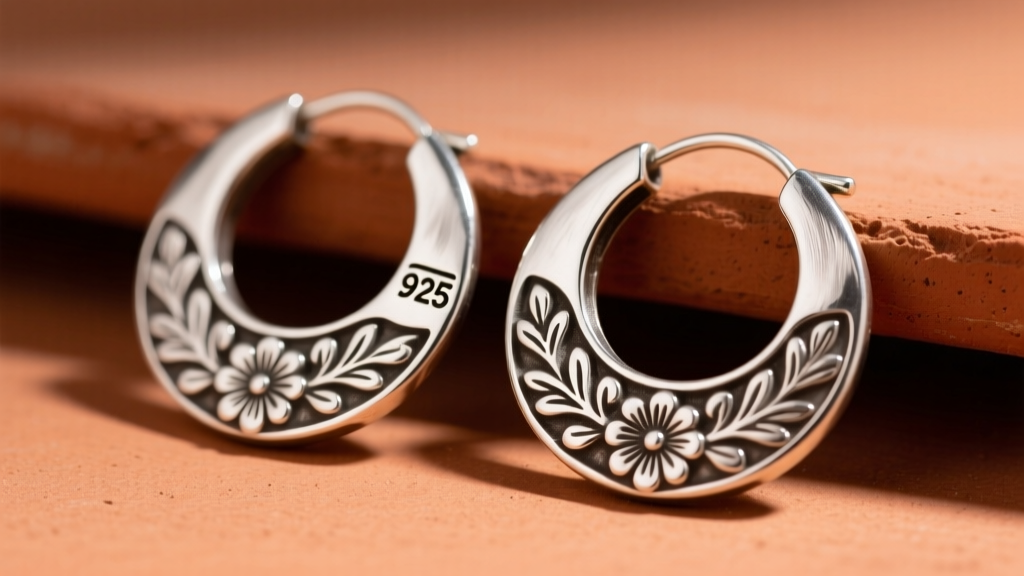
The Metallurgy and Heritage of Mexican Arracadas
When collectors and jewelry enthusiasts seek out authentic Mexican hoop earrings, they are usually looking for arracadas—the iconic, often oversized hoops that have been a staple of Mexican adornment for centuries. While the visual appeal of these earrings lies in their intricate floral engravings, hammered textures, or bold geometric shapes, their true value and wearability are dictated by their material properties. Understanding the metallurgy behind these pieces is critical for assessing authenticity, structural integrity, and skin compatibility.
Unlike lightweight, mass-produced stamped hoops, traditional Mexican arracadas are typically forged from heavy-gauge wire and solid sheet metal. The choice of material—whether it is world-renowned Taxco sterling silver, solid gold, or traditional base metals—dictates not only the price point but also how the earring interacts with the earlobe over time. In this comprehensive guide, we break down the specific material grades, wire gauges, and physical properties that define high-quality Mexican hoop earrings.
The Legacy of Taxco Sterling Silver
Taxco, a colonial city in the state of Guerrero, is the undisputed silver capital of Mexico. The silver mined and crafted here has set the global standard for artisan jewelry since the 1930s. According to The Silver Institute, genuine sterling silver must contain exactly 92.5% pure silver and 7.5% alloy metals, usually copper. This specific ratio is crucial for Mexican hoops.
Pure silver (999 fine) is far too malleable for large hoop earrings. If an arracada were made of pure silver, the sheer weight of the hoop would cause it to stretch, warp, and lose its circular tension, making the latch mechanism fail. The 7.5% copper alloy provides the necessary tensile strength to maintain the hoop's shape while allowing artisans to hammer and engrave intricate designs without the metal cracking.
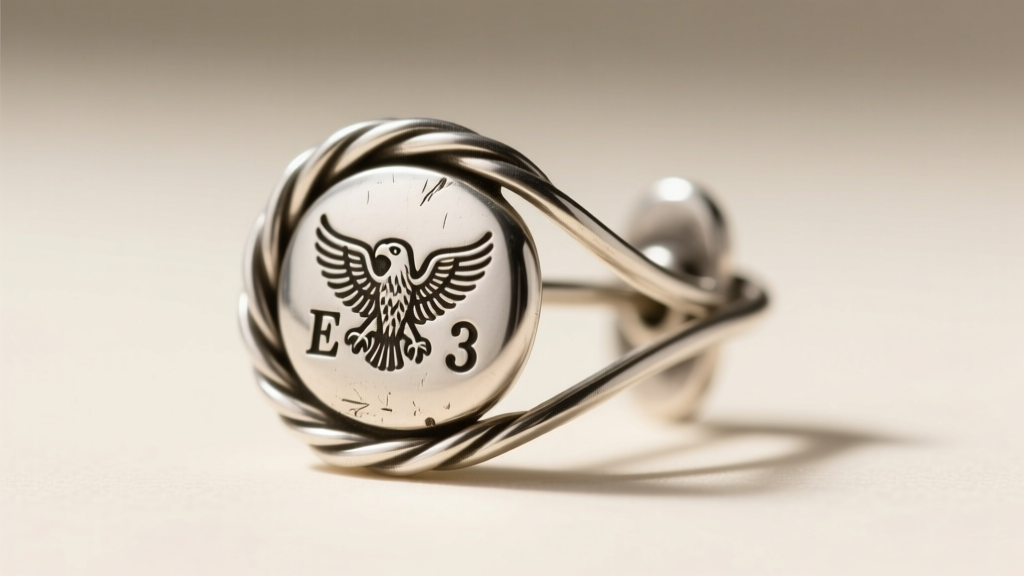
Decoding Mexican Silver Hallmarks
Authenticating vintage and modern Mexican silver requires understanding the hallmarking system. Modern pieces are typically stamped with '925', 'Mexico', or 'Hecho en Mexico'. However, vintage pieces (from the mid-20th century) utilize the historic Eagle Mark system. Introduced in 1948, these marks featured an eagle with a number indicating the region. For instance, an 'Eagle 3' stamp confirms the piece was assayed in Taxco, while 'Eagle 1' denotes Mexico City. The FTC Jewelry Guides strictly regulate how these purity marks can be applied in the US market, ensuring that imported Mexican silver meets the 92.5% threshold.
Wire Gauges and Structural Integrity
One of the most overlooked material properties in hoop earrings is the wire gauge, which determines the thickness of the metal that passes through the ear piercing. Standard fashion earrings typically use 20-gauge (0.81mm) or 18-gauge (1.02mm) wire. However, authentic Mexican arracadas are substantially heavier, often weighing between 8 and 15 grams per earring.
If a heavy, 50mm diameter Mexican hoop is crafted with a thin 20-gauge wire, it creates a severe mechanical failure risk known in the body modification community as the 'cheese-cutter effect'. The concentrated downward force of the heavy silver will slowly slice through the earlobe tissue over time. To prevent this, master silversmiths in Taxco and Oaxaca utilize much thicker gauges:
- 16-Gauge (1.29mm): The standard for medium-weight arracadas (up to 10 grams). Provides excellent structural support while remaining comfortable for standard lobe piercings.
- 14-Gauge (1.63mm): Used for heavy, oversized statement hoops (12 to 20+ grams). This thickness distributes the weight across a wider surface area of the earlobe, preventing tissue migration and tearing.
- 12-Gauge (2.05mm): Reserved for massive, solid-core artisan pieces or earrings specifically designed for stretched earlobes.
When shopping for Mexican hoop earrings, always verify the wire thickness. A high-quality piece will feel substantial and rigid, resisting bending when gentle lateral pressure is applied.
Material Comparison Chart: Silver, Gold, and Base Metals
While Taxco silver is the most famous, Mexican jewelers work with a variety of metals. Below is a comparative analysis of the materials used in traditional and contemporary Mexican hoops, reflecting 2026 market data and metallurgical properties.
| Material | Grade / Stamp | Tarnish & Oxidation Rate | Hypoallergenic Profile | Avg. Price Range (2026) |
|---|---|---|---|---|
| Taxco Sterling Silver | 925, Eagle Marks | Moderate (reacts to sulfur) | High (unless copper-sensitive) | $65 - $250+ |
| Solid 14k Gold | 14k, 585 | None (highly inert) | Excellent | $400 - $1,200+ |
| Vermeil (Silver base) | 925 + 14k/18k Gold | Low (until plating wears) | High | $120 - $300 |
| Traditional Brass | Unstamped / CuZn | High (develops patina) | Low (contains copper/zinc) | $20 - $50 |
| Artisan Copper | Cu / 999 | Very High (verdigris) | Moderate | $30 - $80 |
Gold and Bimetallic Variations
While silver dominates the tourist and export markets, solid gold Mexican hoops are highly prized within Mexico for quinceañeras, weddings, and generational wealth preservation. Solid 14k gold (58.5% pure gold) is the preferred choice for large arracadas because 18k and 24k gold are too soft to support the structural demands of a heavy, clasped hoop. The alloy metals in 14k gold (often silver, copper, and zinc) provide the necessary spring tension for the earring's hinge and clasp mechanism.
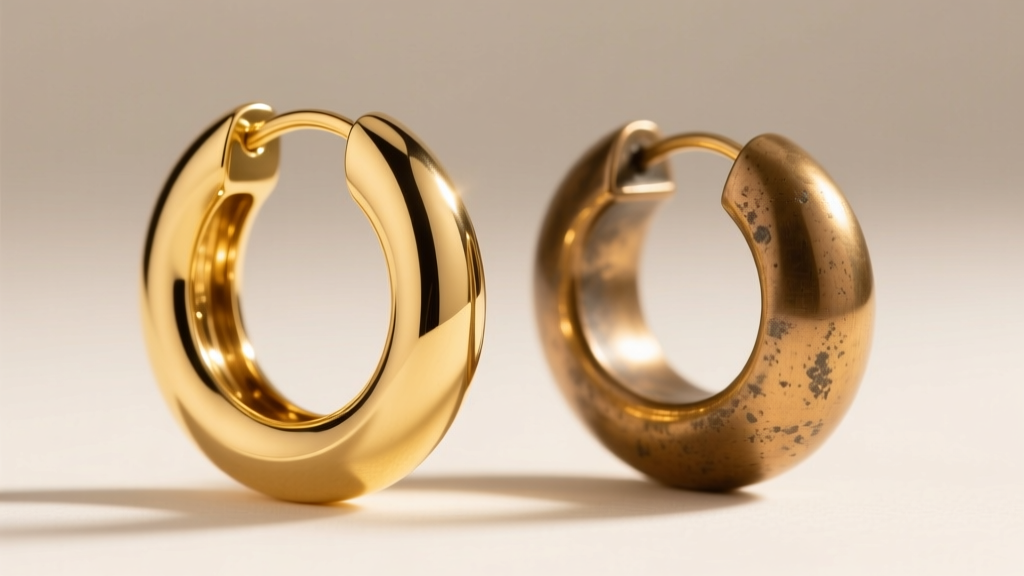
The Risks of Gold-Plated Base Metals
Consumers must be wary of 'gold-plated' Mexican hoops sold at bargain prices. Unlike Vermeil—which requires a thick layer of gold over a solid sterling silver base—cheap plated hoops use brass or nickel-silver (which contains no actual silver) as a base. Once the microscopic gold layer wears away from friction against the earlobe, the exposed base metal reacts with the skin's natural pH and sweat, causing contact dermatitis and leaving a green or black residue on the skin.
How to Spot Authentic Mexican Silver Hoops
Distinguishing genuine Taxco silver from counterfeit or heavily alloyed imitations requires a multi-sensory approach. The Gemological Institute of America (GIA) notes that visual inspection combined with basic physical tests is the most reliable method for consumers.
'Sterling silver possesses a distinct thermal conductivity and acoustic resonance. When tapped, a solid silver hoop will emit a high-pitched, sustained ring, whereas base metals or silver-plated lead will produce a dull, flat thud.'
To verify your Mexican hoop earrings, employ these practical tests:
- The Magnet Test: Pure silver and copper are non-magnetic. If the hoop or its internal steel latch spring is strongly attracted to a neodymium magnet, the core metal is likely steel or iron, indicating a fake.
- The Odor Test: Rub the earring vigorously between your fingers. Genuine 925 silver is odorless. If you detect a metallic, 'penny-like' smell, the piece is heavily alloyed with copper or is solid brass.
- Seam Inspection: Examine the hoop under a jeweler's loupe. Plated earrings often reveal a seam where the base metal was soldered, or show flaking around the high-friction areas near the clasp. Solid Taxco silver is typically forged or drawn from a single continuous wire.
Final Thoughts on Material Selection
Investing in authentic Mexican hoop earrings is an exercise in appreciating functional art. The material you choose should align with your lifestyle and skin chemistry. For daily wear and heirloom longevity, solid Taxco 925 silver or 14k gold remains the undisputed standard, provided the wire gauge is appropriately matched to the hoop's overall weight. By understanding the metallurgical properties, hallmark history, and structural requirements of these iconic pieces, you can confidently curate a collection that honors Mexican craftsmanship while ensuring comfort and durability for decades to come.


