Vin's Earring Troubleshooting: Fix Stuck Threadless Pins
Struggling with your Vin's earring? Learn expert troubleshooting for stuck threadless pins, clicker hinges, and cartilage irritation with our guide.

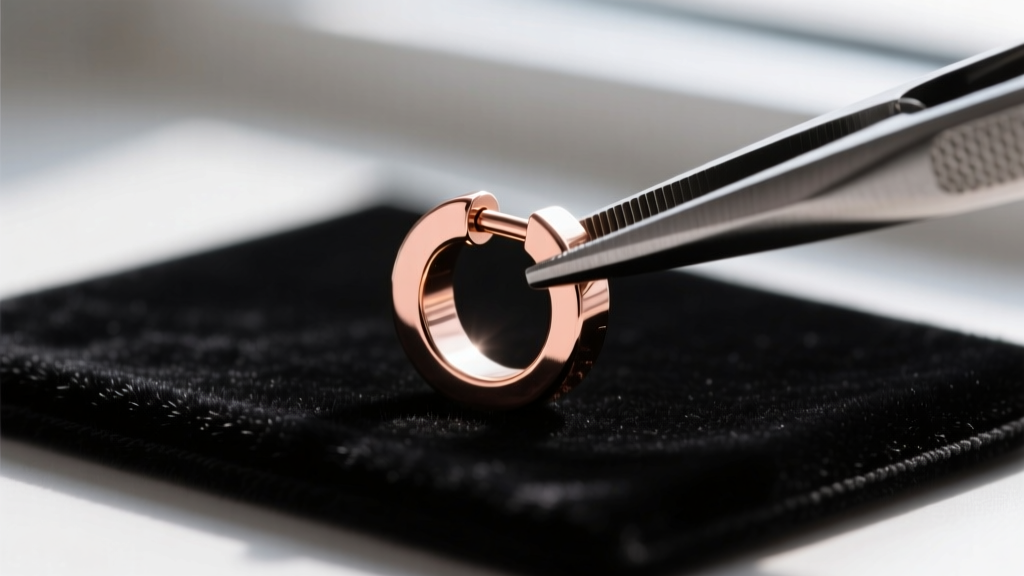
The Mechanics of Vin's Earring Designs: Why They Get Stuck
Vin's Earring has established itself as a premier name in the curated ear community, renowned for intricate threadless ends, delicate clicker hoops, and high-end cartilage jewelry. However, as the popularity of these bespoke pieces has surged through 2026, so has the volume of troubleshooting requests from wearers. The primary culprit? The very engineering that makes threadless and clicker jewelry so secure and seamless also makes it notoriously difficult to manipulate without the proper technique. Whether you are dealing with a jammed press-fit pin, a clicker hinge that refuses to snap shut, or mysterious cartilage irritation, understanding the metallurgy and mechanics of your jewelry is the first step toward a solution.
Unlike traditional internally threaded jewelry, which relies on a screw mechanism, Vin's Earring threadless pieces utilize tension. A slightly bent pin is inserted into a hollow shaft, and the tension of the metal against the inner wall holds the jewelry in place. When this tension is miscalculated, or when debris interferes with the mechanism, users are left with stuck jewelry, bent pins, and frustrated piercers. Below, we break down the exact troubleshooting protocols for rescuing your high-end ear jewelry.
Troubleshooting Threadless (Press-Fit) Pins
The Perfect Bend: Tension Mechanics
The most common issue with Vin's Earring threadless ends is improper pin bending. If the pin is bent too far, it will jam inside the shaft and become nearly impossible to remove. If it is not bent enough, the earring will slide out during sleep or when changing clothes. The golden rule for threadless tension is the 1/3rd Rule.
- Bend Location: The bend should occur exactly one-third of the way down from the tip of the pin, not in the middle or at the base.
- Bend Angle: For 18-gauge (1.0mm) and 16-gauge (1.2mm) jewelry, a subtle 10 to 15-degree angle is sufficient. For thicker 14-gauge (1.6mm) shafts, you may need a 20-degree angle to generate adequate friction.
- The Test: Before inserting the pin into your piercing, test the tension by inserting it into the empty shaft. You should feel a distinct, firm resistance when pushing it in, and hear a soft 'pop' when pulling it out.
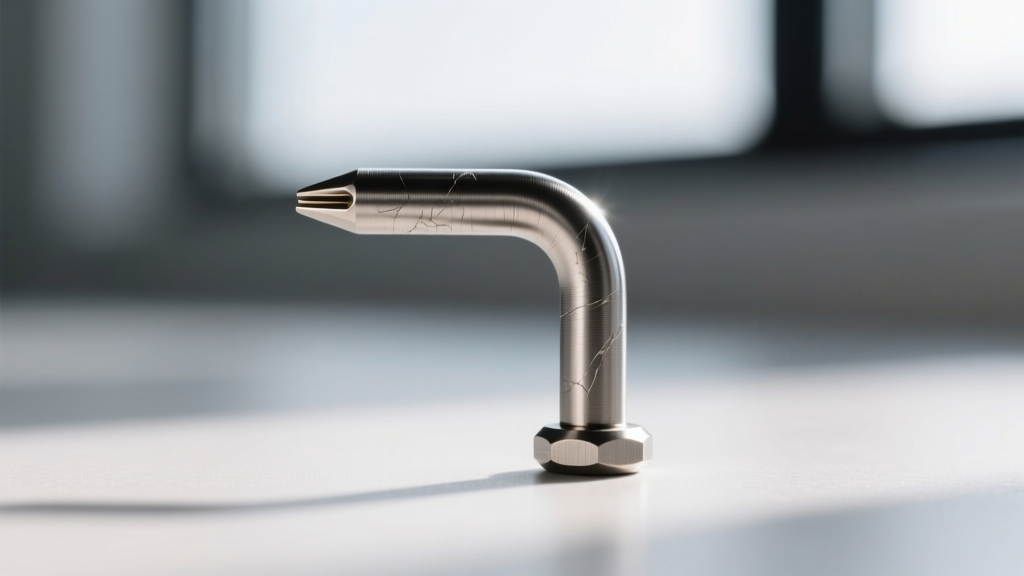
Extracting a Jammed Threadless Pin
If you have over-bent the pin and it is now stuck inside the cartilage shaft, do not panic, and absolutely do not use brute force with standard pliers. Standard metal pliers will crush the delicate 14k gold or titanium pin and scratch the gemstone setting. Instead, follow this extraction protocol:
- Lubricate: Apply a single drop of sterile saline or water-soluble personal lubricant to the entry point of the shaft to reduce friction.
- Grip Safely: Use a pair of silicone-tipped hemostats or wrap the tips of your locking forceps in medical-grade silicone tubing. This protects the metal finish.
- Wiggle, Don't Pull: Grip the end of the earring firmly. Instead of pulling straight out, use a gentle, rapid wiggling motion parallel to the shaft while applying outward pressure. This gradually walks the bent pin out of the tight space without snapping it.
Pro Tip: If the pin snaps inside the shaft, you will need a specialized threadless pin extraction tool or a visit to a professional piercer who can use a taper to push the broken fragment out from the opposite side.
Resolving Clicker Hinge & Clasp Failures
Vin's Earring clicker hoops, particularly the pave and bezel-set designs, feature microscopic hinge mechanisms. Over time, these hinges can become stiff, or the clasp may fail to 'snap' shut. In 90% of cases, this is not a mechanical failure of the metal, but a buildup of sebum, dead skin cells, and soap residue inside the clasp groove.
The Ultrasonic Rescue Method
To restore the snap of your clicker hinge without damaging delicate gemstones like opals or moonstones, avoid harsh chemicals like rubbing alcohol or bleach, which can degrade porous stones and strip the rhodium plating from white gold.
- Step 1: Fill a small glass beaker with warm distilled water and a drop of mild, fragrance-free dish soap.
- Step 2: Submerge the clicker earring and place it in a 40kHz ultrasonic jewelry cleaner for exactly 3 minutes. The high-frequency cavitation bubbles will safely blast debris out of the microscopic hinge crevices.
- Step 3: Rinse with distilled water and dry completely with a microfiber cloth. Apply a microscopic amount of jojoba oil to the hinge pin using a toothpick to restore smooth articulation.
Diagnosing Metal Sensitivities vs. Fit Issues
Many users mistakenly blame a 'stuck' or uncomfortable earring on the mechanics when the root cause is actually a biological reaction to the metal alloy. According to the National Center for Biotechnology Information (NCBI), nickel contact dermatitis is one of the most common causes of piercing irritation, often misdiagnosed as an infection. While Vin's Earring uses high-quality materials, it is vital to verify the exact alloy, especially with white gold.
| Symptom | Probable Cause | Actionable Fix |
|---|---|---|
| Persistent Itching / Flaking | Nickel allergy (common in standard white gold alloys) | Upgrade to ASTM F-136 Titanium or 14k Palladium White Gold |
| Earring Slides Out During Sleep | Insufficient pin tension or shaft stretching | Increase bend angle from 10° to 20° or downsize shaft length |
| Clicker Won't Snap Shut | Sebum buildup in the latch groove | Ultrasonic clean (40kHz) in warm distilled water and mild soap |
| Cartilage Bump (Granuloma) | Excessive pressure from a too-short shaft or heavy end | Switch to a longer post (e.g., 8mm instead of 6mm) to allow for swelling |
For a comprehensive breakdown of safe body jewelry materials, the Association of Professional Piercers (APP) strongly recommends implant-grade titanium (ASTM F-136) for all healing piercings and for individuals with known metal sensitivities. Titanium is entirely nickel-free and highly biocompatible, making it the gold standard for cartilage health.
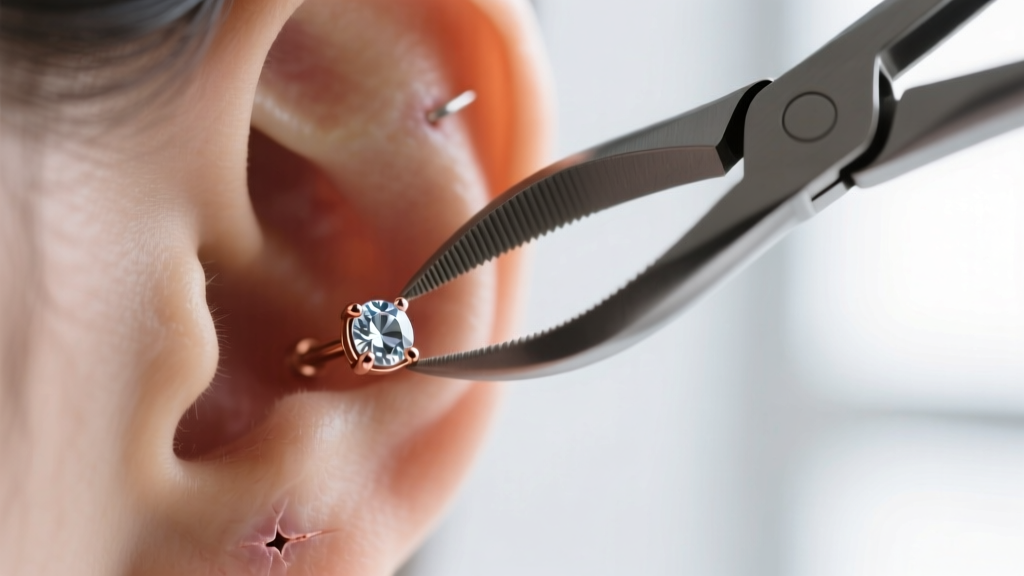
Essential Tools for At-Home Jewelry Rescue
To properly maintain and troubleshoot your Vin's Earring collection, you need the right tools. Relying on your fingernails or standard household tweezers is a recipe for scratched gold and lost gemstones. Invest in the following professional-grade tools:
- Silicone-Tipped Hemostats: Essential for gripping threadless ends without marring the metal or crushing the gemstone prongs.
- Pin Bending Pliers (Nylon Jaw): These pliers feature soft nylon jaws that allow you to bend 16g and 14g titanium pins to the exact degree required without leaving tool marks.
- Debakey Forceps: Originally a surgical tool, these fine-tipped, non-toothed forceps are perfect for clearing microscopic debris from clicker hinges and gemstone settings.
- Insertion Tapers: If you are swapping out a threadless end and the shaft accidentally slides out of your piercing, a sterilized glass or titanium taper will help you re-insert the shaft without traumatizing the fistula.
When to See a Professional Piercer
While most threadless and clicker issues can be resolved at home with patience and the right tools, there are scenarios where professional intervention is mandatory. If a threadless pin has snapped flush with the shaft inside your piercing, do not attempt to dig it out with a needle or safety pin. This introduces bacteria deep into the cartilage and risks severe perichondritis. Visit a reputable, APP-certified piercer who possesses the specialized extraction tapers and sterile environments required to safely remove broken hardware. Similarly, if your cartilage exhibits signs of systemic infection—such as radiating heat, throbbing pain, or yellow/green discharge—remove the jewelry if possible and seek medical attention immediately, as cartilage infections require targeted antibiotics, not just jewelry adjustments.


