How to Clean and Maintain Tory Burch Kira Earrings
Learn expert cleaning and maintenance tips for Tory Burch Kira earrings. Protect the gold plating, enamel, and crystals with our safe care guide.

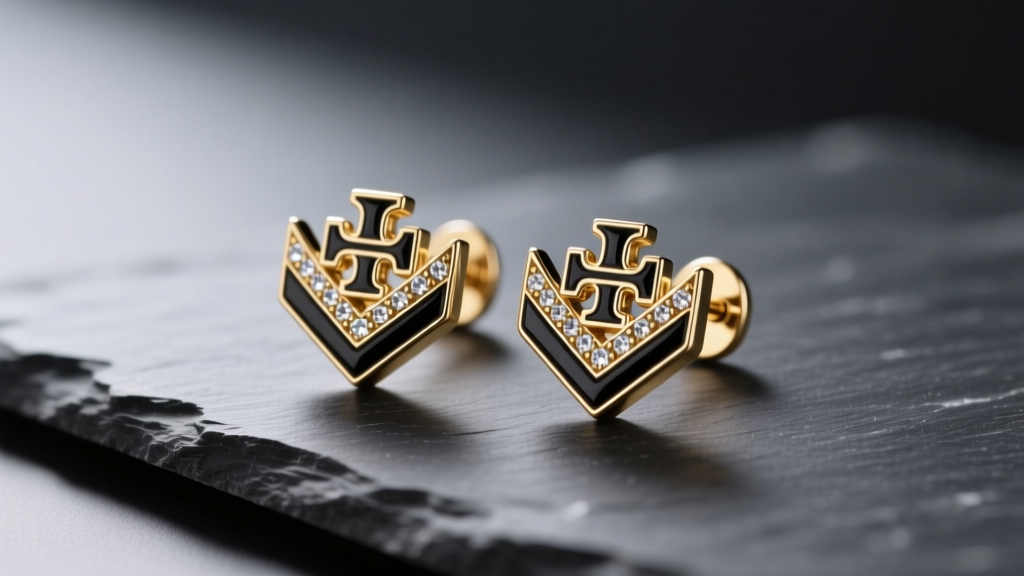
The Tory Burch Kira collection is renowned for its striking geometric chevron motifs, elegant enamel inlays, and brilliant pavé crystal accents. Whether you own the classic Kira studs, the statement hoops, or the huggies, these earrings represent a significant investment in designer fashion jewelry. However, as of 2026, the secondary market for vintage and discontinued Tory Burch pieces has surged, making proper archival care and maintenance more important than ever to preserve their retail and sentimental value.
Unlike fine jewelry crafted from solid 14k or 18k gold, fashion jewelry requires a highly specific, gentle approach to cleaning. Standard ultrasonic cleaners, commercial silver dips, and ammonia-based solutions will permanently strip the electroplating, cloud the enamel, and destroy the delicate foil-backing of the crystals. This comprehensive guide will walk you through the exact material composition of your Tory Burch Kira earrings and provide a professional-grade, safe cleaning protocol to keep them looking pristine.
Material Breakdown: What Are Your Kira Earrings Actually Made Of?
To clean your earrings safely, you must first understand their anatomy. According to the Federal Trade Commission's Jewelry Guides, fashion jewelry must accurately disclose its metal composition. The Kira line typically features:
- Base Metal: Cast brass or a zinc alloy, chosen for its weight and ability to hold intricate chevron molds.
- Plating: A microscopic layer of 14k or 18k gold, or palladium. This electroplating is usually between 0.5 and 1.5 microns thick. Because it is a surface layer, abrasive polishing will wear it down to the base metal.
- Enamel Inlay: Most Kira pieces use cold enamel (a hardened resin) rather than vitreous (glass) enamel. Cold enamel is highly susceptible to micro-scratches and chemical melting.
- Crystals: Precision-cut glass or Swarovski crystals, often foil-backed to maximize light refraction, secured with jeweler's epoxy or cyanoacrylate adhesives.
The 4-Step Safe Cleaning Protocol for Plated & Enameled Pieces
When your Kira earrings accumulate skin oils, lotion residue, or environmental dust, follow this meticulous four-step process to restore their luster without compromising the structural integrity of the settings.
Step 1: Dry Microfiber Dusting
Before introducing any moisture, use a clean, lint-free microfiber cloth to gently wipe the surface. This removes abrasive dust particles that could cause micro-scratches in the gold plating or cold enamel during the wet cleaning phase.
Step 2: The Distilled Water & pH-Neutral Soap Bath
Tap water contains chlorine and heavy minerals that can leave hard water spots or react with the brass base if it reaches a micro-fissure in the plating. Mix two drops of pH-neutral dish soap (like Dawn) into a bowl of lukewarm distilled water. Submerge the earrings for no longer than three minutes. Prolonged soaking can weaken the adhesive holding the pavé crystals in place.
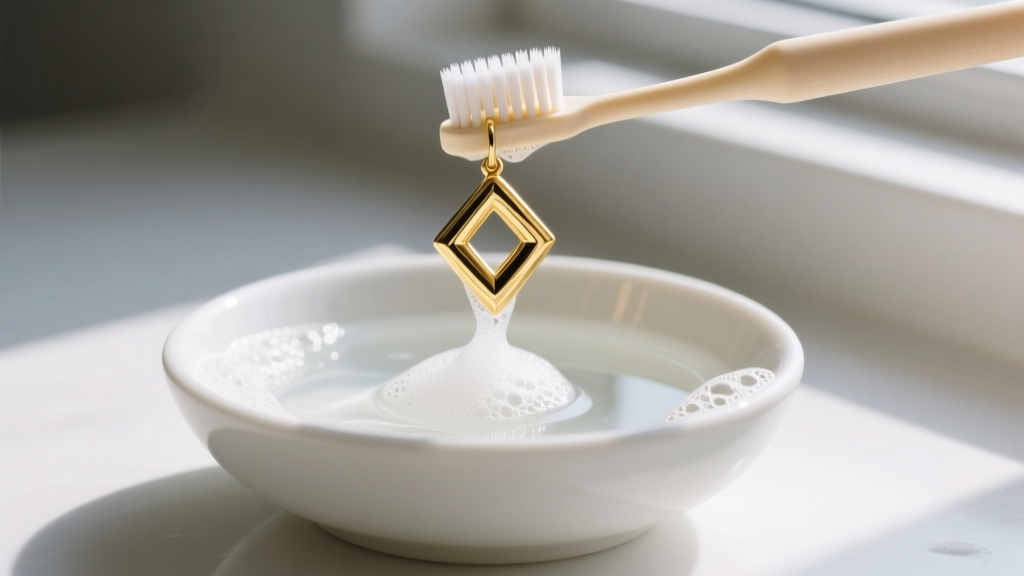
Step 3: Soft Agitation with a Baby Toothbrush
Use an extra-soft baby toothbrush to gently agitate the soap solution over the metal and crystal settings. Never use a standard adult toothbrush, as the stiffer bristles will leave permanent swirl marks on the high-polish gold plating. Focus on the crevices where the chevron arms meet, as this is where sebum and makeup accumulate.
Step 4: The Pat Dry & Air Cure
Rinse briefly under a slow stream of distilled water. Immediately pat the earrings dry with a microfiber towel. Do not rub. Finally, let them air dry on a paper towel in a low-humidity room for two hours before storing. This ensures that no trapped moisture remains under the crystal settings, which could lead to foil oxidation.
Critical Mistakes That Will Destroy Your Kira Earrings
Many well-intentioned jewelry owners ruin their designer pieces by applying fine jewelry cleaning methods to fashion jewelry. The Gemological Institute of America (GIA) warns against using harsh chemicals on treated or fragile gemstone settings, a rule that extends to foil-backed crystals and resin enamels.
| Cleaning Agent | Effect on Gold Plating | Effect on Enamel & Crystals |
|---|---|---|
| Ultrasonic Cleaners | Safe for solid gold, but high-frequency vibrations will shatter cold enamel and shake crystals loose from their epoxy settings. | Catastrophic failure. Avoid entirely. |
| Ammonia (e.g., Windex) | Strips the protective anti-tarnish coating and accelerates the wearing of the micron plating. | Dissolves the foil-backing on crystals, turning them dull and grey. |
| Silver Dip / Polish | Contains thiourea and abrasives that will instantly strip gold plating down to the brass base. | Leaves a chalky, irreversible residue in the enamel grooves. |
| Rubbing Alcohol | Generally safe for bare metal, but dangerous for the piece as a whole. | Degrades the cyanoacrylate adhesives used for pavé, causing stones to fall out. |
Restoring Luster to Dull Crystals and Faux Pearls
If the pavé crystals on your Kira earrings have lost their sparkle, the issue is rarely the glass itself, but rather a film of oils or oxidized foil beneath the setting. If the foil has oxidized (appearing dark or patchy), the crystal must be professionally removed, the foil replaced, and the stone reset—a job for a master jeweler.
However, if the dullness is merely surface-level grime, you can use a specialized jewelry cleaning pen filled with a mild, non-ammoniated surfactant. Apply the tip directly to the crown of the crystal and twist gently. For Kira pieces featuring faux pearls, never submerge them in water. The nacre coating on fashion pearls is incredibly thin and can peel if the underlying bead absorbs moisture and expands. Wipe faux pearls only with a barely damp cloth.
Long-Term Storage and Anti-Tarnish Strategies
Brass and zinc alloys are highly reactive to sulfur and humidity in the air, which causes the base metal to tarnish. When the base metal tarnishes, it expands microscopically, causing the gold plating on the surface to flake or craze. Proper storage is your first line of defense.
- Use Archival Tissue: Wrap your Kira earrings in acid-free, archival-quality tissue paper before placing them in a pouch. This prevents the metal from reacting with synthetic dyes in standard jewelry boxes.
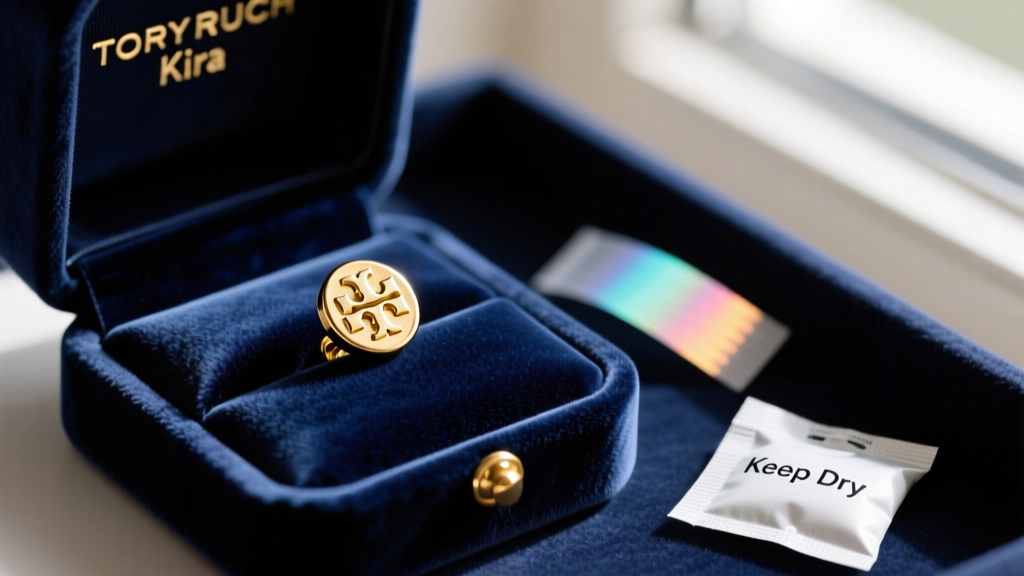
- Anti-Tarnish Strips: Invest in 3M anti-tarnish tabs. These small strips absorb ambient sulfur gases and can protect your plated jewelry for up to 12 months in an enclosed space.
- Silica Gel Packets: Humidity is the enemy of both plating and crystal adhesives. Keep a small silica gel packet in your jewelry drawer or travel case to maintain a dry microclimate.
- Isolate from Other Metals: Store your Kira earrings separately. Harder fine jewelry pieces (like diamond studs or platinum bands) will easily scratch the softer gold plating and cold enamel of your Tory Burch pieces if they rub together in a communal tray.
When to Seek Professional Replating
Despite your best efforts, daily-wear items like studs and huggies will eventually show signs of plating wear, particularly on the high-friction edges of the chevron design and the earring posts. When the brass begins to show through, it is time to consider professional replating.
A specialized jewelry electroplater can polish out minor scratches and apply a fresh layer of 14k or 18k gold, or even upgrade the piece with a highly durable rhodium finish. Expect to pay between $45 and $85 for this service. However, be sure to consult with the jeweler about masking the enamel inlays, as the chemical stripping process required before replating can sometimes damage cold enamel resin. By following these meticulous care guidelines, your Tory Burch Kira earrings will maintain their striking geometric beauty and designer prestige for years to come.


