Troubleshooting Your Sun Earring: Fixing Droop, Snags & Damage
Learn how to troubleshoot common sun earring problems. Expert fixes for lobe droop, snagging rays, and enamel damage in celestial jewelry.

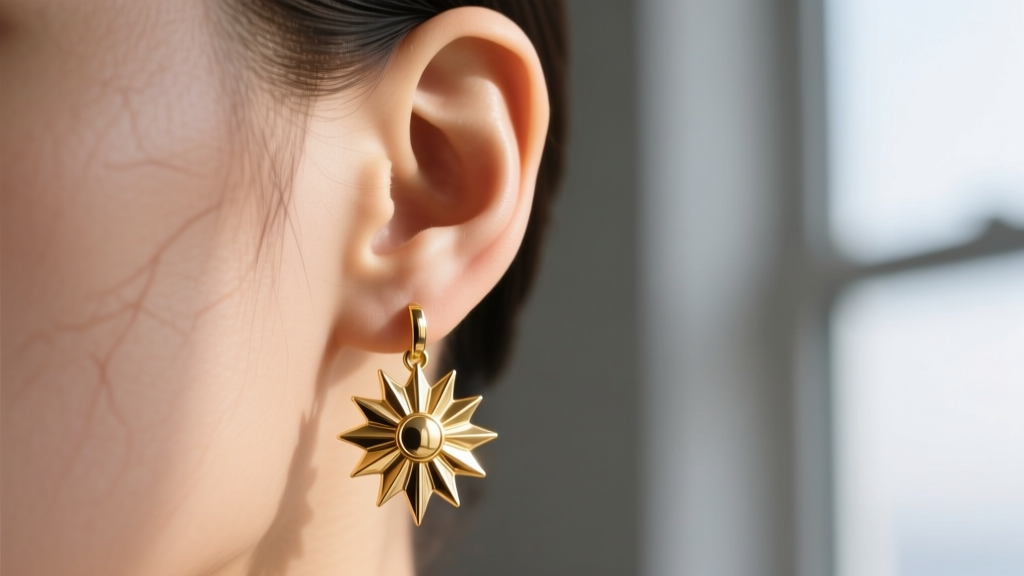
Celestial jewelry has dominated trend cycles for years, but the intricate geometry of a sun earring presents unique wearability challenges that standard studs or hoops simply do not. Whether you are wearing a vintage-inspired sunburst dangle, a minimalist gold ray huggie, or an enameled sun-face cartilage cuff, the radiating design elements create specific points of failure. From lobe droop caused by top-heavy halos to snagging rays and chipping enamel, these statement pieces require specialized troubleshooting.
In this comprehensive guide, we break down the structural mechanics of sun-themed ear wear and provide actionable, jeweler-approved solutions to fix the most common design flaws. By understanding gauge thickness, weight distribution, and material hardness, you can rescue your favorite celestial pieces from the jewelry box drawer and wear them comfortably all day.
The Anatomy of a Sun Earring: Why Design Flaws Happen
Unlike a simple spherical stud or a continuous hoop, a sun motif relies on asymmetrical weight distribution and protruding elements. The "rays" or "sunbursts" extend outward from a central focal point, which fundamentally shifts the center of gravity. When this central point is placed on a standard 20-gauge (0.81mm) post, the leverage created by the radiating metal or gemstones forces the post to tilt downward.
Furthermore, the intricate crevices between the sun rays trap oils, lotions, and dead skin cells, accelerating tarnish on silver alloys and degrading the adhesives used in cheaper pave settings. Understanding these structural vulnerabilities is the first step toward effective troubleshooting.
Troubleshooting Issue #1: Lobe Droop and Forward Tilt
The most frequent complaint among collectors of celestial jewelry is the "forward tilt." A solid 14k gold sunburst dangle can easily weigh between 4 to 6 grams per ear. Human earlobes typically begin to show visible drooping and fatigue when supporting anything heavier than 3.5 grams without assistance. When a heavy sun face sits on a thin wire, it pulls the piercing channel downward, causing discomfort and an unflattering angle.
Structural Fixes: Gauge and Backing Upgrades
To combat lobe droop, you must address both the post thickness and the backing surface area.
- Upgrade to an 18-Gauge Post: Take your sun studs to a local bench jeweler and request an 18-gauge (1.02mm) or even 16-gauge (1.29mm) post replacement. The thicker metal resists the bending torque caused by the heavy sunburst halo, keeping the motif perfectly perpendicular to the floor.
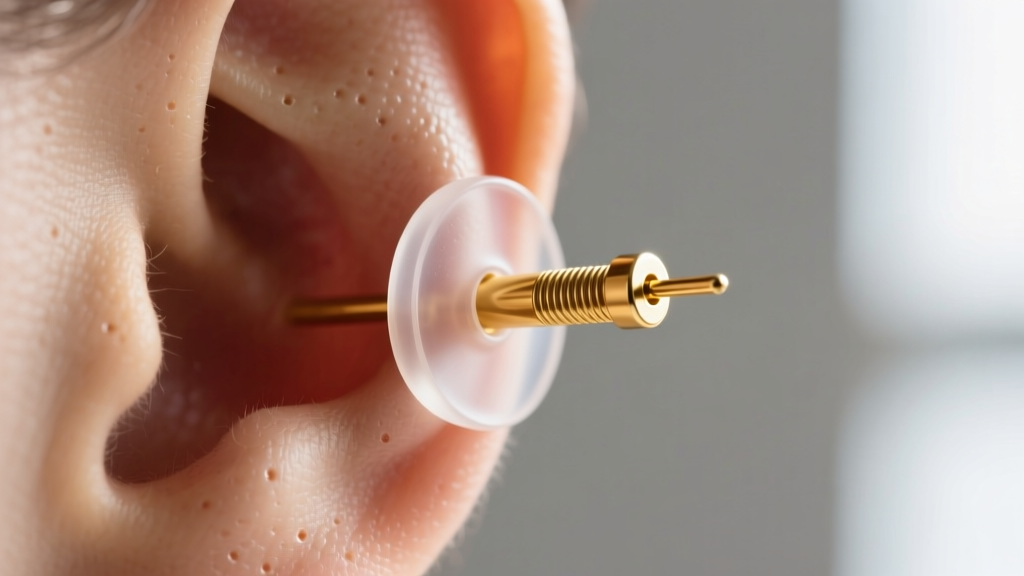
- Use Silicone Support Patches: Products like Lobe Wonder ($8-$15 for a pack) are adhesive-backed silicone patches with a pre-punched hole. They distribute the 5-gram weight of a sun dangle across a wider surface area of the lobe, preventing the piercing channel from stretching.
- Switch to Omega or Leverbacks: If your sun earrings are dangles on French wire hooks, the thin wire offers zero structural support. Have a jeweler solder on Omega backs or leverback closures. These feature a wider, hinged backing that hugs the lobe, providing a rigid shelf that holds the sun motif upright.
Troubleshooting Issue #2: The Snag Factor (Rays and Prongs)
Sun rays are essentially tiny, decorative hooks. If your sun earring features gemstones set at the very tips of the rays using traditional prong settings, it will inevitably catch on cashmere sweaters, silk pillowcases, and curly hair. This snagging doesn't just ruin clothing; it bends the delicate metal rays and loosens the gemstone prongs, leading to lost diamonds or sapphires.
Prevention and Repair Strategies
If you already own a prong-set sunburst piece, you can mitigate the snag factor without sacrificing the design. A bench jeweler can perform a "prong profile reduction," using a high-polish burr to round off the sharp edges of the prong tips, making them flush against the stone. This service typically costs between $25 and $40 per earring.
For a DIY temporary fix, apply a micro-layer of clear, flexible jewelry guard (or a high-quality clear silicone sealant) over the sharp prongs. Allow it to cure for 24 hours. This creates a smooth, invisible bumper that glides through hair and fabric. When purchasing new sun earrings, always opt for bezel-set or flush-set stones at the ray tips, which enclose the gemstone in a smooth metal rim, eliminating snag points entirely.
Troubleshooting Issue #3: Enamel Chipping and Fading
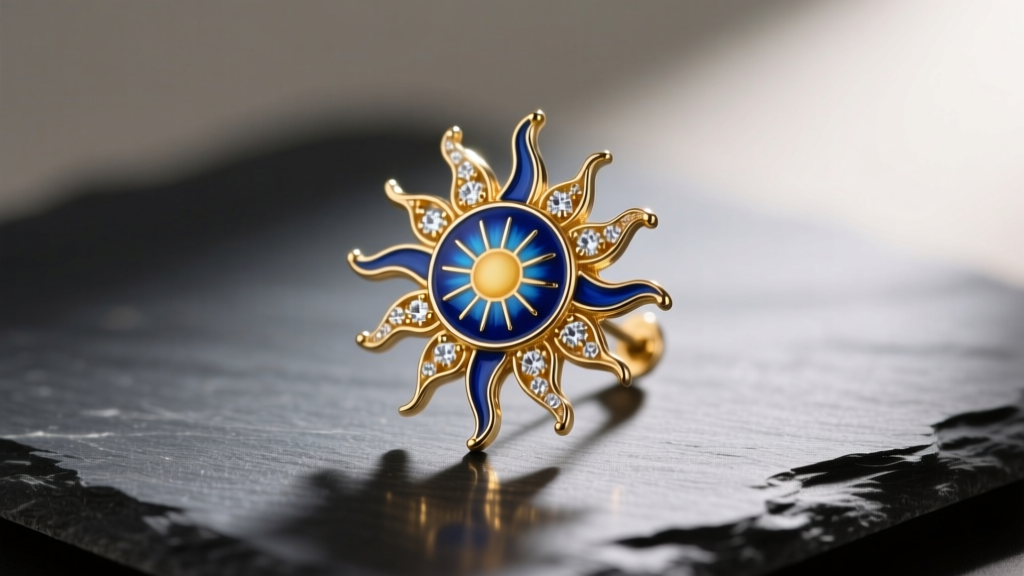
Many artisan and vintage sun earrings utilize enamel to create vibrant celestial faces, often featuring deep blues, bright yellows, or opaque whites. However, not all enamel is created equal, and treating them identically will result in catastrophic damage.
Vitreous vs. Cold Enamel: A Durability Comparison
According to the Rio Grande Enameling Guide, understanding the composition of your sun earring's colored sections is critical for proper care. Vitreous enamel is essentially fused glass, while cold enamel is a modern epoxy resin.
| Enamel Type | Composition | Mohs Hardness | UV & Heat Resistance | Common Failure Mode |
|---|---|---|---|---|
| Vitreous (Hot) | Fused Glass Powder | 5.0 - 6.0 | Excellent; will not yellow | Shattering from hard impacts |
| Cold (Epoxy) | Two-Part Resin | 2.0 - 3.0 | Poor; yellows under UV light | Chipping, peeling, and scratching |
If your sun earring features cold enamel (common in fashion jewelry and pieces under $150), you must store it in a dark jewelry box to prevent UV yellowing. Never use ultrasonic cleaners or steamers on cold enamel, as the high-frequency vibrations and heat will cause the resin to delaminate from the metal base. Vitreous enamel is much more durable but can crack if dropped on a tile floor due to its glass-like brittleness.
The Cartilage Conundrum: Sun Motifs in Helix Piercings
While sun studs look breathtaking in a helix or forward helix placement, they are notorious for causing pressure necrosis and migration in cartilage piercings. The wide surface area of a 12mm to 15mm sunburst motif can press against the folds of the ear or catch on headphones, creating continuous pressure on the fistula (the piercing channel).
The Fix: If you are wearing a sun motif in cartilage, ensure the post is a flat-back labret style made of implant-grade titanium (ASTM F-136). The flat disc distributes pressure evenly against the back of the ear, unlike a standard butterfly backing which will dig into the cartilage and cause painful pressure bumps. Keep the sun face diameter under 10mm for cartilage placements to avoid catching on the ear's natural folds.
Maintenance Checklist for Celestial Jewelry
Because of the intricate crevices between the sun rays, standard wiping is insufficient for cleaning. Follow this protocol recommended by the Gemological Institute of America (GIA) for textured and creviced gold jewelry:
- The Soak: Mix warm water with a few drops of phosphate-free dish soap. Let the sun earrings soak for 10 minutes to loosen sebum trapped between the rays.
- The Agitation: Use an extra-soft baby toothbrush to gently sweep along the grain of the sun rays. Never scrub in a circular motion, as this can bend delicate filigree tips.
- The Rinse and Dry: Rinse under lukewarm distilled water. Use a compressed air duster (held at least 6 inches away) to blow water out of the tight crevices around the sun face, preventing water spots and hidden tarnish.
Jeweler's Insight: Never use silver dip or harsh chemical polishes on oxidized sun earrings. Many celestial designs rely on intentional blackening (patina) in the recesses of the sun rays to make the raised gold or silver details pop. Chemical dips will strip this contrast, leaving the earring looking flat and lifeless.
By addressing the physics of lobe droop, eliminating snag points, and respecting the chemical limits of enamel finishes, your sun earrings will remain striking, comfortable, and structurally sound for years to come. Troubleshooting isn't just about repair; it's about optimizing the intersection of art and anatomy.


